Ginseng Ficus Bonsai Dropping Leaves: Causes and Quick Fixes

This post contains affiliate links. As an Amazon Associate, OurBonsai earns from qualifying purchases at no extra cost to you. Read our disclosure.
In this guide
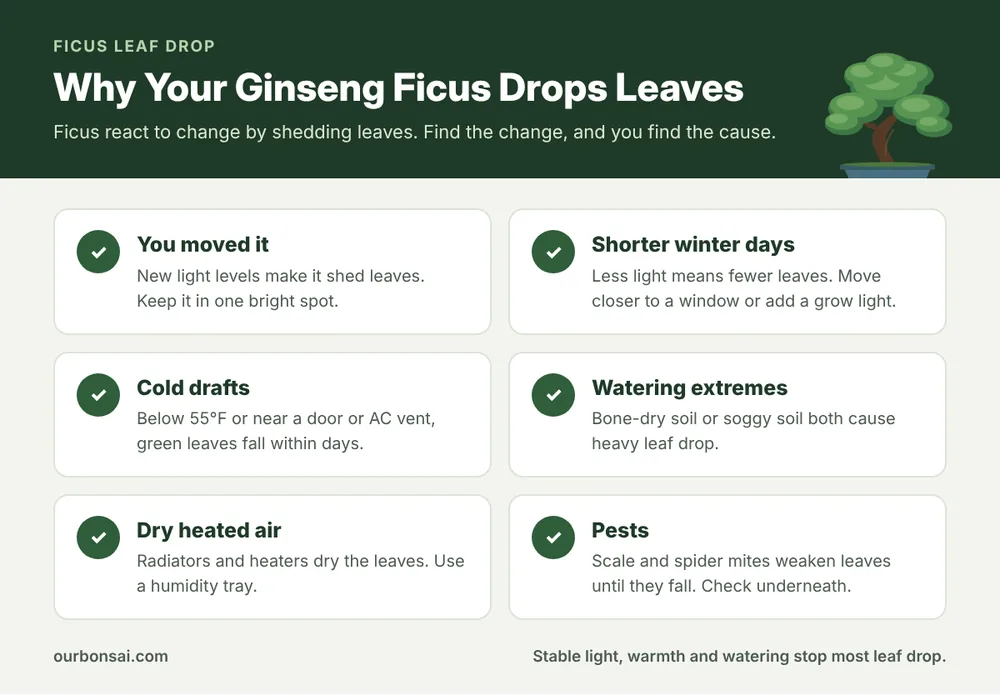
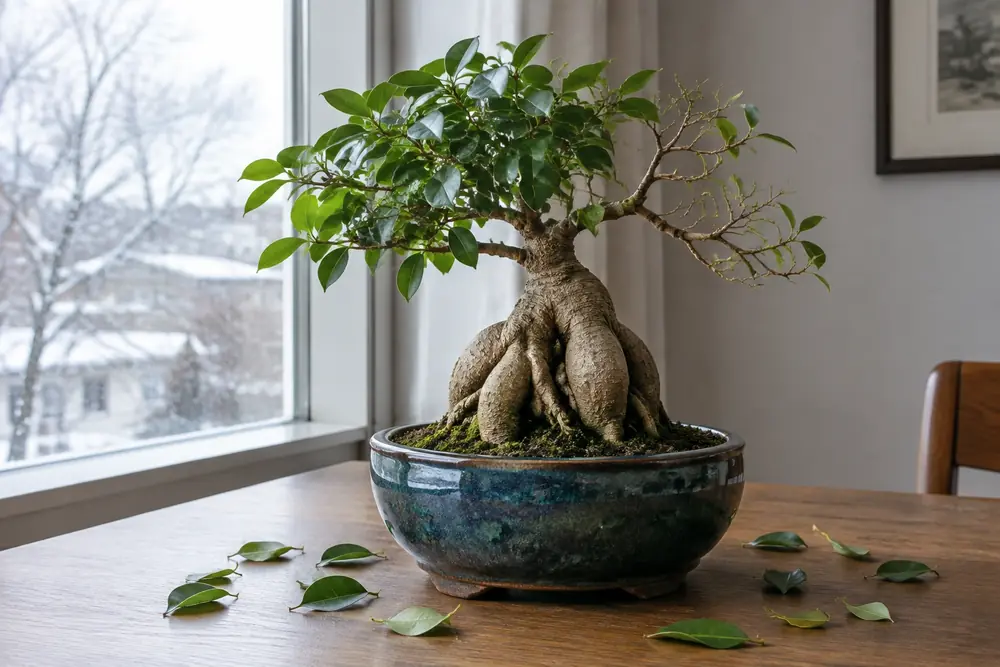
Ginseng ficus bonsai dropping leaves is one of the most alarming things a new owner sees, especially when perfectly green leaves fall onto the table. But ficus are famous for this. The species reacts to almost any change, whether in light, temperature or watering, by shedding some leaves and then adjusting. In most cases the tree is not dying, it is reacting. The key is to find out what changed and stop changing it, so the tree can settle and push new leaves.
This guide covers the six most common reasons a ginseng ficus drops its leaves, how to tell normal stress from real trouble, and how to help the tree recover.
Is leaf drop on a ginseng ficus normal?
Some is. Ficus microcarpa sheds older leaves a few at a time all year. It also drops a noticeable number when it is moved to a new spot, when the seasons change, or when you bring it home from a store or garden center. This “acclimatization drop” can last two to four weeks.
It is a sign of real trouble when:
- The tree keeps dropping leaves for more than a month.
- New buds are not forming at the branch tips.
- The root bulb feels soft, or the soil smells sour.
- Branches are drying out and snapping.
If you see those signs, check the roots and act quickly. Our guide to bonsai losing leaves suddenly covers the more serious causes.
6 causes of ginseng ficus bonsai dropping leaves
1. A change of location
The most common cause. Ficus leaves are built for the light they grow in. Move the tree from a bright greenhouse to a living room, or even from one window to another, and it sheds leaves that no longer suit the new light. It then grows new ones adapted to the new spot.
Fix: pick the brightest spot you can and leave the tree there. Do not move it around looking for a better place every few days; every move restarts the process.
2. Shorter, darker days in autumn and winter
As days shorten, indoor light drops sharply, often to a fraction of summer levels. The tree cannot support all its leaves and sheds the ones it cannot feed, usually the inner and lower leaves first.
Fix: move the tree right next to a south or west window in winter, or add a grow light for 10 to 12 hours a day. Our guide to the best indoor grow lights for bonsai compares options, and how much light a bonsai tree needs explains why winter is so hard on indoor trees.
3. Cold and drafts
Ficus microcarpa is a tropical fig. A cold night on a windowsill, a draft from an outside door, or an air conditioning vent blowing on it can make green leaves fall within days. The Wikipedia page on Ficus microcarpa notes its native range in tropical Asia and Australia, which is why it dislikes anything below about 55°F (13°C).
Fix: keep it between 60 and 75°F (15 to 24°C), away from doors, vents, radiators and cold glass. At night in winter, pull it back from the window a little.
4. Watering extremes
Both too dry and too wet cause leaf drop. A tree left to dry out completely drops leaves that are dry and crisp. A tree kept soggy drops leaves that are soft and often yellow, because its roots are suffocating.
Fix: water thoroughly when the top 2 cm of soil feels dry, and never leave the pot standing in water. If the soil stays wet for days, repot into a gritty mix; our ficus ginseng bonsai soil recipe shows how.
5. Dry air from heating
Central heating can drop indoor humidity to desert levels. Leaves lose water faster than the roots can supply it, especially in a small pot.
Fix: set the pot on a humidity tray filled with pebbles and water (the pot should sit above the water, not in it). See our pick of the best humidity trays for bonsai, or shop for a bonsai humidity tray.
6. Pests
Scale, mealybugs and spider mites drain sap until leaves yellow and fall. Look for small brown bumps on stems, white cotton patches, sticky leaves or fine webbing. Our guide to ficus bonsai pests and diseases shows how to treat each one.
How to help a ginseng ficus recover from leaf drop
- Find the change. Ask what changed in the last two or three weeks: a move, the heating coming on, a cold night, a missed watering.
- Stabilize. Put the tree in a bright, warm, draft-free spot and keep it there.
- Water less while it has fewer leaves. A tree with half its leaves uses half the water. Check the soil before each watering.
- Do not fertilize a tree that is actively dropping leaves. Wait until new buds open.
- Do not prune or repot during the drop unless the roots are rotting.
- Be patient. New leaves usually appear in three to six weeks once the tree has settled.
Leaf drop when moving a ficus outdoors and back
Many growers put their ginseng ficus outside for summer, which builds a much stronger tree. The catch is two big light changes a year. Going out, move it first to full shade for a week, then to morning sun, so the leaves do not scorch. Coming back in, do it before night temperatures fall below about 55°F (13°C), and put it in the brightest window you have. Expect some leaves to drop each time; that is the tree swapping sun leaves for shade leaves, and it settles within a few weeks.
Leaf drop after bringing a new ginseng ficus home
Almost every ginseng ficus drops leaves in its first few weeks in a new home. It has gone from a bright greenhouse to a truck, then a store, then your house, each with different light and temperature. Expect some drop, put it in your brightest window, water carefully and resist the urge to repot it immediately. Once it pushes new growth, it has settled and you can start normal care, including the shaping ideas in our ginseng ficus bonsai styles guide.
FAQ: ginseng ficus bonsai dropping leaves
Why is my ginseng ficus dropping green leaves?
Green leaves falling quickly usually means a sudden change: a move, a cold draft, or a big swing in watering. The tree is shedding leaves it cannot support in the new conditions.
Will my ginseng ficus grow its leaves back?
Yes, as long as the root bulb is firm and the stems are green under the bark. New leaves usually appear within three to six weeks.
Should I mist my ginseng ficus to stop leaf drop?
Misting gives a short humidity boost but does not last. A humidity tray and keeping the tree away from heaters do more.
Can a ginseng ficus lose all its leaves and survive?
Often, yes. A healthy root system can re-leaf a completely bare ficus, given bright light and warmth.
Final thoughts
Ginseng ficus bonsai dropping leaves is usually the tree adjusting to a change, not a death sentence. Give it a stable, bright, warm spot, water by checking the soil, raise the humidity and be patient. Once it stops shedding and new buds appear, it is back on track.