Ginkgo Bonsai Winter Care: Dormancy, Water and Frost

This post contains affiliate links. As an Amazon Associate, OurBonsai earns from qualifying purchases at no extra cost to you. Read our disclosure.
In this guide
- Why does my ginkgo drop all its leaves at once?
- How cold can a ginkgo bonsai handle?
- Ginkgo bonsai winter care checklist
- Where to keep a ginkgo bonsai in winter
- Watering a ginkgo bonsai in winter
- Fertilizer, pruning and repotting around winter
- Preparing your ginkgo for winter
- Waking your ginkgo up in spring
- Common ginkgo winter mistakes
- Ginkgo in a pot vs in the ground
- Ginkgo in warm climates
- Ginkgo winter care at a glance by month
- FAQ: ginkgo bonsai winter care
- Final thoughts
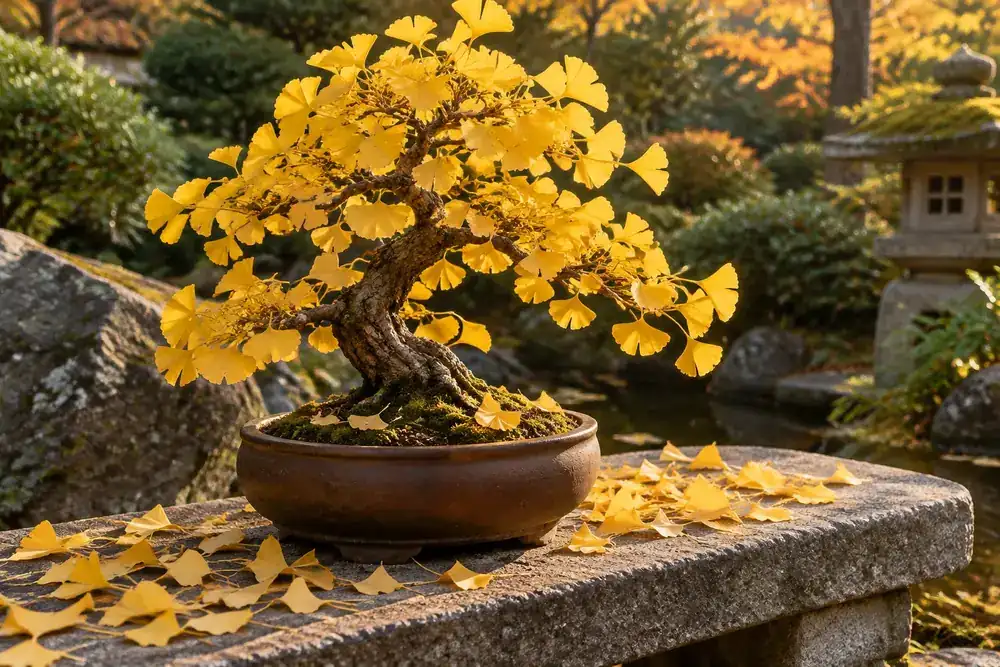
Ginkgo bonsai winter care is mostly about leaving the tree alone in the right place. Ginkgo (Ginkgo biloba) is a living fossil, a tree that has barely changed for millions of years, and it is extremely cold hardy. In autumn its fan-shaped leaves turn brilliant gold and often drop within a few days. Through winter it sits bare and dormant, and in spring it pushes fresh green fans again. The two things that can go wrong in a pot are roots freezing solid in a hard winter and roots rotting in cold, wet soil.
This guide covers what is normal, how cold ginkgo can handle, where to keep it, how to water during dormancy and how to bring it back into growth.
Why does my ginkgo drop all its leaves at once?
Ginkgo is deciduous. Unlike many trees that drop leaves gradually over weeks, ginkgo is famous for shedding nearly all its leaves in a short burst, sometimes overnight after the first hard frost. This is normal behavior and the start of its dormancy. A bare ginkgo in winter is healthy and resting.
To check that your tree is alive, look at the short, knobby spur shoots along the branches. They should be firm with plump buds. A gentle scratch on a twig should show green underneath.
How cold can a ginkgo bonsai handle?
In the ground, ginkgo is hardy to about USDA zone 3 or 4, among the hardiest trees grown as bonsai. In a pot, the roots are more exposed, but ginkgo still copes well.
| Conditions | What to do |
|---|---|
| Down to about -10°C (14°F) | Keep outdoors, sheltered from wind |
| Long spells below -10°C (14°F) | Pot on the ground with mulch, or a cold frame |
| Severe winters below -20°C (-4°F) | Unheated shed or garage, or bury the pot |
Check your area on the USDA plant hardiness map.
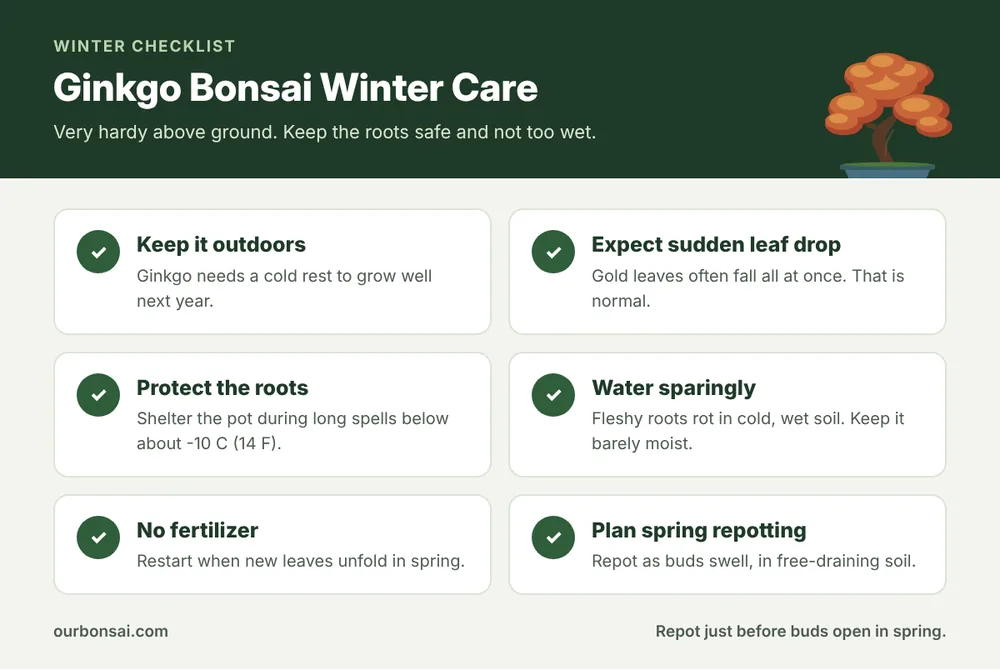
Ginkgo bonsai winter care checklist
Where to keep a ginkgo bonsai in winter
Outdoors. Ginkgo needs a real winter rest. A tree kept indoors in a warm house will not go fully dormant and often leafs out weakly or declines. It is firmly an outdoor tree; see our list of outdoor bonsai tree types for others in the same group.
Good winter spots include a sheltered corner of the garden, a cold frame, an unheated greenhouse, or an unheated garage during the coldest weeks. Because the tree has no leaves, it needs little light while fully dormant.
Watering a ginkgo bonsai in winter
This is where ginkgo differs from many other deciduous trees. Ginkgo has thick, fleshy roots that store water and energy. They are prone to rot if they sit in cold, wet soil for long periods.
- Keep the soil just barely moist, never soggy.
- Check every few days; water only when the surface has dried.
- In long rainy spells, tilt the pot or move it under cover.
- Do not water a frozen pot.
A very free-draining soil is the best protection. Our guide to bonsai soil mix ratios explains how to make a gritty mix with plenty of pumice or lava rock. If you suspect a problem, our guide to bonsai root rot shows the warning signs.
Fertilizer, pruning and repotting around winter
- Fertilizer: Stop feeding in late summer. Start again in spring once the new leaves have unfolded.
- Pruning: Ginkgo grows slowly and dislikes heavy pruning. Winter is a good time to look at the structure, but make cuts in late winter or early spring just before growth. Remove only what you need to.
- Repotting: Early spring, as buds swell. Handle the fleshy roots gently and use free-draining soil.
- Wiring: Ginkgo branches can be stiff and brittle. Many growers prefer pruning to wiring for this species.
Preparing your ginkgo for winter
- Feed well through spring and early summer so the tree builds reserves.
- Leave it outdoors as nights cool, so it hardens off naturally.
- Enjoy the autumn color, then rake up fallen leaves to reduce fungus.
- Make sure the pot drains freely before the wet season.
- Plan where it will go during the coldest weeks.
Waking your ginkgo up in spring
Ginkgo is often one of the later trees to leaf out in spring. Do not worry if your other deciduous trees are already green. When the buds on the spur shoots swell:
- Move the tree into full sun.
- Increase watering gradually as leaves open.
- Repot if needed, right as buds swell.
- Start feeding once the leaves have expanded.
Protect soft new leaves from late frosts by moving the tree under cover on frosty nights.
Common ginkgo winter mistakes
- Bringing the tree into a warm house because it looks dead.
- Watering a dormant tree as often as in summer, leading to root rot.
- Leaving it in a waterlogged pot through a rainy winter.
- Heavy pruning in autumn.
- Panicking when the tree leafs out later than others in spring.
Ginkgo in a pot vs in the ground
Because ginkgo grows slowly, many growers develop young trees in larger training pots or in the garden for a few years. In the ground, winter care is not a concern at all. Once the trunk has thickened and the tree moves into a bonsai pot, the winter care steps above become important. If you are looking for a starter tree, our Brussel’s ginkgo bonsai review looks at one easy option, and you can browse ginkgo bonsai on Amazon.
Ginkgo in warm climates
Ginkgo also grows in areas with mild winters, but it still needs some cold to rest well. In places where frost is rare, a ginkgo bonsai may drop its leaves late and wake up unevenly in spring. Keep it in the coolest outdoor spot you have during winter, such as a shaded north side of the house, and avoid heated rooms. In very hot summers, give it afternoon shade and steady watering so the leaves do not scorch before autumn.
Ginkgo winter care at a glance by month
- Late autumn: Leaves turn gold and drop. Rake them up. Stop all feeding.
- Early winter: Move the pot onto the ground in a sheltered spot. Reduce watering.
- Midwinter: During the deepest cold, use a cold frame, shed or mulch around the pot. Check moisture every week or so.
- Late winter: Check buds and plan any pruning. Prepare fresh, gritty soil if the tree needs repotting.
- Early spring: Repot as buds swell, then return the tree to full sun once the danger of hard frost has passed.
FAQ: ginkgo bonsai winter care
Is my ginkgo bonsai dead in winter?
Almost certainly not. Ginkgo is bare from autumn to spring. Check that the buds on the spur shoots are firm and the twigs are green under the bark.
Can ginkgo bonsai be kept indoors?
Not as a permanent indoor tree. It needs a cold winter rest outdoors.
How often should I water ginkgo in winter?
Only when the surface has dried. In cool, wet weather that may be once every week or two. Keep it on the dry side.
Why is my ginkgo so slow to leaf out in spring?
Ginkgo is naturally late to wake up. As long as the buds are firm, give it time. The Wikipedia article on Ginkgo biloba describes its unusual growth habits.
Final thoughts
Ginkgo bonsai winter care is simple: keep the tree outdoors, protect the roots during long hard freezes, keep the soil barely moist rather than wet, and wait patiently for spring. Enjoy the golden leaf drop as a sign the tree is settling in for its rest. For more on similar trees, see our guide to deciduous bonsai tree types and our complete bonsai care guide.