Bald Cypress Bonsai Yellow Leaves: Causes and Fixes

This post contains affiliate links. As an Amazon Associate, OurBonsai earns from qualifying purchases at no extra cost to you. Read our disclosure.
In this guide
- Normal autumn color vs a real problem
- 6 causes of bald cypress bonsai yellow leaves
- How to diagnose yellow leaves step by step
- A feeding plan that keeps foliage green
- Yellowing after moving the tree
- Quick reference
- Preventing yellow leaves on bald cypress
- FAQ: bald cypress bonsai yellow leaves
- Final thoughts
Bald cypress bonsai yellow leaves can mean two very different things. In autumn, yellow to orange to copper foliage is completely normal: bald cypress (Taxodium distichum) is a deciduous conifer that colors up and drops its needles with small shoots every year. In spring and summer, though, yellow or pale foliage is a sign that something is wrong, most often soil that is too alkaline, a tree that is underfed, or roots that dried out on a hot day.
This guide helps you tell the difference, explains the common causes of yellowing in the growing season and shows how to fix each one.
Normal autumn color vs a real problem
Bald cypress is one of the most colorful conifers in autumn. As days shorten and nights cool, the soft, flat needles shift from green through yellow and orange to a rusty copper. Then the small branchlets drop off, needles and all. You can see this in the photos on the Wikipedia page for Taxodium distichum.
It is normal if:
- It happens in autumn, after the first cool nights
- The whole tree colors fairly evenly
- The buds on the branches stay firm and plump
It is a problem if:
- Foliage yellows in spring or summer
- New growth comes in pale yellow instead of bright green
- Yellowing is patchy, with brown, crispy tips
- The color change happens within days after a hot, dry spell
6 causes of bald cypress bonsai yellow leaves
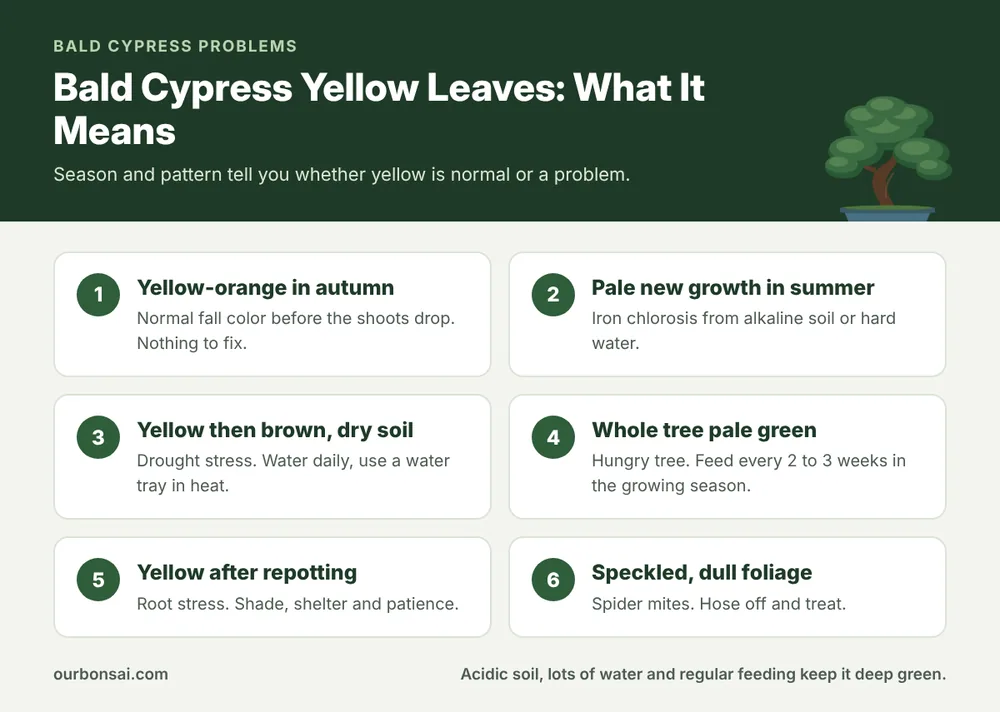
1. Alkaline soil and hard water (iron chlorosis)
This is the most common cause of yellow foliage in a well-watered bald cypress. In nature, the species grows in acidic swamp soils. In alkaline conditions, its roots cannot take up iron and manganese properly, and new growth comes in pale yellow with slightly greener veins. Bald cypress is well known for this problem in landscapes with alkaline soil.
Fix: use rain water for watering whenever possible. At the next repotting (early spring), switch to an akadama-based mix, which is slightly acidic. Our kanuma bonsai soil review covers an even more acidic option you can blend in. A chelated iron supplement applied as directed can green up the foliage while you correct the pH.
2. Drought stress
Bald cypress uses a lot of water. If the root ball dries out, the foliage yellows, then browns and crisps, often within a couple of days. This is very common in summer in small pots.
Fix: water deeply, then check at least twice daily in hot weather. In summer, stand the pot in a shallow tray with 1 to 2 cm of water. Our guide to watering bonsai in summer has more tips for heat waves.
3. Nutrient shortage
Bald cypress grows fast and is a heavy feeder. In bonsai soil, nutrients run out quickly. A hungry tree turns an even pale green to yellow, and growth slows.
Fix: feed every two to three weeks from spring until late summer. A balanced liquid fertilizer works well, as described in our guide to the best liquid fertilizer for bonsai trees.
4. Root problems
Roots damaged by winter freezing, rot in cold soggy soil or severe root pruning can cause yellow, weak growth in spring. You may also see some shoots that never fully open.
Fix: keep the tree in light shade, keep the soil moist but not waterlogged during recovery, and do not fertilize until strong new growth appears. Check our guide to root rot in bonsai if the roots smell sour or look black.
5. Kept indoors or in too much shade
Bald cypress needs full sun. In shade or indoors, growth is pale, weak and leggy. Over time, the tree turns yellow and declines.
Fix: move it outdoors into full sun. Our guide to types of outdoor bonsai trees explains why species like this cannot be kept as houseplants.
6. Spider mites
In hot, dry weather, spider mites suck sap from the foliage, which turns speckled, dull and yellowish. Look for very fine webbing among the needles.
Fix: hose the tree down thoroughly and treat with insecticidal soap or horticultural oil if needed. See our guide to spider mites on bonsai trees.
How to diagnose yellow leaves step by step
- Check the date. Late September to November in the Northern Hemisphere? Probably normal autumn color.
- Check the soil. Dry, crumbly soil points to drought. Dense, wet, sour soil points to root problems.
- Look at the new growth. Pale yellow new shoots with slightly greener veins point to iron chlorosis.
- Think about feeding. No fertilizer for months? The tree is likely hungry.
- Check the location. Less than six hours of direct sun is not enough.
- Inspect the foliage closely. Speckles and fine webs mean spider mites.
A feeding plan that keeps foliage green
Because nutrient shortage is such a common cause, a simple feeding plan prevents a lot of yellowing:
- Start when new shoots are a few centimeters long in spring, not before buds open.
- Feed every two to three weeks with a balanced fertilizer through late spring and summer. Organic pellets placed on the soil surface work well too, replaced every month or so.
- Use a fertilizer with micronutrients, including iron and magnesium, which bald cypress needs to stay deep green.
- Taper off in late summer with a lower-nitrogen feed, so the tree can harden its shoots before autumn.
- Stop in autumn and winter while the tree is dormant.
Never feed a tree right after repotting or while it is suffering from drought. Water it back to health first and wait for new growth.
Yellowing after moving the tree
A bald cypress moved from a nursery or shaded spot into full sun can briefly pale or scorch at the tips while the foliage adjusts. Move it in stages over a week or two, starting with morning sun. Trees bought in leaf in summer often show some yellowing in the first weeks for this reason. Keep the soil constantly moist and the new growth should come in green.
Quick reference
| Pattern | Most likely cause | First step |
|---|---|---|
| Even yellow-orange in autumn | Normal dormancy | Nothing, protect roots in winter |
| Pale yellow new growth in summer | Alkaline soil, hard water | Rain water, akadama, chelated iron |
| Yellow then crispy brown | Drought | Water deeply, use a water tray |
| Pale green all over | Nutrient shortage | Feed every 2 to 3 weeks |
| Weak, pale growth in spring | Root damage | Shade, steady moisture, no feed yet |
| Speckled, dull, fine webs | Spider mites | Hose off, treat |
Preventing yellow leaves on bald cypress
- Keep it outdoors in full sun all growing season
- Use an akadama-based soil, as in our bonsai soil mix ratio guide
- Water heavily in summer, with a water tray in hot spells
- Use rain water when possible
- Feed regularly from spring to late summer
- Repot every two to three years in early spring
FAQ: bald cypress bonsai yellow leaves
Why are my bald cypress needles turning yellow in summer?
Most often iron chlorosis from alkaline soil or hard water, or the soil dried out. Check the soil and the color of the new growth.
Is it normal for bald cypress to turn yellow in fall?
Yes. It is a deciduous conifer. It turns yellow-orange to copper and drops its needles every autumn.
Will yellow bald cypress foliage turn green again?
Slightly pale foliage can green up once iron uptake improves. Fully yellow foliage usually stays yellow, but new growth will come in green.
How do I make my bald cypress bonsai greener?
Full sun, slightly acidic soil, rain water, plenty of water in summer and regular feeding.
Final thoughts
Bald cypress bonsai yellow leaves in autumn are part of the tree’s natural cycle. In the growing season, they are a signal to check soil pH, watering and feeding. Fix the cause, keep the tree outside in full sun with plenty of water, and the new growth will come in bright green again. For a general look at leaf color problems, see our guide to bonsai leaves turning yellow or brown.