Jade Bonsai Winter Care: Light, Water and Cool Rest

This post contains affiliate links. As an Amazon Associate, OurBonsai earns from qualifying purchases at no extra cost to you. Read our disclosure.
In this guide
- Jade or dwarf jade?
- How cold can a jade bonsai handle?
- Jade bonsai winter care checklist
- Light: the most important factor
- Watering a jade bonsai in winter
- Soil
- Why a cool winter rest helps
- Common winter problems
- Fertilizer, pruning and repotting
- Summer outside, winter inside
- A simple winter watering test for jade
- Mistakes that kill jade in winter
- FAQ: jade bonsai winter care
- Final thoughts
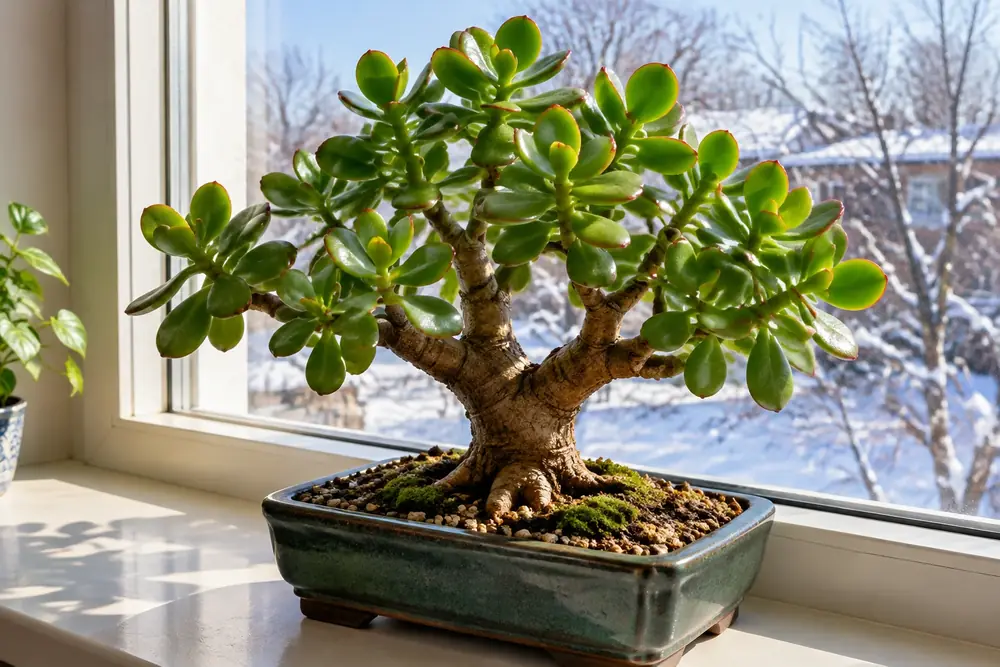
Jade bonsai winter care is mostly about restraint. Jade (Crassula ovata) is a succulent from South Africa that stores water in its thick leaves and trunk. In winter, it grows slowly and needs very little water. Most jade problems in winter come from too much kindness: too much water, too often, in a spot that is too dark. Give it bright light, a cool rest and dry soil between waterings, and it will stay healthy, and may even flower.
This guide covers temperature, light, watering and soil for jade in winter, plus a note on dwarf jade (Portulacaria afra), which is often sold under the same name.
Jade or dwarf jade?
Two different plants are sold as “jade bonsai”:
- Jade plant (Crassula ovata): larger, flat, oval leaves, often with red edges in sun. Can produce white or pink star-shaped flowers in winter.
- Dwarf jade or elephant bush (Portulacaria afra): smaller, rounder leaves on reddish stems. Very popular for bonsai.
Both are succulents and need very similar winter care. Dwarf jade is slightly less tolerant of cold and prefers to stay above about 7°C (45°F). Our review of Brussel’s dwarf jade bonsai shows what dwarf jade typically looks like.
How cold can a jade bonsai handle?
| Temperature | Effect |
|---|---|
| 15 to 24°C (59 to 75°F) | Comfortable, slow growth |
| 10 to 15°C (50 to 59°F) | Ideal cool winter rest, encourages flowering |
| 5 to 10°C (41 to 50°F) | Tolerated if kept dry |
| Below 5°C (41°F) | Risk of damage; avoid |
| Frost | Leaves turn mushy and die |
Jade can spend summer outside, but bring it in before nights drop below about 10°C (50°F).
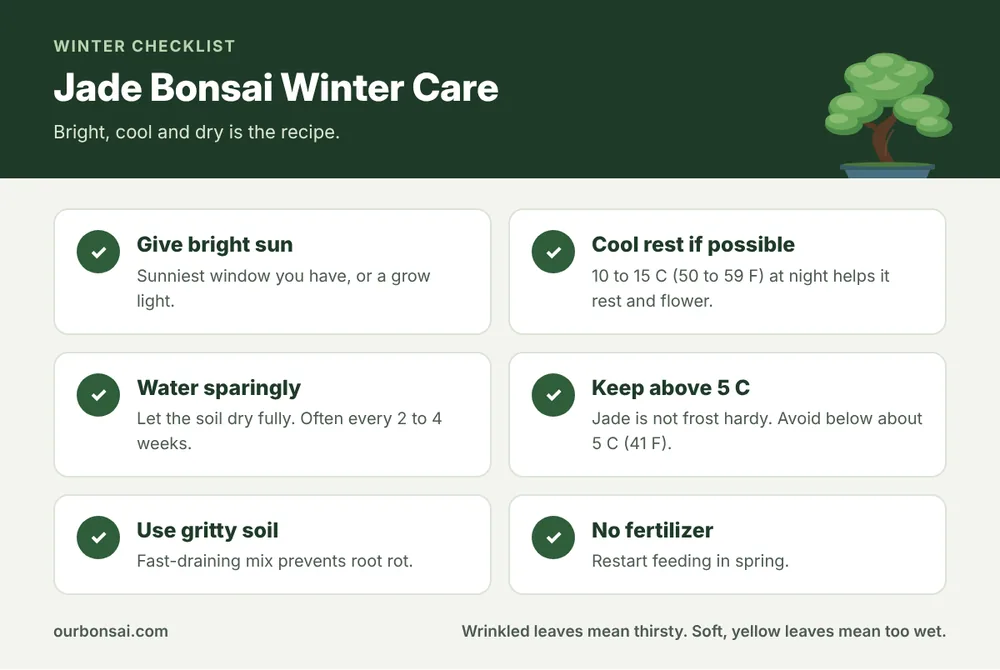
Jade bonsai winter care checklist
Light: the most important factor
Jade loves sun. In winter, give it the brightest spot you have:
- A south-facing window (north-facing in the southern hemisphere) is ideal.
- Keep it close to the glass, but away from cold drafts at night.
- If your home is dark, add a grow light for 10 to 12 hours a day. Our guide to the best grow lights for bonsai covers good options.
In low light, jade grows long, weak, stretched shoots with widely spaced leaves, which ruins the compact bonsai shape.
Watering a jade bonsai in winter
This is where most jade trees get into trouble. Jade stores water in its leaves, so it can go a long time without watering. In winter, with slow growth and less light, it needs even less.
- Let the soil dry out completely between waterings.
- Water thoroughly when you do water, until it runs from the drainage holes, then let it drain.
- Never leave the pot sitting in water.
- In a cool room, watering every two to four weeks is often enough. In a warm room, perhaps every one to two weeks.
Read the leaves:
- Plump and firm: the tree has enough water.
- Slightly wrinkled or soft and thin: it is thirsty.
- Soft, yellow, translucent or falling off easily: too much water, possibly root rot. See our guide to bonsai root rot.
Soil
A gritty, fast-draining soil is essential. Regular potting soil holds far too much water for a succulent in winter. Use a bonsai mix with plenty of pumice, lava rock or grit, or a good succulent mix. Our Bonsai Jack succulent soil review looks at one popular option, and you can find succulent bonsai soil on Amazon.
Why a cool winter rest helps
In its native habitat, jade experiences cool, dry winters. A similar rest in your home:
- Keeps growth compact instead of leggy.
- Reduces the risk of root rot.
- Encourages the clusters of small white or pink flowers that mature jades sometimes produce in late autumn and winter.
A cool, bright room, an unheated sunroom or a bright windowsill in a cooler part of the house works well. Just keep it above about 5°C (41°F).
Common winter problems
- Dropping leaves: Usually overwatering, a cold draft or very low light. Healthy jade also drops a few old leaves now and then.
- Wrinkled leaves: Thirsty. Water thoroughly.
- Red leaf edges: Normal stress coloring from bright sun or cool temperatures. Many growers like it.
- Leggy growth: Not enough light.
- White cottony spots: Mealybugs, a common jade pest. Our guide to jade bonsai pests and diseases explains treatment.
Fertilizer, pruning and repotting
- Fertilizer: None in winter. Start again in spring with a diluted fertilizer, about once a month.
- Pruning: Light pruning is possible, but spring and summer are better, as cuts heal faster. Jade branches easily from cuts. See traditional jade bonsai styles for shaping ideas.
- Repotting: Late spring or early summer. Let the roots dry for a few days before watering after repotting, as with other succulents.
Summer outside, winter inside
Jade grows best if it spends summer outdoors in a bright, sheltered spot. Introduce it to full sun gradually to avoid scorching. In autumn, bring it inside before nights get cold, check it for mealybugs, and cut back on water as it settles indoors.
A simple winter watering test for jade
If you are never sure whether to water, try this routine. Once a week, gently squeeze a lower leaf between two fingers. A firm, plump leaf means no water is needed yet. Then push a wooden chopstick to the bottom of the pot and leave it for ten minutes. If it comes out dry and clean, and the leaf has started to feel slightly soft, it is time to water. If the chopstick is damp or has soil sticking to it, wait another week. This two-part check stops almost all winter overwatering, which is the main cause of lost jade trees.
Mistakes that kill jade in winter
- Watering on a weekly schedule like other houseplants, regardless of the soil.
- Using a pot without drainage holes or a cache pot that collects water.
- Keeping it in ordinary potting compost, which stays wet for weeks in a cool room.
- Placing it in a dim corner, where it stretches and weakens.
- Leaving it on a cold windowsill behind a closed curtain at night.
FAQ: jade bonsai winter care
How often should I water a jade bonsai in winter?
Only when the soil is completely dry. In a cool room, that may be every two to four weeks.
Can a jade bonsai stay outside in winter?
Only in frost-free climates where it stays above about 5°C (41°F). Elsewhere, bring it in.
Why is my jade dropping leaves in winter?
Usually overwatering, cold drafts or not enough light. Check the soil and its position.
Will my jade bonsai flower?
Mature jade plants can flower in late autumn and winter, especially after a cool, dry rest with bright light. The Wikipedia page on Crassula ovata has more on its flowering habit.
Final thoughts
Jade bonsai winter care is easy once you resist the urge to water too much. Give it bright sun, let the soil dry out fully between waterings, keep it in a cool room above 5°C if you can, and skip fertilizer until spring. A jade cared for this way stays compact and healthy, and may reward you with flowers. If you are choosing a new tree, see our guide to the real jade bonsai tree as an indoor plant.