Is My Cherry Blossom Bonsai Dying? Signs and How to Save It

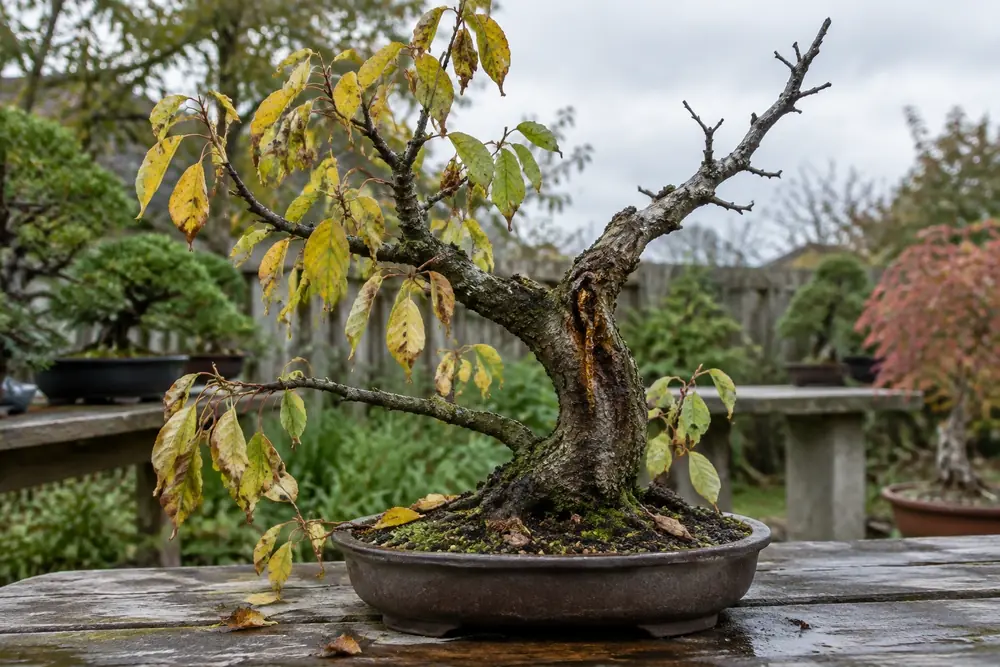
A cherry blossom bonsai dying is a real worry, because flowering cherries are less forgiving than tough species like elms or junipers. They are prone to root rot in wet soil, vulnerable to fungal and bacterial diseases through wounds, and they suffer quickly if kept indoors. But not every brown leaf means the end. In autumn, cherries naturally color and drop their leaves. And even a tree in real trouble can often be saved if you catch the problem early and the roots are still healthy.
In this guide
This guide explains how to tell whether your cherry bonsai is dying or just dormant, the most common causes of decline and a practical rescue plan.
Dying or just dormant?
Cherry blossom bonsai, usually Japanese flowering cherry (Prunus serrulata) or related species, are deciduous. In autumn, leaves turn yellow, orange or red and fall. Through winter the tree is bare. That is normal.
Warning signs that need action:
- Leaves wilting, yellowing or browning in spring or summer
- Branches dying back one by one
- Amber gum oozing from the bark
- Sunken, dark or cracked patches of bark
- Leaves with a silvery sheen
- Buds failing to open in spring
- Soil that smells sour or stays wet for days
How to check if your cherry bonsai is alive
The scratch test
Gently scratch a small patch of bark on a twig with your fingernail. Bright green and moist underneath means alive. Brown and dry means that part is dead. Work toward the trunk until you find green.
Check the buds
In winter, healthy cherry buds are plump and firm. Shriveled, dry or hollow buds are a bad sign.
Check the roots
Ease the tree out of its pot. Healthy roots are firm and light brown inside. Rotting roots are dark, soft and smell sour.
7 reasons a cherry blossom bonsai is dying
1. Root rot
The most common killer of cherry bonsai. Prunus roots are fleshy and rot quickly in dense, waterlogged soil. Leaves yellow and wilt even though the soil is wet, and branches start to die back.
Fix: remove the tree from the pot, cut away dark, mushy roots back to firm tissue, and repot into a gritty, fast-draining mix. Our guide to root rot in bonsai explains the process step by step, and our bonsai soil mix ratio guide shows how to build a better mix.
2. Bacterial canker and gummosis
Cherries are prone to bacterial canker. Sunken, dark patches appear on the bark, often with amber gum oozing out, and the branch above the canker wilts and dies. It enters through wounds and leaf scars, especially in cool, wet weather.
Fix: in dry summer weather, cut out infected branches well below the visible damage, back to healthy wood. Sterilize your tools between cuts and seal the wounds. Our guide to bacterial diseases in bonsai trees covers this in more detail.
3. Silver leaf disease
A fungal disease that gives leaves a silvery sheen, then causes branch dieback. The wood of affected branches shows a dark stain when cut. It enters through pruning wounds made in autumn or winter. The RHS guide to silver leaf explains how it spreads.
Fix: cut affected branches back until the wood shows no staining, in dry summer weather, and seal the cuts. Avoid pruning cherries in autumn and winter.
4. Drought
A cherry in a small pot can dry out in a single hot afternoon. Leaves wilt, crisp and drop, and flowers for next year may fail to form.
Fix: soak the pot in a basin of water for ten minutes, then check daily, twice on hot days. Our guide to watering bonsai in summer helps you get through heat waves.
5. Kept indoors
Cherries are outdoor trees that need full sun and a cold winter rest to grow and flower. Indoors, they weaken, drop leaves and eventually die.
Fix: move the tree outdoors into sun, introducing it gradually if it has been inside a long time. Our guide to types of outdoor bonsai trees explains why.
6. Winter root damage
Hardy in the ground, cherries are still vulnerable in a small pot, where roots freeze much harder. Damage often shows only in spring, when buds fail to open or leaves collapse soon after opening.
Fix: in winter, protect the pot by placing it on the ground in a sheltered spot, mulching around it, or moving it into an unheated shed or garage.
7. Pests
Aphids cluster on new shoots and curl the leaves. Borers tunnel into the trunk, leaving small holes and sawdust. Scale insects form bumps on twigs. All weaken the tree.
Fix: treat aphids with a strong spray of water or insecticidal soap. See our guide to aphids on bonsai trees. Borer damage needs prompt removal of affected wood.
How to save a dying cherry blossom bonsai
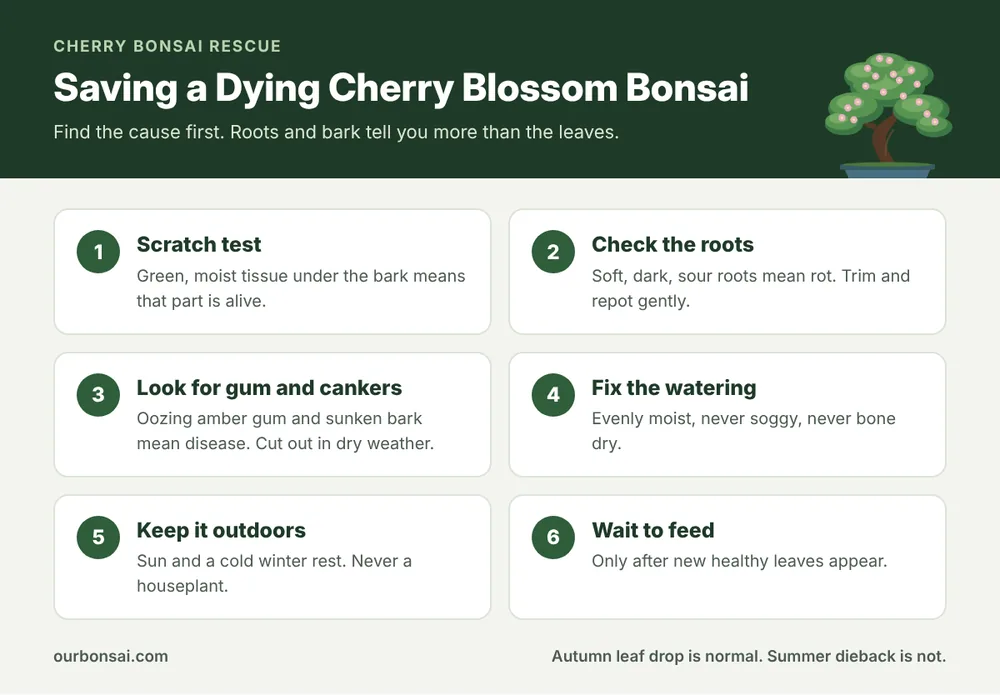
- Diagnose first. Scratch test, roots, bark and leaves.
- Fix the roots if needed. Repot only if roots are rotting.
- Cut out diseased wood in dry weather, with sterilized tools, and seal every cut.
- Place it correctly. Outdoors, in morning sun and light afternoon shade while it recovers.
- Water carefully. Evenly moist, never soggy and never bone dry.
- Do not feed until new healthy leaves appear, then feed lightly.
- No pruning for shape, no wiring, no repotting for style until next season.
- Be patient. Recovery can take the rest of the season.
Cherry bonsai recovery timeline
| Time after fixing the cause | What to expect |
|---|---|
| 1 to 2 weeks | Wilting stops, no new dieback |
| 3 to 6 weeks | New buds swell on healthy branches (in the growing season) |
| Rest of the season | New leaves harden off, growth slowly resumes |
| Next spring | Leaf-out, possibly few or no flowers |
| Following spring | Normal flowering if the tree has fully recovered |
Do not expect flowers the spring after a major rescue. The tree needs a full season of healthy growth to set flower buds again. Removing any flower buds that do form can even help it recover faster, because flowering uses a lot of energy.
When it is too late
If the scratch test finds no green anywhere, including the base of the trunk, and the roots are completely rotten or dry and hollow, the tree has most likely died. For a deciduous cherry found bare in winter, wait until late spring before making that call, as buds can open later than expected after stress.
Preventing problems next year
| Habit | Prevents |
|---|---|
| Gritty, fast-draining soil | Root rot |
| Prune only after flowering and in dry summer weather | Canker and silver leaf |
| Sterilize tools and seal cuts | Disease spread |
| Daily soil checks in summer | Drought damage |
| Outdoors all year, root protection in winter | Weak growth, freeze damage |
| Check new shoots for aphids in spring | Pest damage |
FAQ: cherry blossom bonsai dying
Why are the leaves on my cherry bonsai turning brown in summer?
Most often the soil dried out, or the roots are rotting. Check the soil and roots first, then the bark for canker.
What is the gum oozing from my cherry bonsai?
Gummosis. It can come from injury or stress, but sunken bark and dying branches nearby point to bacterial canker. Cut out affected wood in dry weather.
Can a cherry bonsai recover from root rot?
Yes, if enough healthy roots remain. Trim the rotten roots, repot into gritty soil, water carefully and avoid feeding until it grows again.
Is it normal for my cherry bonsai to lose its leaves?
In autumn, yes. Cherries are deciduous. In spring or summer, leaf loss is a warning sign.
Final thoughts
A cherry blossom bonsai dying is usually suffering from wet roots, disease entering through wounds, drought or life indoors. Check the roots and bark, fix the cause, and give the tree stable outdoor conditions while it recovers. Prune only after flowering and in dry weather, use gritty soil, and your cherry has every chance to bloom again. For a wider look at branch problems on any species, see our guide on why bonsai branches are dying.