Is My Olive Bonsai Dying? Signs, Causes and How to Save It

An olive bonsai dying usually shows it by dropping lots of leaves, turning dull and gray-green, or wilting even when the soil is wet. The good news is that olives are among the toughest trees you can grow, and they bud back from old, bare wood. The most common causes are too little light (especially indoors in winter), overwatering and root rot, hard frost on the roots, and a sudden change of location. Check that the trunk is still green under the bark, fix the cause, and give the tree time and as much light as possible.
In this guide
- How to tell if your olive is dying or just stressed
- Warning signs of an olive bonsai in trouble
- The most common reasons an olive bonsai dies
- How to save a dying olive bonsai step by step
- Normal leaf drop vs a dying olive
- Recovery time
- Preventing problems in the future
- Common mistakes
- FAQ: olive bonsai dying
- Final thoughts
This guide shows you how to diagnose the problem and how to bring your olive back.
How to tell if your olive is dying or just stressed
Olives react to stress by shedding leaves. That looks alarming, but a bare olive is often very much alive. Two quick checks:
- Scratch test. Gently scrape a small patch of bark with your fingernail on the trunk and a few branches. Green and moist underneath means alive. Brown and dry means that part has died.
- Bend test. Living twigs bend. Dead twigs snap and look dry inside.
If the trunk is green under the bark, the tree can recover, even if every leaf has fallen. Olives in old orchards regrow from stumps, and the Wikipedia article on the olive notes how readily the tree resprouts after damage.
Warning signs of an olive bonsai in trouble
| Sign | What it often means |
|---|---|
| Heavy leaf drop indoors in winter | Not enough light, dry heat |
| Yellow leaves dropping, soil wet for days | Overwatering, poor drainage |
| Leaves wilting while soil is wet | Root rot |
| Leaves curling and crisping, soil dry | Underwatering, heat |
| Dark, wet-looking leaves after a cold night | Frost damage |
| Sticky leaves, small bumps on stems | Scale insects |
| Leaves dropping soon after you bought or moved it | Shock from a new location |
The most common reasons an olive bonsai dies
1. Not enough light
This is the top cause for indoor olives. Olives are Mediterranean sun-lovers that need several hours of direct sun. On a winter windowsill, light levels are a fraction of what they need. The tree drops leaves to save energy, grows weak, pale shoots and gradually declines. Our guide on how much light a bonsai tree needs explains how big that gap is. A good grow light for bonsai can make the difference.
2. Overwatering and root rot
Olives tolerate drought far better than wet feet. In dense soil or a pot without drainage, the roots suffocate and rot. You will see yellowing, then leaf drop, often with a sour smell from the soil. Our guide to root rot in bonsai covers the signs and treatment.
3. Frost on the roots
Olive branches can handle light frost, but roots in a small pot freeze far more easily than roots in the ground. Below about -5 °C (23 °F), or in a long cold spell, an unprotected pot can freeze solid and the roots die. Our pomegranate bonsai winter care guide covers a similar Mediterranean tree and shows how to protect pots.
4. Dry heat indoors
Radiators and heaters dry the soil and air quickly. Leaves curl, crisp and drop. Keep the tree away from heat sources and check the soil daily.
5. Pests
Scale insects are the most common olive pest. They look like small brown bumps on stems and leaves and leave sticky honeydew. Our guide on scale on bonsai trees shows how to remove them.
6. A sudden move
Moving an olive from a sunny garden center greenhouse to a dim living room, or from outdoors to indoors in autumn, often triggers a wave of leaf drop. Make changes gradually where possible.
How to save a dying olive bonsai step by step
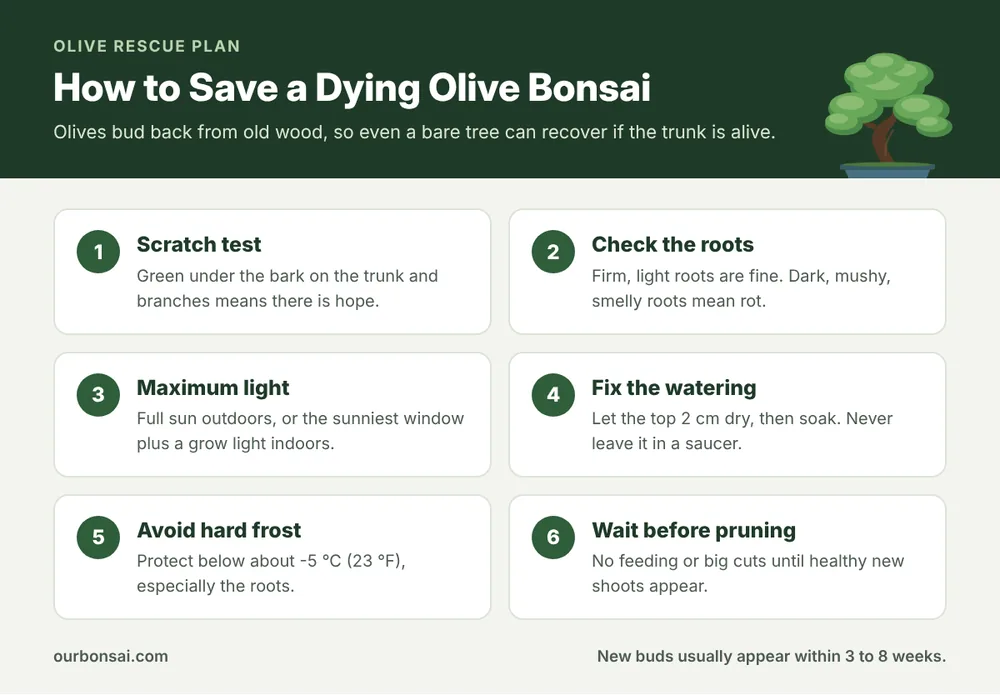
- Confirm it is alive. Do the scratch test. Mark dead branches to remove later.
- Check the roots. Slide the tree out of the pot. If roots are dark and mushy, trim them back to firm tissue with clean scissors and repot into fresh, gritty soil. Our bonsai soil mix ratio guide shows a suitable mix. If the roots look fine, put the tree back without disturbing them.
- Give it light. Outdoors in full sun from spring to autumn. Indoors, the sunniest window plus a grow light for 12 to 14 hours a day.
- Fix the watering. Water only when the top 2 cm of soil is dry, then soak the whole pot. Never leave it standing in water.
- Protect it from extremes. No hard frost on the roots, no radiators, no hot afternoon sun on a freshly repotted tree.
- Treat pests if you found any.
- Be patient. Do not fertilize, prune hard or move the tree around until you see healthy new shoots.
Normal leaf drop vs a dying olive
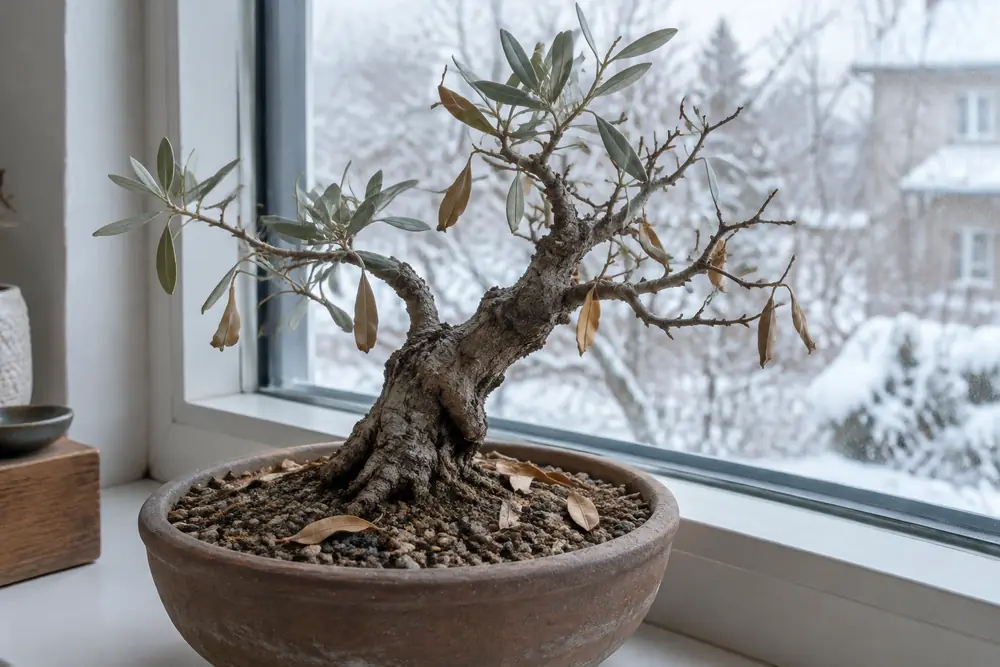
Olives are evergreen, but each leaf lives only two or three years. In spring, when new shoots open, a healthy olive drops a share of its oldest leaves, which turn yellow first. That is normal renewal. The warning signs are heavy drop in autumn or winter, drop of young leaves, or leaves falling while new shoots fail to appear.
Recovery time
If the roots were healthy and the cause was light or a move, olives often push new buds within three to six weeks once conditions improve. After root rot or frost damage, it may take two months or more, and recovery is often faster once spring arrives. Once the tree is growing strongly, start regular feeding and remove any branches that stayed dead.
Preventing problems in the future
- Keep olives outdoors in full sun for as much of the year as your climate allows.
- Use a free-draining, gritty soil and a pot with good drainage holes.
- Water by checking the soil, not by the calendar.
- Protect the pot from hard frost in winter, or keep the tree in a cool, bright, frost-free room.
- Inspect regularly for scale.
For other species that like similar conditions, see our guide to types of outdoor bonsai trees.
Common mistakes
- Keeping an olive indoors all year in a dim room. It slowly starves of light.
- Watering more because leaves are falling. Check the soil first.
- Bringing a frozen tree into a hot room. Thaw it slowly in a cool place.
- Cutting off bare branches immediately. Wait for the scratch test and new buds.
FAQ: olive bonsai dying
Why is my olive bonsai losing all its leaves?
Most often because of low light indoors, overwatering, cold or a recent move. Check light and soil moisture first.
Can an olive bonsai come back from no leaves?
Yes. If the trunk and branches are green under the bark, olives readily re-bud from old wood.
Can olive bonsai live indoors?
Only with very bright light, ideally a sunny window plus a grow light, and preferably a cool winter rest. They do much better outdoors.
How cold can an olive bonsai tolerate?
The branches can take light frost, but roots in a pot should be protected below about -5 °C (23 °F).
Should I repot a dying olive bonsai?
Only if the roots are rotting or the soil stays wet for days. Otherwise, fix the light and watering first and wait for spring to repot, when the tree can regrow roots quickly.
Final thoughts
An olive bonsai dying is usually reacting to too little light, wet roots or cold. Check that the trunk is alive, look at the roots, then give the tree strong light, careful watering and protection from extremes. Olives are survivors, and with the cause fixed, most will reward your patience with a fresh flush of silvery leaves.