Olive Bonsai Yellow Leaves: Causes and How to Fix Them

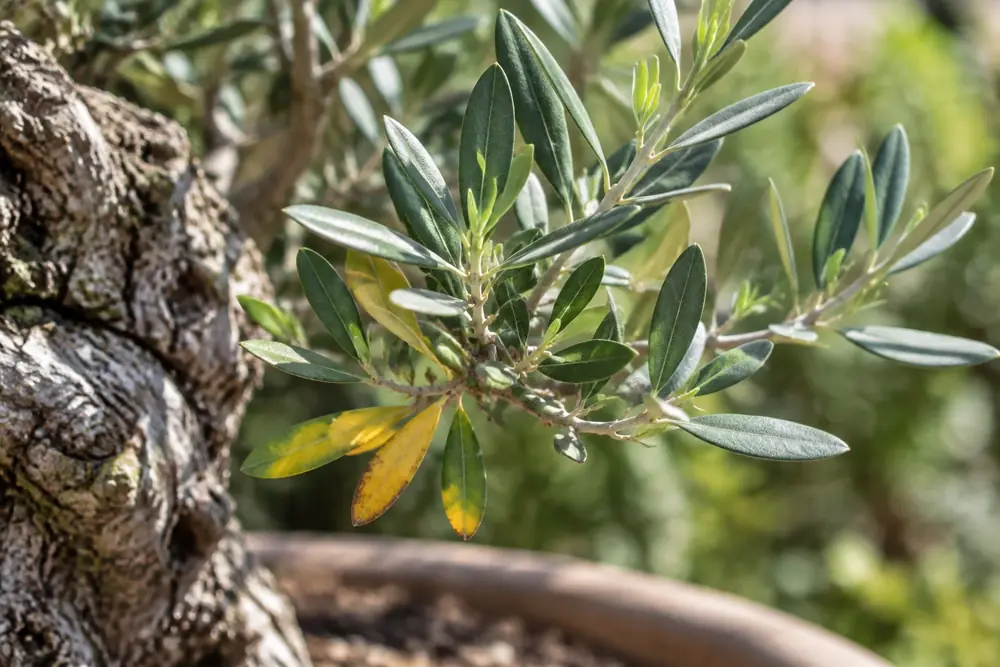
Seeing olive bonsai yellow leaves does not always mean something is wrong. Olives are evergreen, but each leaf only lives about two to three years. Every spring, as new shoots grow, the tree sheds a share of its oldest leaves, and those turn yellow first. That is healthy renewal. Yellowing becomes a problem when many leaves turn yellow at once, when young leaves are affected, or when it happens indoors in winter. The usual causes are wet roots, too little light, a lack of nutrients or stress after repotting.
In this guide
This guide helps you read the yellowing and fix the cause.
Normal yellowing: olive leaf renewal
The European olive (Olea europaea) keeps its leaves longer than most broadleaf trees, but not forever. The Wikipedia article on the olive notes the leaves are long-lived and leathery. When the tree pushes new growth in spring, older leaves at the base of last year’s shoots and on the inside of the canopy turn yellow and fall.
Signs it is normal:
- It happens mostly in spring or early summer.
- The yellow leaves are the oldest ones, low on the shoots or inside the tree.
- The tree is producing healthy new shoots at the same time.
- Only a modest share of leaves is affected.
Pick off the yellow leaves and carry on.
When yellow leaves are a problem
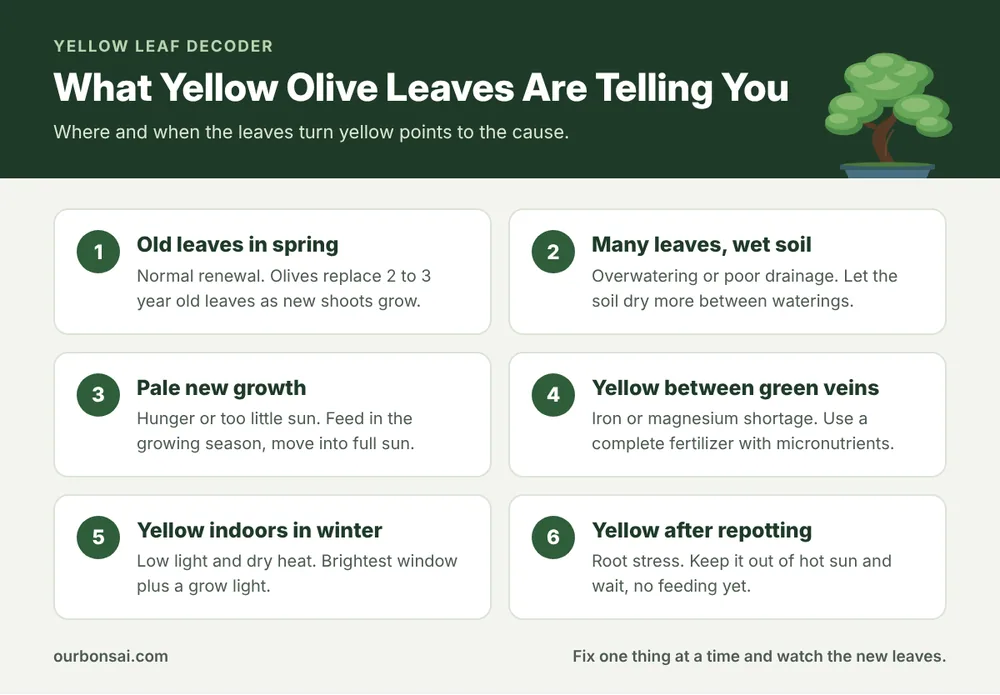
| Pattern | Most likely cause | Fix |
|---|---|---|
| Many leaves yellow at once, soil wet | Overwatering, poor drainage | Gritty soil, water only when the top dries |
| Pale, yellow-green new leaves | Lack of nitrogen or sun | Feed regularly, full sun |
| Yellow between green veins on new leaves | Iron or magnesium deficiency | Complete fertilizer with micronutrients |
| Yellow and dropping indoors in winter | Low light, dry heat | Brightest window, grow light, away from heaters |
| Yellow after repotting | Root disturbance | Shade, patience, no feeding for a month |
| Yellow with sticky leaves or bumps | Scale insects | Remove and treat |
1. Overwatering
This is the most common harmful cause. Olives evolved on dry, rocky ground. In dense soil that stays wet, roots run short of oxygen and stop taking up nutrients, and leaves yellow and drop. A sour smell or soft roots point to root rot in bonsai. Switch to a gritty mix. Our bonsai soil mix ratio guide shows how.
2. Not enough light
Olives need several hours of direct sun. In shade or indoors, new leaves come in pale, and the tree sheds older leaves to save energy. Our guide on how much light a bonsai tree needs explains why indoor windows often fall short. A grow light for bonsai helps in winter.
3. Nutrient deficiency
Bonsai soil contains very few nutrients. An olive that has not been fed for a season turns pale yellow-green, especially on new growth. Yellowing between green veins, called chlorosis, usually points to iron or magnesium shortage. Feed every two weeks with a balanced liquid fertilizer during the growing season, or use slow-release pellets. Our guide on bonsai fertilizer: pellets or liquid helps you choose.
4. Winter indoors
Many olive owners bring their trees inside for winter. Warm, dim rooms with dry air are hard on olives. Yellowing and leaf drop between November and February are common. If possible, keep the tree in a cool, bright, frost-free room around 5 to 15 °C (40 to 60 °F), where it can rest. Our guide on watering indoor bonsai in winter has tips.
5. Repotting stress
Some yellowing in the weeks after repotting is normal, especially if many roots were cut. Keep the tree out of hot sun and wind, water carefully and wait about a month before feeding.
6. Pests
Scale insects suck sap from olive stems and leaves, causing yellowing and sticky honeydew. Look for small brown bumps. Our guide on scale on bonsai trees explains removal.
How to fix yellow leaves step by step
- Check the season and position. Old leaves in spring? Relax and remove them.
- Check the soil. Push a finger 2 cm into the soil. Wet means stop watering until it dries.
- Check the light. Move the tree to the sunniest spot you have.
- Check feeding. If you have not fed for months, start in the growing season.
- Look for pests on stems and leaf undersides.
- Remove the yellow leaves so you can see whether new yellowing appears.
- Give it two to three weeks before changing anything else.
Yellow leaves on young olive bonsai and cuttings
Young olives grown from cuttings or nursery liners often show more yellowing than mature trees. Their small root systems are easily upset by changes in watering, and many are sold in peat-based soil that stays wet. If your young olive yellows, check the soil first. Moving it into a free-draining mix in spring, a little deeper than a show pot, helps it grow a strong root system. Young trees also respond quickly to feeding, so a hungry young olive greens up within a few weeks once regular fertilizer starts.
Variegated and wild olives
Some ornamental olive varieties have naturally pale or variegated leaves, and wild olive types (Olea europaea var. sylvestris) have smaller, darker leaves. Compare new growth with older healthy leaves on the same tree before deciding that pale color is a problem.
Yellow leaves through the year
- Spring: some old leaf drop is normal as new shoots open. Pale new shoots mean it is time to feed.
- Summer: yellowing is uncommon outdoors. If it happens, check for wet roots after heavy rain or for pests.
- Autumn: a few old leaves may yellow. Reduce feeding toward the end of the season.
- Winter: indoor olives often yellow from low light. Outdoors in mild climates, cold soil can slow roots and cause some yellowing.
Preventing yellow leaves on olive bonsai
- Keep the tree outdoors in full sun for as much of the year as your climate allows.
- Use gritty, fast-draining soil and a pot with good drainage holes.
- Water deeply, then let the top dry before watering again.
- Feed regularly from spring to early autumn.
- Give it a cool, bright winter rest instead of a warm, dark living room.
For other drought-loving trees with similar needs, see our guide to types of outdoor bonsai trees.
FAQ: olive bonsai yellow leaves
Is it normal for olive bonsai leaves to turn yellow?
Yes, for some older leaves in spring when new growth appears. Widespread or winter yellowing points to a care problem.
Will yellow olive leaves turn green again?
No. Remove them. Judge your fixes by the color of new leaves.
Should I fertilize an olive bonsai with yellow leaves?
If the roots are healthy and the tree is growing, yes. If the soil is soggy or roots are damaged, fix that first.
Why is my indoor olive bonsai turning yellow in winter?
Low light, warm temperatures and dry air. Move it to a cooler, brighter spot and add a grow light.
Can hard tap water cause yellow leaves on an olive?
Rarely. Olives tolerate hard, alkaline water well, unlike azaleas. If you see yellowing between green veins, it is more likely a lack of iron or magnesium in the fertilizer than a problem with the water.
Final thoughts
Olive bonsai yellow leaves are often just old leaves being replaced in spring. If yellowing is widespread, look first at watering and light, then at feeding and pests. Fix one thing at a time and the next flush of growth will come in a healthy silvery green.