Bonsai Leaf Drop After Moving: Why It Happens and What to Do


Bonsai leaf drop after moving is one of the most common things new owners see. You bring a tree home or move it to a different window, and within a few days leaves start to yellow and fall. It looks alarming, but in most cases the tree is simply adjusting. A move changes light, temperature and humidity all at once, and many species, especially ficus, schefflera, serissa and Fukien tea, react by shedding leaves that were grown for the old conditions. Keep the tree in one good spot, water carefully, and it will usually re-leaf within a few weeks.
In this guide
- Why moving causes leaf drop
- What changes in a move
- Which bonsai drop leaves most after moving
- What to do after moving your bonsai
- Bringing home a new bonsai: the first month
- Moving between indoors and outdoors
- How long does it take to recover?
- When leaf drop is more than a move
- Common mistakes
- FAQ: bonsai leaf drop after moving
- Final thoughts
This guide explains why it happens, what you can do to reduce it and when it is a sign of something more serious.
Why moving causes leaf drop
Leaves are built for the conditions they grew in. A leaf grown in bright greenhouse light has a different structure from one grown in a dim living room. When the light suddenly drops, those leaves are no longer worth keeping, so the tree sheds them and grows new ones suited to the new spot. Plant scientists call the shedding process abscission.
The same happens in reverse. A tree moved from shade into strong sun can scorch and drop leaves because they are not adapted to the extra light.
What changes in a move
| Factor | Typical change | Effect on the tree |
|---|---|---|
| Light | Greenhouse or garden to indoor window | Sudden drop in light, older leaves shed |
| Temperature | Steady nursery to drafty room | Stress from swings, especially at night |
| Humidity | Humid greenhouse to heated home | Leaves lose water faster, edges crisp |
| Watering | Daily nursery routine to irregular | Soil too wet or too dry |
| Travel | Dark box, heat or cold in transit | Shock before it even arrives |
Which bonsai drop leaves most after moving
- Ficus: famous for dropping leaves after a change in light. Usually recovers quickly. Our Golden Gate ficus bonsai care guide has more.
- Serissa: very sensitive to any change. Even turning the pot can trigger leaf drop.
- Fukien tea: dislikes moves and dry air.
- Schefflera: drops leaves when moved to a darker or colder spot. See our dwarf schefflera bonsai care guide.
- Outdoor trees brought indoors: junipers, maples and other outdoor species decline indoors no matter how carefully they are moved.
What to do after moving your bonsai
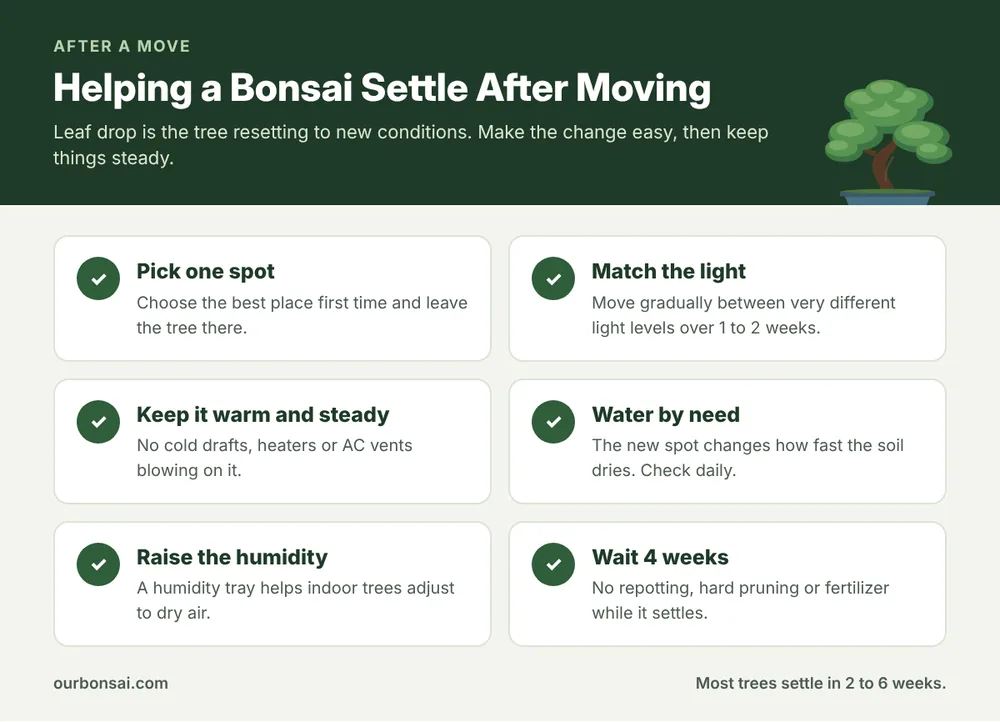
- Choose the right spot the first time. For indoor tropical trees, that means the brightest window you have, close to the glass but out of cold drafts. Our guide on the best place for a bonsai tree helps you decide.
- Leave it there. Every move restarts the adjustment. Resist the urge to try different places.
- Check the soil daily. A new spot dries the soil at a different rate. Water only when the top 1 cm feels dry.
- Raise the humidity. Place the pot on a humidity tray, especially in heated rooms.
- Keep temperatures steady. Avoid radiators, heaters, AC vents and doors that open to the outside.
- Do not repot, prune hard or fertilize for about four weeks. The tree needs its energy to adjust.
- Pick up fallen leaves and keep an eye on new buds.
Bringing home a new bonsai: the first month
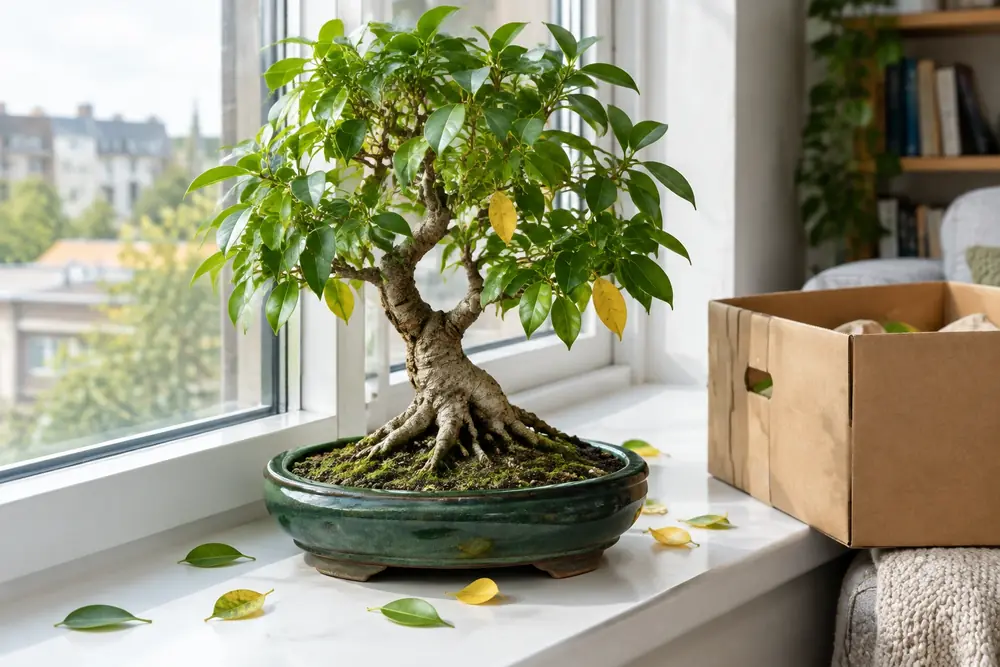
New trees from a garden center, a market stall or an online shop have often been through a lot: a greenhouse, a truck, a store shelf and a dark box. Here is a simple plan for the first four weeks.
Week 1. Unpack the tree straight away. Check the soil and water if it is dry. Put it in its final spot. Look under the leaves and along the stems for pests. Remove any glued-on stones from the soil surface so water can reach the roots.
Week 2. Expect some leaves to yellow and fall. Pick them up, keep checking the soil daily and leave the tree where it is.
Week 3. Leaf drop usually slows. Look closely at the branch tips and leaf joints for small swelling buds.
Week 4. New leaves start to open on most tropical species. You can now begin light feeding. Plan a repot into proper bonsai soil for next spring if the tree came in dense soil.
Moving between indoors and outdoors
Many bonsai spend summer outside and winter inside. Each switch is a move, so do it gradually:
- Moving outside in spring: start in shade for a week, then morning sun, then full position. Wait until nights stay above about 10 °C (50 °F) for tropical trees.
- Moving inside in autumn: do it before the heating comes on full blast and before nights get cold. Check for pests first so you do not bring them into the house. Our guide on how long you should quarantine a new bonsai explains why this matters.
How long does it take to recover?
Most trees stop dropping leaves within two to three weeks and start pushing new buds within four to six weeks. Ficus and schefflera are usually fastest. Serissa and Fukien tea can take longer. As long as the branches are green under the bark, the tree is alive.
When leaf drop is more than a move
The move may not be the whole story if:
- Leaves keep dropping after six weeks. Check light levels and watering.
- The soil stays wet for days. Overwatering is likely. See our guide to root rot in bonsai.
- Leaves are sticky or speckled. Pests may have come with the tree.
- The tree is an outdoor species kept indoors. It needs to go back outside.
For other reasons trees shed leaves, see our guide on why a bonsai loses leaves suddenly.
Common mistakes
- Moving the tree around to find a better spot. Each move causes more drop.
- Watering more to “help”. Wet soil plus fewer leaves is a recipe for rot.
- Repotting a newly bought tree right away. Let it settle first, then repot in spring.
- Feeding to boost recovery. Wait until new growth appears.
FAQ: bonsai leaf drop after moving
Is it normal for a bonsai to drop leaves after moving?
Yes. Many species shed leaves when light, temperature or humidity change. It usually stops within a few weeks.
How long does bonsai leaf drop after moving last?
Typically two to three weeks, with new buds appearing in four to six weeks.
Should I water more when my bonsai drops leaves after a move?
No. Fewer leaves means less water use. Check the soil and water only when it starts to dry.
Can I prevent leaf drop when moving a bonsai?
You can reduce it by choosing a bright, stable spot, making light changes gradually and keeping humidity up.
Should I turn my bonsai to give all sides light?
Turning the pot a quarter turn every week or two is fine for most trees once they have settled. For very sensitive species like serissa, turn less often and in smaller steps.
My bonsai lost all its leaves after moving. Is it dead?
Not necessarily. Scratch a little bark on a branch. Green underneath means it is alive and will likely re-bud in a few weeks.
Final thoughts
Bonsai leaf drop after moving is usually a tree adjusting, not a tree dying. Choose a bright, steady spot, leave it there, water by need and keep the air humid. Hold off on repotting and feeding, and in a few weeks you should see new leaves made for their new home. For more on indoor care, see our guide on how to take care of a bonsai tree inside.