Pomegranate Bonsai Yellow Leaves: Causes and Fixes

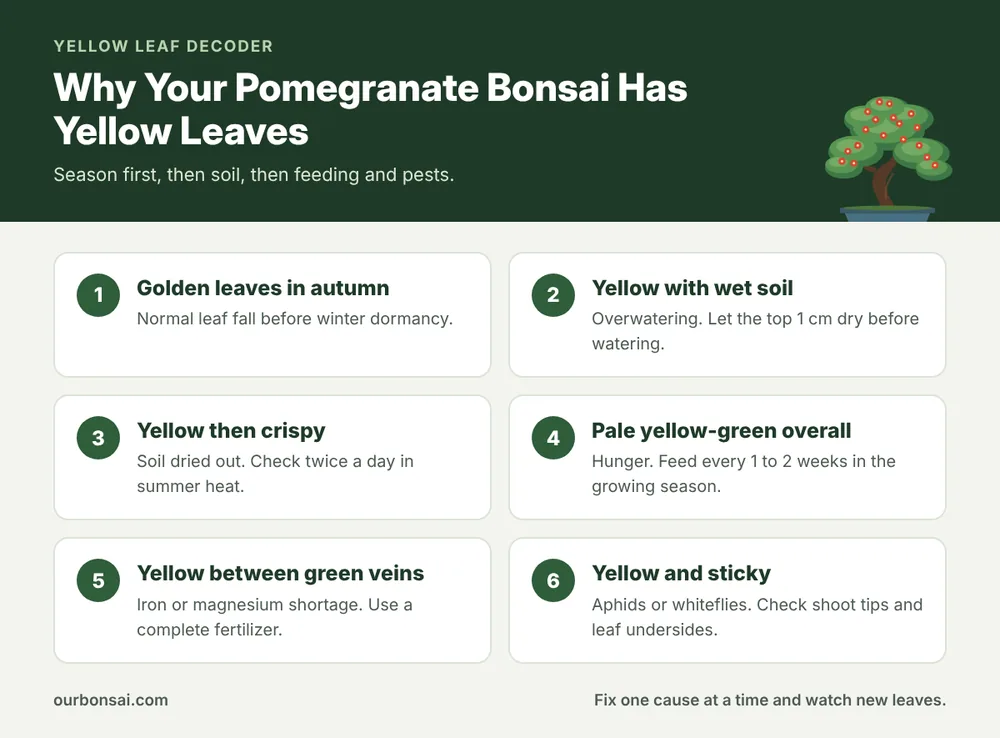
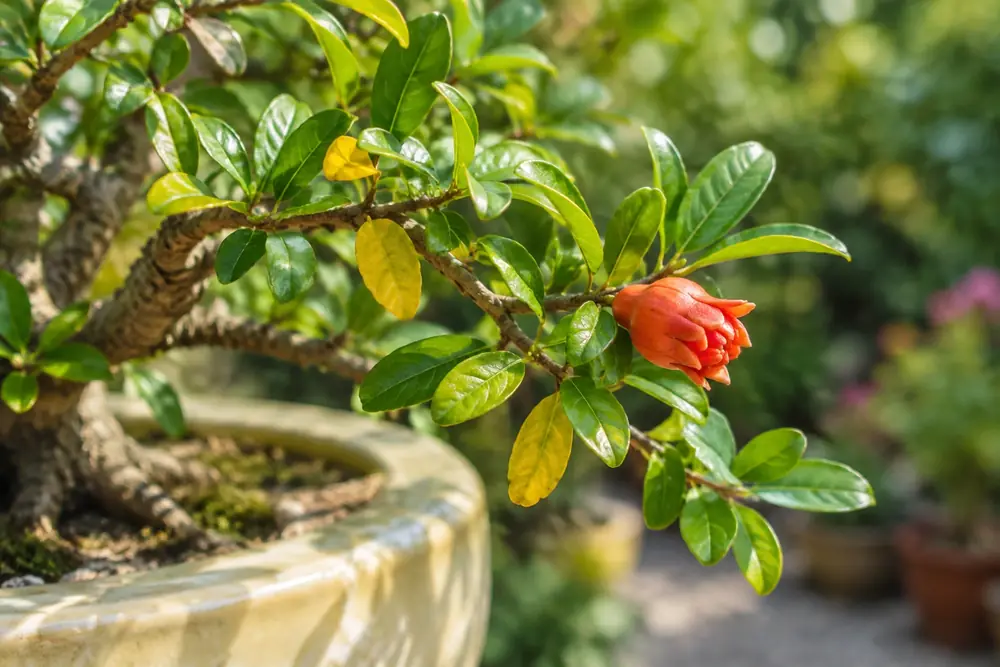
Spotting pomegranate bonsai yellow leaves is worrying in spring and summer but completely normal in autumn. Most pomegranates are deciduous, so their leaves turn a lovely golden yellow and fall before winter. In the growing season, though, yellow leaves point to a problem: usually overwatering or poor drainage, the soil drying out, a lack of nutrients, too little light or sap-sucking pests like aphids and whiteflies. Look at the season, then at the soil and the pattern of yellowing, and you will usually find the cause quickly.
In this guide
This guide walks through each cause and how to fix it.
Normal autumn yellowing
The pomegranate (Punica granatum) is a deciduous shrub in most climates. The Wikipedia article on pomegranate notes its leaves turn yellow before falling in autumn. On a bonsai this usually happens from October to November in the northern hemisphere, as nights cool and days shorten.
Signs it is normal:
- It is autumn and nights are getting cooler.
- Leaves across the whole tree turn yellow fairly evenly.
- The branches stay flexible and green under the bark.
- Buds are visible and firm at the leaf joints.
Reduce watering as the leaves fall and prepare for winter. Our pomegranate bonsai winter care guide covers the next steps.
Pomegranate bonsai yellow leaves in spring and summer
| Pattern | Most likely cause | Fix |
|---|---|---|
| Yellow, soft leaves, soil wet for days | Overwatering, poor drainage | Gritty soil, water by need |
| Yellow then crispy, soil dry | Drought | Check twice daily in summer |
| Pale yellow-green overall | Nitrogen shortage | Regular feeding |
| Yellow between green veins | Iron or magnesium shortage | Complete fertilizer with micronutrients |
| Pale, thin growth | Low light | Full sun outdoors |
| Yellow, sticky leaves, curled tips | Aphids or whiteflies | Treat pests |
| Yellow after repotting | Root stress | Shade, patience |
1. Overwatering
Pomegranates are thirsty in summer, but they still need air around their roots. Dense soil that stays wet, a pot without good drainage or a saucer full of water all lead to yellowing, starting low on the tree. A sour smell from the soil suggests root rot in bonsai.
2. Underwatering
A flowering, fruiting pomegranate in a small pot can dry out in an afternoon. Leaves yellow, then crisp at the edges, and flowers and fruit drop. Water thoroughly and check the soil morning and afternoon in hot weather. Our guide on watering bonsai in summer has more tips.
3. Nutrient shortage
Pomegranates are hungry trees, especially when flowering and fruiting. A tree that is not fed regularly turns pale yellow-green. Yellowing between green veins, known as chlorosis, usually points to iron or magnesium shortage. Feed every one to two weeks with a balanced liquid fertilizer, or use slow-release pellets. Our best bonsai plant food guide compares options.
4. Too little light
Pomegranates need full sun to grow strongly and flower. In shade or indoors, leaves turn pale and the tree drops older leaves. Move outdoor trees into the sunniest spot you have. For indoor trees, a grow light for bonsai helps.
5. Pests
Aphids and whiteflies cluster on soft new shoots and the undersides of leaves. They suck sap, leaving leaves yellow, curled and sticky. Our guides to aphids on bonsai trees and whiteflies on bonsai trees explain treatment.
6. Repotting stress
Some yellowing after a spring repot is normal while the roots regrow. Keep the tree out of hot afternoon sun and wind for two weeks and wait about a month before feeding.
7. Heavy fruiting
A young tree carrying several fruits can run short of energy and nutrients, and older leaves turn yellow. Remove some of the fruit and feed more regularly.
How to fix yellow leaves step by step
- Check the season. Autumn? Probably normal.
- Check the soil. Wet for days means water less. Bone dry means water more consistently.
- Check the light. Full sun outdoors is best.
- Check feeding. No fertilizer for a month or more in summer? Start feeding.
- Look for pests on shoot tips and leaf undersides.
- Remove yellow leaves so you can see whether new yellowing appears.
- Change one thing at a time and give it two to three weeks.
Feeding a pomegranate to prevent yellow leaves
Because pomegranates grow, flower and fruit in the same season, they need steady feeding from spring to late summer.
- Spring (as leaves open): a balanced fertilizer, such as an equal NPK feed, every one to two weeks, or organic pellets on the soil surface once a month.
- Early summer (flowering): keep feeding, but switch to a fertilizer slightly lower in nitrogen and higher in phosphorus and potassium. Too much nitrogen gives lush leaves and fewer flowers.
- Late summer (fruit): continue with the lower-nitrogen feed while fruit swells.
- Autumn: stop feeding once leaves start to color.
- Winter: no feeding while the tree is dormant.
Choose a fertilizer that lists micronutrients such as iron and magnesium. That alone prevents most cases of yellowing between the veins. Our guide on bonsai fertilizer: pellets or liquid explains the pros and cons of each format.
Yellow leaves and soil age
Old, broken-down soil holds more water and less air each year, and it also holds onto fewer nutrients. If your pomegranate has been in the same soil for three years or more, yellowing may simply mean it is time to repot. Do it in spring as the buds swell, using a fresh, gritty bonsai mix.
Pomegranate yellow leaves indoors
Some people grow dwarf pomegranates indoors year-round. Indoors, yellowing is most often caused by low light and overwatering together: the tree uses little water in a dim room, but the soil is watered as if it were outdoors. Place the tree in the sunniest window, add a grow light and water only when the top centimeter is dry. In winter, a cool, bright room gives a better rest than a warm one. Our guide on watering indoor bonsai in winter helps.
Common mistakes
- Panicking in autumn. Golden leaves are the start of normal dormancy.
- Watering more when leaves yellow. Check the soil first.
- Feeding heavily to fix yellowing caused by wet roots. Fix the roots first.
- Keeping the tree in shade. Pomegranates need full sun.
- Letting a young tree fruit heavily. It drains energy.
FAQ: pomegranate bonsai yellow leaves
Why are my pomegranate bonsai leaves turning yellow in autumn?
That is normal. Most pomegranates are deciduous and drop their leaves for winter.
Why are my pomegranate bonsai leaves turning yellow in summer?
Usually because of wet roots, drying out, hunger, too little light or pests. Check the soil first.
Should I remove yellow leaves from my pomegranate bonsai?
Yes, in the growing season. They will not turn green again, and removing them helps you see if the problem continues.
Can too much fruit cause yellow leaves?
Yes, on young or weak trees. Remove some fruit and feed regularly.
Can hard water cause yellow leaves on a pomegranate?
Rarely. Pomegranates tolerate hard, alkaline water well. Yellowing between the veins is more often a fertilizer that lacks micronutrients.
Final thoughts
Pomegranate bonsai yellow leaves are normal in autumn and a signal in summer. In the growing season, check watering, light, feeding and pests, and fix one cause at a time. With full sun, gritty soil and regular feeding, your pomegranate will keep its glossy green leaves all summer and turn gold only when it is time to rest.