Pomegranate Bonsai Dropping Leaves: Causes and Fixes


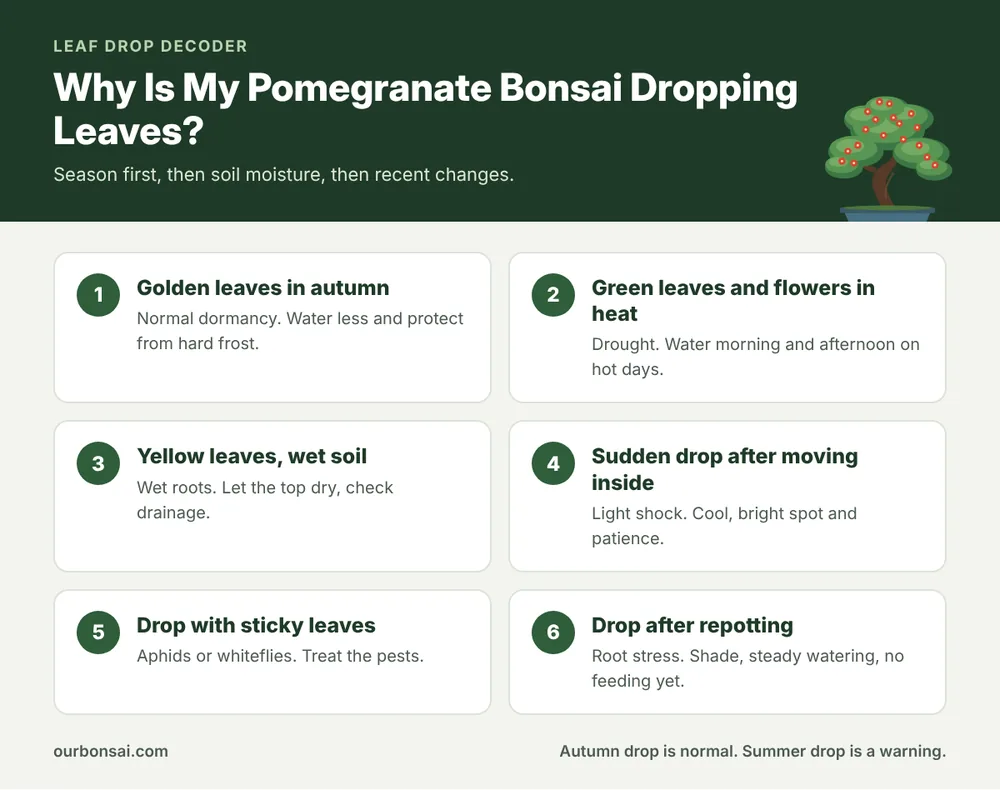
A pomegranate bonsai dropping leaves is completely normal in autumn, because most pomegranates are deciduous and shed all their leaves before winter. In spring and summer, though, leaf drop is a warning. The most common cause in the growing season is the soil drying out, which also makes the tree drop its flowers and young fruit. Other causes are wet roots, a sudden move (especially indoors), cold wind, repotting stress and sap-sucking pests. Find the trigger, fix it, and pomegranates usually push new leaves within a few weeks.
In this guide
- Normal leaf drop in autumn
- Leaf drop in spring and summer: what it means
- Causes of a pomegranate bonsai dropping leaves
- Why pomegranates drop flowers and fruit
- How to stop leaf drop step by step
- Helping a pomegranate regrow leaves
- Watering through the season to prevent leaf drop
- Leaf drop after defoliation or heavy pruning
- Indoor pomegranates
- Common mistakes
- FAQ: pomegranate bonsai dropping leaves
- Final thoughts
This guide explains each cause, how to spot it and what to do.
Normal leaf drop in autumn
The pomegranate (Punica granatum) is deciduous in most climates. As nights cool in autumn, leaves turn golden yellow and fall, often over two or three weeks. The Wikipedia article on pomegranate notes that only some tropical types stay semi-evergreen. On a bonsai, autumn leaf drop is a sign the tree is preparing for its winter rest.
What to do: water less as the leaves fall, stop feeding, and protect the pot from hard frost through winter. Our pomegranate bonsai winter care guide explains the details.
Leaf drop in spring and summer: what it means
| What falls | When | Most likely cause |
|---|---|---|
| Green leaves, flowers and young fruit | Hot days | Soil dried out |
| Yellow leaves from inside and below | Over one to two weeks | Overwatering, poor drainage |
| Many leaves suddenly | After a move | Light or temperature shock |
| Leaves with brown, crispy edges | Windy, hot spells | Wind burn, drought |
| Sticky, curled leaves | Gradual | Aphids or whiteflies |
| A scattering of leaves | After spring repot | Root stress |
Causes of a pomegranate bonsai dropping leaves
1. Drought
This is the number one cause in summer. A flowering, fruiting pomegranate in a small pot uses a lot of water. If the soil dries out completely, even for a few hours, the tree sheds flowers and young fruit first, then leaves. Water thoroughly and check twice a day in hot weather. Our guide on watering bonsai in summer has heat wave tips.
2. Overwatering
The opposite problem shows up as yellow leaves dropping from inside the canopy, with soil that stays wet for days. Roots are short of oxygen. Use a gritty mix and water only when the top centimeter dries. A sour smell suggests root rot in bonsai.
3. A sudden move
Moving a pomegranate from a sunny garden into a house, or from a greenhouse to a windowsill, causes a big drop in light. The tree sheds leaves it can no longer support. Our guide on how much light a bonsai tree needs explains why indoor light is so limited.
4. Cold and wind
Late spring frosts can blacken and drop tender new leaves. Cold, drying winds in early spring or autumn also cause early leaf drop. Shelter the tree on cold nights.
5. Pests
Aphids and whiteflies cluster on soft new shoots. Their feeding leaves curled, sticky leaves that eventually drop. Check shoot tips and leaf undersides. Our guides to aphids on bonsai trees and whiteflies on bonsai trees cover treatment.
6. Repotting stress
After root pruning in spring, the tree has fewer roots to supply its new leaves. Some leaf drop is normal. Keep it out of hot afternoon sun and wind for two weeks.
Why pomegranates drop flowers and fruit
Flower and fruit drop often comes together with leaf drop and has similar causes:
- Drought, the most common cause.
- Poor pollination. Indoor trees and trees in sheltered spots may not be pollinated, so the flower falls without setting fruit. A soft brush moved between flowers helps.
- Too much fruit for the tree. The tree sheds extras it cannot support. On young trees, thin fruit by hand.
- Too much nitrogen. Lush leaves and fewer flowers that stay on.
How to stop leaf drop step by step
- Check the season. Autumn? Normal.
- Check the soil. Dry means water thoroughly and check more often. Wet means let it dry.
- Think about recent changes. Moved, repotted, pruned? Give it time and stable conditions.
- Check for pests.
- Give it full sun in the growing season.
- Hold off on fertilizer until the tree is stable and pushing new leaves.
Helping a pomegranate regrow leaves
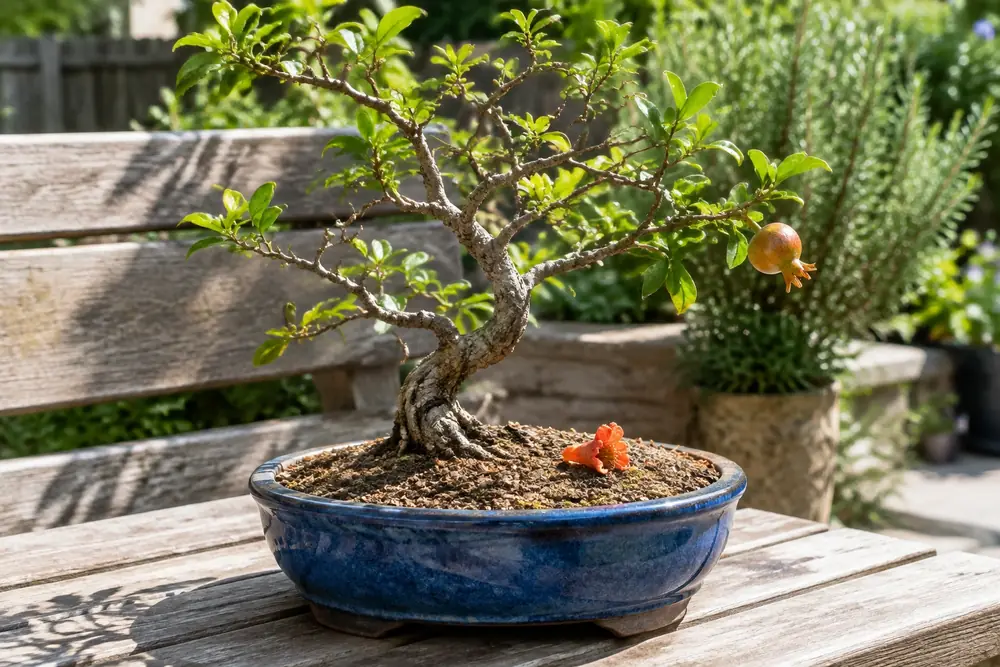
Pomegranates are vigorous and re-bud readily once conditions improve. Keep the tree in full sun, water consistently and start light feeding once new leaves appear. Our guide on bonsai fertilizer: pellets or liquid helps you choose. New leaves often appear within two to four weeks in summer.
Watering through the season to prevent leaf drop
Most summer leaf drop on pomegranates comes back to water, so a simple seasonal routine prevents most problems.
- Spring: as buds open, water when the top centimeter of soil feels dry. New leaves are soft and wilt quickly if the pot dries out.
- Early summer (flowering): check every morning and again in the late afternoon on hot days. A flowering tree in a shallow pot can need water twice a day.
- Late summer (fruit): keep the soil evenly moist while fruit swells. Large swings between wet and dry also cause fruit to split.
- Autumn: water less as the leaves color and fall.
- Winter: keep the soil just slightly moist, never soggy and never bone dry.
On very hot days, a shallow tray of gravel under the pot or a spot with afternoon shade for a few hours helps the roots stay cool without harming flowering.
Leaf drop after defoliation or heavy pruning
Some growers partly defoliate pomegranates in early summer to encourage smaller leaves and finer branching. Removing leaves on purpose is different from leaf drop caused by stress, but the tree still needs time and energy to regrow. Only do it on a strong, well-fed tree, never in the same year as repotting, and never in late summer. A weak tree that loses many leaves at once may push few new buds.
Indoor pomegranates
Dwarf pomegranates are sometimes grown indoors. Indoors they often drop leaves in autumn and winter even in a warm room, because light is too low. A cool, bright spot around 5 to 12 °C (40 to 55 °F) gives them a proper rest. If you keep one in a warm room, add a grow light and expect some leaf drop. Move it outdoors in spring once nights stay above about 10 °C (50 °F), gradually over a week or two.
Common mistakes
- Treating autumn leaf drop as a problem. It is normal dormancy.
- Letting a flowering tree dry out. You will lose flowers, fruit and leaves.
- Keeping it in shade. Pomegranates need full sun.
- Moving it around. Each move adds stress.
FAQ: pomegranate bonsai dropping leaves
Is it normal for a pomegranate bonsai to drop its leaves?
Yes, in autumn. Most pomegranates are deciduous. Leaf drop in spring or summer points to a care problem.
Why is my pomegranate bonsai dropping flowers?
Most often because the soil dried out, or because the flowers were not pollinated. Check the soil twice a day in hot weather.
Will my pomegranate grow its leaves back?
Yes, if the branches are green under the bark. Pomegranates re-bud strongly in the growing season and every spring.
How do I stop my indoor pomegranate from dropping leaves?
Give it as much light as possible, water only when the top dries and keep it in a cool, steady spot away from heaters.
How long does it take for new leaves to grow back?
In the growing season, usually two to four weeks once the cause is fixed. After winter dormancy, buds open in late spring, often later than other deciduous bonsai.
Final thoughts
A pomegranate bonsai dropping leaves in autumn is simply getting ready for winter. In spring and summer, check the soil first, since drought is the most common cause, then look at light, recent changes and pests. Fix the cause, keep the tree in full sun with steady watering, and new leaves and flowers will follow.