Homemade Bug Spray for Bonsai: 5 Safe Recipes

This post contains affiliate links. As an Amazon Associate, OurBonsai earns from qualifying purchases at no extra cost to you. Read our disclosure.
In this guide
A good homemade bug spray for bonsai can be as simple as 5 ml (1 teaspoon) of pure liquid soap in 1 liter of water, which kills aphids, spider mites, whiteflies and young mealybugs on contact. For tougher infestations, a neem spray (5 ml cold-pressed neem oil plus 2 ml soap per liter of warm water), cotton swabs dipped in 70 percent rubbing alcohol for mealybugs and scale, or a light oil spray for scale crawlers will handle most problems. Spray in the evening or on a cloudy day, never in full sun or above about 30 C (86 F), cover the undersides of the leaves, and repeat every 5 to 7 days for three rounds to catch eggs that hatch after the first spray. Test any spray on a few leaves 48 hours before treating the whole tree, because some species burn easily.
Before you spray: identify the pest
Homemade sprays work best when you know what you are dealing with. A quick look with a magnifying glass usually tells you:
- Aphids: small green, black or gray insects clustered on new shoots. See aphids on bonsai trees.
- Spider mites: fine webbing, tiny pale speckles on leaves, common indoors in dry air. See spider mites on bonsai.
- Mealybugs: white, cottony clumps in leaf joints and on roots. See mealybugs on bonsai.
- Scale: small brown or gray bumps stuck to stems and leaf veins, often with sticky honeydew. See scale on bonsai.
- Whiteflies: tiny white moths that fly up when you touch the tree.
Start with the mildest method that works. A strong rinse with the shower or a hose knocks off many aphids and mites before you need any spray at all.
Homemade bug spray for bonsai: five recipes
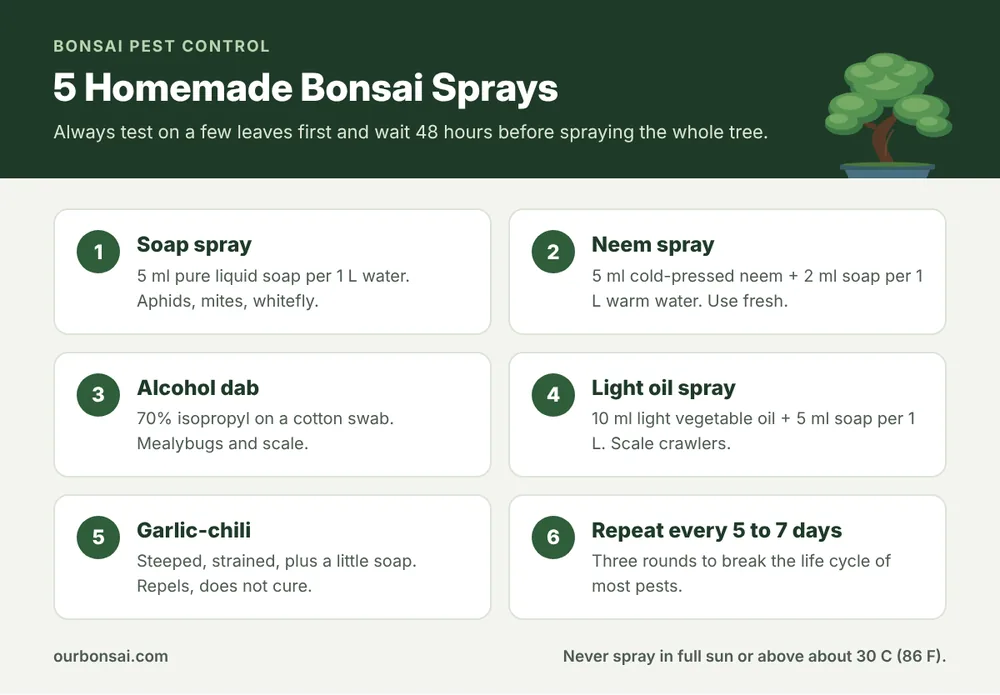
1. Simple soap spray
- 1 liter of lukewarm water
- 5 ml (1 teaspoon) pure liquid soap, such as unscented castile soap
Soap breaks down the soft outer layer of small insects and kills them on contact. It has no lasting effect once dry, so it must hit the pests directly.
Use pure soap, not dishwashing detergent. Many detergents contain degreasers, fragrances or other additives that can damage leaves. Do not increase the dose; 1 to 2 percent soap is effective, and stronger mixes scorch leaves.
Best for: aphids, spider mites, whiteflies, young mealybugs and scale crawlers.
2. Neem oil spray
- 1 liter of warm water
- 5 ml cold-pressed neem oil
- 2 ml pure liquid soap (to emulsify the oil)
Mix the soap into the warm water first, then add the neem and shake well. Neem works by smothering insects and by interfering with their feeding and growth. It also has some effect against powdery mildew. The emulsion separates within hours, so mix only what you will use that day.
Best for: aphids, mites, mealybugs, whiteflies and the early stages of scale.
If you want to buy neem, look for cold-pressed oil rather than “clarified” neem extracts, which have less of the active compounds. A search such as cold pressed neem oil shows the common options.
3. Rubbing alcohol spot treatment
- 70 percent isopropyl alcohol
- Cotton swabs or a small soft brush
Dip a swab and touch it directly to each mealybug or scale insect. Alcohol dissolves their waxy coating and kills them quickly. For a wider area, a mix of 1 part 70 percent alcohol to 3 parts water can be sprayed, but test it first; some thin-leaved species scorch.
Best for: mealybugs and scale, especially small numbers you can see.
4. Light oil spray
- 1 liter of water
- 10 ml light vegetable oil (such as canola)
- 5 ml pure liquid soap
Shake well and use immediately. Oil coats and suffocates soft-bodied insects and the mobile “crawler” stage of scale. It is less effective on adult scale under their hard shells.
Best for: scale crawlers, mites and their eggs.
5. Garlic and chili repellent
- 1 whole bulb of garlic
- 1 small hot chili
- 1 liter of water
- 5 ml pure liquid soap
Blend the garlic and chili with half the water, leave it to steep overnight, strain it through a fine cloth or coffee filter, then add the remaining water and the soap. This is a repellent: it makes the tree less attractive to aphids and some other insects but will not clear an established infestation. Keep it out of your eyes and off your skin.
Best for: prevention on outdoor trees that are regularly visited by aphids.
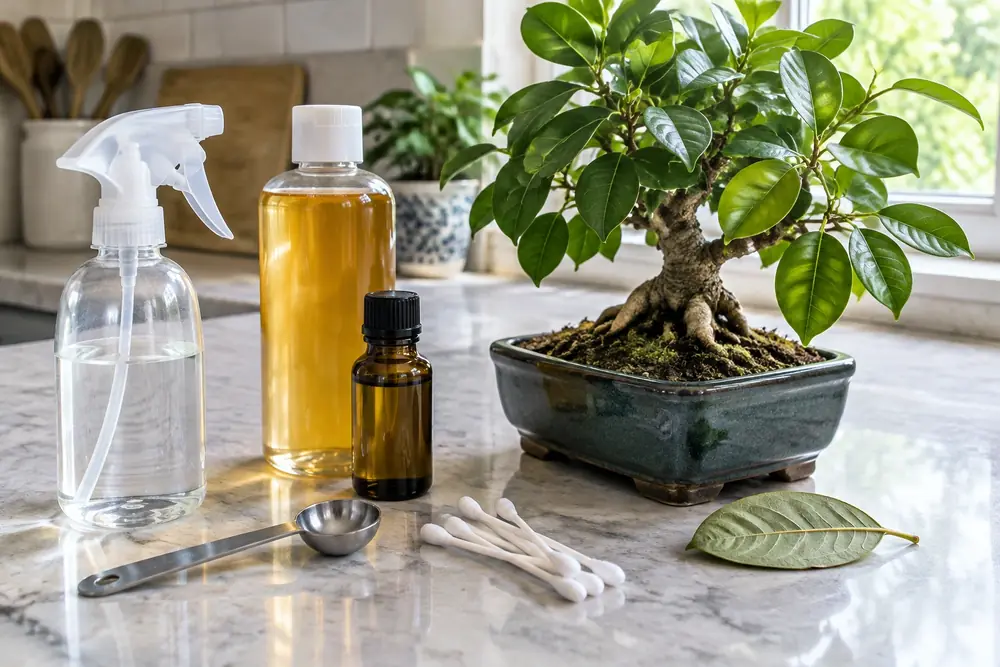
How to apply a homemade spray
- Test first. Spray a few leaves and wait 48 hours. Look for spots, browning or leaf drop.
- Pick the right moment. Early morning or evening, out of direct sun. Never spray a dry, wilting tree; water it first and spray the next day.
- Cover everything. Spray the undersides of leaves, leaf joints and stems, where most pests hide.
- Protect the soil with a plastic bag or cling film if you are using oil or neem, so it does not soak the root zone.
- Rinse after a few hours if you used soap or oil on a sensitive species.
- Repeat every 5 to 7 days, usually three times, to catch insects that hatch from eggs after the first round.
Our step-by-step guide to treating bonsai pests shows how to escalate if home methods do not work.
Trees that need extra caution
| Tree | Caution |
|---|---|
| Jade and other succulents | Oils and soaps can damage the waxy leaf coating. Use alcohol swabs and test first. |
| Junipers and blue conifers | Oil sprays can strip the blue bloom and discolor foliage. Use soap or water rinses. |
| Azalea in flower | Sprays mark the petals. Treat before or after flowering. |
| Recently repotted or stressed trees | Wait until the tree is growing well again. |
| Fukien tea and serissa | Sensitive to stress; test carefully and use the mildest option. |
When homemade sprays are not enough
If an infestation keeps coming back after three or four rounds, or scale insects cover large parts of the stems, a commercial horticultural oil or insecticidal soap with a tested formula is more reliable. Our list of pest control sprays for bonsai covers some options.
Frequently asked questions
Can I use dish soap for a bonsai bug spray?
It is not ideal. Many dish soaps contain degreasers and fragrance that can damage leaves. Pure castile soap or a soap labeled as insecticidal soap is safer.
How often should I spray?
Every 5 to 7 days, usually for three applications. Spraying more often increases the risk of leaf damage without killing more pests.
Will homemade sprays harm beneficial insects?
Soap and oil sprays can kill any soft-bodied insect they hit, including ladybird larvae. Spray only the affected tree, and only where the pests are.
Can I spray indoor bonsai in the house?
Yes. Take the tree to a sink or bathtub, spray it there, let it dry, and wipe up any overspray. Keep neem away from fabrics, as it has a strong smell.
Final thoughts
Most bonsai pest problems start small. A mild soap spray, a neem round or a cotton swab of alcohol catches them before they need anything stronger. Use the right ratio, test first, spray out of the sun and repeat three times. For background on how soap sprays kill insects, see the Wikipedia article on insecticidal soap.