When and How to Repot Ficus Bonsai

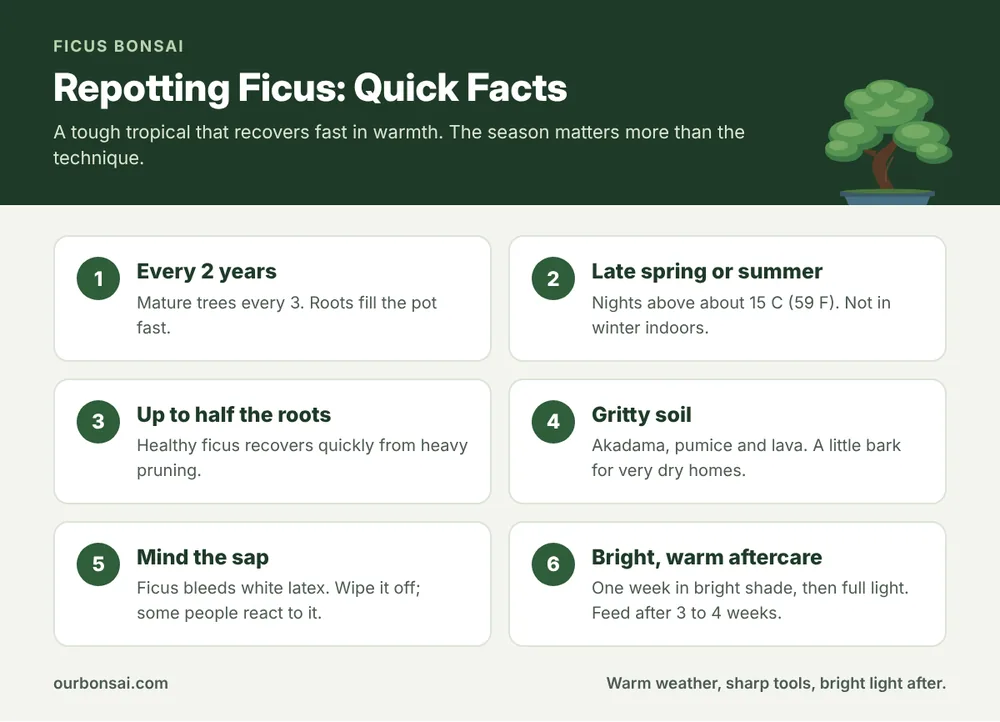
Here is how to repot ficus bonsai: repot every 2 years, in late spring or summer when nights stay above about 15 C (59 F). Ficus is one of the most forgiving trees to repot. A healthy tree tolerates losing up to half its roots and grows new white root tips within days in warm weather. Use a gritty mix of akadama, pumice and lava, protect any aerial roots, and give the tree a week of bright shade before returning it to full light. The one real mistake is repotting a ficus indoors in winter, when it is growing slowly and cold window glass chills the roots.
In this guide
Why ficus handles repotting so well
Ficus species used for bonsai, including Ficus retusa, Ficus microcarpa, Golden Gate ficus and willow-leaf fig, come from tropical and subtropical Asia, where many grow as strangler figs and banyans. They are built to root fast: aerial roots drop from branches, find soil, and thicken into new trunks. That same vigor below ground means cut roots regrow quickly, as long as the tree is warm.
If you have a ginseng ficus with a swollen root base, the technique is different; that tree has its own article.
Signs it is time to repot
| Sign | Meaning |
|---|---|
| Roots growing out of drainage holes | Pot is full |
| Water runs off the surface or drains very slowly | Soil compacted |
| Tree dries out within a day in mild weather | Not enough soil left |
| Leaves smaller and paler, less new growth | Roots congested |
A quick check is to tip the tree out of its pot. If you see a solid mat of roots around the outside, it needs repotting this season. Our Golden Gate ficus bonsai care guide covers the other parts of routine care.
Choosing soil
A gritty mix keeps ficus roots healthy indoors and out:
- Outdoor summer, indoor winter (most growers): 40 percent akadama, 30 percent pumice, 30 percent lava.
- Indoor all year in a dry, heated home: 50 percent akadama, 30 percent pumice, 20 percent fine bark, for a little more water holding.
- Humid climate or low indoor light: more pumice and lava so the soil dries faster.
Avoid dense potting soil. It stays wet in low winter light and is a common cause of root rot. For ingredient details, see our bonsai soil mix ratio guide.
How to repot ficus bonsai, step by step
- Pick a warm day, ideally outdoors in the shade.
- Prepare the pot with mesh and tie-in wires, and sieve your soil.
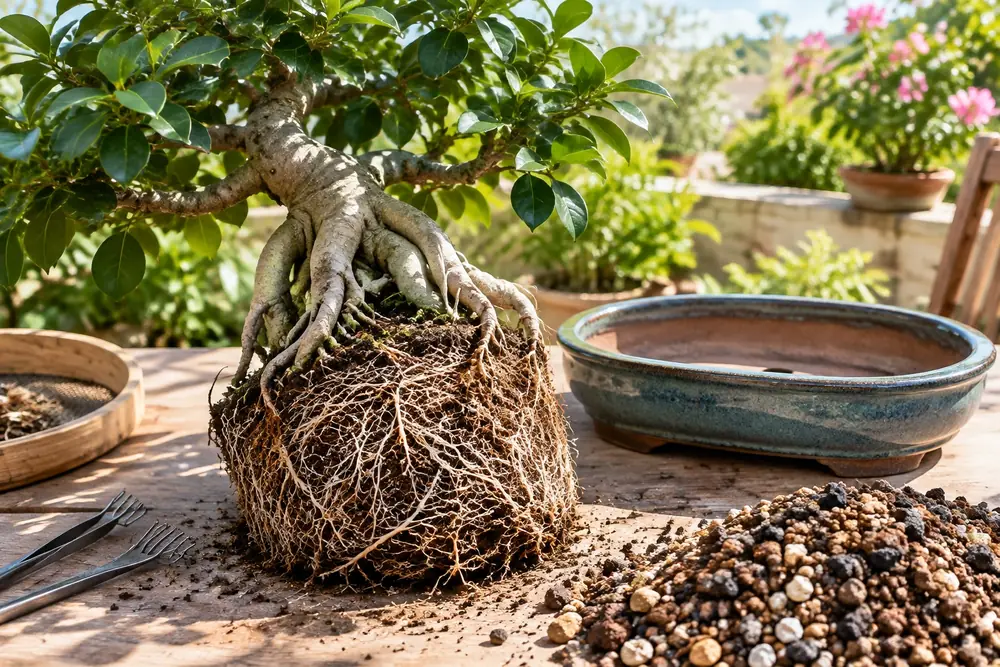
- Remove the tree. Cut old tie wires and ease it out. If it is stuck, run a knife around the pot edge.
- Comb out the roots. Use a root hook to tease out old soil from the outside and bottom. Ficus roots are tough; you can be firm.
- Cut back. Remove thick roots heading straight down and shorten long roots. Up to half the root mass is fine on a strong tree.
- Protect aerial roots. If your tree has aerial roots that have reached the soil, keep them. They are part of its character and feed it.
- Spread surface roots outward for a wider base. Ficus responds well to this and the nebari improves noticeably over a few repots.
- Pot up, tie in firmly, and fill with soil, working it in with a chopstick.
- Water thoroughly until it runs clear.
Ficus bleeds white latex sap from cuts. Wipe it away with a damp cloth. Some people’s skin reacts to it, so gloves are a good idea.
Aftercare
- One week in bright shade, out of direct midday sun and wind.
- Then full light. Outdoors in summer, or the brightest window or a grow light indoors.
- Water when the top 1 cm dries. Fresh gritty soil dries faster than old soil.
- Keep humidity up. Mist lightly or use a humidity tray for the first week indoors.
- Feed after 3 to 4 weeks, then every 2 weeks through the growing season.
- Pruning is fine once new shoots appear, usually within 2 to 3 weeks.
Some leaf drop after repotting is normal for ficus, especially if it was moved between rooms or brought in from outdoors. New leaves follow quickly in warmth.
Using the repot to fix the base
The most valuable thing you can do at a ficus repot is improve the surface roots, because ficus responds so quickly. A few techniques growers use:
- Root spreading. After combing, lay the thickest surface roots out like spokes and pin them down with bent wire or a small weight. In one growing season they thicken in that position.
- Plate method. Some growers tie the root base flat onto a disc of wood or plastic so roots cannot dive down. All growth then goes outward. Remove the plate at the next repot.
- Fusing roots. Ficus roots that touch and press together often fuse over time. Placing several small roots side by side can create one broad, buttress-like root.
- Encouraging aerial roots. Keep humidity high in summer, for example by enclosing a branch in a damp sleeve, and new aerial roots may form. Guide them into the soil and they thicken fast.
For more on the banyan look, our banyan fig bonsai care guide shows how aerial roots develop.
Problems after repotting
- Heavy leaf drop: usually cold, a draft or a big change in light. Keep it warm and stable.
- Yellow leaves and wet soil: overwatering after the repot. Let the soil dry more.
- Sticky leaves or white fluff: pests that were already there, often scale or mealybugs. See our guide to ficus bonsai pests and diseases.
Frequently asked questions
Can I repot a ficus bonsai in winter?
Only if it is in a warm greenhouse or under strong grow lights with warm roots. Indoors on a winter windowsill, wait until late spring.
Can I bare-root a ficus bonsai?
Yes. Healthy ficus tolerate full bare-rooting in warm weather. It is useful when moving a tree out of poor soil.
How much root can I cut from a ficus?
Up to about half on a strong, healthy tree in summer.
Should I fertilize right after repotting?
No. Wait 3 to 4 weeks, until new roots and shoots are growing.
Final thoughts
Ficus makes repotting easy if you wait for warmth. Repot every couple of years in summer, prune the roots firmly, use gritty soil and keep it bright and humid while it settles. For timing across other tropical species, see our guide on the best time to repot tropical bonsai, and for background on the species, the Wikipedia article on Ficus microcarpa.