Bonsai Frost Damage: Signs, Recovery and Prevention

Bonsai frost damage happens when temperatures drop below what a tree, and especially its roots, can handle. The leaves of tropical bonsai turn dark, limp and see-through after a freeze, while hardy trees may show browned needles, split bark or, worst of all, no new buds in spring because the roots froze solid. The first thing to do is not panic and not cut anything yet. Move the tree out of the cold, keep the soil lightly moist, and wait for new growth to show you what survived.
In this guide
This guide explains why bonsai are more exposed to frost than garden trees, how to recognize the damage, and how to help a frosted tree recover.
Why bonsai are more vulnerable to frost
A maple or pine in the ground has its roots insulated by tons of soil. The same tree in a shallow bonsai pot has its roots just a few centimeters from the cold air on every side. Roots are also much less cold-hardy than branches. Many growers use a rough rule: roots of a potted tree can only take temperatures around 10 °C (about 20 °F) warmer than the tree’s branches can.
That is why bonsai need protection even when the species is fully hardy in your garden. A good starting point is knowing your climate zone. The USDA Plant Hardiness Zone Map shows the average winter low where you live.
Types of bonsai and their frost tolerance
| Group | Examples | Frost tolerance |
|---|---|---|
| Tropical | Ficus, jade, schefflera, serissa, Fukien tea | None. Damage below about 5 to 10 °C (40 to 50 °F) |
| Subtropical / Mediterranean | Olive, pomegranate, bougainvillea | Light frost only, roots must not freeze |
| Hardy deciduous | Maples, elms, hornbeam, larch | Need winter cold, roots need protection from hard freezes |
| Hardy conifers | Junipers, pines, spruce | Very hardy branches, roots still need protection |
If you are not sure which group your tree is in, our guides to types of outdoor bonsai trees and tropical bonsai species will help.
Signs of bonsai frost damage
- Dark, wet-looking leaves that go limp and translucent a day after a freeze. Typical on tropicals.
- Crispy brown leaves or needle tips on evergreens, often on the side facing the wind.
- Blackened new shoots after a late spring frost on deciduous trees that had already started to grow.
- Split or cracked bark on the trunk. Large temperature swings cause frost cracks, sometimes on the sunny side.
- No buds opening in spring while other trees of the same species are growing. This often means the roots froze.
- Loose tree in the pot with soft, dark roots when you check.
What to do right after a frost
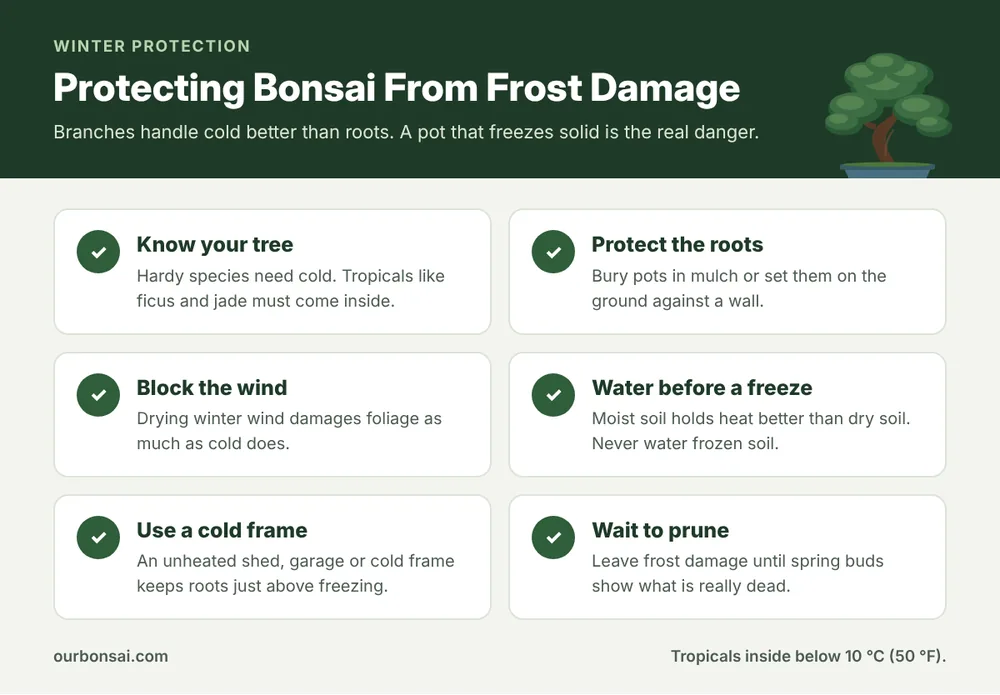
- Move the tree somewhere sheltered. An unheated garage, shed or porch is ideal for hardy trees. Tropicals go back indoors.
- Thaw slowly. Do not bring a frozen hardy tree straight into a warm house. Fast thawing does more damage. Let it thaw in a cool spot.
- Do not water frozen soil. Wait until the soil has thawed, then check the moisture and water lightly if it is dry.
- Do not prune yet. Leaves and shoots that look dead may still have living buds behind them.
- Do not fertilize. A stressed tree cannot use it.
- Keep tropical trees warm and bright. Put them in a bright window away from heaters, and let the damaged leaves fall naturally.
How to check what survived
Wait two to four weeks for tropicals, or until spring for hardy trees. Then:
- Scratch the bark with a fingernail on several branches. Green underneath is alive. Brown and dry is dead.
- Look for swelling buds. Living buds are firm and plump.
- Check the roots. Slide the tree out of the pot. White or light brown firm root tips are alive. Dark, mushy roots that slide apart are dead.
Once you know which parts are alive, cut dead branches back to living wood. If many roots died, do not do a full repot. Gently replace only the loose, rotten soil and keep the tree in shade while it rebuilds roots.
Frost damage on popular bonsai trees
Each group of trees shows frost damage a little differently, which helps you decide what to do.
- Ficus. Leaves turn dark green, then black or brown and drop within a few days. Branches often survive mild frost, and the tree re-sprouts in warmth. A frozen trunk turns soft, which is much more serious.
- Jade and other succulents. Leaves become glassy and mushy because their stored water froze. Remove mushy leaves once they collapse and keep the soil on the dry side while the plant recovers.
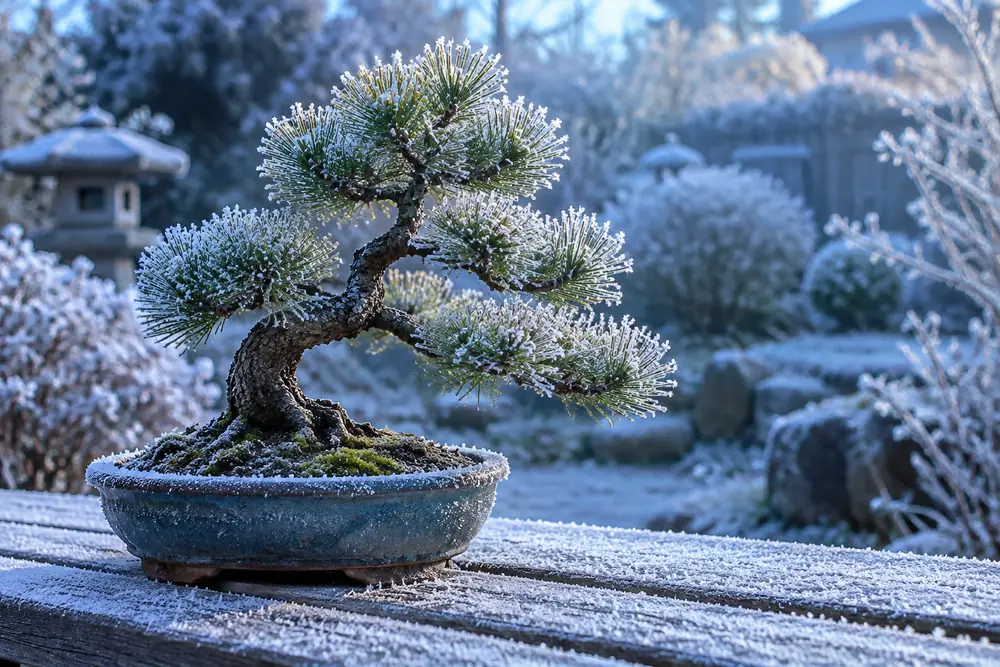
- Junipers and pines. Foliage may turn bronze or purple in winter. That color change is normal and turns green again in spring. Real damage shows as dry, brown foliage that crumbles.
- Japanese maples. Usually fine in winter but very tender after bud break. A late spring frost blackens the new leaves. The tree normally pushes a second set of leaves a few weeks later, though it loses some strength.
- Azaleas. Flower buds are the first casualty. Buds that froze turn brown inside and will not open.
Frost damage versus winter drying
Evergreens can also brown in winter without any frost injury at all. When the soil is frozen, roots cannot take up water, but sun and wind keep pulling moisture from the foliage. The result is brown, dried tips on the windward side. The fix is the same as for frost: shelter from wind and protect the roots so they stay unfrozen.
How to protect bonsai from frost
Protect the pots, not just the branches
- Set pots on the ground, out of the wind, rather than on a bench.
- Surround or bury pots in bark mulch, leaves or straw up to the rim.
- Group trees together so they shelter each other.
- Use an unheated greenhouse, cold frame or garage for the coldest weeks. Hardy trees still need cold, just not frozen roots.
Plan by species
- Tropicals come inside when nights drop below about 10 °C (50 °F). Our guide on how to take care of a bonsai tree inside covers the indoor season, and watering indoor bonsai in winter helps you avoid the opposite problem.
- Mediterranean trees like olive and pomegranate can handle a light frost but need shelter in long freezes. See our pomegranate bonsai winter care guide.
- Hardy trees stay outside but get root protection from about -5 °C (23 °F) downward.
Watch the late spring frost
Deciduous trees that have already opened their leaves are very tender. If a frost is forecast after bud break, move them into a shed overnight or cover them with frost fleece.
FAQ: bonsai frost damage
Can a bonsai recover from frost damage?
Often, yes. If the roots and trunk survived, a tree can regrow from dormant buds. Tropical trees may lose all their leaves and still recover within a month or two.
Should I cut off frost-damaged leaves?
Not right away. Let them fall or wait until new growth shows which parts are alive, then remove what is clearly dead.
At what temperature should I protect my bonsai?
Tropicals need protection below about 10 °C (50 °F). Hardy outdoor bonsai need root protection when temperatures fall well below freezing, roughly -5 °C (23 °F) or colder.
Can I bring a frozen bonsai inside to warm it up?
Not straight into a heated room. Thaw it slowly in a cool, sheltered place, then decide where it should spend the rest of winter.
Final thoughts
Bonsai frost damage is mostly about roots. Branches of hardy trees can take a lot of cold, but roots in a small pot cannot. Know which of your trees are tropical, protect pots from hard freezes, and if frost does strike, move the tree to shelter, avoid pruning and wait patiently. For year-round basics, see our main bonsai care guide.