Green Aphids on Bonsai: Identification and Treatment
Quick Answer
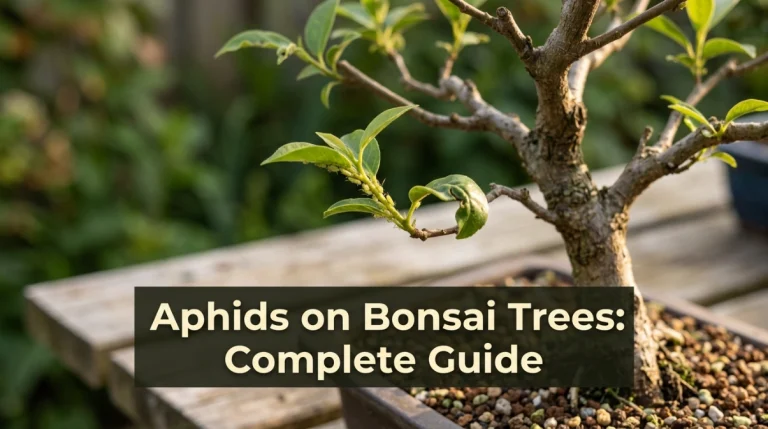
Green aphids on bonsai are small, soft-bodied sap-feeding insects that usually cluster around tender shoots, buds, and leaf undersides. Confirm them by checking for pear-shaped green bodies, sticky honeydew, curled new leaves, pale shed skins, and repeated ant activity; the UC IPM aphid guide provides a useful reference for identification and control.
Signs to check first
- Green clusters: Look closely at new shoots, buds, petioles, and leaf undersides.
- Sticky honeydew: Aphid waste can leave foliage, pots, and benches tacky.
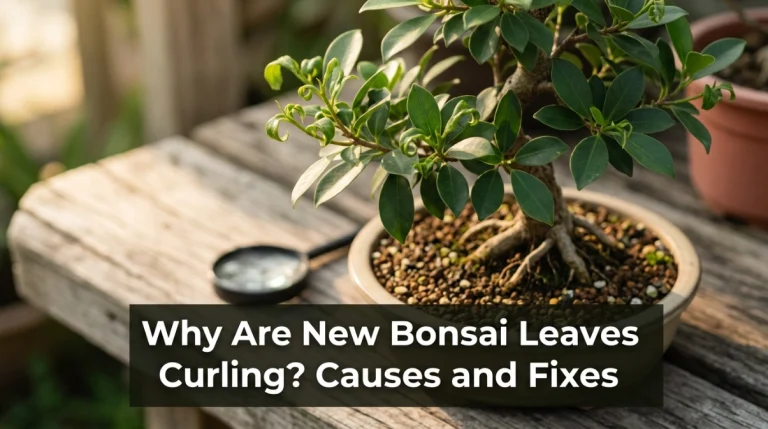
- Curled leaves: Feeding on developing tissue can twist or distort new growth.
- White skins: Empty shed aphid skins may remain around an active colony.
- Ant traffic: Ants may repeatedly visit colonies to collect sugary honeydew.
Best first treatment
- Isolate the bonsai, remove aphids with controlled water pressure, then use a plant-labeled insecticidal soap or horticultural oil if insects remain.
Green aphids on bonsai trees can appear almost overnight when fresh shoots begin extending. I usually spot them first around soft spring growth, where crowded young leaves give a small colony plenty of protected feeding sites.
The good news is that green aphids are usually manageable when you catch them early. This guide covers identification, damage, treatment choices, recurrence, and prevention without automatically reaching for the strongest pesticide.
In This Guide
What Do Green Aphids Look Like on a Bonsai?
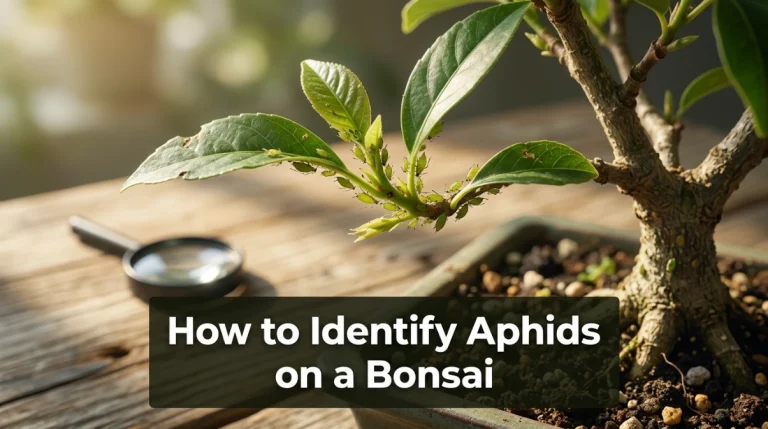
Green aphids are tiny, soft-bodied insects commonly found in groups on tender plant tissue. Their green color can range from pale yellow-green to a deeper leaf green, so color alone should never be your only identification clue.
Definition: An aphid is a small sap-feeding insect in the superfamily Aphidoidea. Aphids use piercing-sucking mouthparts to draw fluids from plant tissue and commonly produce sugary waste called honeydew.
Check the newest growth first
Start with shoot tips, unopened buds, young stems, and the undersides of expanding leaves. Those areas are usually easier for aphids to feed from than mature, hardened foliage.
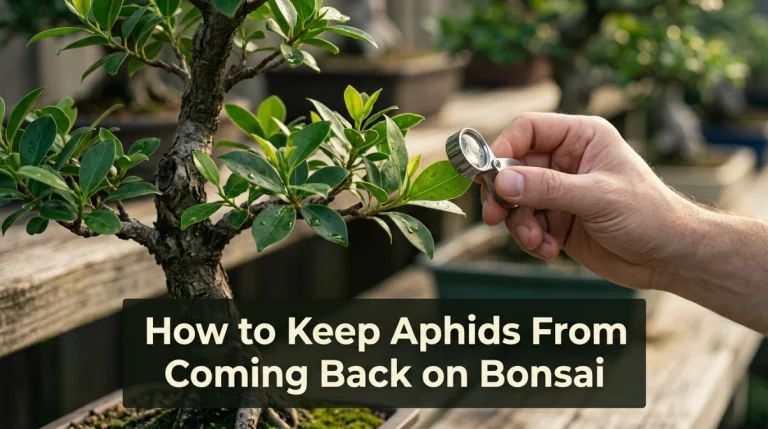
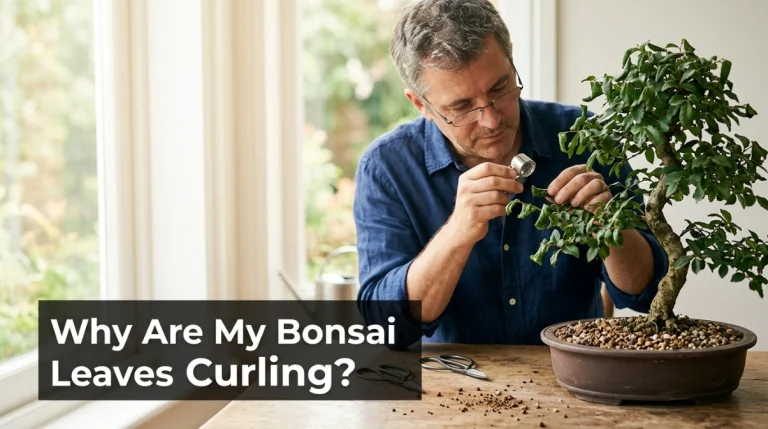
I often use a 10× hand lens when checking a small bonsai. Under magnification, many aphids show a pear-shaped body and two small tube-like structures near the rear called cornicles.
- Body: Soft rather than hard or shell-like.
- Size: Usually only a few millimeters long.
- Grouping: Often clustered instead of evenly scattered.
- Movement: Usually slow when compared with many predatory insects.
- Location: Most noticeable on tender shoots and leaf undersides.
Look for symptoms around the insects
Honeydew is one of the easiest clues. It can create a shiny or sticky coating on foliage, branches, the pot rim, or the surface beneath the tree.
Pale white flecks around a colony can also be useful. These may be empty skins left behind when aphids molt rather than dead white insects.
The general Bonsai Empire pest and disease guide also lists aphids among common insects found on bonsai.
Green aphids vs. similar bonsai pests
| Pest | Typical Appearance | Main Clue | Honeydew? |
|---|---|---|---|
| Green aphids | Soft, pear-shaped green insects | Colonies on fresh shoots | Yes |
| Scale | Brown, tan, gray, or pale bumps | Fixed shell-like appearance | Often |
| Mealybugs | White cottony insects | Waxy material in joints | Yes |
| Spider mites | Extremely tiny mites | Stippling and fine webbing | No |
Section Takeaway: Identify the insect itself whenever possible. Green color plus clustering, honeydew, soft bodies, and distorted new growth creates a much stronger diagnosis than color alone.
What Damage Do Green Aphids Cause?
Green aphids remove sap from actively growing tissue. A small colony may cause little lasting harm, while a large population can deform the exact shoots you are trying to develop.
Young leaves may curl and twist
Developing leaves can become curled, puckered, undersized, or misshapen after sustained feeding. Established foliage may remain normal while the newest growth looks increasingly distorted.
This matters in bonsai because shoot quality affects future ramification. Ramification means the increasingly fine branching that creates a mature-looking canopy.
Honeydew can lead to secondary problems
Aphids excrete excess sugars as honeydew. This sticky coating can collect on leaves and provide a surface where dark sooty mold develops.
Sooty mold usually grows on the honeydew rather than invading healthy plant tissue. Controlling the sap-feeding pest removes the underlying source.
- Sticky or glossy leaves
- Dark surface coating
- Repeated ant activity
- Yellowing around damaged shoots
- Slower or distorted extension growth
When does an infestation become serious?
A few aphids on a vigorous bonsai rarely justify panic. Risk increases when multiple shoots carry colonies or when the tree is already under stress.
I pay closer attention to recently repotted trees and bonsai recovering from major styling. Adding pest pressure to an already stressed root or canopy system can slow recovery.
- Light infestation: A few insects on one or two shoots.
- Moderate infestation: Several colonies with visible honeydew.
- Heavy infestation: Numerous shoots covered with aphids and distorted foliage.
- Higher-risk tree: Weak, dehydrated, recently repotted, or otherwise stressed bonsai.
Section Takeaway: Aphid numbers matter, but tree condition matters too. Treat a weak bonsai more cautiously and avoid stacking unnecessary stress on top of pest damage.
How Do You Get Rid of Green Aphids on Bonsai?

Start with isolation and physical removal before escalating treatment. This reduces the pest population while limiting unnecessary chemical exposure.
1. Isolate the affected bonsai
Move the tree away from other bonsai and houseplants as soon as you confirm aphids. Check neighboring plants at the same time because winged aphids can move between hosts.
2. Inspect every tender shoot
Turn affected leaves over and look inside curled foliage. Check buds, young stems, branch junctions, and the newest several nodes of each growing shoot.
3. Remove visible aphids with water
A controlled spray of water can knock many aphids from sturdy foliage. Support delicate branches with your free hand so the treatment does not become a styling accident.
A bonsai requires more restraint than a landscape shrub. Avoid blasting loose soil from the pot or snapping fine twigs.
4. Remove isolated colonies manually
On a small tree, fingers, a cotton swab, or a soft brush can remove small clusters. This works especially well when only one or two shoot tips are affected.
5. Recheck after physical removal
Inspect the tree again within several days. Aphids hidden inside curled foliage or protected branch junctions may survive the first cleaning.
If active colonies remain, move to a treatment labeled for aphids and suitable for the plant. Contact treatments work best when they directly cover the insects.
Which Green Aphid Treatment Works Best?
For many bonsai, the best treatment is the least disruptive option that controls the infestation. Water, commercial insecticidal soap, and horticultural oils can all have a place depending on severity.
Commercial insecticidal soap
Insecticidal soap uses potassium salts of fatty acids to control soft-bodied pests such as aphids. These products need good contact with the insects, so coverage matters.
Follow the label rather than mixing a stronger solution. The UC IPM guide to less-toxic insecticides notes that complete coverage and repeat treatment may be necessary for soap products.
Horticultural oil and neem-based products
Horticultural oils can suppress aphids by coating them. Neem oil is one plant-derived oil used in some labeled garden products.
Do not assume that more oil means better control. Avoid treating a drought-stressed bonsai, and follow temperature restrictions and plant-sensitivity warnings on the label.
Water vs. soap vs. horticultural oil
| Method | Best Use | Main Advantage | Main Limitation |
|---|---|---|---|
| Water spray | Light colonies | No pesticide residue | Hidden aphids may remain |
| Insecticidal soap | Persistent exposed aphids | Targeted contact treatment | Requires thorough coverage |
| Horticultural oil | Persistent colonies when label allows | Useful against soft-bodied pests | Plant and temperature restrictions matter |
Should you use homemade dish-soap sprays?
I prefer commercial insecticidal soap rather than household detergent recipes. Dishwashing products are designed for cleaning dishes, not for predictable use on living foliage.
Commercial products give you a labeled concentration and plant-use instructions. That removes much of the guesswork from treating a small, valuable tree.
What about stronger systemic insecticides?
Most minor aphid infestations do not require systemic treatment. Broad or persistent insecticides can also affect beneficial insects, especially when plants are flowering.
As of 2026, an integrated pest management approach still makes sense for home bonsai. Identify the pest, reduce it mechanically, preserve natural enemies, and escalate only when necessary.
Section Takeaway: Start with water for light infestations. If aphids persist, a properly labeled insecticidal soap or horticultural oil is usually a more measured next step than immediately using a broad-spectrum pesticide.
Why Do Green Aphids Keep Coming Back?
Recurring aphids usually mean survivors remained on the bonsai or new insects recolonized it. Contact treatments cannot kill insects they never reach.
Curled leaves protect survivors
Aphids often feed inside distorted leaves where spray coverage is poor. Open curled foliage carefully during inspection and check the protected inner surface.
Do not remove large amounts of healthy growth just to reach a few insects. Manual cleaning may be enough on a small bonsai.
Ants can help colonies persist
Ants are attracted to aphid honeydew and may defend aphid colonies from predators. Repeated ant traffic therefore deserves investigation rather than being dismissed as unrelated.
Fresh nitrogen-rich growth can attract aphids
Soft new growth provides favorable feeding sites. Excessive nitrogen fertilization can encourage lush shoots that remain tender longer.
Do not stop feeding a healthy bonsai simply because aphids appeared. Use a fertilizer schedule suited to the species, season, and development goal.
Natural enemies may have been disrupted
Lady beetles, lacewing larvae, hoverfly larvae, and tiny parasitic wasps can reduce aphid populations outdoors. Broad-spectrum pesticide use can also kill these useful predators.
- Inspect new shoots regularly.
- Keep newly acquired trees separate at first.
- Check nearby bonsai after finding aphids.
- Avoid unnecessary broad-spectrum spraying.
- Control persistent ant activity around colonies.
- Keep the tree appropriately watered and vigorous.
Aphid prevention is mainly an inspection habit. During active growth, spending a minute checking shoot tips can reveal a colony long before an entire canopy becomes sticky.
Section Takeaway: Repeated outbreaks usually have a reason. Search for hidden aphids, fresh susceptible growth, ants, nearby infested plants, and treatment gaps before changing products.
Frequently Asked Questions About Green Aphids on Bonsai
Are green aphids harmful to bonsai trees?
Yes, especially when populations become large. Aphids can distort new leaves, weaken developing shoots, produce sticky honeydew, and interfere with the fine growth needed for bonsai development, although a few aphids rarely kill a vigorous tree by themselves.
Can I spray green aphids off my bonsai with water?
Yes. A controlled water spray is a useful first treatment for a light infestation, but use enough restraint to protect delicate branches and bonsai soil.
Why are there ants on my aphid-infested bonsai?
Ants commonly visit aphid colonies because aphids produce sugar-rich honeydew. Persistent ant traffic can therefore help you locate hidden colonies and may interfere with natural predators that otherwise feed on aphids.
Will neem oil kill green aphids?
Neem-based horticultural products can suppress aphids when the product label includes the pest and plant situation. Coverage matters, and oil products should not be applied to stressed plants or under unsuitable temperature conditions specified by the manufacturer.
How often should I treat aphids on a bonsai?
There is no safe universal interval for every product. Reinspect after treatment and repeat only according to the pesticide label, because contact products may require another application when surviving aphids become visible.
Should I isolate a bonsai that has aphids?
Yes. Isolation reduces the chance that winged or crawling pests reach nearby plants and makes monitoring easier while you treat the affected tree.
Can green aphids kill a bonsai?
Aphids are unlikely to kill a vigorous bonsai when found early. A severe infestation can become more serious when combined with root damage, drought, heat stress, poor light, or another problem that has already weakened the tree.
Final Takeaway: Treat Green Aphids Early Without Over-Treating
Green aphids on bonsai are easiest to control before colonies cover multiple shoots. Look for small green insects, sticky honeydew, white shed skins, curled young leaves, and suspicious ant activity.
Start by isolating the tree and physically removing as many aphids as possible. Move to a labeled insecticidal soap or horticultural oil only when mechanical control does not solve the problem.
Keep inspecting the newest growth after treatment. Catching five aphids today is much easier than treating hundreds after the next flush of tender shoots.
Your bonsai does not need the strongest possible treatment. It needs the right treatment, good growing conditions, and consistent observation.