Can Spider Mites Kill a Bonsai? Signs, Damage, and Treatment
Quick Answer
Yes, spider mites can kill a bonsai if a heavy infestation continues long enough. They pierce leaf cells, causing stippling, bronzing, leaf loss, weakening, and potentially severe decline, especially when the tree is already stressed by heat or drought; the University of Minnesota spider mite guide confirms that severe feeding can kill affected plants.
Warning signs to check
- Pale stippling: Tiny white or yellow dots appear where mites have damaged leaf cells.
- Fine webbing: Silky threads may form under leaves, between shoots, or around branch junctions.
- Bronzed foliage: Heavy feeding can turn healthy green leaves dull, yellow, gray, or bronze.
- Leaf drop: Damaged leaves may dry out and fall before they normally would.
- Moving specks: A hand lens or white-paper test can reveal tiny crawling mites.
What to do first
- Separate the bonsai from nearby plants, confirm live mites, rinse the foliage carefully, and then choose a plant-labeled treatment if the infestation remains active.
Spider mites are easy to underestimate because the pests themselves are almost microscopic. By the time you notice obvious webbing, a colony may already be feeding across much of the canopy.
I take suspected mites seriously, but I don’t assume every yellow leaf means disaster. This guide explains when spider mites become dangerous, how to confirm them, and how to save a bonsai before damage becomes irreversible.
In This Guide
Can Spider Mites Really Kill a Bonsai?
Yes. A severe spider mite infestation can weaken a bonsai enough to cause extensive leaf loss, branch decline, and eventually plant death.
A healthy tree rarely collapses because of a few mites. The danger rises when populations multiply unchecked while the bonsai is already dealing with heat, dry soil, damaged roots, poor light, or another stress.
What exactly is a spider mite?
Spider mites are tiny arachnids that feed by piercing plant cells and removing their contents. They are related to spiders and ticks rather than true insects.
Twospotted spider mites are around 1/50 inch long, which makes individual mites difficult to identify without magnification. Their small size explains why foliage damage often appears before growers notice the pest itself.
- Light infestation: A few mites feed on scattered leaves with limited visible damage.
- Growing infestation: Stippling spreads, leaves lose color, and mite numbers increase.
- Heavy infestation: Bronzing, webbing, drying, and premature leaf drop become obvious.
- Critical infestation: A weakened tree loses substantial photosynthetic foliage and struggles to recover.
Bonsai deserve closer attention than large landscape trees. Their compact canopies mean a relatively small damaged area can represent a large percentage of the tree’s useful foliage.
A shallow bonsai pot can also dry faster than garden soil. That combination of limited root volume and drought stress can make heavy mite feeding more damaging.
Section Takeaway: Spider mites can kill a bonsai, but death usually follows severe, prolonged feeding combined with plant stress rather than the appearance of a few isolated mites.
How Do Spider Mites Damage a Bonsai?
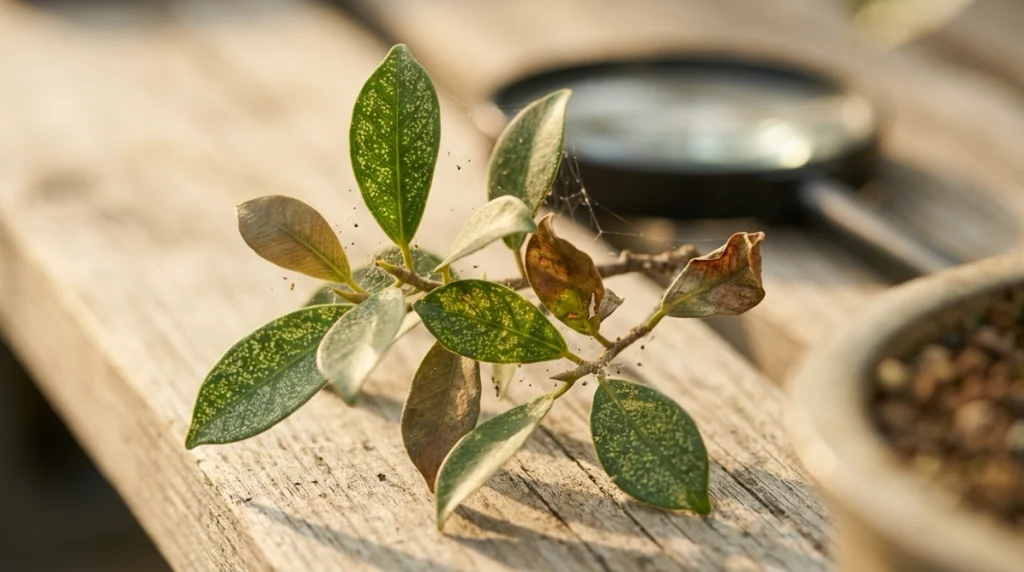
Spider mites damage bonsai by repeatedly piercing foliage and feeding from individual plant cells. The first visible clue is usually fine pale stippling rather than large holes or chewed edges.
As more cells become damaged, leaves lose healthy color and photosynthetic capacity. Persistent feeding can then cause bronzing, drying, premature leaf fall, and declining vigor.
Damage usually progresses in stages
- Early feeding: Tiny pale or yellow dots develop across leaves or needles.
- Color loss: Foliage begins looking washed out, dull, gray-green, or bronze.
- Webbing: Fine silk becomes visible as mite numbers increase.
- Leaf decline: Damaged foliage yellows, dries, curls, or drops.
- Tree stress: Continued defoliation reduces the tree’s ability to support healthy growth.
Hot and dry weather is especially important. Twospotted spider mites can complete development in roughly one to two weeks under favorable temperatures, allowing populations to increase quickly.
The University of Minnesota notes that colonies can reach high numbers in less than two weeks when temperatures exceed about 90°F. That is why a tree can seem fine during one inspection and look much worse shortly afterward.
Does webbing mean the infestation is severe?
Visible webbing usually means the colony deserves immediate attention. Spider mites often live and feed on leaf undersides before producing obvious webs across larger sections of foliage.
Don’t wait for webbing before inspecting a suspicious tree. Stippling may appear much earlier.
| Infestation Level | Typical Signs | Risk to Bonsai |
|---|---|---|
| Early | Scattered stippling, a few mites on leaf undersides | Usually low if caught quickly |
| Moderate | Widespread pale spots, dull foliage, increasing mites | Growth and vigor may decline |
| Heavy | Webbing, bronzing, yellowing, drying, leaf drop | Serious stress and possible dieback |
| Prolonged severe | Major defoliation and weakening | Plant death becomes possible |
Section Takeaway: The combination of spreading stippling, bronzing, webbing, and leaf loss indicates a much greater threat than finding one or two mites.
How Can You Confirm Spider Mites on a Bonsai?
Confirm spider mites by inspecting damaged foliage closely and looking for living mites. Symptoms alone can be misleading because drought stress, nutrient problems, and other pests can produce yellow or declining leaves.
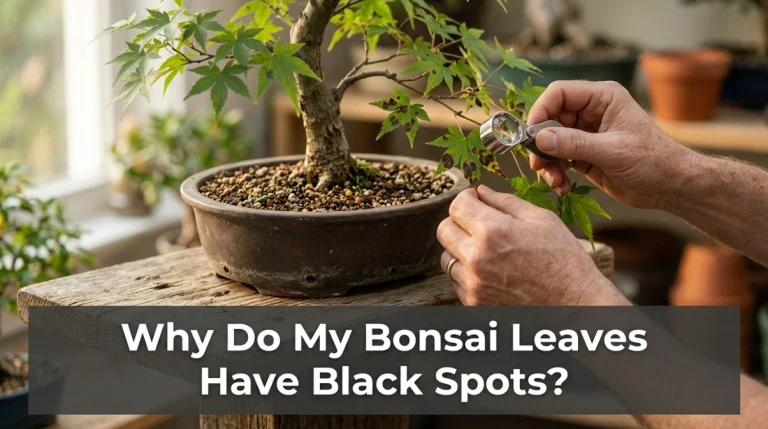
I use two checks before reaching for any spray: a hand lens and the white-paper test. Together, they can separate suspected mites from general bonsai stress surprisingly quickly.
Use the white-paper test
- Place a clean sheet of white paper beneath a suspicious branch.
- Tap or gently shake the branch over the paper.
- Wait several seconds and watch the fallen specks.
- Look for tiny dots that begin crawling across the surface.
- Confirm suspicious specks with a hand lens if possible.
This simple method is recommended in university extension guidance because mites are difficult to see while they remain on foliage. A 10× hand lens also makes checking leaf undersides much easier.
Spider mites vs. common look-alikes
| Problem | Main Clue | Webbing | Sticky Honeydew |
|---|---|---|---|
| Spider mites | Fine stippling and tiny moving specks | Often present in heavy infestations | No |
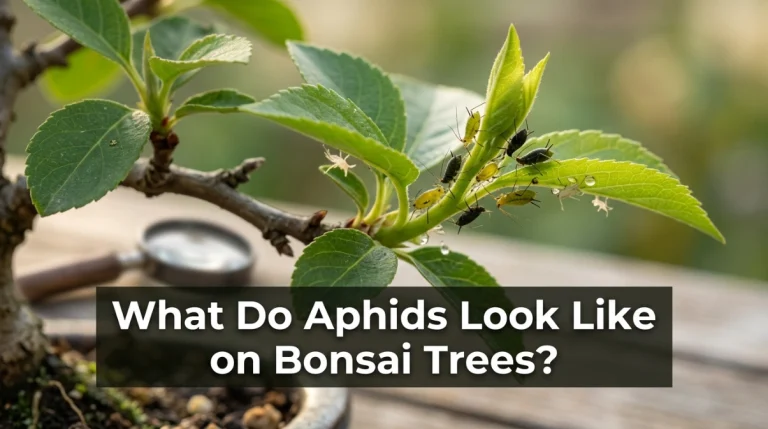
| Aphids | Soft insects clustered on new growth | No | Common |
| Scale | Fixed shell-like bumps on leaves or stems | No | Possible with soft scale |
| Drought stress | Dry substrate, wilt, browning without live pests | No | No |
The Bonsai Empire pest and disease guide also lists spider mites among pests commonly found on bonsai. Correct identification matters because treating the wrong problem can add unnecessary stress.
One small Chinese elm I monitored during a hot spell looked dusty before it looked sick. The white-paper test revealed moving specks days before obvious webbing developed.
Section Takeaway: Don’t diagnose mites from yellow leaves alone. Look for stippling and confirm living mites with magnification or the white-paper test.
What Should You Do When a Bonsai Has Spider Mites?
Start by separating the infested bonsai from nearby plants and confirming the pest. Then reduce the active population while keeping the tree’s normal watering, light, and temperature needs stable.
A stressed bonsai doesn’t benefit from several major changes at once. I avoid emergency repotting, hard pruning, heavy feeding, and strong pest treatments all on the same day.
Use this response sequence
- Isolate the tree: Put reasonable distance between the affected bonsai and susceptible plants.
- Confirm live mites: Check leaf undersides with a hand lens or white paper.
- Rinse foliage: Use a controlled stream of water to dislodge mites and remove some webbing.
- Check moisture: Keep the species appropriately watered without leaving roots constantly saturated.
- Treat if needed: Choose an appropriate plant-labeled soap, horticultural oil, or miticide.
- Reinspect: Look for surviving or newly hatched mites every few days.
When rinsing a small bonsai, support delicate branches so water pressure doesn’t damage the structure. Direct water toward both sides of the foliage, especially the undersides.
The goal isn’t to soak the pot repeatedly. Covering the soil surface temporarily can help prevent unnecessary saturation while you wash foliage.
Should you repot a bonsai because of spider mites?
Usually, no. Spider mites primarily feed on foliage, so repotting does not solve the main infestation and may weaken a tree that is already stressed.
Repot only when root or soil problems independently justify it and the timing suits the species. Pest panic alone isn’t a good reason to disturb healthy roots.
Section Takeaway: Isolate, verify, rinse, treat carefully, and monitor. Avoid adding unnecessary root or pruning stress while the bonsai is fighting an infestation.
What Spider Mite Treatments Work on Bonsai?
The best treatment depends on infestation severity, tree species, growing conditions, and the product label. Physical removal and lower-impact contact products are sensible starting points for many home growers.
The Penn State Extension twospotted spider mite guidance discusses horticultural oil and registered miticides while stressing label directions. Product suitability still depends on the individual bonsai species.
Water rinsing
A strong but controlled water spray can knock mites from foliage and remove protective webbing. This is most useful early or as part of a repeated management program.
Water alone may not eliminate every egg or hidden mite. Continue monitoring rather than assuming one rinse finished the infestation.
Insecticidal soap
Commercial insecticidal soaps can suppress mites when the spray contacts them directly. Coverage matters because contact products don’t provide long-lasting protection.
Spray leaf undersides as directed by the label. Test sensitive species on a small section first when the label recommends it.
Horticultural oil
Horticultural oils can also control mites through direct contact. The tree species, temperature, plant condition, concentration, and product label all affect safe use.
The Penn State indoor plant pest guide recommends rinsing foliage and lists insecticidal soap or horticultural oil among options for heavier pest infestations. It also emphasizes treating leaf undersides.
Miticides
A severe or persistent outbreak may require a product specifically labeled for mites and the plant being treated. Spider mites are arachnids, so a general insecticide isn’t automatically an effective mite treatment.
Follow every label direction for concentration, interval, plant restrictions, protective equipment, and application conditions. More product isn’t better.
What should you avoid?
- Homemade detergent mixes: Household soaps can injure foliage because they are not formulated as plant pesticides.
- Random insecticides: Some products do not control mites effectively and may kill beneficial predators.
- Repeated overdosing: Excess spray can cause phytotoxicity and further stress the bonsai.
- Automatic repotting: Changing soil doesn’t remove a foliage-feeding infestation.
- Heavy fertilizer: Don’t push a weakened tree into rapid growth while it is recovering.
As of 2026, integrated pest management remains the sensible approach: identify the mite, reduce the population, protect plant health, use targeted products when needed, and keep checking the result.
Section Takeaway: Treat spider mites deliberately rather than aggressively. Good coverage, correct identification, label compliance, and repeat monitoring matter more than choosing the strongest chemical available.
How Do You Help a Bonsai Recover and Prevent Mites?
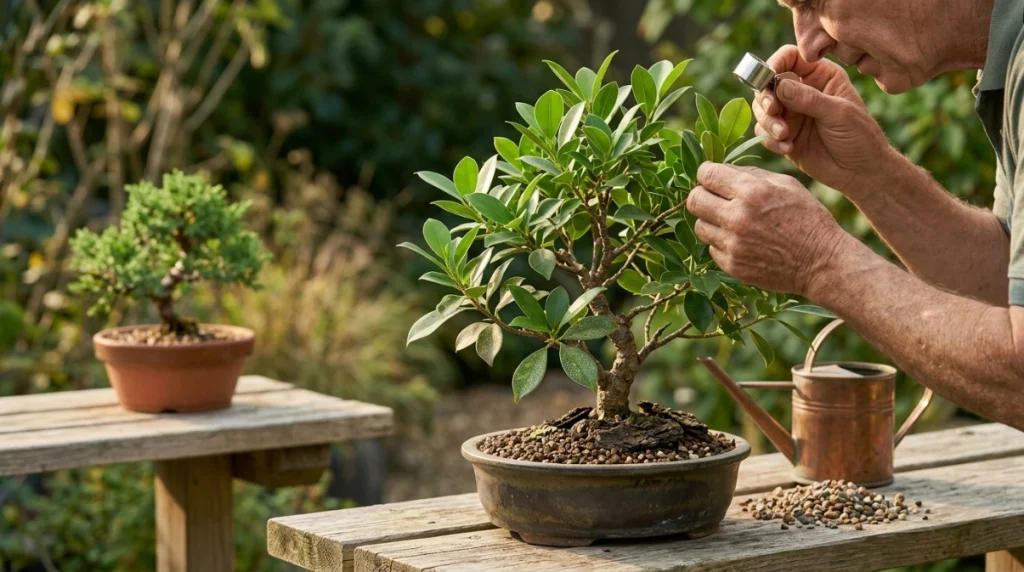
Help the tree recover by returning it to stable, species-appropriate care. Good light, correct watering, airflow, and protection from extreme stress give the bonsai the best chance to replace damaged foliage.
Don’t expect existing stippled leaves to turn perfectly green again. Judge recovery by the absence of live mites and the quality of new growth.
Inspect frequently after treatment
During an active infestation, check the tree every three to five days. University of Minnesota guidance recommends frequent inspection because mite populations can build rapidly during hot, dry conditions.
- Inspect leaf undersides.
- Repeat the white-paper test.
- Look for fresh stippling.
- Check whether new webbing appears.
- Inspect nearby plants for spread.
Reduce future mite-friendly conditions
Spider mites often become troublesome when plants experience hot, dry conditions. Correct watering and avoiding drought stress can make the environment less favorable while supporting the bonsai’s natural vigor.
This doesn’t mean keeping bonsai soil constantly wet. Water according to the species and substrate rather than creating root problems in an attempt to discourage mites.
Quarantine new trees
Inspect newly acquired bonsai before placing them against established trees. Check the foliage, branch junctions, trunk, and leaf undersides under strong light.
A short separation period gives hidden pests time to become visible. It is far easier to manage one affected bonsai than an entire bench of them.
Protect natural predators outdoors
Predatory mites and other beneficial organisms can suppress pest mite populations. Broad-spectrum pesticides may remove those natural enemies and sometimes contribute to later mite outbreaks.
A targeted approach protects the tree without unnecessarily disrupting everything living around it. That matters most in outdoor collections.
Section Takeaway: Recovery depends on stable care and repeated inspection. Preventing drought stress, checking new trees, and avoiding unnecessary broad-spectrum pesticides can reduce future outbreaks.
Frequently Asked Questions
How fast can spider mites kill a bonsai?
There is no fixed timeline because tree health, species, temperature, mite population, and water stress all matter. Under hot conditions, mite populations can increase dramatically within one to two weeks, so a heavy untreated infestation can deteriorate much faster than many beginners expect.
Can a bonsai recover after losing leaves to spider mites?
Yes, a bonsai can recover if enough healthy roots, branches, and stored energy remain. Eliminate the active mites first, then provide stable species-appropriate care rather than forcing growth with heavy fertilizer.
Does fine webbing always mean spider mites?
No. Ordinary spiders can also make webs around bonsai, but their webbing does not usually come with widespread stippling and bronzed foliage. Confirm mites with a hand lens or white-paper test before treating.
Can spider mites spread to other bonsai?
Yes. Mites can move among nearby susceptible plants, which is why separating an infested bonsai is useful. Inspect neighboring trees carefully, especially where foliage touches or pots sit close together.
Will spraying water kill spider mites?
Water can physically dislodge many mites and remove webbing, making it a useful first step. One rinse may not remove every mite or egg, so repeated inspection and further treatment may still be necessary.
Should I use neem oil on spider mites?
Some horticultural products containing neem-derived oils are labeled for mite management, but suitability varies by plant and formulation. Read the product label carefully, confirm it is appropriate for your bonsai species, and avoid applying oils during unsuitable temperatures.
Should I throw away a bonsai with spider mites?
Usually not. Most infestations are worth treating if the tree still has viable foliage and branches. Disposal becomes a more reasonable consideration only when the tree has suffered extreme decline or poses an unmanageable risk to a valuable collection.
Final takeaway: Spider mites can kill a bonsai, but early detection changes the outcome. Watch for stippling before heavy webbing appears, confirm live mites, treat them carefully, and keep the tree’s normal care stable while it recovers.
If you’re seeing pale speckles, bronzing, or fine webs today, inspect the leaf undersides now rather than waiting for more obvious damage. Catching a growing mite colony early is much easier than rebuilding a heavily defoliated bonsai.