
Live Dwarf Juniper Bonsai Tree Review: Worth It?

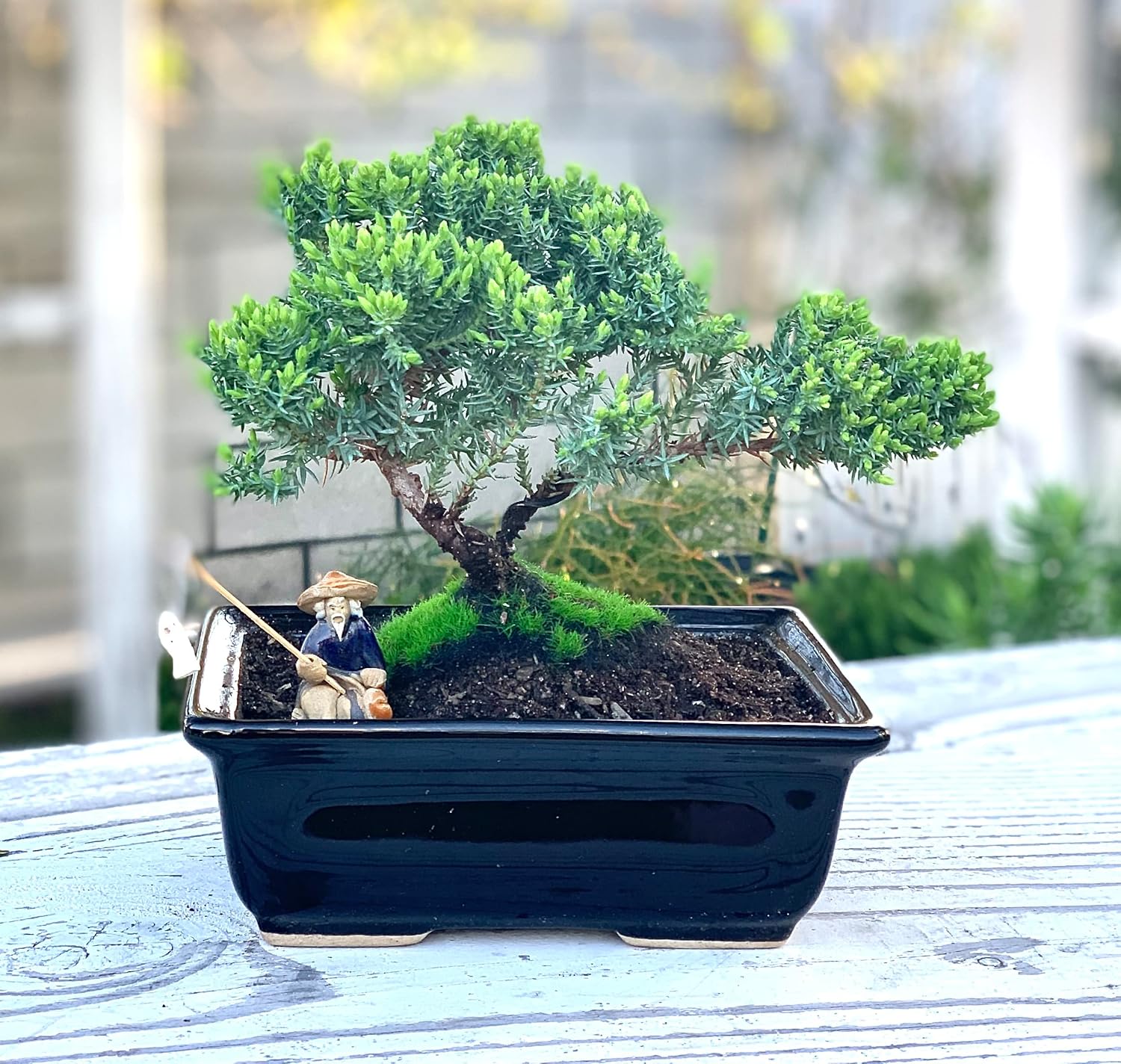
The Live Dwarf Juniper Bonsai Tree with Ceramic Fisherman is aimed at buyers who want a mature-looking bonsai without waiting years for a seedling to develop. The Amazon listing describes it as about six years old, compact, handcrafted, and already planted in a glazed ceramic pot. Its strongest appeal is presentation: you get an established evergreen silhouette, decorative fisherman, and a display-ready composition. The main caution is horticultural, not cosmetic—junipers are outdoor trees, so this is a poor match for anyone planning to keep it permanently on an indoor desk.

Quick Overview and Specifications
| Feature | Details |
|---|---|
| Product | Live Dwarf Juniper Bonsai Tree with Ceramic Fisherman |
| Manufacturer | New Country Bonsai Inc. |
| Advertised age | About 6 years; manufacturer copy also mentions 4–5 years |
| Approx. listed size | 7 x 4 x 6 inches on Amazon-derived listings |
| Container | Glazed ceramic bonsai pot; color and shape may vary |
| Included accent | Small ceramic fisherman and decorative top dressing |
| Best placement | Outdoors in strong light; short indoor display only |
| Current direct price reference | $45.95 on New Country Bonsai; Amazon pricing can vary |
First Impressions
This bonsai makes a stronger first impression than a bare nursery starter because the visual work is largely done. New Country Bonsai sells it as a compact live juniper in a glazed pot, and the fisherman creates a miniature landscape rather than a simple potted shrub. Buyer feedback found across current product listings repeatedly praises secure packaging and healthy green arrival, although live plants naturally vary in trunk movement, foliage density, pot color, and exact size.
One detail worth noticing is age labeling. The product title says “about 6 years old,” while the manufacturer’s own product copy also describes the tree as 4–5 years old. I would treat the age as approximate rather than guaranteed. For buyers focused on aesthetics, that may not matter; collectors who want precise provenance may prefer a nursery listing that identifies exact cultivar and age.
Performance and Feel
In bonsai terms, “performance” means how usable the tree is as living material. An older juniper has an immediate advantage over a seedling: there is already woody structure to prune, wire, and refine. The compact scale also makes it approachable for a first styling project. Our guide to outdoor bonsai trees for beginners explains why junipers remain a common learning species.
The key is placement. Specialist bonsai guidance recommends keeping junipers outdoors year-round in bright sun and allowing winter dormancy. That makes the product’s “home and office décor” positioning somewhat misleading. It can come inside briefly for display, but long-term vigor depends on outdoor light, airflow, and seasonal temperature changes. If indoor growing is your main goal, read our guide on whether a juniper bonsai can survive indoors before buying.
Shipping Condition and Acclimation
For a live bonsai, safe transit is a major part of product quality. Current buyer comments commonly mention intact foliage, moist soil, and packaging that kept the tree stable. A few reports across third-party review pages mention minor yellowing or a small broken stem, which is plausible shipping stress rather than automatic plant failure. The best first step is to unpack promptly, check moisture, and place the tree in suitable light without immediately pruning, wiring, or repotting a stressed specimen.
Durability and Long-Term Care
The ceramic pot and established woody trunk give this set better long-term potential than novelty “bonsai” kits built around seeds. Still, longevity depends far more on care than on the container. Junipers dislike constantly wet roots, so water based on soil condition rather than a fixed schedule. A fast-draining substrate matters, especially in a shallow pot; our juniper bonsai soil mix guide covers appropriate drainage-focused options.
The seller does not clearly identify the exact juniper species on the product page, which limits precise hardiness advice. In very cold climates, shallow bonsai roots need protection even when the species itself is cold-hardy. Also expect repotting and root work eventually as soil breaks down and the root mass fills the container.
Value for Money
New Country Bonsai currently lists this tree at $45.95 direct, which is competitive for a live, styled juniper in a ceramic pot with a decorative figure. You are paying for years of nursery growth and a finished presentation, not just plant material. Value drops if you specifically want a documented cultivar, a larger trunk, or a complete tool kit. Amazon pricing fluctuates, so compare the live price rather than assuming the direct-store figure.
Comparison to Similar Bonsai
Brussel’s Bonsai lists a 5-year Green Mound Juniper (Juniperus procumbens ‘Nana’) at $65, about 6–10 inches tall, with clearer botanical identification. That is a better fit for buyers who value documented species information. Brussel’s 3-year Green Mound kit is $59 and includes soil, shears, humidity tray, pot, and care brochure, making it more of a hands-on starter package. By contrast, this New Country Bonsai tree emphasizes immediate decorative impact and older-looking structure. If you want more help choosing among established junipers, our Japanese juniper bonsai guide covers the tradeoffs of size, age, lighting, and training.
Pros and Cons
Pros
- Established, mature-looking tree from day one
- Glazed ceramic pot and fisherman make it gift-ready
- Compact size suits patios, balconies, and small benches
- Buyer feedback often praises healthy arrival and packaging
- Lower direct price than some named-nursery 5-year junipers
Cons
- Not suitable for permanent indoor life
- Exact tree shape, size, and pot appearance vary
- Age description is not perfectly consistent
- Exact juniper species/cultivar is not clearly stated
- Live-plant shipping can cause minor stress or damage
Who Should Buy This?
Buy it if you want a compact outdoor bonsai that already looks established and you value presentation more than botanical documentation. It is especially appealing as a gift for someone with a sunny patio, balcony, garden bench, or other outdoor growing space. Skip it if you need a low-light office plant, want guaranteed specimen dimensions, or prefer a precisely labeled Juniperus cultivar for serious collection work.
Extended FAQ
Can this juniper bonsai live indoors?
Not as a permanent houseplant. Junipers need strong outdoor light, fresh air, and seasonal dormancy. Short indoor display periods are safer than year-round indoor placement.
How old is the tree?
The listing says about six years old, but the manufacturer’s product copy also mentions 4–5 years. Treat the age as approximate.
How often should I water it?
Do not water by calendar. Check the soil and water thoroughly when it begins to dry slightly, while avoiding prolonged sogginess.
Does the exact tree look like the product photo?
No live bonsai is identical. The seller notes that color and shape can vary, and individual trunk movement and foliage density will differ.
Should I repot it immediately?
Usually no. Let a newly shipped tree acclimate first unless there is an urgent drainage or root problem. Repotting adds stress.
Is it a good beginner bonsai?
Yes for a beginner who can grow outdoors and learn moisture control, pruning, and winter protection. It is not beginner-friendly if the plan is permanent indoor display.
Final Verdict
The Live Dwarf Juniper Bonsai Tree with Ceramic Fisherman earns its appeal through maturity, presentation, and gift-ready charm. Its approximately six-year head start means you receive something that already resembles a composed bonsai rather than raw nursery stock. The strongest concern is the indoor/outdoor messaging: proper juniper care requires outdoor conditions, and the unspecified cultivar plus approximate age reduce precision for advanced hobbyists. For a beginner with appropriate outdoor space, however, it offers a convincing balance of visual impact and price.
As an Amazon Associate, we earn from qualifying purchases…
