Azalea Bonsai Dropping Leaves? 8 Causes and What to Do

This post contains affiliate links. As an Amazon Associate, OurBonsai earns from qualifying purchases at no extra cost to you. Read our disclosure.
In this guide
An azalea bonsai dropping leaves is not always in trouble. Satsuki azaleas are semi-evergreen, so they naturally shed some older leaves every year, mostly in autumn, while keeping a set of smaller leaves through winter. The problem starts when leaves fall in large numbers, out of season, or while they are still green. That kind of drop is the tree telling you something is wrong with its roots, water, light or environment.
Below you will find the eight most common reasons azaleas lose leaves, how to recognize each one, and how to fix it. Start by noting the season, how many leaves are falling and what they look like when they drop.
Is it normal for an azalea bonsai to drop leaves?
Yes, to a point. Azaleas used for bonsai produce two kinds of leaves. Spring leaves are larger and grow early in the season. Summer leaves are smaller, tougher and grow later. In autumn, many of the spring leaves turn yellow, orange or red and fall, while the summer leaves stay on through winter. Some varieties also shed more than others.
So a light drop of older, inner leaves in autumn, with healthy buds at the branch tips, is normal. Any of these signs means it is not normal:
- Leaves dropping in spring or summer
- Green leaves falling off when touched
- Most of the tree losing leaves in a week or two
- Dry, crispy leaves or soft, black ones
- Bare branch tips with shriveled buds
8 reasons for azalea bonsai dropping leaves
1. Natural autumn shedding
As explained above, autumn drop of older leaves is part of the azalea’s yearly cycle. There is nothing to fix. Keep watering when the soil starts to dry and protect the tree from hard frost in winter.
2. The soil dried out
This is the most common cause of sudden leaf drop. Azaleas have hair-thin roots in a small volume of soil. If the pot dries out completely, the fine roots die within hours. A few days later, leaves wilt, turn brown or crispy and fall.
Fix: soak the pot in a tray of water for 10 minutes, let it drain, and then check the soil every day. In summer, small azaleas often need water daily, sometimes twice. Our guide to watering bonsai in summer has practical tips.
3. Overwatering and root rot
The opposite problem looks different. Leaves turn yellow, go soft and drop, and the soil stays wet for days. Roots without oxygen start to rot, and the tree cannot hold on to its leaves.
Fix: water only when the top layer is just starting to dry. Check that the drainage holes are open. If the roots are dark and mushy, follow our guide to root rot in bonsai and repot into fresh, airy soil like kanuma.
4. Moved indoors or too little light
Azaleas are outdoor trees. Brought indoors for long, they get too little light, the air is dry from heating, and there is no cool winter rest. The usual reaction is steady leaf drop over a few weeks.
Fix: keep the tree outside in bright, filtered light for most of the year. If you bring it in to enjoy the flowers, keep the visit short and place it in the brightest, coolest window. See our Satsuki azalea indoor care guide for details.
5. Hard water and wrong soil pH
Azaleas need acidic soil. Hard tap water slowly raises the pH, leaves yellow between the veins and eventually drop. This is slower than the other causes, often over a season.
Fix: use rain water, repot into kanuma and feed with an acid fertilizer. Our list of the best soil for azalea bonsai helps you choose a mix.
6. Pests
Spider mites and lace bugs suck sap from the leaves, which become speckled, pale and then fall. Spider mites are worst in hot, dry weather and indoors.
Fix: check the underside of leaves with a magnifying glass. Hose the tree down and use insecticidal soap or neem oil. Our guide to spider mites on bonsai trees has a step-by-step plan.
7. Repotting shock
Repotting removes some roots, so the tree temporarily cannot support all its leaves. Some drop is normal for a few weeks afterwards.
Fix: keep the tree in light shade, out of the wind, with evenly moist soil. Skip fertilizer for about a month.
8. Heat, wind and sun scorch
Hot, dry wind and strong afternoon sun can scorch leaves, which then brown and fall, often on one side of the tree.
Fix: give morning sun and afternoon shade in hot climates, and use a shade cloth in heat waves.
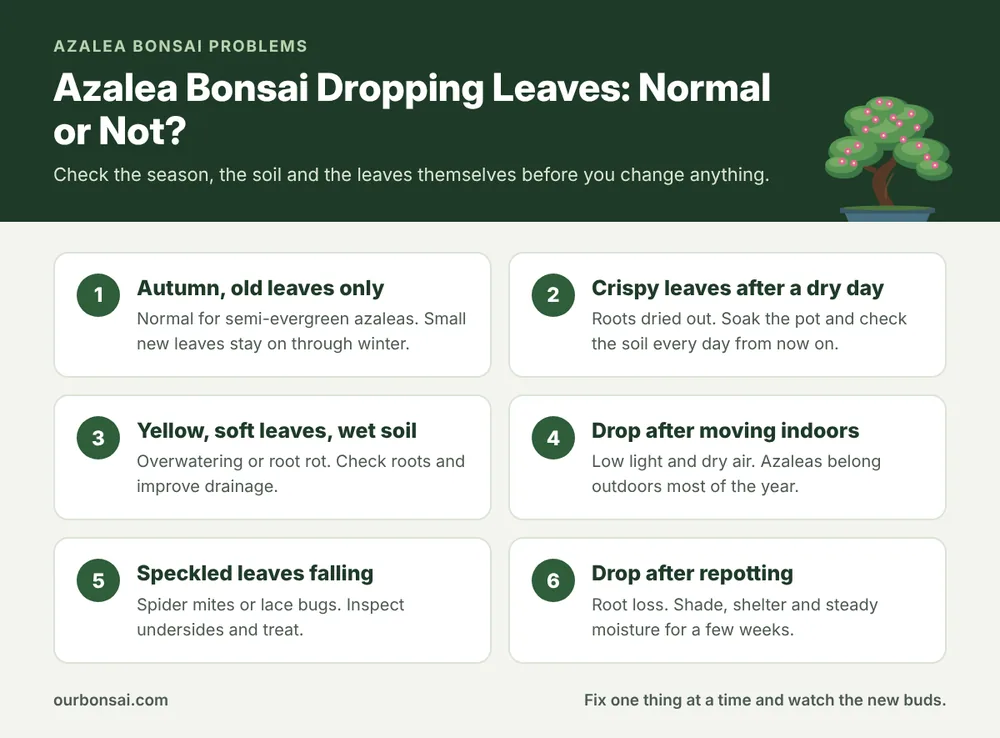
What to do right now if your azalea bonsai is dropping leaves
- Check the soil moisture. Push a finger 1 cm into the soil. Bone dry or soggy will point you to cause 2 or 3.
- Look at the branch tips. Plump buds mean the tree is alive and can recover. Scratch the bark lightly with a fingernail: green underneath is good, brown and dry is dead.
- Inspect a few leaves. Speckles, webs or black spots under the leaf mean pests.
- Move it to the right spot. Outdoors, bright but not scorching, sheltered from strong wind.
- Do not fertilize a stressed tree. Wait until new leaves appear.
- Do not repot in a panic, unless roots are clearly rotting.
For general leaf-drop problems that apply to any species, our guide to why a bonsai loses leaves suddenly is a useful companion.
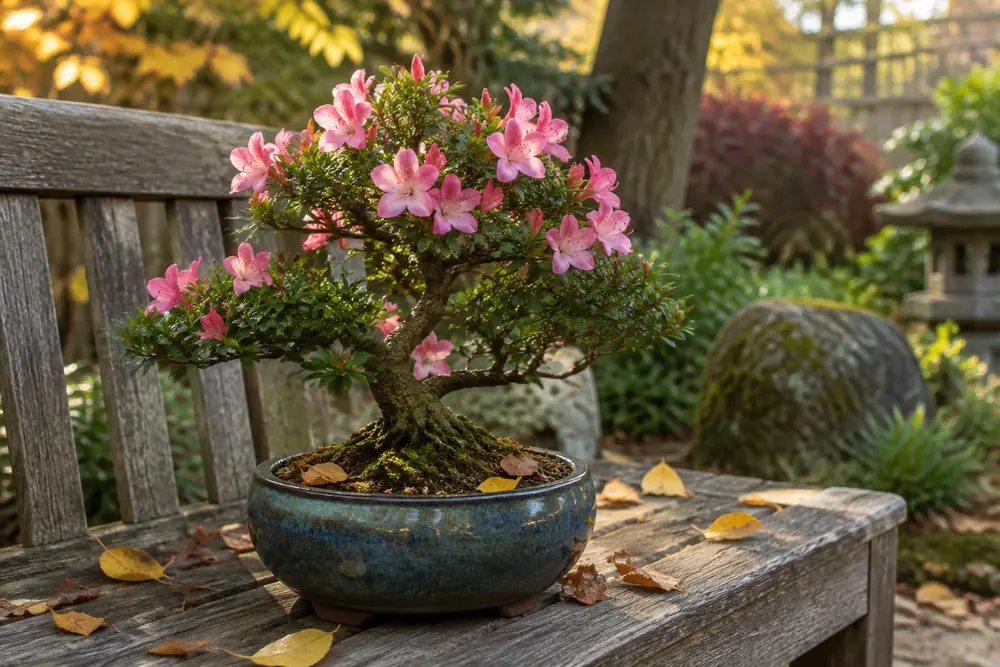
Azalea bonsai leaf drop by season
| Season | What leaf drop usually means |
|---|---|
| Spring | Root damage from winter, dry soil, or repotting stress |
| Summer | Dry roots, heat scorch, spider mites |
| Autumn | Normal shedding of older spring leaves |
| Winter | Frozen or dried-out roots, or the tree kept too warm indoors |
How to help an azalea grow its leaves back
Once you have fixed the cause, the tree needs time. Keep it outdoors in bright, filtered light, water carefully and wait. New buds can take two to six weeks to open, depending on the season. When new leaves appear, start feeding again with an acid-friendly fertilizer at half strength. Our picks for the best fertilizer for azalea bonsai include gentle organic options.
Azaleas are tough once established. The Royal Horticultural Society’s rhododendron guide stresses the same basics for garden azaleas: acidic soil, steady moisture and protection from drying winds.
FAQ: azalea bonsai dropping leaves
Why is my azalea bonsai losing leaves in summer?
Most often the soil dried out on a hot day, or spider mites are feeding on the leaves. Check the soil daily and inspect the leaf undersides.
Will my azalea bonsai grow back after losing all its leaves?
Often yes, if the branches are still green under the bark and the roots are alive. Keep it outdoors, water carefully and wait for new buds.
Do azalea bonsai lose their leaves in winter?
They lose some older leaves in autumn but keep the small summer leaves through winter. A completely bare azalea in winter is a sign of a problem.
Can I bring my azalea bonsai indoors to stop leaf drop?
Usually that makes it worse. Azaleas need outdoor light and a cool winter rest. Protect them from hard frost in an unheated, sheltered spot instead.
Final thoughts
An azalea bonsai dropping leaves is either following its natural cycle or reacting to stress. Light autumn shedding is normal. Heavy, sudden or out-of-season drop almost always comes back to the roots: too dry, too wet, or in the wrong soil. Fix the watering and soil first, keep the tree outdoors in good light, and give it a few weeks. For a full care routine, see our main bonsai care guide.