Boxwood Bonsai Dropping Leaves: Why It Happens and What to Do

A boxwood bonsai dropping leaves always deserves a closer look, because boxwood is an evergreen. Unlike a maple or an elm, it is not supposed to go bare in autumn. A light drop of old leaves from inside the canopy is normal, since each boxwood leaf only lives two or three years. But leaves falling from the outer shoots, green leaves dropping when you touch the tree, or bare patches spreading through the canopy are all signs of stress that you should act on quickly.
In this guide
The good news is that boxwood is tough and buds back well from old wood. If you find and fix the cause while the branches are still alive, most trees recover fully within a season. This guide explains the common causes, how to tell them apart and what to do next.
Is it normal for a boxwood bonsai to lose leaves?
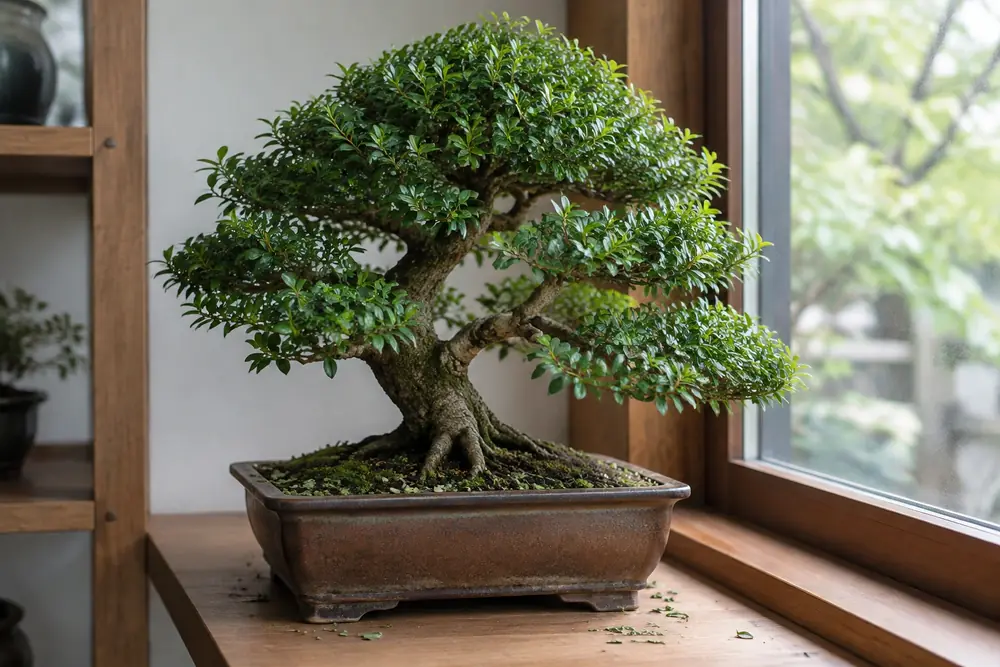
Some leaf loss is normal. Boxwood replaces its leaves gradually. In spring, as new growth starts, the tree sheds a portion of its oldest leaves, mainly from the shaded inside of the canopy. You might also see a few yellow inner leaves in late summer. As long as the branch tips are full of healthy leaves and new buds, this is just turnover.
It is not normal when:
- Leaves drop from the tips of branches, not just the inside
- Leaves turn brown, black-spotted or crispy before falling
- Large areas go bare within a few weeks
- Twigs are dry and brittle under the bark
7 reasons for boxwood bonsai dropping leaves
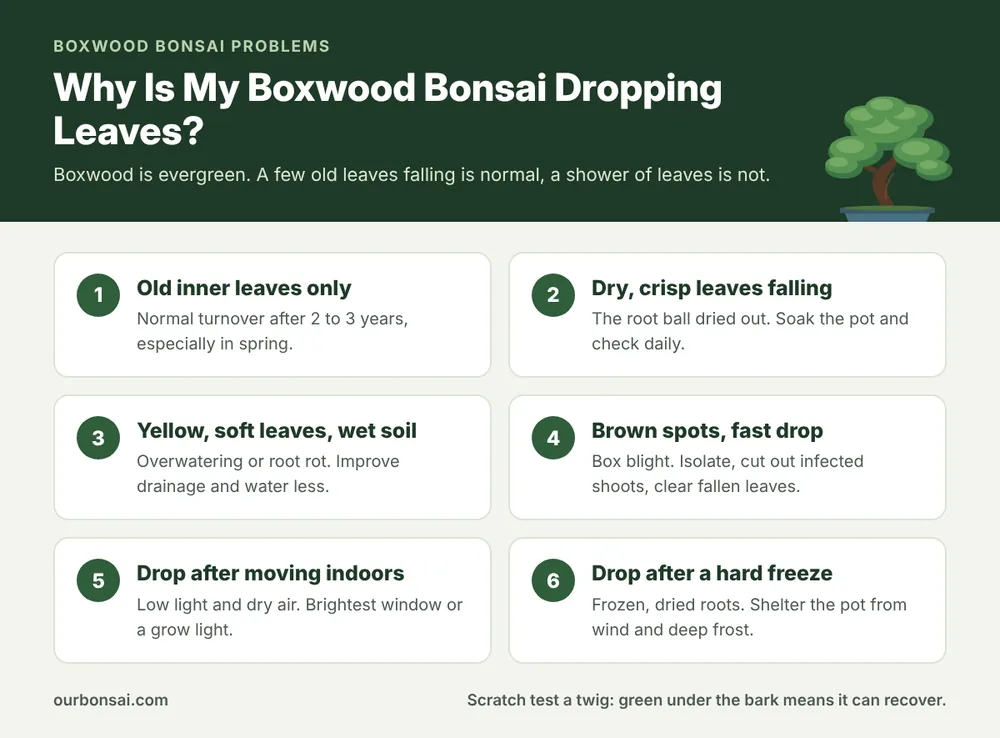
1. The soil dried out
Boxwood has fine, shallow roots, and a bonsai pot holds very little water. If the soil dries out completely, especially on a hot or windy day, the root tips die and the tree drops leaves a few days later. The leaves often feel dry and crisp.
Fix: soak the pot in a basin of water for 10 minutes so the whole root ball rehydrates, then let it drain. From now on, check the soil every day in the growing season. A simple soil moisture meter can help while you learn the rhythm.
2. Overwatering and root rot
The opposite mistake causes leaves to yellow, soften and fall. Roots sitting in wet soil suffocate and rot. You may notice a sour smell or a dark, slimy surface on the soil.
Fix: let the topsoil dry slightly between waterings and make sure water drains freely. If you lift the tree and find mushy black roots, follow our guide to root rot in bonsai. Repot into a gritty mix as described in our bonsai soil mix ratio guide.
3. Box blight
Box blight is a fungal disease that spreads fast in warm, humid weather. Leaves develop dark brown spots, turn brown and drop quickly, and young stems show black streaks. Whole patches can go bare in days. The RHS box blight guide has photos that make it easy to recognize.
Fix: move the tree away from other boxwoods, cut out infected shoots into healthy wood, clean your tools between cuts, collect all fallen leaves and water the soil, not the foliage. Thin the canopy to let air through.
4. Moved indoors, or too little light
Japanese and common boxwood are outdoor trees. Kept indoors, they get too little light and react by dropping leaves, often from the inside first. Even the indoor-friendly Harland boxwood drops leaves in a dark room.
Fix: outdoor boxwood belongs outside all year with winter protection. Harland boxwood indoors needs the brightest window you have or a grow light. Our Brussel’s Harland boxwood bonsai review covers indoor placement for this species.
5. Cold and wind damage
Hardy boxwood can handle frost, but roots in a small pot are exposed. If the root ball freezes hard and the tree also sits in cold, drying wind, the leaves can’t get water. They bronze, dry and drop in late winter or early spring.
Fix: in winter, place the pot on the ground in a sheltered spot, mulch around it or put it in an unheated shed or garage with some light. Water on mild days when the soil is dry.
6. Pests
Boxwood leafminer, boxwood mites and boxwood psyllids weaken leaves until they fall. In parts of Europe, box tree caterpillars can strip a tree in days. The RHS box tree caterpillar page shows the webbing and damage to look for.
Fix: inspect leaves and inner branches closely. Remove caterpillars by hand, hose off mites, and remove blistered leaves with leafminer larvae.
7. Repotting or heavy pruning
Removing a lot of roots or leaves at once can make the tree shed more. This is usually temporary.
Fix: keep the tree in light shade and out of the wind for a few weeks, keep the soil evenly moist and wait for new buds before feeding.
What to do right now
- Feel the soil. Too dry or too wet gives you the most likely cause right away.
- Do the scratch test. Gently scratch a twig with your fingernail. Green and moist underneath means alive. Brown and dry means that twig is dead.
- Look for spots and streaks. Brown leaf spots and black stem streaks mean blight. Isolate the tree.
- Check the location. Outdoor boxwood should be outside in good light, with shelter in winter.
- Hold off on fertilizer until the tree is pushing new growth.
- Be patient. Boxwood buds back from bare wood, but it can take four to eight weeks.
Boxwood leaf drop by season
| Season | Most likely cause |
|---|---|
| Spring | Normal turnover, winter root damage, repotting stress |
| Summer | Dry roots, mites, box blight in humid spells |
| Autumn | Blight after wet weather, overwatering as growth slows |
| Winter | Frozen or dried-out roots, cold wind, tree kept indoors |
How to help your boxwood leaf out again
Once you have fixed the cause, cut back any dead twigs to live wood and let the tree recover in bright, filtered light. When new shoots appear, start feeding again with a balanced fertilizer at half strength. A good liquid feed, like those in our guide to the best liquid fertilizer for bonsai trees, works well for boxwood. Through the next growing season, thin the canopy regularly so light and air reach the inside. This prevents the slow inner leaf drop that dense boxwoods often suffer from. Our boxwood bonsai styles guide shows how to keep an open, healthy structure.
FAQ: boxwood bonsai dropping leaves
Why is my boxwood bonsai losing leaves from the inside?
Usually it is shade inside a dense canopy, or normal turnover of old leaves. Thin the canopy so light reaches the inner branches.
Can a boxwood bonsai recover after losing all its leaves?
Often yes, if the branches and roots are still alive. Boxwood buds well from old wood. Keep it in good light, water carefully and wait several weeks.
Is my boxwood bonsai dropping leaves because of the cold?
It can be, if the roots froze hard or the tree sat in cold, drying wind. Give it a sheltered spot and protect the pot in winter.
Should I fertilize a boxwood that is dropping leaves?
No. Fix the cause first and wait until new shoots appear. Feeding a stressed tree with damaged roots can make things worse.
Final thoughts
A boxwood bonsai dropping leaves is reacting to a problem in its roots, its light or its surroundings, or it is simply replacing old inner leaves. Check the soil first, rule out blight and pests, and make sure the tree is in the right spot for its species. Boxwood is resilient, and with the cause fixed it will usually fill back in. For a wider overview of leaf drop on any species, see our guide to why a bonsai loses leaves suddenly.