Is Bonsai Hard to Care For? An Honest Answer for Beginners

Is bonsai hard to care for? The honest answer is: keeping a bonsai alive and healthy is not hard, but it is different from caring for a normal houseplant. The basics take a minute or two a day and a few habits you can learn in a couple of weeks. What is genuinely hard, and takes years to master, is the art side: styling, wiring and developing a tree into a masterpiece. You do not need that to enjoy a healthy bonsai.
In this guide
- Why bonsai seems hard
- What is easy about bonsai care
- What takes some learning
- A realistic first month
- How much time does bonsai take?
- How much does bonsai cost?
- Is bonsai hard to care for indoors?
- The easiest bonsai for beginners
- The hardest bonsai to keep
- Mistakes that make bonsai seem hard
- Who finds bonsai easy?
- FAQ: is bonsai hard to care for
- Final thoughts
Bonsai’s reputation for difficulty mostly comes from the large number of trees that die in their first year. When you look at why they die, it is almost always the same few mistakes. This article explains what is easy, what takes some learning, how much time and money bonsai really needs, and how to set yourself up to succeed.
Why bonsai seems hard
There are three reasons people think bonsai is difficult:
- Many gift and shop trees die quickly. That is usually because they are outdoor species sold as indoor plants, or kept in dark corners as decorations.
- The small pot leaves little margin for error. A bonsai can dry out in an afternoon. A normal houseplant would survive a missed week.
- The art looks complex. Pictures of centuries-old trees make it seem like you need special skills from day one.
None of these mean the basics are hard. They mean the basics are important.
What is easy about bonsai care
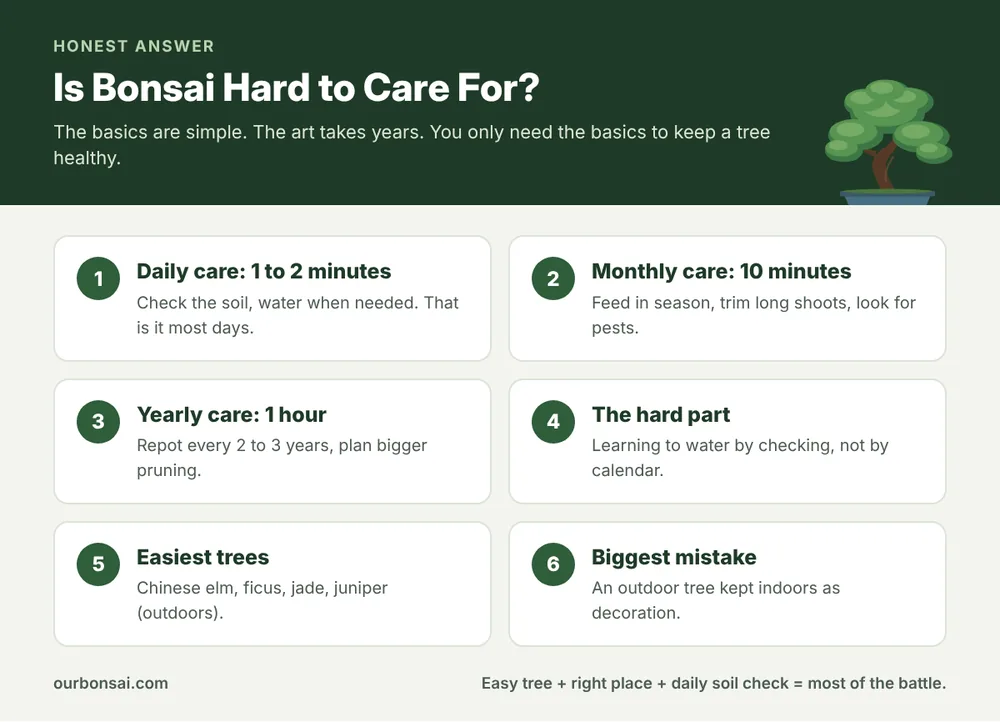
- Daily care is quick. Most days, you check the soil and water if needed.
- The rules are simple. Light, water, soil, feeding and the seasons cover almost everything.
- Many species are tough. Chinese elm, ficus and jade forgive a lot of beginner mistakes.
- Trees recover. A stressed bonsai that gets the right care usually bounces back within weeks.
- You need few tools. A watering can and a pair of scissors are enough to start.
What takes some learning
Watering by checking
This is the one real skill to learn early. Instead of watering every few days, you check the soil daily and water thoroughly when the top is just dry. It takes a couple of weeks to get a feel for how fast your pot dries in different weather. A soil moisture meter can help in the beginning.
Light
Bonsai need much more light than most houseplants. Indoors, that means right next to the brightest window or under a grow light. Our guide on how much light a bonsai tree needs explains how to judge it.
Indoor vs outdoor species
Some bonsai, like junipers, maples and pines, must live outdoors and need winter cold. Others, like ficus and jade, can live inside. Knowing which you have is essential.
Seasonal timing
Repotting, heavy pruning and feeding all have best times of year. Once you know them for your species, it becomes routine.
A realistic first month
If you are still unsure, here is what the first month with a beginner tree typically looks like:
- Week 1: you find a bright spot, learn what dry soil feels like and water a few times. Some leaf drop is normal as the tree adjusts.
- Week 2: you start to notice how quickly the pot dries in warm or cool weather. Watering becomes a quick morning habit.
- Week 3: new buds may appear if it is the growing season. You check under a few leaves for pests while watering.
- Week 4: you feed for the first time and maybe trim a long shoot or two.
By the end of the month, most people find the routine takes less time than making a cup of coffee. The challenge is consistency, not difficulty.
How much time does bonsai take?
| Task | How often | Time |
|---|---|---|
| Check soil and water | Daily | 1 to 2 minutes |
| Look for pests | Every 1 to 2 weeks | 2 minutes |
| Feed | Every 1 to 4 weeks, spring to autumn | 2 minutes |
| Trim long shoots | Every few weeks in the growing season | 5 to 10 minutes |
| Repot | Every 2 to 5 years | 30 to 60 minutes |
| Wiring and styling | Optional, a few times a year | As long as you enjoy |
In total, basic care for one tree takes less time than walking a dog. The only demanding part is that daily soil check, especially in summer.
How much does bonsai cost?
Bonsai does not have to be expensive. A healthy young tree from a nursery or a beginner bonsai costs about the same as a nice houseplant. You will need a bag of proper soil every couple of years, a fertilizer and a pair of scissors. Expensive tools, rare pots and old specimen trees are optional extras for later. Our guide on what tools are needed for a bonsai garden lists what is essential and what can wait.
Is bonsai hard to care for indoors?
Indoor bonsai are a little harder than outdoor ones, mainly because homes are darker and drier than trees would like. Choose a tropical species, put it right next to a bright window, add a grow light in winter and use a humidity tray. Our guide on how to take care of a bonsai tree inside covers the details.
The easiest bonsai for beginners
- Chinese elm: tough, recovers quickly, indoor or outdoor in mild climates.
- Ficus: the classic easy indoor bonsai.
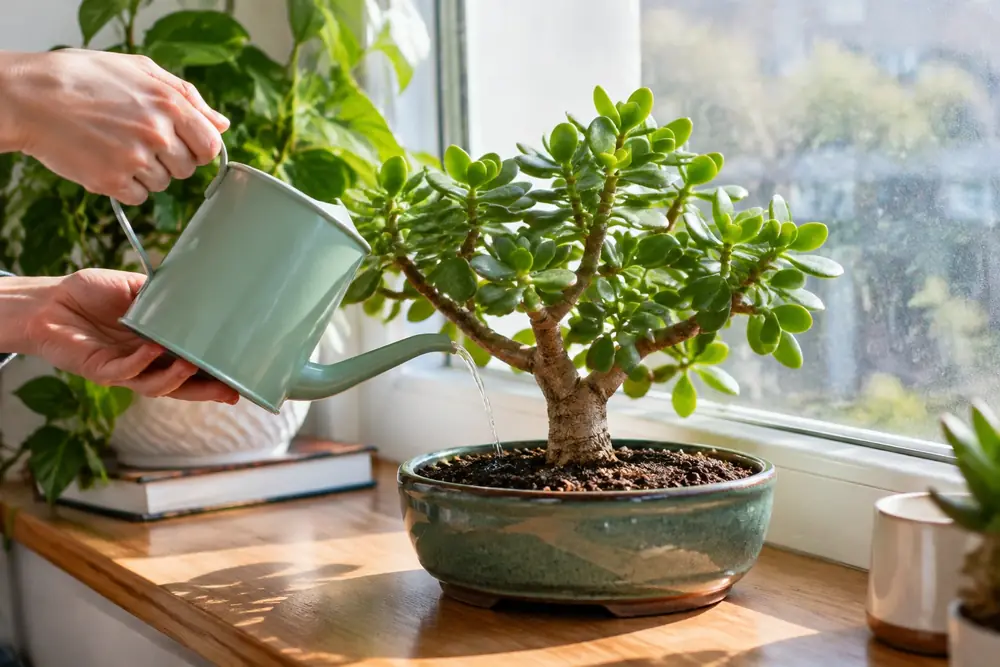
- Jade: stores water, ideal if you forget to water.
- Juniper: very hardy, but only outdoors.
- Dwarf schefflera: tolerates lower light than most indoor trees.
Our list of the best low maintenance bonsai trees for beginners compares them in detail.
The hardest bonsai to keep
Some species are genuinely more demanding: azaleas (acidic soil and careful watering), flowering cherries (prone to root rot), pines (complex seasonal pruning) and Japanese maples (sensitive to sun scorch and wind). They are wonderful trees, but better as a second or third bonsai.
Mistakes that make bonsai seem hard
- Keeping an outdoor tree indoors
- Placing the tree in a dark spot as decoration
- Watering on a schedule instead of checking the soil
- Using regular potting soil
- Never feeding
- Repotting, pruning and wiring all at once
Avoid these and bonsai becomes much easier. Our main bonsai care guide covers each basic step.
Who finds bonsai easy?
People who enjoy a small daily routine usually find bonsai relaxing rather than difficult. If you like checking on plants in the morning, you already have the most important habit. If you travel a lot, choose drought-tolerant species like jade, set up an automatic watering system, or ask a neighbor to help. The National Bonsai Foundation is a good place to see what the hobby can become once the basics feel easy.
FAQ: is bonsai hard to care for
Is bonsai a good hobby for beginners?
Yes. Start with one hardy species, learn to water by checking the soil and give it good light. Most beginners who do that succeed.
How long does it take to learn bonsai care?
The basics take a few weeks. Styling and advanced techniques take years, but they are optional and part of the fun.
Can a bonsai survive if I forget to water it?
A day or two in cool weather, often yes. In summer heat, a small bonsai can die within a day. Jade and other succulents are the most forgiving.
Is bonsai more work than a houseplant?
A little. Mainly the daily soil check and occasional pruning. In return, you get a tree that can live for decades.
Final thoughts
So, is bonsai hard to care for? Not really, as long as you choose the right tree, give it strong light and learn to water by checking the soil. The basics take minutes a day. The art can take a lifetime, and that is what makes it rewarding. If you are ready to start, our guide to the best place for a bonsai tree is a good next step.