Overwatered Bonsai: Signs and How to Save It

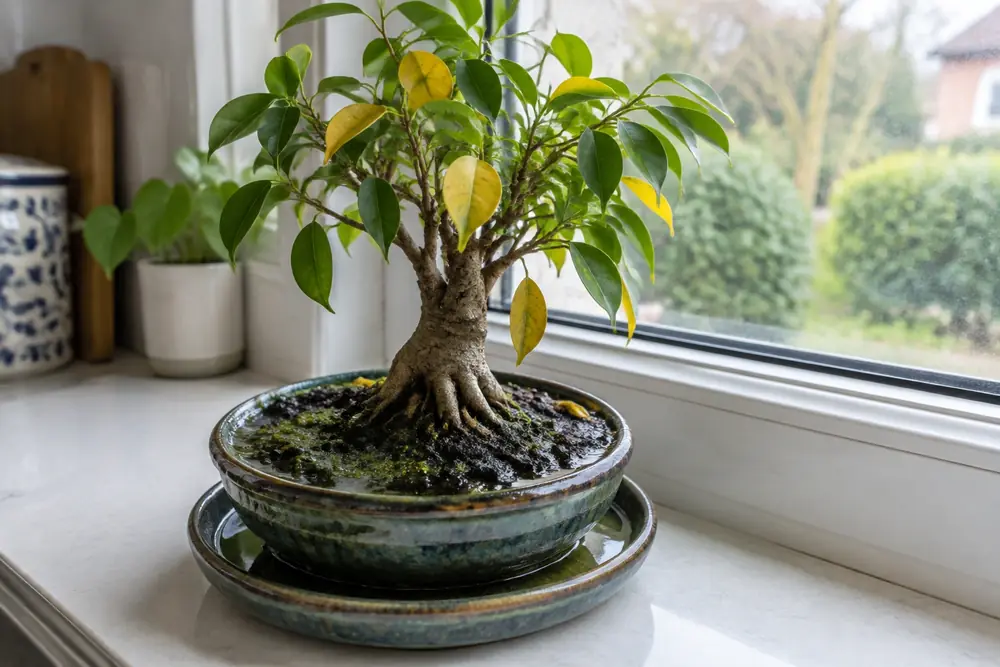
An overwatered bonsai is one of the most common problems in the hobby, and one of the most fixable if you catch it early. The typical signs are yellowing leaves (often starting low on the tree), leaves dropping while the soil is still wet, wilting despite moist soil, green algae on the surface and a sour smell. The fix is to stop watering until the top of the soil dries, make sure the pot drains freely, check the roots for rot, and if needed, trim the dead roots and repot into fresh, gritty bonsai soil.
In this guide
- Why too much water hurts bonsai
- 8 signs of an overwatered bonsai
- Overwatered or underwatered?
- Common causes of overwatering
- How to save an overwatered bonsai
- How long does recovery take?
- How to prevent overwatering
- A simple test for your watering habit
- Species most at risk
- Common mistakes when rescuing an overwatered bonsai
- FAQ: overwatered bonsai
- Final thoughts
This guide explains why overwatering does so much damage, how to recognize it and how to rescue the tree.
Why too much water hurts bonsai
Roots need oxygen as much as they need water. In healthy bonsai soil, water drains through quickly and air fills the gaps between particles. When the soil stays waterlogged, those gaps stay full of water and roots slowly suffocate. Fine feeder roots die first, the tree can no longer take up water or nutrients properly, and fungi that cause root rot move in.
The irony is that an overwatered tree often looks thirsty. Leaves droop and wilt because damaged roots cannot supply water, so the owner waters again, making things worse.
8 signs of an overwatered bonsai
- Yellow leaves, often starting with the older leaves low on the tree.
- Leaves dropping while the soil is wet.
- Wilting or drooping even though the soil is moist.
- Soil that stays dark and wet for days after watering.
- Green algae or moss spreading quickly over the soil surface.
- A sour or rotten smell from the soil.
- Soft, dark roots coming out of the drainage holes.
- Fungus gnats flying around the pot, attracted by constantly wet soil. See our guide to fungus gnats on bonsai trees.
Overwatered or underwatered?
| Sign | Overwatered | Underwatered |
|---|---|---|
| Soil | Wet or damp for days | Dry, light, pulling from pot edge |
| Leaves | Yellow, soft, dropping | Crispy, brown edges, curling |
| Wilting | Happens even with wet soil | Recovers quickly after watering |
| Smell | Sour, musty | None |
| Roots | Dark, mushy, slimy | Dry, brittle but light colored |
Many owners confuse the two. Always check the soil before deciding. Our guide on why bonsai leaves are wilting goes deeper into telling them apart.
Common causes of overwatering
- Watering on a fixed schedule instead of checking the soil.
- Regular potting soil. It holds water far too long for a bonsai pot. See bonsai soil vs regular soil.
- Blocked drainage holes or a pot without holes.
- A saucer full of water under the pot.
- Old, broken-down soil that has turned compact.
- Low light indoors, so the tree uses little water but gets the same amount.
- Winter, when trees grow slowly but owners keep their summer routine.
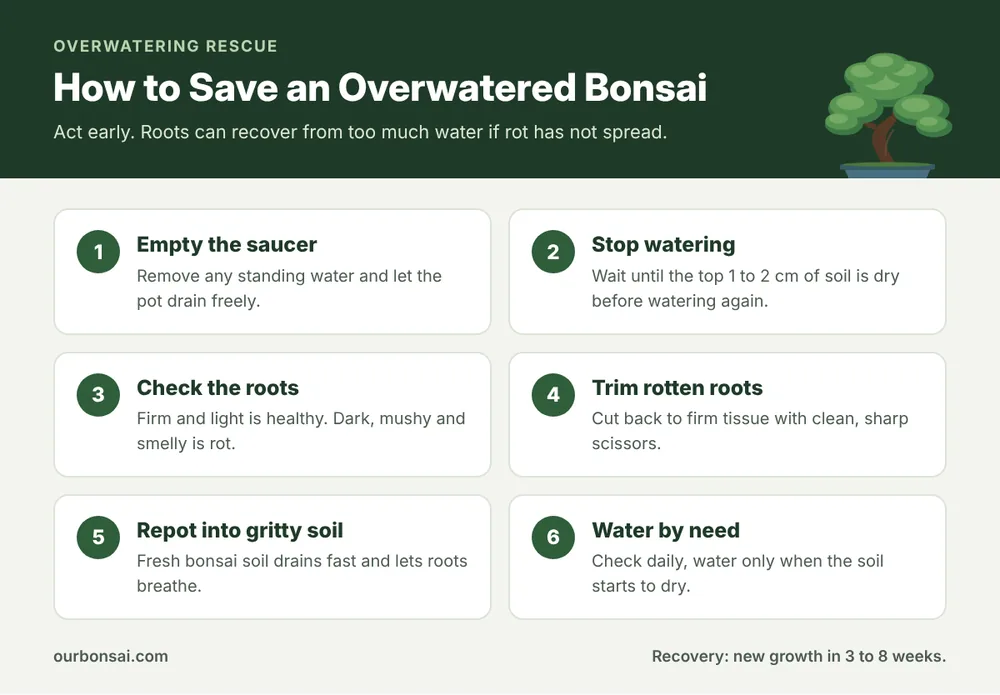
How to save an overwatered bonsai
Mild case: wet soil, a few yellow leaves
- Empty any saucer and make sure water drains freely.
- Stop watering until the top 1 to 2 cm of soil is dry.
- Move the tree to a brighter, airier spot so the soil dries faster. Avoid strong afternoon sun while it recovers.
- Remove yellow leaves.
- From now on, check the soil before every watering.
Serious case: wilting, smell, heavy leaf drop
- Remove the tree from the pot. Gently slide it out and look at the roots.
- Clean away soggy soil. Use a chopstick to loosen and remove the wet, compacted soil.
- Trim rotten roots. Cut away dark, mushy or smelly roots with clean, sharp scissors, back to firm, light-colored tissue.
- Repot into fresh, gritty soil. A mix of akadama, pumice and lava drains fast and gives roots air. Our bonsai soil mix ratio guide explains the proportions.
- Use a clean pot with good drainage holes.
- Water once lightly to settle the soil, then wait until the top starts to dry.
- Keep the tree in bright shade, away from wind and direct sun, for two to three weeks.
- Do not fertilize until you see new growth.
For a deeper look at root disease, see our full guide to root rot in bonsai.
How long does recovery take?
In mild cases, the tree stabilizes within a week or two once the soil dries properly. After root pruning and repotting, expect three to eight weeks before new growth appears. Some trees drop most of their leaves during recovery and then re-bud. Use the scratch test on branches: green under the bark means the tree is still alive.
How to prevent overwatering
- Check before you water. Push a finger 1 cm into the soil. Water only if it feels dry at that depth.
- Use bonsai soil, not potting compost.
- Keep drainage holes clear and never leave a pot standing in water.
- Adjust for the season. Trees need much less water in winter.
- Use a moisture meter if you find it hard to judge. A simple soil moisture meter helps beginners a lot.
- Repot on time so the soil does not break down into mud.
Our guide on watering indoor bonsai in winter is especially useful, because winter is when most indoor trees get overwatered.
A simple test for your watering habit
If you are not sure whether you overwater, try this for two weeks: before every watering, push a wooden chopstick deep into the soil and leave it for ten minutes. Only water if it comes out dry or barely damp. Write down the days you actually water. Most people who try this find their tree needs water far less often than they thought, especially indoors and in winter.
Species most at risk
Trees that prefer drier roots suffer from overwatering fastest: junipers, pines, olives, jade and other succulents. Thirstier trees like azaleas and willows tolerate wetter soil, but even they need drainage and air.
Common mistakes when rescuing an overwatered bonsai
- Watering again because the tree wilts. Check the soil first.
- Putting the tree in hot, direct sun to dry it out. Damaged roots cannot cope with heat.
- Fertilizing to help it recover. Fertilizer salts harm damaged roots.
- Repotting into the same old soil. Always use fresh, fast-draining soil.
FAQ: overwatered bonsai
Can an overwatered bonsai recover?
Yes, if enough healthy roots remain. Let the soil dry, trim any rotten roots and repot into gritty soil.
How do I dry out an overwatered bonsai?
Empty the saucer, stop watering, and move the tree to a bright, airy spot out of direct sun. In serious cases, repot into fresh, dry bonsai soil.
How long does it take for an overwatered bonsai to recover?
Usually two to eight weeks, depending on how much root damage there was.
Should I repot an overwatered bonsai right away?
If the roots are rotting or the soil stays wet for days, yes, regardless of season. Otherwise, let it dry and repot in spring.
Do self-watering pots cause overwatering in bonsai?
Often, yes. They keep the bottom of the soil permanently wet, which most bonsai species dislike. A normal bonsai pot with large drainage holes is safer.
Final thoughts
An overwatered bonsai is a common mistake with a clear fix: let the roots breathe again. Stop watering until the soil dries, check and trim the roots if needed, and move the tree into fresh, gritty soil. Then switch to watering by need instead of by habit. Your tree will recover, and your future trees will thank you. For more basics, see our main bonsai care guide.