Best Soil for Ginkgo Bonsai: Mix Recipe and Ratios

This post contains affiliate links. As an Amazon Associate, OurBonsai earns from qualifying purchases at no extra cost to you. Read our disclosure.
In this guide
The best soil for ginkgo bonsai is a gritty, free-draining mix that still holds some moisture, such as 2 parts akadama, 1 part pumice and 1 part lava rock. Ginkgo (Ginkgo biloba) has thick, fleshy roots that rot quickly in soggy soil, but it also does not like to dry out completely. A balanced mix like this gives the roots air, drains instantly after watering and keeps a gentle, even moisture between waterings. It is a classic bonsai mix that suits ginkgo particularly well.
This guide explains what ginkgo roots need, gives three easy soil recipes, lists soils to avoid, and shows how and when to repot.
Why soil matters for ginkgo bonsai
Ginkgo is one of the oldest tree species on Earth, often called a living fossil. The Wikipedia page on Ginkgo biloba describes a tough, long-lived tree that tolerates pollution, poor soil and harsh city streets. In the ground it is nearly indestructible. In a small pot, its weak point is its roots.
Ginkgo roots are thicker and more fleshy than those of most bonsai species. They store water and energy, which makes them prone to rot if the soil stays wet. At the same time, the fan-shaped leaves lose a lot of water on hot days, so a mix that dries out too quickly can scorch the leaves. The goal is a mix that sits in the middle: excellent drainage and air, with enough water-holding particles to carry the tree from one watering to the next.
What makes a good ginkgo bonsai soil
| Property | Why it matters for ginkgo |
|---|---|
| Fast drainage | Fleshy roots rot in standing water |
| Plenty of air space | Roots need oxygen to grow and stay firm |
| Moderate water retention | Prevents leaf scorch on hot days |
| Stable particles | Mineral grit does not compact like peat |
| Particle size 2 to 6 mm | Room for air, enough surface for fine roots |
Best soil components for ginkgo bonsai
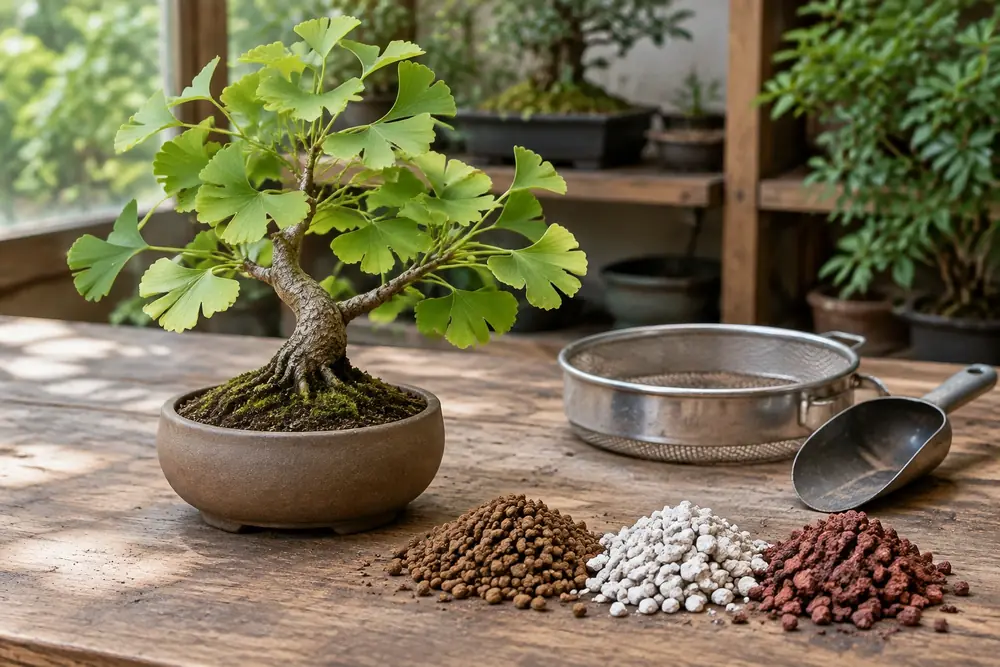
- Akadama. Japanese baked clay granules. Holds water and nutrients, drains well, and changes color as it dries. The backbone of most ginkgo mixes.
- Pumice. Light, porous volcanic rock. Holds a little water inside each grain while keeping the mix open. Encourages fine root branching.
- Lava rock. Heavy, rough and very free-draining. Adds structure and keeps the mix from compacting.
- Calcined clay. A cheaper alternative to akadama, sold as oil absorbent or certain non-clumping cat litters. Our guide to the best cat litter for bonsai soil explains which types work.
- Pine bark fines. Small amounts add water retention and organic matter, useful in hot climates.
Our general bonsai soil mix ratio guide explains how each component behaves and how to adjust ratios for different trees.
3 best soil mixes for ginkgo bonsai
Recipe 1: Classic mix
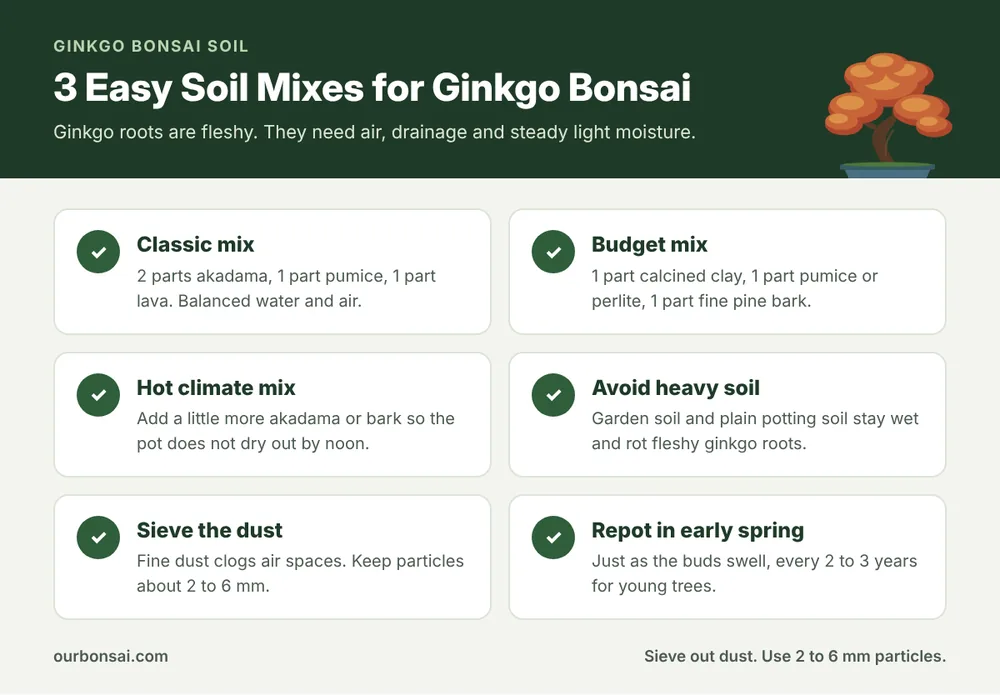
2 parts akadama, 1 part pumice, 1 part lava. This balanced mix is the go-to for ginkgo and most deciduous bonsai. It drains instantly, holds moisture evenly and lasts two to three years before it starts to break down.
Recipe 2: Budget mix
1 part calcined clay, 1 part pumice or perlite, 1 part fine pine bark. Uses easy-to-find materials. It holds a bit more water thanks to the bark, so let the surface dry slightly between waterings.
Recipe 3: Hot climate mix
3 parts akadama, 1 part pumice, 1 part lava, plus a handful of pine bark. In hot, dry summers, a little extra water-holding material stops the pot drying out by early afternoon and protects the leaves from scorch.
If you prefer to buy a ready-made mix, look for an akadama bonsai soil mix that already contains pumice and lava. Our premium bonsai soil review covers one popular option.
Soils to avoid for ginkgo bonsai
- Garden soil. Heavy, compacts quickly and drains poorly.
- Plain potting compost. Holds water for days and suffocates fleshy roots. See bonsai soil vs regular soil for why it is a problem.
- Unsieved mixes. Fine dust fills the gaps and slows drainage.
- Very coarse, all-lava mixes. Drain so fast that the tree dries out and leaves scorch in summer.
How to repot a ginkgo bonsai into new soil
- Time it right. Early spring, just as the buds begin to swell and before the leaves open.
- Prepare the soil. Sieve each component to remove dust, then mix in your chosen ratio.
- Remove the tree and comb out about a third of the old soil from the outside and bottom of the root ball.
- Trim roots. Cut back long, thick roots and any that circle the pot. Keep as many fine roots as possible. Ginkgo roots are fleshy, so cut cleanly with sharp scissors. Our guide to the best bonsai repotting tools covers what you need.
- Repot. Add a base layer of soil, set the tree, tie it in and work new soil in among the roots with a chopstick.
- Water thoroughly until it runs clear, then keep the tree out of strong wind and hot sun for two to three weeks.
Young ginkgo grow quickly and need repotting every two to three years. Older trees can go three to five years between repots.
How soil affects ginkgo watering
In the classic mix, water whenever the top 1 to 2 cm of soil starts to dry, which in summer often means every day. The akadama turns from dark to light brown as it dries, a helpful visual cue. In winter, a dormant ginkgo needs much less water, but the soil should never dry out completely. The Clemson Extension ginkgo guide notes that ginkgo prefers well-drained soil and moderate moisture, which is exactly what a good bonsai mix provides.
FAQ: best soil for ginkgo bonsai
Can I use regular potting soil for ginkgo bonsai?
Not on its own. It stays too wet for fleshy ginkgo roots. If you must, mix it with at least twice as much pumice or grit.
Does ginkgo bonsai need akadama?
It is not essential, but it helps. Akadama holds moisture evenly and shows you when the soil is drying. Calcined clay is a good substitute.
How often should I repot a ginkgo bonsai?
Every two to three years for young trees, three to five for mature trees, in early spring.
Is ginkgo bonsai soil the same as maple bonsai soil?
Very similar. Both do well in a classic akadama, pumice and lava mix.
Final thoughts
The best soil for ginkgo bonsai is a balanced, gritty mix: 2 parts akadama, 1 part pumice and 1 part lava is a reliable choice. It drains fast enough to protect fleshy roots and holds enough water to keep the leaves fresh in summer. Repot in early spring, sieve out the dust and your ginkgo will build a strong root system for years. If you are still choosing a tree, our Brussels ginkgo bonsai review looks at one common option.