Japanese Black Pine Bonsai Yellow Needles: Why They Turn Yellow or Brown

This post contains affiliate links. As an Amazon Associate, OurBonsai earns from qualifying purchases at no extra cost to you. Read our disclosure.
In this guide
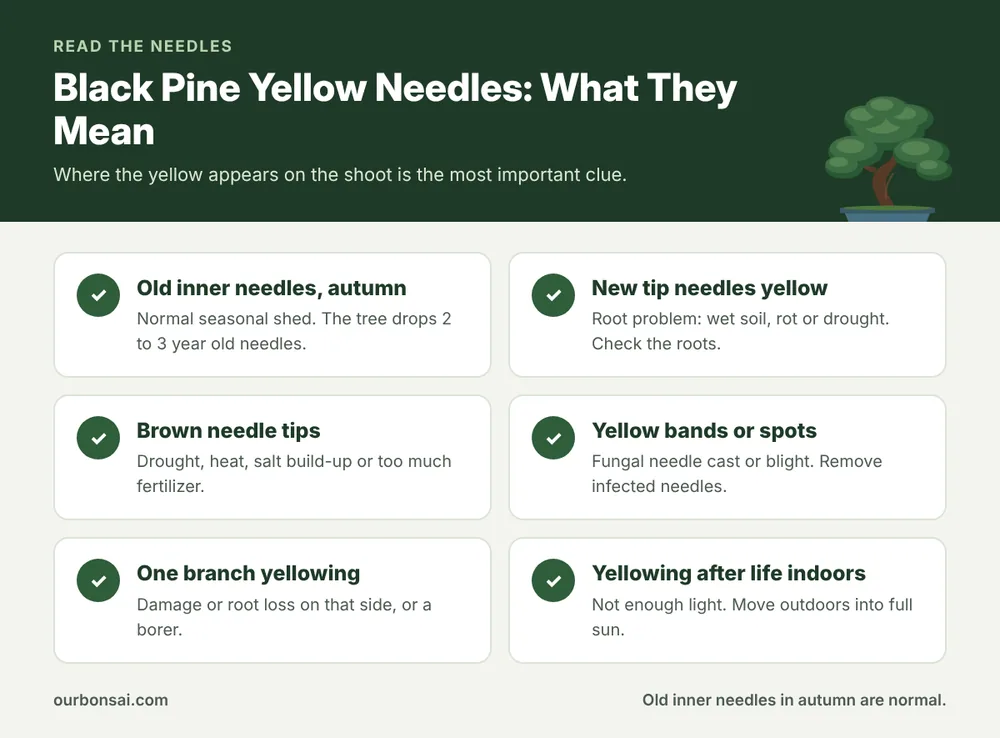
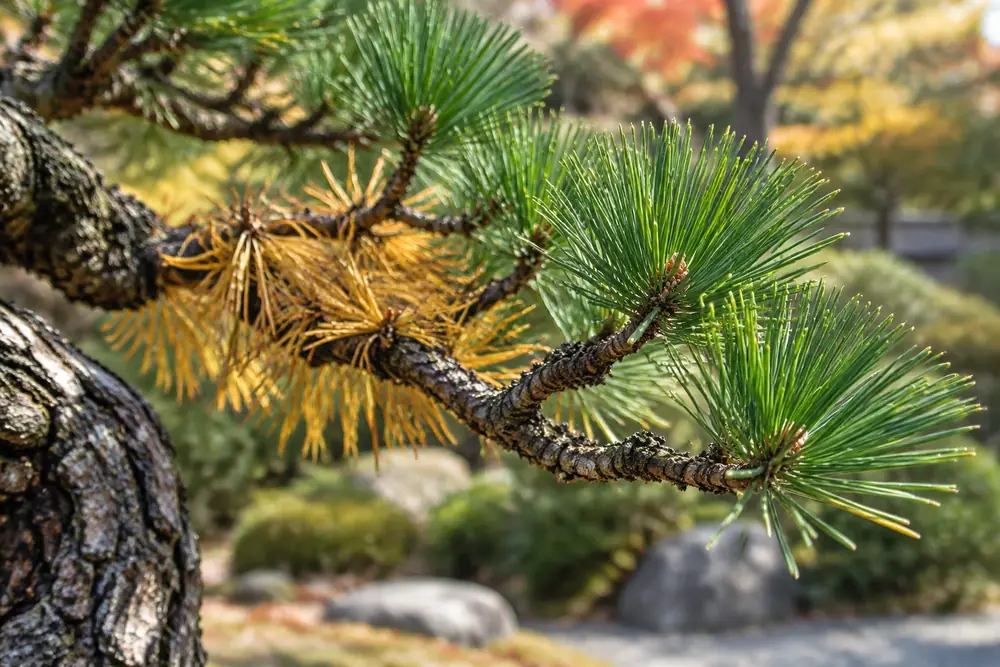
Japanese black pine bonsai yellow needles can be completely normal or a sign that something is wrong, and the difference is mostly about which needles are changing color. Every autumn, a healthy black pine (Pinus thunbergii) sheds its oldest needles, the ones two or three years old, further back from the branch tips. They turn yellow, then brown, and drop. That is natural. But when the newest needles at the tips turn yellow, or needles brown from the tips down across the tree, the cause is usually at the roots, in the weather or from a disease.
This guide explains how to read the pattern of yellowing, the most common causes, and how to fix each one.
Normal needle shed vs a problem
| Pattern | Normal or not |
|---|---|
| Older needles behind the tips turn yellow in autumn | Normal |
| A few yellow needles mixed in, new growth healthy | Normal |
| New needles at the tips turn yellow | Problem |
| Needles yellow or brown all over the tree | Problem |
| Yellow bands, spots or brown tips with a green base | Problem, often fungal |
| Yellowing during spring or summer growth | Problem |
If your tree’s yellowing is limited to the older needles in autumn and the current year’s needles are deep green and firm, there is nothing to fix. You can even pluck the old needles to tidy the tree and let light into the inner branches.
Causes of Japanese black pine bonsai yellow needles
1. Wet roots and poor drainage
Black pine hates soggy soil. Its roots, and the beneficial fungi that live with them, called mycorrhiza, need air. In dense soil or a pot that does not drain, the roots slowly suffocate and rot. The first sign is often yellowing of the newer needles and weak spring growth.
Fix: water only when the top 1 to 2 cm of soil is dry, remove any saucer, and protect the tree from long rainy spells. In early spring, repot into gritty soil; our guide to the best soil for Japanese black pine bonsai explains the right mix.
2. Drought
A pine that dries out completely, especially in a small pot in summer, loses fine roots. Needles then turn yellow or brown from the tips over the following weeks. Because pine needles do not wilt, the damage often shows long after the dry day.
Fix: check the soil every day in summer and water as soon as the surface dries. Shade the pot (not the foliage) in heat waves. Our article on watering bonsai in summer has more tips.
3. Not enough light
Black pine needs full sun. A tree kept indoors, or in deep shade, gradually yellows from the inside out and weakens. It cannot survive long indoors.
Fix: move it outdoors into full sun, gradually if it has been inside. It also needs a cold winter rest outdoors.
4. Fungal needle diseases
Needle cast and needle blight fungi cause yellow spots or bands on the needles, which then turn brown from the tip while the base stays green, usually on older needles first. They spread in wet, humid weather with poor air flow. The Wikipedia article on Dothistroma needle blight describes one of the most common.
Fix: remove and bin infected needles, clear fallen needles from the soil, avoid wetting the foliage, and improve air flow around the tree. A copper-based fungicide in spring protects new growth; browse copper fungicide for plants if needed. Our guide to bonsai pests and diseases covers fungal problems in general.
5. Pests
Pine needle scale (small white flecks on needles), aphids, adelgids and spider mites can all cause yellowing. Check the needles closely, especially near the base. Our guides to aphids on bonsai trees and scale on bonsai trees explain treatment.
6. Nutrient problems and fertilizer burn
A pine that has not been fed for a long time can turn pale yellow-green, especially on new growth. On the other hand, too much fertilizer, or salt build-up from hard water, can burn the roots and turn needle tips brown.
Fix: feed with an organic fertilizer from spring to autumn, holding back while candles extend if you are trying to keep needles short. Flush the pot with plenty of clean water every few weeks to remove salts.
Yellow needles in winter
In winter, some black pines take on a slightly yellow-green or bronze tint, especially in full sun and cold wind. This winter color is a normal response to cold and usually fades back to deep green in spring as the tree wakes up. It affects the whole canopy evenly and the needles stay firm.
Winter yellowing to watch for is different: needles turning bright yellow or brown on one side, or on a single branch, often means the roots on that side froze or dried out. Protect the pot in hard frosts by sinking it in mulch, placing it on the ground in a sheltered corner, or moving it into an unheated shed or cold frame during the coldest spells. Water only when the soil is dry and not frozen.
Yellow needles after decandling or repotting
Some yellowing of older needles after decandling, heavy pruning or repotting is common, because the tree redistributes its energy. If the new growth stays green and healthy, it will settle. If new candles also yellow, the tree was probably too weak for the work and needs a rest year. Our guide on repotting bonsai in autumn explains why timing matters so much for conifers.
How to keep black pine needles green
- Grow it outdoors in full sun all year, with a cold winter rest.
- Use gritty, fast-draining soil.
- Water when the surface dries, never on a fixed schedule.
- Feed regularly through the growing season.
- Inspect needles every few weeks for pests and spots.
- Keep fallen needles cleared from the soil surface.
- Allow good air flow between trees on your bench.
FAQ: japanese black pine bonsai yellow needles
Is it normal for my black pine to have yellow needles in autumn?
Yes, if only the older needles behind the branch tips are yellowing. Pines shed their oldest needles each autumn.
Why are the new needles on my black pine turning yellow?
Usually a root problem from wet soil, drought or root rot. Check the soil and the roots first.
Should I pull off yellow needles?
Yes, once they are fully yellow. It tidies the tree, lets light reach the inner buds and removes possible disease.
Can yellow pine needles turn green again?
No. Focus on keeping the new needles healthy.
Final thoughts
Japanese black pine bonsai yellow needles are normal when they are the oldest needles in autumn, and a warning sign when they are new needles or appear across the whole tree. Read the pattern, check the soil and roots, look for spots and pests, and keep the tree outdoors in full sun. With the cause fixed, the next flush of candles will tell you the tree is back on track. For a broader look at evergreen needle cycles, see our guide to types of evergreen bonsai trees.