How Often to Water Boxwood Bonsai (Indoor & Outdoor)


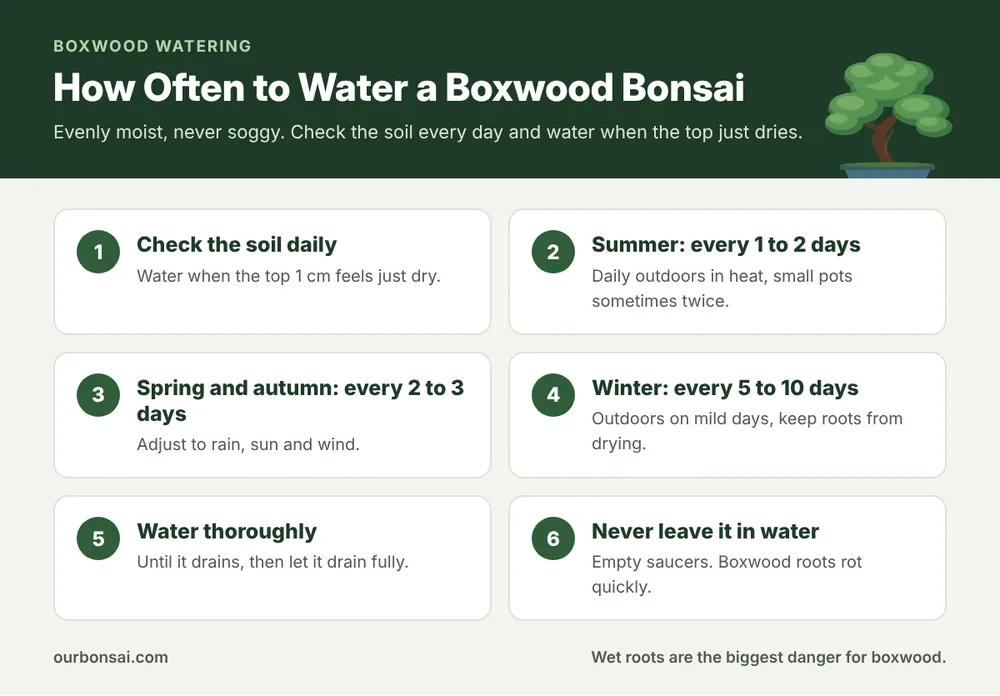
If you are wondering how often to water boxwood bonsai, the short answer is: check the soil every day and water when the top centimeter is just starting to dry. Outdoors in summer, that is usually every one to two days, sometimes daily or more in a heat wave. In spring and autumn it is often every two to three days, and in winter much less. Boxwood likes evenly moist soil, but its roots are prone to rot if the soil stays wet, so the goal is damp, airy soil rather than wet soil.
In this guide
- Why boxwood needs balanced watering
- How often to water boxwood bonsai by season
- How to tell when your boxwood needs water
- How to water a boxwood bonsai
- Outdoor boxwood
- Indoor Harland boxwood
- Water quality for boxwood
- Using a moisture routine
- Signs of overwatering and underwatering
- Common watering mistakes with boxwood
- Watering after repotting and pruning
- FAQ: how often to water boxwood bonsai
- Final thoughts
Boxwood (Buxus) is a tough evergreen, and the popular bonsai species, Japanese and Korean boxwood, common boxwood and the subtropical Harland boxwood, all share this need for balanced watering. This guide covers how to water each in different seasons, indoors and outdoors, and how to spot problems early.
Why boxwood needs balanced watering
Boxwood has fine, shallow, fibrous roots. In the small volume of a bonsai pot, they dry out quickly in warm, windy weather, and the tree shows stress with dull, curling leaves. But boxwood is also highly prone to root rot, including Phytophthora, when the soil stays waterlogged. Overwatering kills more boxwood bonsai than underwatering.
That is why the right soil matters so much. A gritty, fast-draining mix lets you water thoroughly without drowning the roots. Our guide to bonsai soil mix ratios explains how to build one.
How often to water boxwood bonsai by season
| Season | Outdoor boxwood | Indoor Harland boxwood |
|---|---|---|
| Spring | Every 2 to 3 days | Every 3 to 4 days |
| Summer | Every 1 to 2 days, daily in heat | Every 2 to 3 days |
| Autumn | Every 2 to 3 days | Every 3 to 4 days |
| Winter | Every 5 to 10 days, on mild days | Every 4 to 7 days |
These are starting points. A small tree on a sunny, windy balcony dries much faster than a large tree in a sheltered garden. Always check the soil before watering.
How to tell when your boxwood needs water
- Finger test: push a finger about 1 cm into the soil. Just dry means water. Still damp means wait.
- Chopstick test: leave a wooden chopstick in the soil for ten minutes. If it comes out damp and dark, wait.
- Pot weight: lift the pot after watering and again later. A light pot needs water.
- Leaves: dull leaves that curl slightly or lose their shine on a warm day show the tree is thirsty.
A soil moisture meter helps while you learn how fast your pot dries.
How to water a boxwood bonsai
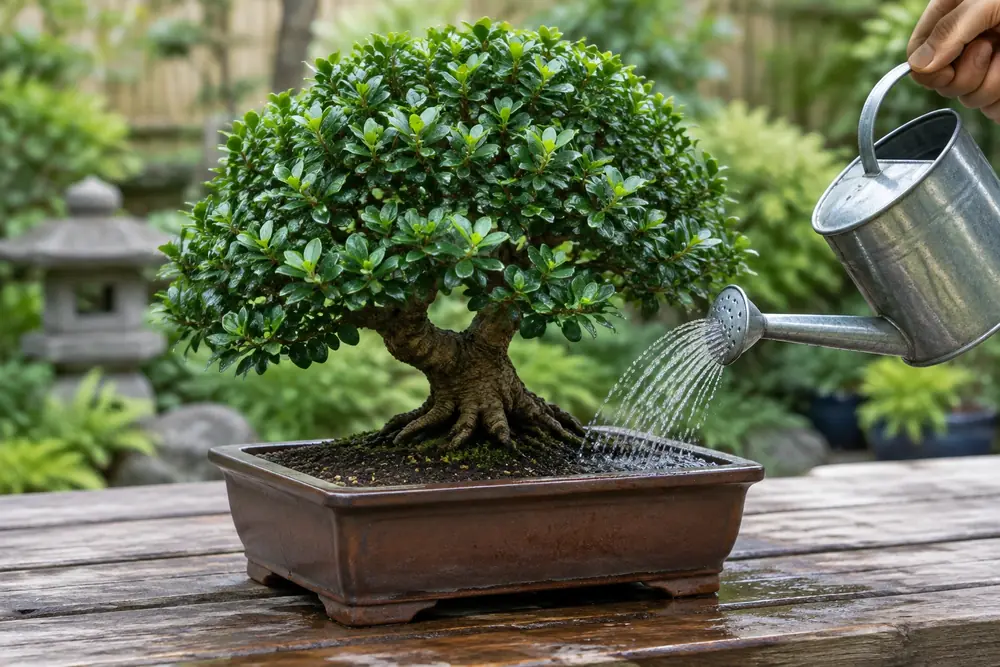
- Use a watering can with a fine rose so you do not wash soil out. Our guide to the best Japanese watering can for bonsai covers good options.
- Water over the whole soil surface until water runs from the drainage holes.
- Wait a minute, then water again so the soil absorbs it fully.
- Let the pot drain completely. Never leave it standing in a saucer of water.
- Water in the morning where possible, so the foliage dries during the day. Wet foliage overnight encourages box blight.
- Aim at the soil, not the dense canopy, to keep leaves as dry as possible.
Outdoor boxwood
Japanese, Korean and common boxwood are outdoor trees. They need sun, fresh air and a winter rest. Outdoors, check the soil every day from spring to autumn. In very hot weather, light afternoon shade helps reduce water loss and leaf scorch. Our guide to watering bonsai in summer has tips for heat waves.
Winter watering outdoors
In winter, outdoor boxwood uses little water, but the roots must not dry out. Cold, dry winds can dehydrate the leaves while the soil is frozen, causing winter bronzing. Water on mild days when the soil starts to dry, and protect the pot from hard frost by placing it on the ground in a sheltered spot.
Indoor Harland boxwood
Harland boxwood is a subtropical species often sold as an indoor bonsai. Indoors, the soil dries more slowly, but heating dries the air and the surface quickly. Check daily, water only when the top is just dry and use a humidity tray. Keep it in the brightest window you have. Our Brussel’s Harland boxwood bonsai review covers indoor care for this species.
Water quality for boxwood
Boxwood is not fussy about water quality, and unlike azaleas it does not mind moderately hard tap water, because it prefers near-neutral soil. A few tips still help:
- Avoid softened water. Water from a water softener contains sodium that damages roots over time.
- Flush the pot occasionally. If a white crust builds up on the soil or pot from minerals and fertilizer salts, water slowly for a couple of minutes every month or two to wash it through.
- Use rain water when convenient. It is ideal for any bonsai, but not essential for boxwood.
- Avoid ice-cold water on indoor trees. Let it reach room temperature, especially for the subtropical Harland boxwood.
Using a moisture routine
Many growers find it easiest to tie watering to a daily habit, such as checking the bonsai every morning with a coffee. On hot summer days, add a second check in the late afternoon. Over a few weeks you will learn exactly how your boxwood behaves in different weather, and watering becomes automatic.
Signs of overwatering and underwatering
| Sign | Likely cause | What to do |
|---|---|---|
| Dull, curling leaves, dry soil | Underwatering | Water thoroughly, check daily |
| Crispy brown leaf edges | Repeated drying, wind | Water more evenly, shelter from wind |
| Yellow leaves, soil wet for days | Overwatering | Water less, check drainage |
| Straw-colored dying shoots, sour soil | Root rot | Check roots, repot into gritty soil |
| Orange or bronze leaves in winter | Winter wind and sun | Shelter the tree, water on mild days |
If you see dark leaf spots and black streaks on stems, that is more likely box blight than a watering problem. The RHS box blight guide helps you identify it. For root problems, see our guide to root rot in bonsai.
Common watering mistakes with boxwood
- Watering on a schedule. Check daily instead.
- Small sips. Always water until it drains.
- Leaving saucers full. Roots sit in water and rot.
- Wetting the foliage in the evening. Encourages fungal disease.
- Using dense soil. The center of the root ball stays wet.
- Forgetting winter. Dormant outdoor boxwood still needs occasional water.
Watering after repotting and pruning
After repotting in early spring, water thoroughly once and keep the tree sheltered from sun and wind for two to three weeks. The reduced roots use less water at first, so check carefully before watering again. After heavy pruning, the tree also has fewer leaves and uses less water, so adjust accordingly.
FAQ: how often to water boxwood bonsai
Should I water my boxwood bonsai every day?
In summer outdoors, often yes. In spring, autumn and winter, usually less. Always check the soil first.
Can I mist my boxwood bonsai?
Misting is not needed outdoors and can encourage fungal disease. Indoors, a humidity tray is a better way to raise humidity.
How do I know if my boxwood is overwatered?
Leaves yellow, the soil stays wet for days and may smell sour. Water less often and check the drainage.
How often should I water an indoor boxwood bonsai?
Usually every two to four days, depending on heating and light. Check the soil daily.
Final thoughts
So, how often to water boxwood bonsai? Check daily, water thoroughly when the topsoil is just dry, and expect every one to two days in summer and much less in winter. Use gritty soil, never leave the pot in water and water the soil rather than the foliage. For styling ideas once your tree is thriving, see our boxwood bonsai styles guide.