Can You Use Cactus Soil for Bonsai? When It Works and When Not

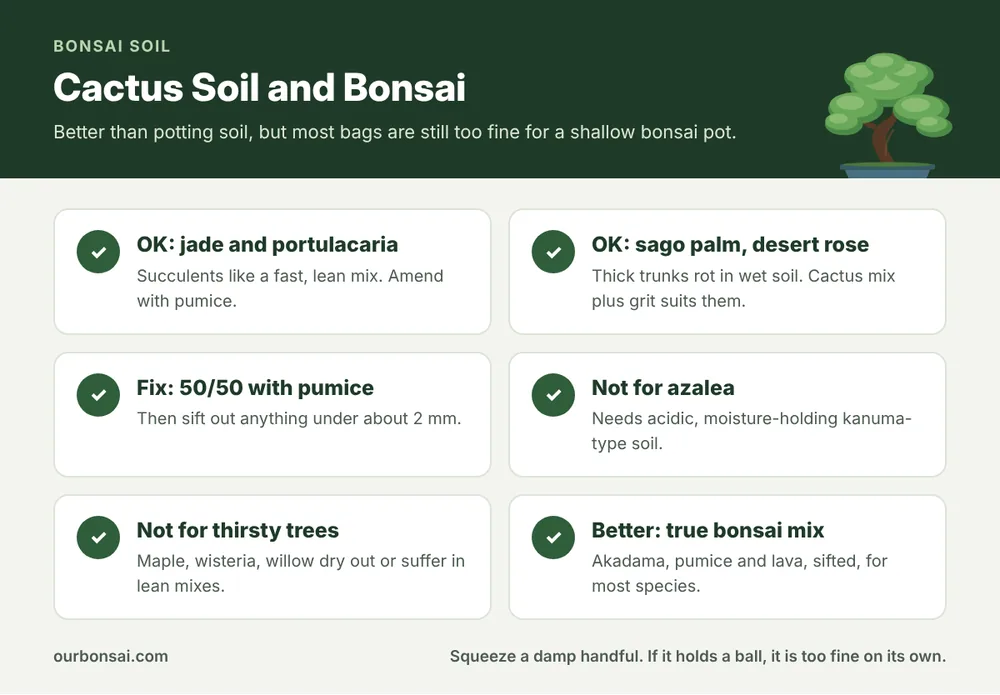
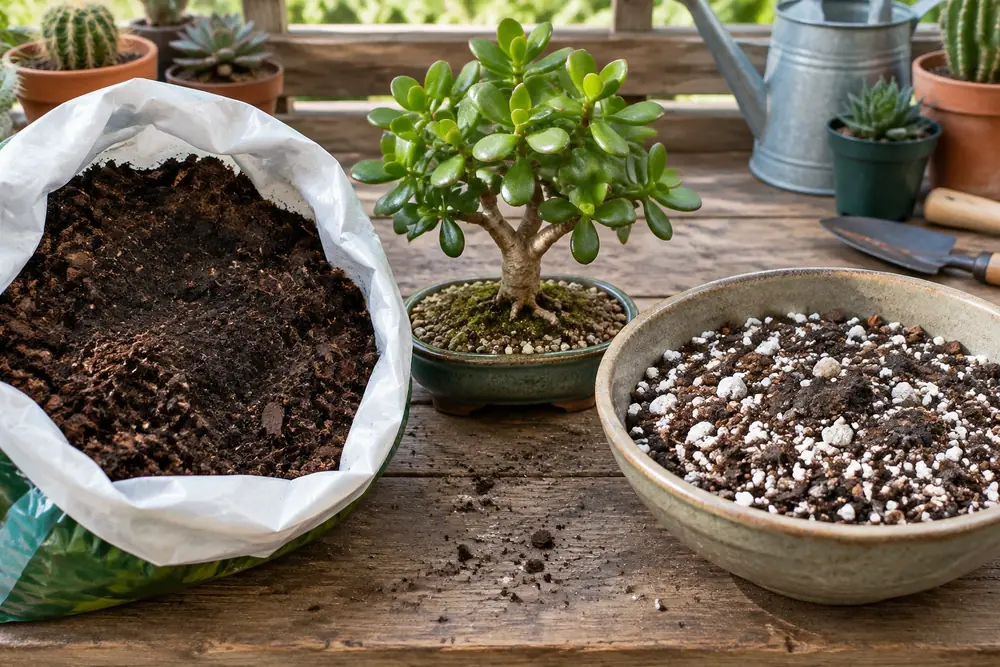
Can you use cactus soil for bonsai? Yes, for some trees, but rarely straight from the bag. Cactus mix suits succulent and dry-climate species such as jade, portulacaria (dwarf jade), sago palm and desert rose, which want fast drainage and dislike wet roots. The catch is that most bagged cactus soils are still largely peat, coir and fine sand, which compact in a shallow bonsai pot. Mix the cactus soil 50/50 with pumice or lava, sift out particles smaller than about 2 mm, and it becomes a decent substrate for those species. For moisture-loving trees (maple, wisteria, willow) and acid lovers like azalea, cactus mix is the wrong starting point.
In this guide
What is in cactus soil?
“Cactus and succulent mix” is not a standard product. Brands vary a lot:
- Peat-based blends: mostly sphagnum peat or coir with some sand and perlite. The most common type in garden centers. Drains better than potting soil, but still fine-textured.
- Gritty blends: mostly pumice, calcined clay, lava or crushed granite with a small amount of bark. Much closer to bonsai soil.
- Sandy blends: potting soil with lots of fine sand. Heavy and prone to compaction.
The label alone does not tell you which you have. Open the bag, take a damp handful and squeeze it. If it holds together in a ball and feels spongy, it is a peat-based mix. If it falls apart into separate grains, it is a gritty mix and much more suitable.
Why bonsai need coarser soil than cacti in normal pots
A cactus in a 15 cm deep plastic pot on a windowsill has room for water to drain down. A bonsai pot is often only 3 to 8 cm deep. In a shallow container, a layer of water “perches” at the bottom after watering, and in fine soil that wet layer can fill most of the pot. Roots sit in it and rot.
Bonsai mixes avoid this by using granules of 2 to 6 mm with almost no dust. Water drains through the gaps between grains, and air fills them again. Our article on bonsai soil versus regular soil explains the physics in more detail.
Can you use cactus soil for bonsai of every species?
| Tree | Cactus soil? | How to use it |
|---|---|---|
| Jade (Crassula ovata) | Yes, amended | 50% cactus mix, 50% pumice |
| Portulacaria afra | Yes, amended | 50% cactus mix, 50% pumice or lava |
| Sago palm | Yes, amended | 40% cactus mix, 60% pumice and lava |
| Desert rose (Adenium) | Yes, amended | 40% cactus mix, 60% pumice |
| Baobab, other caudex trees | Yes, amended | Very gritty, mostly mineral |
| Olive | Possible | 30% cactus mix, 70% akadama, pumice and lava |
| Ficus | Not ideal | Prefers more water retention; use a standard mix |
| Juniper, pine | Not ideal | Peat-based mixes hold water against fine roots |
| Azalea | No | Needs acidic, moisture-holding kanuma |
| Maple, elm, wisteria | No | Too lean or too fine; use akadama-based mixes |
For desert rose specifically, our guide to the best soil for desert rose bonsai gives detailed ratios. For azaleas, see our list of soils for azalea bonsai.
How to make cactus soil work for bonsai
- Check the texture with the squeeze test above.
- Sift it. Shake it through a 2 mm screen. With a peat-based mix, a lot will fall through; that fine material is what causes problems in a shallow pot.
- Add grit. Mix what remains with an equal volume of pumice or lava rock, sifted to 2 to 6 mm. For very water-sensitive trees like sago palm, use more grit.
- Test the drainage. Fill a pot, water it, and watch. Water should vanish from the surface in a second or two and flow from the drainage holes almost at once.
- Watch the first few weeks. If the pot stays wet for more than 5 to 7 days indoors, add more grit at the next repot.
Cactus soil vs a true bonsai mix
| Factor | Bagged cactus mix | Bonsai mix (akadama, pumice, lava) |
|---|---|---|
| Particle size | Mostly fine, some grit | 2 to 6 mm granules |
| Drainage in shallow pots | Moderate to poor | Fast |
| Air space after watering | Low to moderate | High |
| Breakdown over time | Peat compacts within 1 to 2 years | Pumice and lava stay stable; akadama lasts 2 to 3 years |
| Cost | Low | Higher |
| Best for | Succulent bonsai, once amended | Nearly all bonsai species |
If you want something closer to bonsai soil without mixing your own, a gritty succulent mix is a good bridge. Our Bonsai Jack succulent soil review looks at one that is mostly mineral. For a general-purpose mix, see our guide to bonsai soil mix ratios.
Signs cactus soil is not working
- The surface stays dark and damp for days.
- Moss or algae spreads across the soil.
- Lower leaves yellow and drop while the soil is wet.
- The soil pulls away from the pot walls when dry, and water runs down the gap.
- Fungus gnats appear, which breed in damp, organic soil.
Any of these suggest the mix is too fine or too organic. Repot into a coarser mix at the next suitable time.
Frequently asked questions
Is cactus soil better than regular potting soil for bonsai?
Usually, yes, because it drains faster. But both are too fine for most bonsai pots without amendment.
Can I use cactus soil for a juniper bonsai?
It is not recommended. Junipers do best in a gritty mineral mix. A peat-based cactus mix holds water against their fine roots, especially in winter.
Can I mix cactus soil with cat litter?
Some growers use unscented, non-clumping calcined clay cat litter as a cheap akadama substitute. Clumping litter must never be used. Our guide to cat litter for bonsai soil explains which kinds work.
Do I need to fertilize more in cactus soil?
Amended, gritty mixes hold fewer nutrients, so regular light feeding during the growing season helps.
Final thoughts
Cactus soil is a reasonable base for succulent and dry-climate bonsai once you sift it and cut it with pumice. For most other species, a proper granular bonsai mix is the better choice. For a general look at what makes a growing medium work in containers, see the Wikipedia article on potting soil, and for other everyday options, our article on good potting soil for bonsai.