When and How to Repot Ginseng Ficus Bonsai

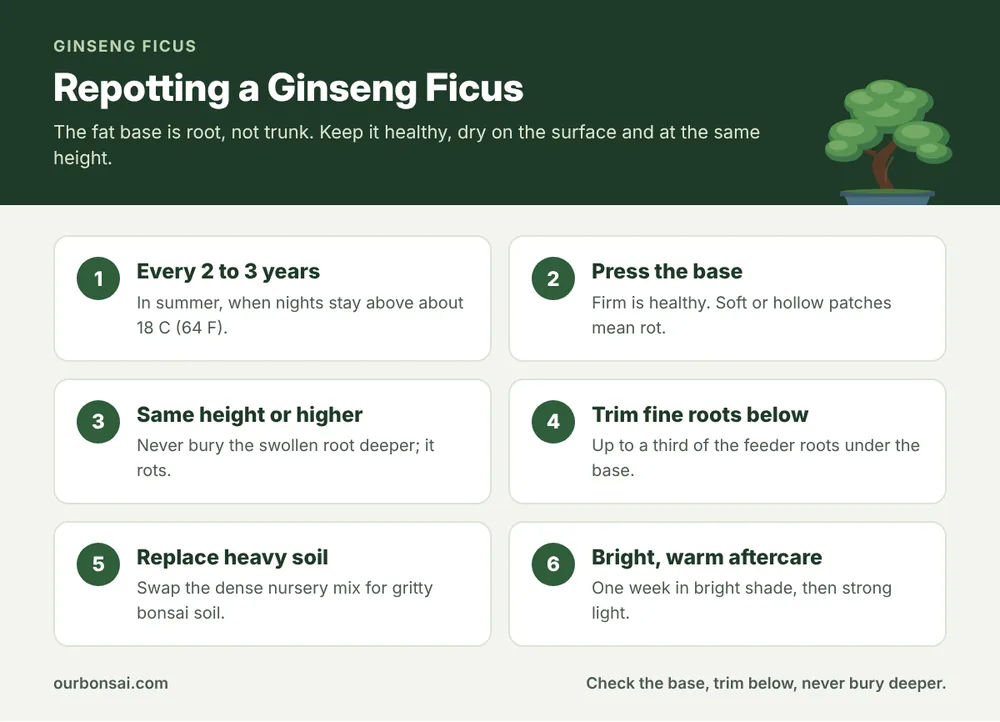
Here is how to repot ginseng ficus bonsai: repot every 2 to 3 years in summer, when nights stay above about 18 C (64 F); keep the swollen “ginseng” root at the same height or slightly higher, never deeper; press it all over to check for soft or hollow patches; trim up to a third of the fine roots underneath; and replace the heavy nursery soil with a gritty, fast-draining mix. The fat base of a ginseng ficus is root tissue, not trunk, and it rots if it is buried or kept wet, so the repot is mostly about protecting it.
In this guide
What a ginseng ficus really is
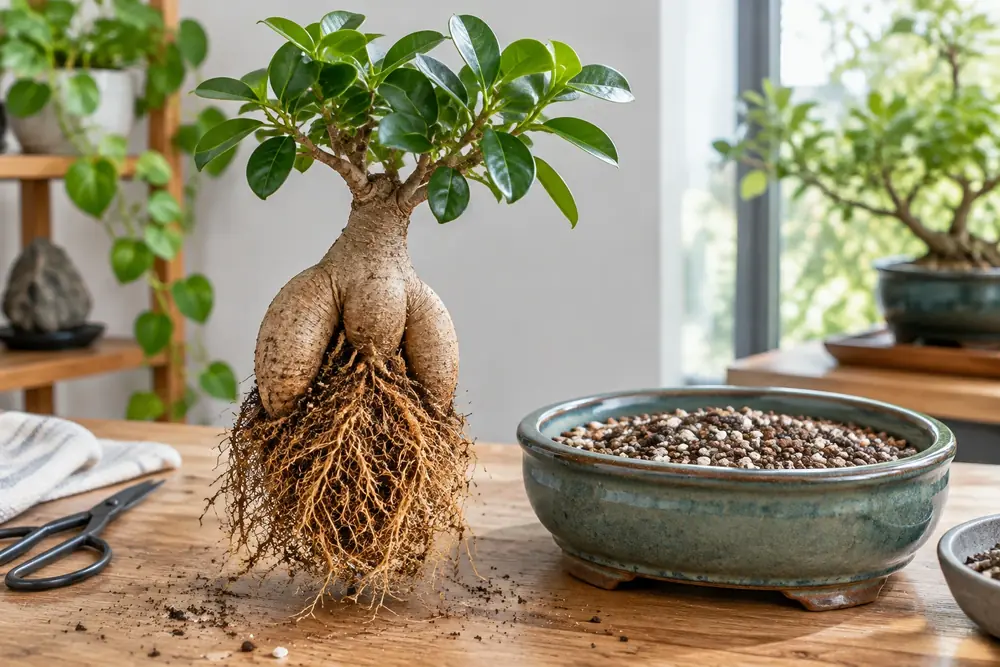
Ginseng ficus is a form of Ficus microcarpa grown from seedlings that develop a thick, swollen root and lower stem. Growers lift these young plants, expose the swollen part above the soil, and often graft a smaller-leaved ficus onto the top to make a bushier canopy. You can sometimes see a graft line where the bark texture changes, a few centimeters above the swollen base.
That gives the tree its “ginseng root” look, and it also means:
- The swollen base is storage tissue. It holds water and starch, and it is softer than a trunk.
- The feeding roots grow from the bottom of the swollen part, often as a ring of fine roots.
- The tree is often sold in dense, peaty soil that stays wet, which is a common cause of rot in the base.
When to repot
| Sign | Action |
|---|---|
| Water drains slowly or the soil smells sour | Repot this summer |
| Fine roots fill the pot or circle it | Repot this summer |
| Soft spots or dark patches on the swollen base | Repot now if warm, and treat the rot |
| Tree healthy and soil drains well | Wait |
Late spring to midsummer is best. In winter indoors, wait unless the base is rotting. Our guide on the best time to repot tropical bonsai explains timing across warm-climate trees.
Soil
Use a gritty, fast-draining mix so the base never sits wet. A good starting point is 40 percent akadama, 40 percent pumice and 20 percent lava. Our ficus ginseng bonsai soil recipe covers variations and ready-made options.
How to repot ginseng ficus bonsai, step by step
- Water the day before so the fine roots are hydrated.
- Remove the tree. Ginseng ficus often comes in a plastic inner pot inside a ceramic one. Take it out of both.
- Inspect the swollen root. Press it gently all over. Healthy tissue is firm. Soft, wrinkled, dark or hollow-sounding patches mean rot.
- Treat any rot. Cut soft tissue back to firm, pale material with a clean knife. Let the wound dry for a few hours, then dust it with sulfur powder or seal it with cut paste.
- Remove the old soil. Gently tease out the dense nursery soil from the fine roots. Ficus tolerates this well in summer.
- Trim the fine roots under the base by up to a third, cutting any long, circling or dead ones.
- Set the height. Place the tree so the swollen root sits at the same level as before or a little higher. Never bury it deeper.
- Tie in firmly and fill with soil, working it in with a chopstick around the fine roots, not packed against the base.
- Water thoroughly.
Aftercare
- Bright shade for about a week, then full light: a bright south window, a grow light, or outdoors in summer.
- Water when the top 1 to 2 cm dries. Avoid pouring water over the swollen base itself.
- Keep it warm, above 18 C (64 F).
- Feed after 3 to 4 weeks at half strength, then normally through the growing season.
- Watch the base for the next few weeks. If a treated rot spot spreads, cut it back again.
Choosing a pot for a ginseng ficus
The tree is usually sold in a glazed ceramic pot with a plastic pot hidden inside, or in a ceramic pot with no drainage at all. Neither is ideal. Choose a pot with large drainage holes that is a little wider than the spread of fine roots under the base. A shallow to medium depth works well because the feeding roots are concentrated in a thin layer under the swollen root, and a deep pot full of soil below them stays wet. An oval or round pot suits the rounded shape of the base. If your tree is top-heavy, a heavier ceramic pot keeps it from tipping over on a windowsill.
Common mistakes
- Burying the swollen root to “stabilize” the tree. Tie it in with wire instead.
- Leaving it in the original dense soil for years. This is the main cause of base rot.
- Watering on a schedule. Ginseng ficus is often killed by too much water, not too little.
- Repotting in a cold room in winter.
- Leaving decorative glued stones on the surface. They block air and water. Remove them at the first repot.
If leaves drop or pests appear, our guide to ficus bonsai pests and diseases covers the usual suspects.
Should you raise the base higher?
Some growers raise the swollen root a little at each repot to show more of it, which is fine as long as the fine roots below remain in soil. Others go the other way and let the tree grow on in a bigger pot, which adds branches and aerial roots and makes it look more like a natural tree. Our guide to ginseng ficus bonsai styles shows both approaches.
Frequently asked questions
Can I bury the ginseng root to make the tree more stable?
No. The swollen root rots when buried. Use tie-in wire to hold the tree steady.
What do soft spots on a ginseng ficus mean?
Rot in the swollen root, almost always from wet soil. Cut back to firm tissue, let it dry and seal it, then repot in gritty soil.
How often should I repot a ginseng ficus?
Every 2 to 3 years, and sooner if it is still in its original dense nursery soil.
Can I cut the swollen root?
Only to remove rot. Healthy swollen root tissue is the tree’s water store and character; leave it.
Final thoughts
Repotting a ginseng ficus is mostly about the base: inspect it, keep it high and dry, and give the fine roots below fresh, gritty soil every few years. For more on the species, see the Wikipedia article on Ficus microcarpa.