Water Bonsai Ice Cubes Myth: Do Ice Cubes Really Work?

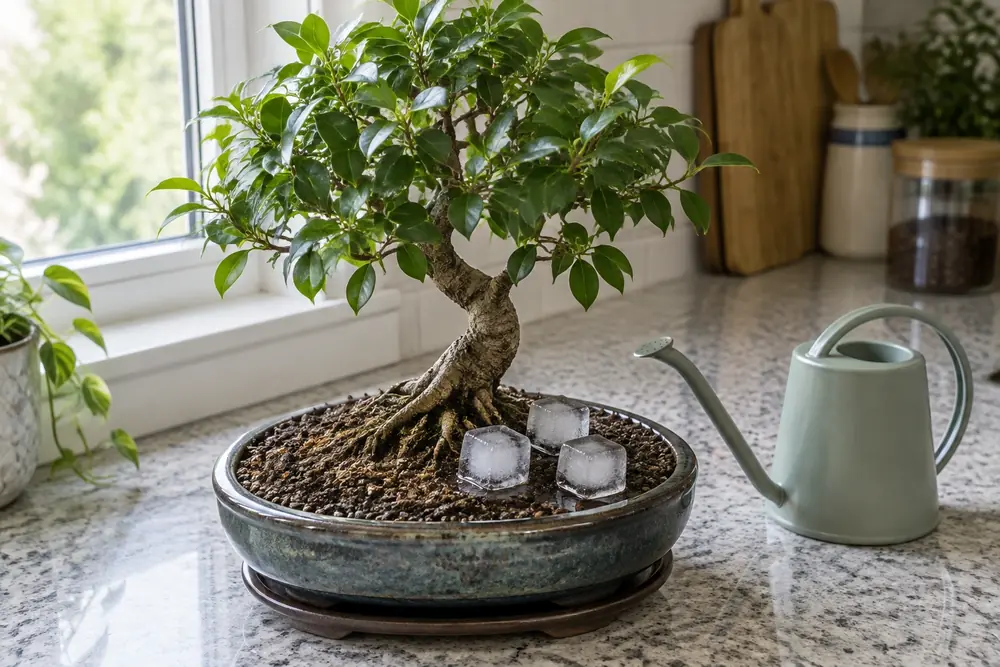
Many gift and supermarket bonsai come with a little tag: water bonsai ice cubes, three a week, done. It sounds convenient, and the idea is that melting ice releases water slowly so you cannot overwater. In practice, ice cubes rarely give a bonsai enough water, they wet only part of the root ball, and the cold can stress tropical indoor species like ficus and jade. The better approach is to check the soil every day and, when it starts to dry, water slowly with room temperature water until it runs out of the drainage holes.
In this guide
Below we look at where the ice cube idea comes from, what actually happens in the pot, and how to switch to a routine that keeps your tree healthy.
Where the ice cube advice comes from
The ice cube method became popular with moth orchids (Phalaenopsis) sold in supermarkets. Those orchids grow in bark that drains very quickly, and the main danger for beginners is drowning them. A couple of ice cubes a week is a simple rule that is hard to get badly wrong. Some bonsai sellers copied the idea for small trees sold as gifts.
Orchids are epiphytes. In nature they cling to tree bark with their roots in the open air, get drenched by rain and then dry within hours. They store water in thick leaves and roots, so a small, regular dose of water suits them. Bonsai trees grow in soil, have fine feeder roots spread through the whole pot and lose water constantly through their leaves.
The trouble is that a bonsai is not an orchid. Most bonsai trees use far more water, especially when they are growing, and they need their whole root mass to be moist, not one wet patch.
Water bonsai ice cubes: what really happens in the pot
| Factor | Ice cubes | Proper watering |
|---|---|---|
| Amount of water | About 30 to 60 ml for three cubes | Enough to soak the pot and drain |
| How evenly it spreads | Runs down one channel | Covers the whole surface and root ball |
| Water temperature | Near freezing | Room temperature |
| Flushing of salts | None | Excess runs out and takes salts with it |
| Adjusts to the tree | Fixed routine | Based on how dry the soil is |
Not enough water
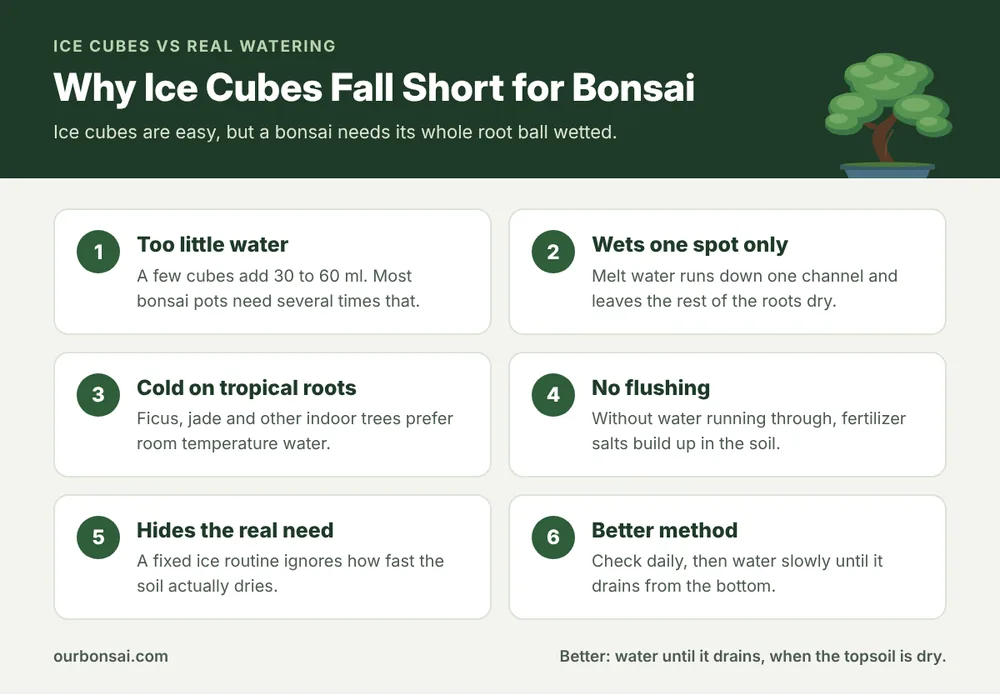
A typical small bonsai pot holds several hundred milliliters of soil. Three ice cubes provide a tiny fraction of the water that soil can hold. In a warm room, a growing tree uses more than that in a day. The result is slow, steady drought stress that often shows up as leaf drop weeks later.
Uneven wetting
Melt water follows the easiest path down, usually right next to where the cubes sat. The soil on the far side of the pot can stay bone dry. Roots in those dry areas die off, and the tree loses part of its root system without you noticing.
Cold on tropical roots
Most indoor bonsai are tropical or subtropical: ficus, jade, schefflera, Fukien tea, serissa. Their roots like warmth. Repeated near-freezing water against the trunk base and roots is not ideal for them. Growers of tropical plants generally recommend room temperature water for this reason.
Salt build-up
When you water properly, extra water runs out of the drainage holes and carries away excess fertilizer salts and minerals. Ice cubes never produce runoff, so these salts gradually build up in the soil and can burn fine roots.
Is it ever OK to use ice cubes?
There are a few situations where ice cubes do little harm:
- As a top-up between proper waterings for a tree in a very slow-drying pot, while you are learning how fast it dries.
- For outdoor hardy trees in hot weather, some growers place ice on the soil surface to cool it on extreme days. This is a niche trick, not a watering method.
- When someone else is watering for you for a day or two and you want to avoid flooding.
Even then, the tree still needs a real, thorough watering whenever the soil dries.
The better way to water an indoor bonsai
- Check the soil every day. Push a finger about 1 cm into the soil. If it feels dry at that depth, water.
- Use room temperature water. Fill a can and let it stand for a while if your tap water is very cold.
- Water slowly over the whole surface until water runs out of the drainage holes.
- Wait a minute and water again, so dry pockets soak through.
- Let it drain fully. Do not leave the pot standing in a saucer of water.
For tools, a small can with a fine spout or rose is perfect. See our guide to the best Japanese watering can for bonsai. If the soil has dried out so much that water runs straight off, stand the pot in a basin of water for 10 minutes.
Moving from ice cubes to normal watering
If your tree has been on an ice cube diet for a while, its root ball may be partly dry and compacted. Start with a 10 to 15 minute soak in a basin of room temperature water, then let it drain. From then on, follow the check-first routine above. Expect to water a small indoor bonsai every two to four days, and more often in summer or near a heater.
Many gift bonsai are also potted in dense soil or even glued-on pebbles on top of the soil. If you see a hard layer of glued stones, carefully remove it so water can reach the roots. Next spring, repot into proper bonsai soil. Our guide to bonsai soil vs regular soil explains why.
Watering tips for common gift bonsai
- Ficus: water when the top 1 to 2 cm is dry. Tolerant of an occasional mistake. Our Golden Gate ficus bonsai care guide has more detail.
- Jade: let it dry a little more between waterings. It stores water in its leaves.
- Juniper: this is an outdoor tree. Indoors it slowly declines whatever watering you use. See our Japanese juniper bonsai indoors guide.
- Fukien tea and serissa: keep evenly moist and never let them dry out.
For winter, when heating dries both soil and air, see our guide to watering indoor bonsai in winter.
Common mistakes
- Following the tag no matter what. The tree’s needs change with season and temperature.
- Watering only the center of the pot. Water the whole surface.
- Using a saucer that stays full. Standing water keeps the bottom soggy.
- Watering on a fixed day. Check first, every time.
FAQ: water bonsai ice cubes
Can I water my bonsai with ice cubes?
You can, but it is not a good main method. Ice cubes give too little water, wet only part of the root ball and may chill tropical roots.
How many ice cubes should I give a bonsai?
Rather than counting cubes, check the soil daily and water thoroughly when it starts to dry.
Why does my bonsai tag say to use ice cubes?
It is a simple rule borrowed from supermarket orchids to prevent overwatering. It suits orchids in bark better than bonsai in soil.
Is cold water bad for bonsai?
Cold water is not usually harmful to hardy outdoor trees, but tropical indoor bonsai prefer room temperature water.
Final thoughts
The advice to water bonsai ice cubes style is well meant but usually leaves the tree thirsty. Swap it for a simple habit: check the soil every day, water slowly with room temperature water until it drains, and let the top dry slightly before the next watering. Your bonsai will grow stronger, keep its leaves and stay healthy for far longer. For full basics, see our guide on how to take care of a bonsai tree inside.