Serissa Bonsai Dropping Leaves: 7 Causes and Easy Fixes

This post contains affiliate links. As an Amazon Associate, OurBonsai earns from qualifying purchases at no extra cost to you. Read our disclosure.
In this guide
Serissa bonsai dropping leaves is probably the most common complaint from people who grow this pretty little tree. Serissa (Serissa japonica), often sold as snow rose or tree of a thousand stars, has a reputation for being “fussy”. In practice it is not fragile; it is just very honest. Whenever something in its surroundings changes, it tells you by shedding leaves. Once you learn to read that signal, you can keep a serissa full and green for years.
Below are the seven most common causes of leaf drop, how to work out which one applies to your tree, and what to do about each.
Is some leaf drop on a serissa normal?
Yes. Serissa regularly sheds older leaves on the inside of the canopy, especially:
- In autumn, as light levels fall.
- After a big flush of flowers.
- After pruning, when inner leaves suddenly get less light.
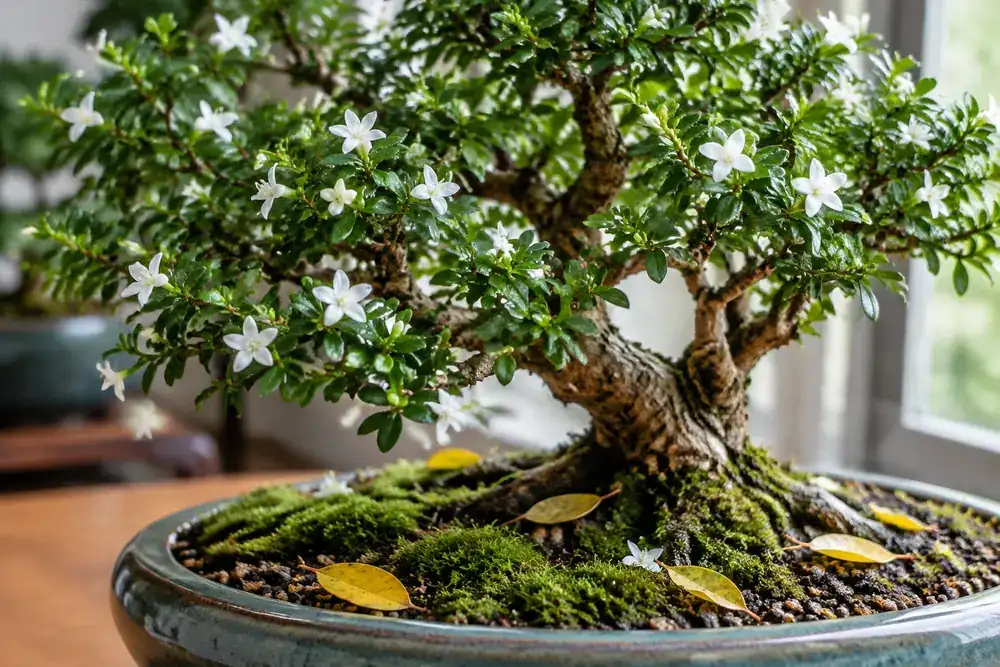
A few yellow leaves a week while new shoots keep growing at the tips is normal. What is not normal is many leaves dropping every day, green leaves falling, or leaf drop with no new growth at all.
| Type of leaf drop | Likely meaning |
|---|---|
| A few old inner leaves turn yellow | Normal leaf renewal |
| Many green leaves drop suddenly | Shock: a move, a draft or dry roots |
| Yellow leaves plus wet soil | Overwatering or root trouble |
| Crispy, brown-edged leaves | Underwatering or dry air |
| Sticky leaves or tiny dots | Pests |
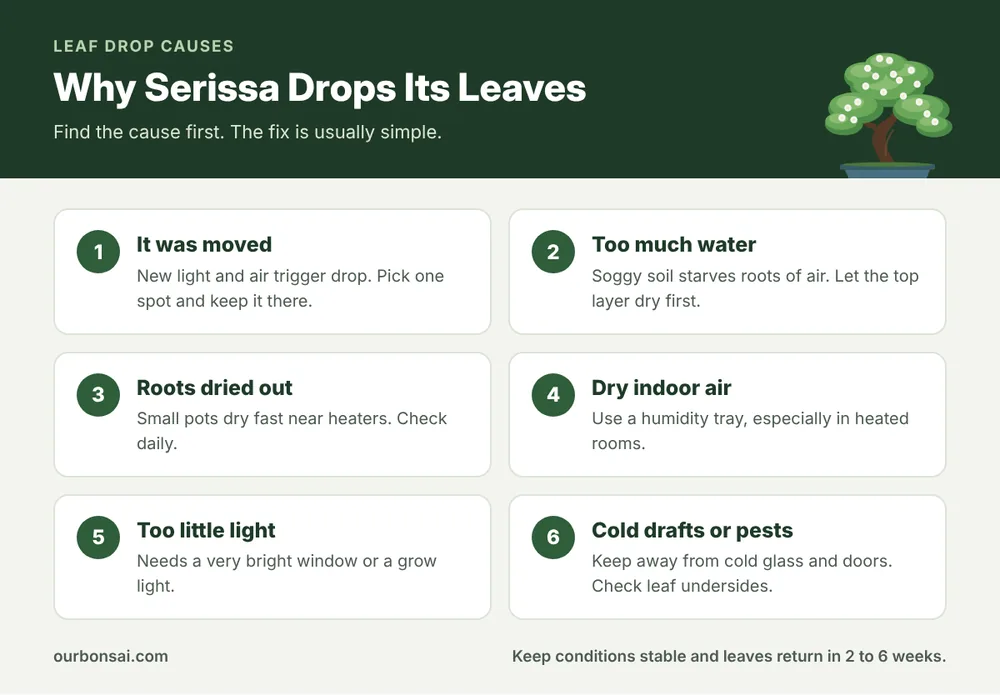
7 causes of serissa bonsai dropping leaves
1. You moved the tree
This is the classic one. A serissa bought from a store, carried home and placed in a new spot almost always drops leaves within a week or two. The same happens if you move it from one window to another, or take it outside for summer without a gradual change. The fix is patience: choose a bright, stable spot and leave it there.
2. Overwatering
Serissa likes evenly moist soil, but when the soil stays wet for days the roots cannot breathe. Leaves yellow and fall, often starting from the bottom of the tree. Let the top half centimetre of soil dry between waterings and make sure the pot drains freely. If the soil smells sour, check the roots for rot using our guide to bonsai root rot.
3. Dry roots
The opposite problem is just as common. Small bonsai pots dry out quickly, especially in summer or next to a heater. One completely dry day can kill many fine roots, and the leaves drop a few days later. Check the soil every day and water as soon as the surface is dry. A soil moisture meter is a handy backup.
4. Dry indoor air
Central heating can drop indoor humidity very low in winter. Serissa comes from humid regions of Southeast Asia and responds by shedding leaves. A humidity tray under the pot, or grouping it with other plants, helps a lot.
5. Not enough light
Indoors, serissa needs as much light as you can give it: a south- or east-facing window, close to the glass. In low light it drops leaves and grows thin, weak shoots. In dark homes or winter, a small LED grow light makes a big difference. See how much light a bonsai tree needs.
6. Cold drafts and temperature swings
Serissa prefers steady temperatures between about 15 and 24°C (60 and 75°F). Cold air from a window at night, an outside door or an air conditioner causes leaf drop, and so does hot dry air from a vent.
7. Pests
Aphids, spider mites, scale and mealybugs feed on the sap and weaken the tree. Look under the leaves and along stems for tiny insects, webbing or sticky residue. Our guide to tiny bugs on bonsai leaves helps you identify them.
How to stop serissa leaf drop: a quick action plan
- Stop moving it. Choose the brightest stable spot and commit to it.
- Check the roots and soil. Wet and sour? Repot into fresh, free-draining soil. Dry and hard? Soak the pot in a bowl of water for ten minutes.
- Set a daily soil check. Water only when the top layer is dry.
- Add humidity with a tray in heated rooms.
- Add light with a grow light in winter or dark rooms.
- Inspect for pests and treat early.
- Pause fertilizer and pruning until new growth appears.
Most serissas push new buds within two to six weeks once conditions are stable.
Serissa leaf drop by season
Spring
Leaf drop in spring is often linked to moving the tree outdoors too quickly. Serissa enjoys a summer outside in morning sun, but harden it off over two weeks.
Summer
Dry roots are the main risk. Small pots in hot weather may need water once or even twice a day. Watch for spider mites in dry heat.
Autumn
Expect some natural yellowing as light levels fall. Bring outdoor trees inside before nights drop below about 10°C (50°F), and expect a little drop after the move.
Winter
Low light and dry heated air are the usual causes. Use a grow light and humidity tray, and water less often because growth slows.
Choosing the right soil and pot
A good bonsai soil prevents most watering problems. Serissa does well in a mix that drains quickly but still holds some moisture, such as akadama with a little organic material. Our guide to the best bonsai soil explains the options, and bonsai soil vs regular soil shows why ordinary potting compost causes trouble in small pots. Make sure your pot has large drainage holes. Ready-made bonsai soil mixes on Amazon are a simple option if you have only a tree or two.
How to settle a newly bought serissa
New serissas drop leaves more than any other group, because they have just moved from a nursery greenhouse to a store and then to your home. You can reduce the shock:
- Unpack it carefully and check the soil right away. Store trees are often very dry or very wet.
- Choose its permanent spot on day one, in the brightest window you have, and leave it there.
- Do not repot it immediately, even if the pot looks small or the soil looks poor. Wait until it is growing well, ideally the next spring.
- Remove any glued-on stones from the soil surface. Some mass-market bonsai come with a hard layer of glued gravel that stops water reaching the roots.
- Hold back on fertilizer for the first month.
Expect some leaf drop in the first two or three weeks anyway. As long as the stems stay green and supple, the tree is adjusting.
FAQ: serissa bonsai dropping leaves
Will my serissa grow its leaves back?
Yes, in most cases. If the branches are green under the bark and the roots are healthy, new leaves appear once conditions are stable.
Should I mist my serissa?
Light misting does no harm, but its effect only lasts a few minutes. A humidity tray and correct watering do far more.
Can I keep a serissa outside?
In warm months, yes. It enjoys a sheltered spot with morning sun. Bring it in when nights get cool. In frost-free climates it can live outside all year.
Why does my serissa drop leaves after pruning?
Inner leaves that were shaded may yellow after pruning as the tree adjusts. As long as new shoots form, this is normal. You can read more about serissa background on Wikipedia’s Serissa page.
Final thoughts
Serissa bonsai dropping leaves is almost always a reaction to change: a move, a watering mistake, dry air, low light or pests. Find the cause, fix it, then give the tree stable conditions and time. A settled serissa is a rewarding little tree, covered in tiny white flowers for much of the year. For more on indoor trees, see our guide on how to take care of a bonsai tree indoors.