How to Take Care of a Bonsai Tree Indoors (Step by Step)

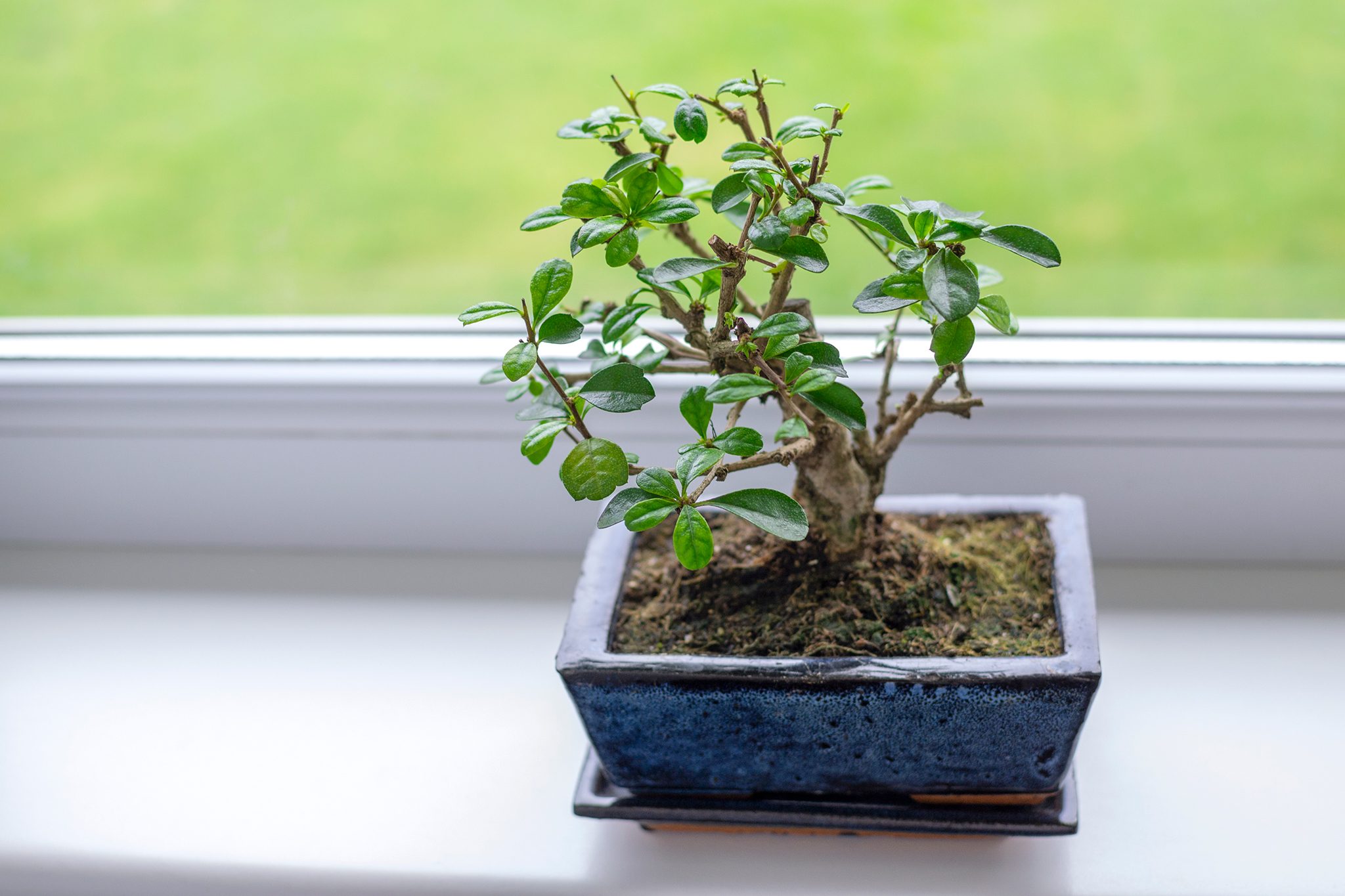
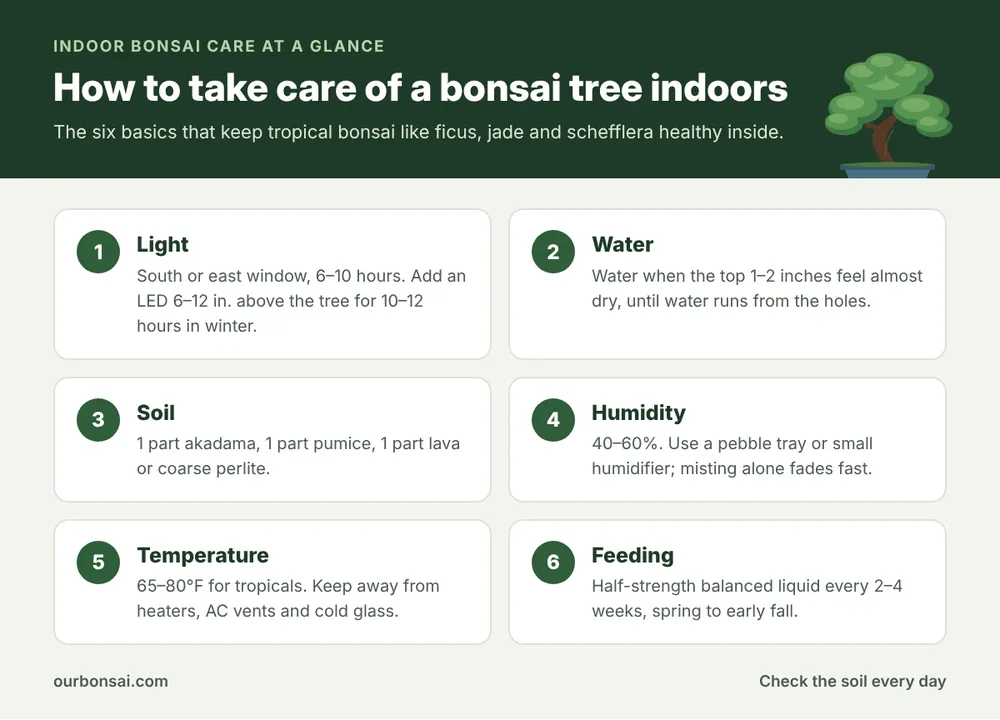
Quick answer: to take care of a bonsai tree indoors, choose a tropical species such as ficus or jade, give it a bright south or east window (or an LED grow light for 10–12 hours), water only when the top 1–2 inches of soil are almost dry, use a fast-draining bonsai mix, keep humidity around 40–60%, and feed at half strength every 2–4 weeks in the growing season.
In this guide
- Choose the right indoor bonsai species
- Light requirements and placement
- Watering the right way
- Soil, pots, and drainage
- Temperature and humidity indoors
- Fertilizing and feeding
- Pruning, wiring, and training indoors
- Pest and disease management
- Seasonal care calendar for indoor bonsai
- Troubleshooting common symptoms
- Daily, weekly, and monthly routine
- Quick answers
- Frequently asked questions
- Conclusion
Most indoor bonsai fail from too little light or too much water. This step-by-step guide shows what to do, why it works and how to fix problems early.
ok indoor-bonsai-care-quick-guide
Choose the right indoor bonsai species
Start with a species that can adapt to rooms. Tropical and subtropical trees handle stable indoor heat best.
Good options for beginners:
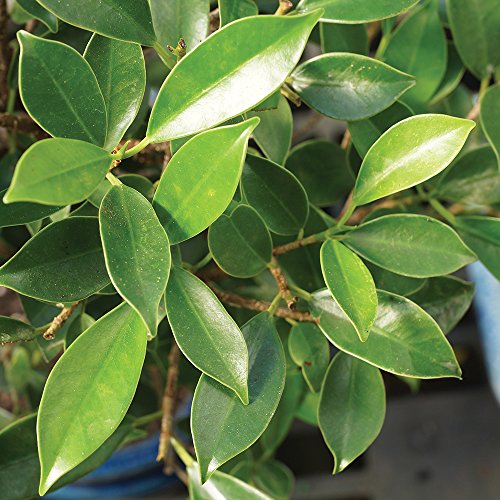
- Ficus (Ficus retusa, Ficus microcarpa). Tough, takes low to medium light, easy to shape.
- Jade or Portulacaria afra. Stores water, great for busy people.
- Chinese elm. Forgiving, but still needs bright light.
- Schefflera arboricola. Flexible and strong roots for styling.
- Serissa or Fukien tea. Pretty blooms, but sensitive and needs stable care.
Tip: a Ficus microcarpa under an east window with a small LED grow light is one of the easiest ways to start. It takes trimming well and recovers fast after wiring. For more choices, see the best indoor bonsai trees for beginners.
Light requirements and placement
Light is food for your bonsai, and getting it right is the most important part of indoor care. Most indoor spaces are dim for trees, even near a window.
Do this:
- Place the tree at a south or east window for 6 to 10 hours of bright light.
- Rotate the pot a quarter turn each week to keep even growth.
- Add a full spectrum LED grow light if the window is weak. Aim the lamp 6 to 12 inches above the canopy.
- Set the light on a timer for 10 to 12 hours per day in winter.
Signs you need more light:
- Long, thin internodes.
- Pale leaves and slow growth.
- Leaning toward the window.
Adding even a modest 30-watt LED panel usually makes leaves smaller and darker and keeps growth compact. Our guide to how much light a bonsai tree needs goes deeper.
Can a bonsai live in low light?
Most can survive but will not thrive. Add a grow light, reflect light with a white wall, and move closer to the window for best results.
How close should a grow light be?
Start at 8 inches and watch for heat or scorch. If leaves curl or dry, raise the light a bit and add airflow.
Watering the right way
Overwatering is the top cause of failure. Use a free-draining mix and check the soil each day.
Smart steps:
- Test with a wooden skewer pushed 1 to 2 inches deep. If it comes out almost dry, water now.
- Water until it flows from the drain holes. Wait a minute. Water again to wet the core.
- Use room-temp water. If your tap water is hard, let it sit overnight to vent chlorine.
Humidity helps, but misting is short lived. Use a humidity tray with water below the pot base, group plants, or run a small humidifier.
Common signs:
- Yellow, soft leaves and black tips mean too much water.
- Dry, crispy edges and wilting mean too little.
How often should I water a bonsai indoors?
There is no fixed schedule. In warm, bright rooms, you may water daily; in winter, every 3 to 5 days. See watering indoor bonsai in winter for cold-season tips.
Is bottom watering good?
It can help re-wet dry soil. Soak the pot base for 10 to 15 minutes, then drain well. Do not make it a daily habit.
Soil, pots, and drainage
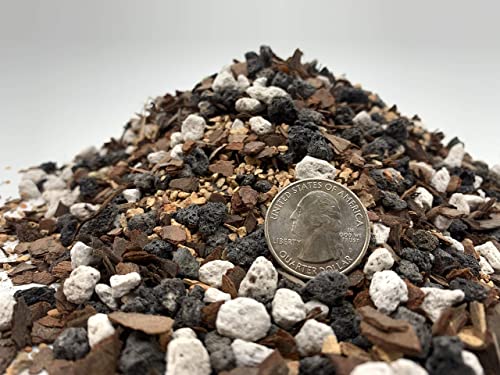
Your soil must drain well and hold enough air. Most indoor trees thrive in a chunky, inorganic blend.
A simple starter mix (more ratios in our bonsai soil mix ratio guide):
- 1 part akadama or fired clay for moisture and nutrients.
- 1 part pumice for light weight and air space.
- 1 part lava rock or coarse perlite for drainage.
Pot and setup tips:
- Use a pot with large drain holes and mesh.
- Avoid saucers that hold standing water against the base.
- Repot young trees every 1 to 2 years. Repot older trees every 2 to 4 years, when roots circle.
Jade in particular does much better in a gritty mix: the risk of root rot drops and it becomes easy to tell when it needs water.
Temperature and humidity indoors
Tropical bonsai prefer stable rooms.
Targets:
- Tropical and subtropical species: 65 to 80°F, 40 to 60 percent humidity.
- Keep away from AC vents, heaters, and cold windows in winter nights.
- Raise humidity with a tray or a small humidifier. Aim for gentle airflow with a fan on low.
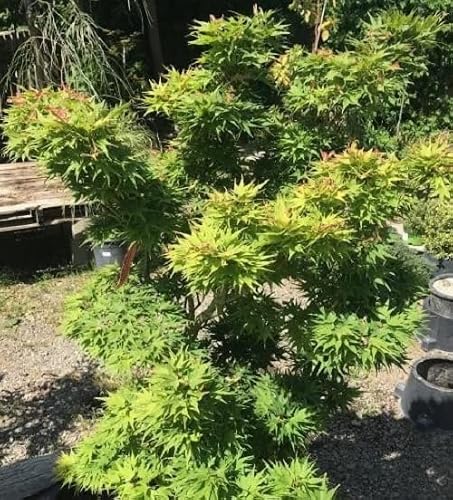
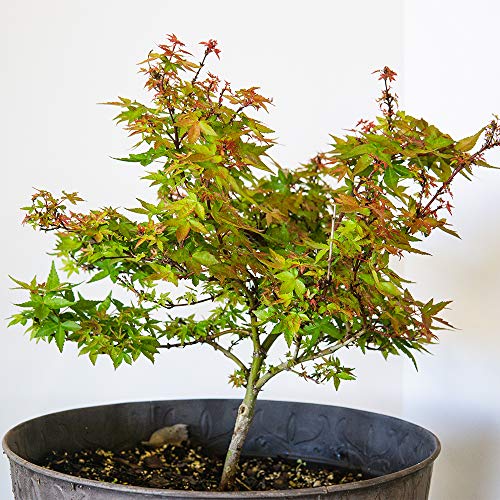
Temperate species like juniper or maple need a cold rest. If grown inside, give a cool spot at 35 to 50°F for 8 to 12 weeks, or they may weaken.
Fertilizing and feeding
Indoor bonsai grow slower than outdoor trees.
Simple plan:
- Spring to early fall: feed light and often. Use a balanced liquid fertilizer at half strength every 2 to 4 weeks.
- Late fall to winter: feed less. Once a month or pause if growth stops.
- For flowering trees, switch to lower nitrogen before bloom to help buds set.
Tips:
- Flush the soil with clean water once a month to wash salts.
- Organic pellets work well for steady feed but watch for fungus gnats.
Pruning, wiring, and training indoors
Shaping keeps your tree small and strong.
Do this:
- Pinch new shoots during the growing season to keep shape and leaf size small.
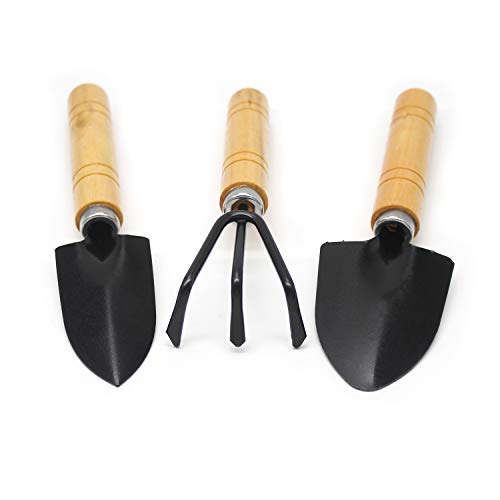
- Use sharp, clean tools to avoid tears. Sterilize blades between trees.
- Wire only healthy branches. Wrap at 45 degrees, not too tight. Check weekly and remove before it bites.
Structural pruning is best in spring when the tree can heal. Never remove more than one third of foliage at once on weak trees.
Tip: note the date when you wire a branch, then check it after two to six weeks and remove the wire before it cuts into the bark.
Pest and disease management
Indoor air is dry and calm, which pests love.
Watch for:
- Spider mites, scale, aphids, mealybugs, and fungus gnats.
- Fine webs, sticky honeydew, white fluff, or leaf curl.
Fix fast:
- Wash leaves with lukewarm water.
- Treat with insecticidal soap or neem oil every 7 days for 3 rounds.
- Use yellow sticky traps for gnats and let the top inch of soil dry between waterings.
- Quarantine new plants for two weeks.
See our guide to bonsai pests and diseases for symptoms and treatments. Root rot comes from poor drainage and constant wet soil. Improve the mix, repot if needed, trim black roots, and water less often.
Seasonal care calendar for indoor bonsai
ok indoor-bonsai-seasonal-care-calendar
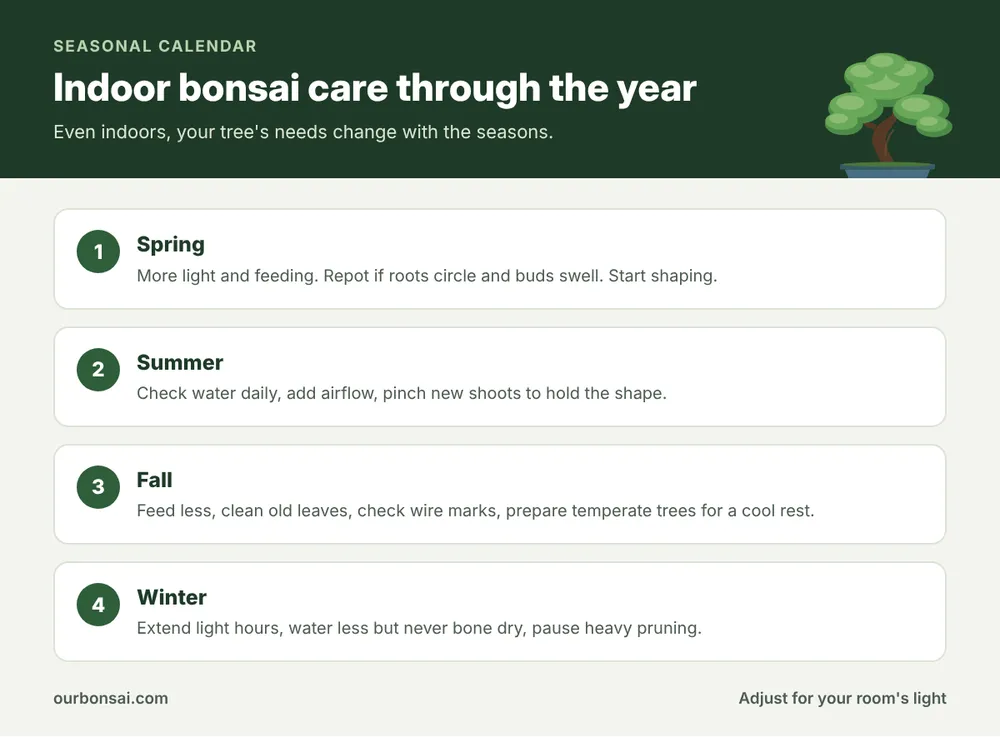
Spring:
- Increase light and feed. Resume shaping as growth starts.
- Repot if roots are tight and buds swell.
Summer:
- Watch water and heat. Add airflow and keep lights higher if leaves scorch.
- Pinch often to hold shape.
Fall:
- Reduce feed. Clean old leaves and check wire marks.
- Prepare cool rest for temperate trees.
Winter:
- Extend light hours. Water less but do not let the soil go bone dry.
- Pause heavy pruning unless the species is active.
Troubleshooting common symptoms
Leaf drop after moving:
- Normal stress. Give steady light, avoid drafts, and do not overwater. More causes: why a bonsai loses leaves suddenly.
Yellow leaves at the bottom:
- Often old leaf shed or low light. Increase light and check feed.
Brown tips:
- Low humidity or salt build-up. Raise humidity and flush the soil.
Leggy growth:
- Not enough light. Move closer to the window and add a grow light.
No growth for months:
- Cold root zone, low light, or tight roots. Warm the area, boost light, and consider repotting in season.
Daily, weekly, and monthly routine
Daily:
- Check light, soil feel, and pests.
- Rotate the pot a bit if it leans.
Weekly:
- Deep water as needed. Wipe leaves to clear dust.
- Inspect wire and prune light growth.
Monthly:
- Flush the soil. Feed if in season.
- Clean your tools and review the tree’s shape and health.
Quick answers
Do indoor bonsai need direct sun?
Most do better with bright, indirect sun and a bit of direct morning light. If you lack sun, use a grow light for 10 to 12 hours.
Can I keep a juniper bonsai indoors?
Junipers need cold dormancy and lots of sun. Keep them outdoors most of the year and only bring them in for short displays.
Why are my bonsai leaves turning yellow?
It can be too much water, low light, or a nutrient gap. Check the soil, raise light, and feed a balanced fertilizer at half strength.
Frequently asked questions
What is the best indoor bonsai for beginners?
Ficus is the top choice for most homes. It handles low light and forgives small mistakes.
How long can a bonsai live indoors?
With good care, many live for decades. Give stable light, water by need, and refresh soil on schedule.
Do I need special bonsai soil for indoor trees?
Yes, use a fast-draining, airy mix. A blend of akadama, pumice, and lava rock supports roots and reduces rot.
Should I mist my indoor bonsai?
Misting offers short relief. A humidifier or pebble tray keeps humidity steady for longer.
Can I use tap water for my bonsai?
Often yes, if it is not very hard. If leaves show salt burn, use filtered or let tap water sit overnight.
Conclusion
Start with a hardy species, give bright light, water by need, and keep the mix airy. Watch for small signs, act early, and your tree will reward you.
Pick one action today: move your bonsai to better light, add a timer to your lamp, or switch to a draining mix.