Common Bonsai Pests Every Grower Should Know
Tiny insects can cause surprisingly large problems on a bonsai tree. Yellow leaves, sticky foliage, weak new growth, fine webbing, or unexplained leaf drop may all point to pests rather than a watering or fertilizer problem.
Understanding the common bonsai pests every grower should know makes it much easier to act before serious damage occurs. Because bonsai trees grow in small containers with limited foliage and root space, a heavy infestation can weaken them faster than it might weaken a full-size landscape tree.
This guide explains the pests bonsai owners are most likely to encounter, how to recognize their damage, what to do first, and when treatment or experienced help is appropriate.
Quick Answer
The common bonsai pests every grower should know include aphids, spider mites, scale insects, mealybugs, whiteflies, thrips, fungus gnats, and leaf-chewing insects. Check leaves, stems, branch joints, and soil regularly. Early infestations can often be controlled through isolation, cleaning, water sprays, pruning, or properly labeled horticultural treatments.
Why Bonsai Trees Can Be Vulnerable to Pests
Bonsai are not naturally more attractive to every pest than ordinary trees. Their growing conditions, however, can make pest damage more noticeable and sometimes more serious.
A bonsai has relatively little foliage. Losing ten healthy leaves from a small tree matters much more than losing ten leaves from a mature landscape tree.
Trees may also become easier targets when stressed by:
- Improper watering
- Poor drainage
- Too little light
- Excessive fertilizer
- Recent repotting
- Heavy pruning
- Extreme heat or cold
- Growing an outdoor species indoors
- Poor air circulation
Healthy bonsai can still get pests, so an infestation does not automatically mean you have cared for the tree badly. The goal is to catch the problem early.
According to the University of Minnesota Extension’s guidance on insects affecting indoor plants, regular plant inspection and correct identification are important parts of controlling common plant pests. (University of Minnesota Extension)
Common Bonsai Pests at a Glance
| Pest | What You May Notice | Where to Check | Good First Step |
|---|---|---|---|
| Aphids | Curled growth, sticky leaves, clusters of insects | New shoots and leaf undersides | Isolate and rinse them away |
| Spider mites | Fine pale dots, bronzing, fine webbing | Leaf undersides and branch tips | Rinse foliage and improve monitoring |
| Scale | Brown, tan, or white bumps attached to stems | Branches, trunks, leaf veins | Remove small populations manually |
| Mealybugs | White cotton-like clusters | Branch joints, leaf axils, roots | Isolate and remove visible insects |
| Whiteflies | Tiny white insects flying when disturbed | Undersides of leaves | Isolate and monitor with sticky traps |
| Thrips | Silvering, scarring, distorted leaves | Tender leaves and buds | Remove damaged growth and inspect closely |
| Fungus gnats | Tiny dark flies around soil | Soil surface and drainage area | Correct excessive moisture |
| Caterpillars/beetles | Holes or missing leaf edges | Foliage and branches | Hand-remove when practical |
Do not treat a bonsai simply because you see one insect. Identify the pest first. Many beneficial or harmless organisms may visit an outdoor bonsai without damaging it.
1. Aphids
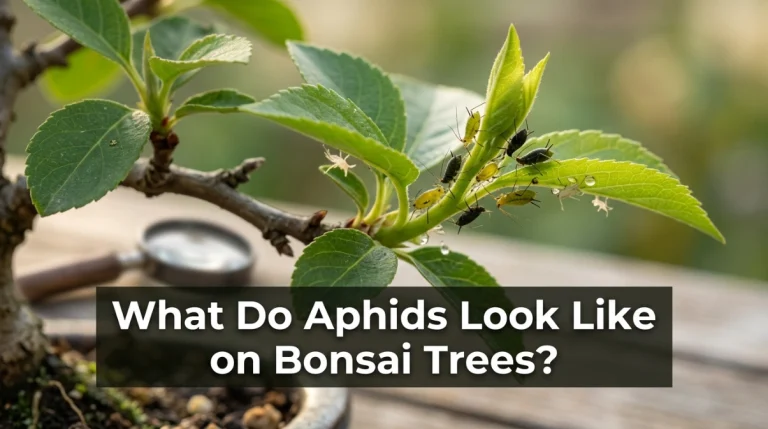
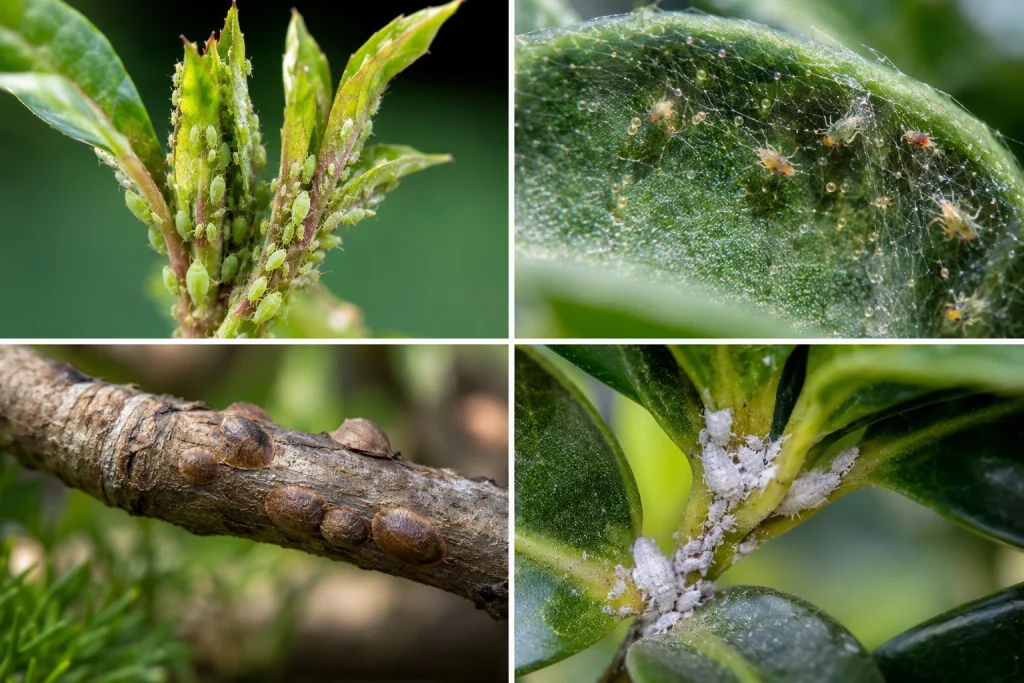
Aphids are among the easiest bonsai pests to recognize. These small, soft-bodied insects often gather in groups around tender shoots, buds, stems, and the undersides of young leaves.
They feed by withdrawing plant sap.
Signs of Aphids on Bonsai
Look for:
- Clusters of green, black, brown, gray, or reddish insects
- Curled or distorted new leaves
- Weak young shoots
- Sticky material on leaves or the pot
- Ant activity around the tree
- Dark sooty growth developing on sticky surfaces
The sticky substance is called honeydew, a sugary waste produced by several sap-feeding pests.
Small aphid populations can often be removed with a controlled stream of water or by wiping affected areas. Avoid blasting a delicate bonsai hard enough to damage branches or wash soil from the pot.
Check again every few days because newly hatched aphids may appear after the first cleaning.
2. Spider Mites
Spider mites are especially troublesome because they are extremely small. They are technically arachnids rather than insects.
Warm, dry conditions can favor some spider mite populations.
Early damage may appear as tiny pale dots across a leaf. As feeding continues, foliage may look dull, yellow, grayish, or bronze.
How to Check for Spider Mites
Inspect the underside of leaves with a hand lens.
You may notice:
- Fine pale stippling
- Bronzed foliage
- Extremely fine webbing
- Premature leaf drop
- Tiny moving specks beneath leaves
The University of California Integrated Pest Management spider mite guide notes that stippling and webbing are important signs and recommends methods such as water sprays, insecticidal soaps, and oils where appropriate. (UC IPM)
Do not assume every spider web on an outdoor bonsai means spider mites. Ordinary spiders can be beneficial visitors and do not feed on the tree.
3. Scale Insects
Scale insects can easily be mistaken for part of the bark.
They often appear as small brown, tan, gray, or whitish bumps firmly attached to branches, stems, or leaves. Many scale insects remain almost motionless while feeding.
Signs can include:
- Yellow foliage
- Reduced vigor
- Branch dieback in severe cases
- Sticky honeydew
- Black sooty mold
- Numerous shell-like bumps
A few scale insects can sometimes be removed carefully by hand.
Avoid scraping thin-barked bonsai aggressively. Damaging the bark while removing a pest can create a larger problem than the original infestation.
4. Mealybugs
Mealybugs look like small white or grayish insects coated in wax. Colonies often resemble tiny bits of cotton tucked into branch joints.
Common hiding places include:
- Leaf axils
- Branch forks
- New shoots
- Beneath leaves
- Trunk crevices
- Occasionally around roots
Mealybugs suck sap and can contribute to yellowing, weak growth, honeydew, and leaf drop.
Because their waxy covering can make treatment difficult, repeated inspection is important. A tree that appears clean today may still have insects or eggs hidden in tight spaces.
5. Whiteflies
Whiteflies are tiny pale insects commonly found beneath leaves. When an infested bonsai is moved or disturbed, adults may fly up in a small cloud.
They are particularly relevant to tropical and subtropical bonsai kept in protected or indoor growing spaces.
Watch for:
- Small white flying insects
- Yellowing leaves
- Sticky honeydew
- Weak foliage
- Groups of immature insects beneath leaves
Yellow sticky cards can help you monitor flying pests, but they should not be considered a complete treatment for a heavy infestation.
6. Thrips
Thrips are narrow, tiny insects that can be difficult to see without magnification.
Rather than producing obvious webbing or cotton-like material, thrips often reveal themselves through damaged plant tissue.
Feeding can cause:
- Silvery or pale patches
- Scarred leaves
- Distorted new growth
- Damaged buds
- Tiny dark specks on foliage
University of California IPM describes thrips as small, slender insects whose feeding can scar or distort leaves and flowers. (UC IPM)
Tender growth deserves particular attention because damage that occurs while a bonsai leaf is developing may remain visible even after the pest has been controlled.
7. Fungus Gnats
Fungus gnats are small, dark flies frequently associated with moist potting media.
Adult gnats are mainly annoying. Their larvae live in the growing medium, where some species feed on fungi, decaying organic matter, and fine roots.
The Penn State Extension discussion of fungus gnats in potted plants explains that the soil-dwelling larvae are the stage capable of damaging roots when infestations are severe. (Penn State Extension)
For a bonsai owner, repeated fungus gnat activity should also prompt a review of watering.
Do not simply stop watering the tree until the soil becomes bone dry. Different bonsai species have very different moisture needs. Instead, determine whether the substrate is staying unnecessarily wet between waterings.
8. Caterpillars, Beetles, and Other Leaf-Chewing Pests
Outdoor bonsai can occasionally attract caterpillars, beetles, earwigs, or other chewing pests.
Unlike mites and aphids, these pests often leave obvious physical damage:
- Holes through leaves
- Ragged edges
- Partially eaten buds
- Missing foliage
- Droppings on leaves or soil
Inspect after dark if damage continues but you cannot locate the culprit during the day.
For a small bonsai collection, hand-picking a visible caterpillar may be easier and safer than immediately reaching for a pesticide.
How to Inspect a Bonsai for Pests
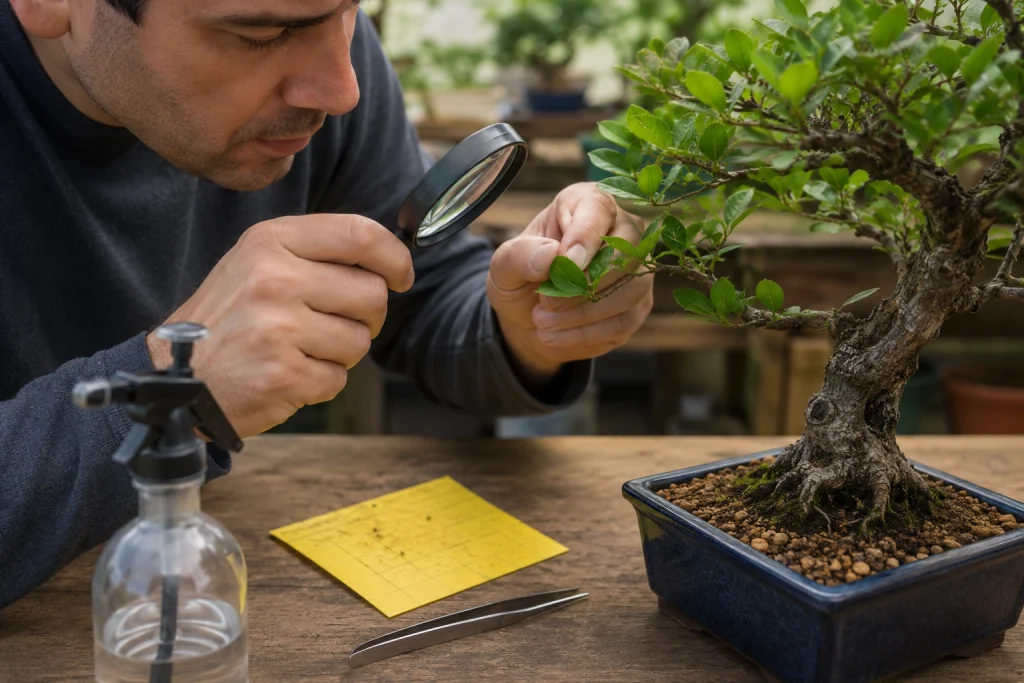
Regular inspection is one of the cheapest and most effective pest-management habits.
A basic hand lens is inexpensive, lasts for years, and is often more useful to a beginner than buying several pest-control products before identifying the problem.
Follow This Five-Minute Inspection
- Look at the tree from a distance. Compare leaf color and density with its normal appearance.
- Inspect new shoots. Aphids and other sap feeders often concentrate on tender growth.
- Turn leaves over. Spider mites, whiteflies, thrips, and scale may hide underneath.
- Check branches and crevices. Look around branch forks and rough bark for scale or mealybugs.
- Inspect the soil surface. Watch for tiny flies, excessive moisture, unusual insects, or declining roots.
Check newly purchased trees particularly carefully.
Expert Tip
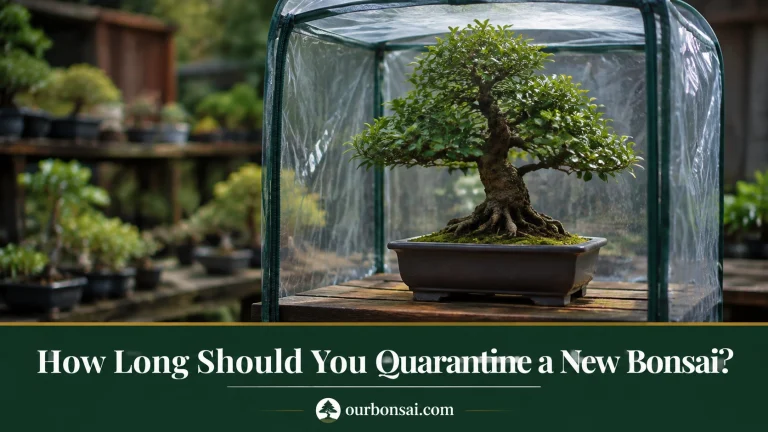
Expert Tip: Keep a new bonsai separate from the rest of your collection for a short observation period. Inspect the leaves, branches, and soil several times before placing it beside established trees. Isolation is far easier than treating an infestation that has spread through an entire collection.
What to Do When You Find Bonsai Pests
The best treatment depends on the pest, bonsai species, infestation level, and growing environment.
An Integrated Pest Management approach starts with identification and lower-risk methods before moving to stronger controls when necessary. The EPA describes Integrated Pest Management as combining pest information and practical control methods while seeking to minimize hazards to people and the environment. (US EPA)
1. Isolate the Bonsai
Move the affected tree away from healthy plants when possible.
Remember that outdoor bonsai still need appropriate outdoor conditions. Do not move a temperate outdoor tree into a warm living room for weeks simply to quarantine it.
2. Identify the Pest
Look closely before treating.
For example:
- Fine webbing and stippled leaves suggest spider mites.
- Cottony white clusters suggest mealybugs.
- Hard bumps suggest scale.
- Sticky leaves may indicate aphids, scale, mealybugs, or whiteflies.
Correct identification prevents unnecessary chemical treatment.
3. Remove What You Can Physically
Depending on the pest, you may:
- Rinse foliage
- Wipe leaves
- Remove isolated scale insects
- Hand-pick caterpillars
- Prune a severely infested small shoot
Avoid heavy pruning on an already weak tree. The bonsai needs healthy foliage to recover.
4. Correct Care Problems Without Overcorrecting
Improve obvious problems such as poor airflow or persistently wet soil.
However, pest treatment is not a reason to suddenly repot a stressed tree unless there is a genuine root or substrate problem requiring intervention.
Simultaneous pesticide treatment, major pruning, root work, and repotting can place unnecessary stress on the tree.
5. Use a Suitable Treatment if Needed
Insecticidal soaps and horticultural oils can be useful against certain soft-bodied pests and mites, but they are not automatically safe for every plant under every condition.
Never use a household cleaning detergent as a substitute for a horticultural product unless reliable plant-care guidance specifically supports that use.
When using a pesticide, follow its label exactly. Make sure:
- The target pest is listed.
- The plant or intended use is permitted.
- Indoor or outdoor restrictions are followed.
- The correct dilution and application method are used.
- Required protective precautions are followed.
- Children and pets are protected as directed.
EPA guidance emphasizes that pesticide labels contain legally enforceable directions for safe use. (US EPA)
Prevention Is Easier Than Treating a Heavy Infestation
You cannot guarantee a completely pest-free bonsai collection, especially outdoors.
You can greatly improve your chances of catching problems early.
Build These Habits
- Inspect trees weekly during active growth.
- Check beneath leaves, not just above them.
- Quarantine new additions when practical.
- Keep benches and growing areas reasonably clean.
- Remove badly damaged fallen leaves.
- Give each species the light and airflow it needs.
- Avoid chronic overwatering.
- Avoid excessive nitrogen feeding that produces unusually soft growth.
- Clean tools between questionable or unhealthy plants.
- Monitor trees closely after moving them indoors or outdoors.
A healthy tree generally has more energy available to tolerate and recover from limited pest damage.
Should You Repot a Bonsai Because It Has Pests?
Usually, no.
Most aphids, mites, scale insects, whiteflies, and thrips live primarily on above-ground plant parts. Repotting will not solve those infestations and may unnecessarily stress the tree.
Repotting becomes more relevant when there is evidence of a serious soil or root problem, such as:
- Root pests
- Severely decomposed substrate
- Persistent drainage failure
- Root rot
- A soil condition that cannot be corrected through normal care
Do not perform major root pruning on a weak, heavily infested bonsai unless there is a compelling reason.
Timing matters too. Bonsai repotting is normally coordinated with the species and its growth cycle rather than done impulsively.
Cost and Treatment Considerations for Beginners
Pest management does not need to become an expensive collection of chemicals and equipment.
For many beginners, useful basics include:
| Item | Typical Value to a Beginner |
|---|---|
| Hand lens | Excellent for identifying mites, scale, and thrips |
| Yellow sticky cards | Useful for monitoring flying insects |
| Small dedicated sprayer | Helpful if a labeled treatment is required |
| Tweezers | Useful for removing visible pests |
| Multiple pesticide products | Usually unnecessary before identification |
| Expensive powered sprayer | Rarely justified for a small collection |
Quality matters most with tools that you will use repeatedly. A decent hand lens, durable tweezers, and a controllable spray bottle can remain useful for years.
The product that costs the most is not necessarily the best treatment. Correct pest identification is more important than buying a stronger pesticide.
Indoor vs. Outdoor Bonsai Pest Management
Indoor and outdoor bonsai may face many of the same pests, but the management environment differs.
Indoor or Tropical Bonsai
Ficus, Schefflera, jade-type bonsai, and other tropical species may experience persistent pest activity because indoor temperatures remain relatively stable.
Spider mites, scale, mealybugs, fungus gnats, and whiteflies can become especially noticeable indoors.
Poor light and low air movement may also weaken an improperly placed tree.
Outdoor Bonsai
Junipers, pines, maples, elms, oaks, and many other traditional bonsai generally belong outdoors.
Outdoor trees are exposed to more insects, but they also share their environment with predators and other beneficial organisms.
Do not spray an outdoor bonsai merely because insects are present. Determine whether they are actually causing damage.
Species-specific pests can also occur. A problem affecting a pine may require different identification and management from a pest attacking a maple or tropical ficus.
Common Mistakes Bonsai Owners Should Avoid
- Treating before identifying the pest. Different pests require different management.
- Spraying every insect you see. Many outdoor insects are harmless or beneficial.
- Using too much pesticide. More product does not mean better control and may damage the tree.
- Using household chemicals on foliage. Bonsai leaves and young bark can be sensitive.
- Ignoring leaf undersides. Many serious pests hide there.
- Treating once and forgetting the problem. Eggs or hidden insects may survive.
- Overwatering to “help” a stressed tree. Persistently wet soil can create additional root problems.
- Repotting immediately. Repotting is not a routine treatment for foliage pests.
- Moving outdoor bonsai permanently indoors during treatment. Outdoor species still require appropriate seasonal conditions.
- Applying oils or soaps to a dehydrated or heat-stressed tree without checking product instructions.
- Performing heavy pruning and pest treatment simultaneously. A weakened tree needs enough healthy foliage to recover.
When to Ask an Experienced Bonsai Grower or Arborist
Most light pest problems can be managed by an attentive hobbyist.
Ask for experienced help when:
- You cannot identify the pest.
- The tree is rapidly losing foliage.
- Major branches are dying.
- You suspect borers beneath the bark.
- Roots are also declining.
- The infestation repeatedly returns despite appropriate treatment.
- The tree is an old, valuable, collected, or difficult-to-replace specimen.
- You are unsure whether a pesticide is safe for that particular species.
- Pest damage may actually be a fungal, bacterial, environmental, or root problem.
For a valuable bonsai, asking for help early can be cheaper than trying several unsuitable treatments.
A qualified arborist is particularly useful when the issue involves tree health or pest diagnosis beyond ordinary container-plant care. An experienced bonsai grower can additionally help judge species-specific timing, stress, and recovery.
FAQs
What are the most common pests on bonsai trees?
Aphids, spider mites, scale insects, mealybugs, whiteflies, thrips, fungus gnats, and various leaf-chewing insects are among the pests bonsai growers commonly encounter. The exact risk depends on the tree species and whether it grows indoors or outdoors.
How do I know if my bonsai has spider mites?
Look for pale stippling, dull or bronzed leaves, fine webbing, and tiny moving specks beneath the foliage. A hand lens makes mites much easier to see.
Can I spray neem oil on every bonsai tree?
No. Plant sensitivity, concentration, temperature, tree condition, and product formulation matter. Check the product label and species suitability before applying any horticultural oil, and avoid assuming one treatment is safe for every bonsai.
Should I remove all insects from an outdoor bonsai?
No. Outdoor trees naturally interact with insects, including beneficial predators. Control should focus on organisms that are correctly identified as pests and are causing unacceptable damage.
Why are there tiny flies around my bonsai soil?
They may be fungus gnats, particularly when the growing medium remains moist for long periods. Inspect the soil and reconsider watering frequency, but do not deliberately dehydrate a species that requires consistent moisture.
Can bonsai pests spread to my other plants?
Yes. Aphids, mites, mealybugs, scale crawlers, whiteflies, thrips, and other pests can move between suitable plants. Separating an infested tree while you identify and manage the problem can help reduce spread.
Can a bonsai recover after a serious pest infestation?
Often, yes, provided enough healthy roots, branches, and foliage remain. Recovery depends on the species, season, severity of damage, and overall tree health. Avoid piling extra stress on the tree with unnecessary repotting, heavy pruning, or excessive fertilizer.
Conclusion
Learning the common bonsai pests every grower should know is less about memorizing insects and more about learning to read your tree.
Check new growth, turn leaves over, examine branch joints, watch the soil, and pay attention when a bonsai suddenly changes appearance. Aphids, spider mites, scale, mealybugs, whiteflies, thrips, fungus gnats, and chewing pests are much easier to manage when detected early.
Start with identification and the least disruptive control method that fits the problem. Keep the tree in appropriate growing conditions, use pesticides only when necessary and according to their labels, and avoid stressful procedures unless the tree genuinely needs them.
Make regular pest inspection part of your normal bonsai watering and care routine. A few minutes of observation each week can prevent a small infestation from becoming a serious threat to your tree.