
Powdery Mildew on Bonsai Trees: Identification and Treatment

Quick Answer
Powdery mildew on bonsai trees usually appears as white or gray flour-like patches on leaves, buds, or young shoots. Start treatment by improving airflow, removing severely infected material, correcting excessive shade or crowding, and confirming the symptoms against reliable guidance such as the University of Minnesota Extension powdery mildew guide before using a fungicide.
Signs to check first
- Powdery coating: White or gray fungal growth develops across leaf surfaces or tender shoots.
- Spreading patches: Small pale areas gradually expand or merge rather than staying unchanged.
- Distorted leaves: Young foliage may curl, cup, twist, or remain undersized.
- Yellowing foliage: Heavier infections may weaken leaves and cause premature drop.
- Susceptible growth: Soft new shoots often show symptoms before older hardened foliage.
Best first response
- Separate the affected bonsai, improve air movement, remove badly infected debris, and monitor new growth before escalating treatment.
White powder on bonsai leaves is alarming because a small canopy makes every damaged leaf noticeable. The good news is that powdery mildew is usually manageable when you identify it early and avoid stressing the tree with unnecessary treatments.
This 2026 guide focuses on practical identification, safe treatment choices, common look-alikes, and prevention. The goal is healthy new growth, not simply making old leaves look clean again.
In This Guide
What Does Powdery Mildew Look Like on a Bonsai?
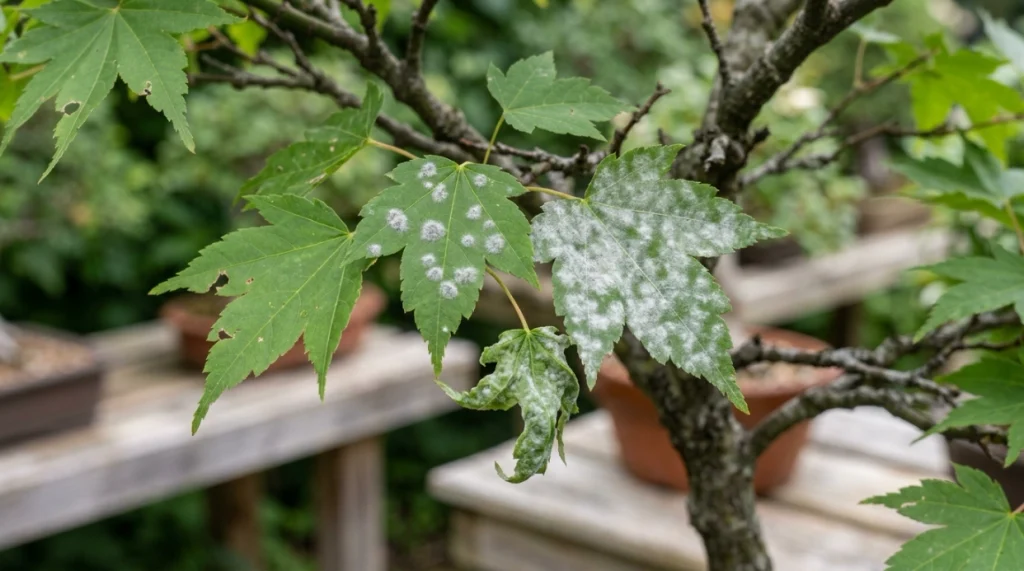
Powdery mildew usually creates a visible white-to-gray coating on living foliage. It may begin as several small circular patches before spreading across larger parts of a leaf.
Definition: Powdery mildew is a group of fungal diseases that produce powder-like fungal growth on susceptible leaves, buds, stems, and other young plant tissue.
Young leaves and green shoots often show the strongest symptoms. Severe infections can also produce twisted foliage, yellowing, slower growth, or early leaf drop.
- Early stage: Small white or pale gray patches appear on individual leaves.
- Developing infection: Patches enlarge and begin joining together.
- Heavy infection: Large parts of the canopy may look dusted with flour.
- Young growth: New leaves may become curled, cupped, or distorted.
- Later symptoms: Infected foliage can yellow, brown, or fall prematurely.
The exact appearance varies with the bonsai species and the powdery mildew fungus involved. Powdery mildew fungi are often host-specific, so one fungal species does not necessarily infect every tree nearby.
The University of Maryland Extension notes that powdery mildew infections can reduce vigor and cause leaf distortion or premature leaf drop. Serious damage is uncommon on many established trees and shrubs, but bonsai deserve closer monitoring because their canopies are deliberately compact.
What Causes Powdery Mildew on Bonsai Trees?
Powdery mildew develops when a susceptible tree, an active mildew fungus, and favorable environmental conditions occur together. Humidity and restricted airflow are particularly important factors.
Unlike many leaf diseases, powdery mildew does not require leaves to remain soaking wet for long periods. Humid air around sheltered foliage can be enough for infection to develop.
- Poor airflow: Dense ramification or crowded benches trap humid air around foliage.
- Heavy shade: Low-light areas often stay cooler and more humid.
- Soft new growth: Tender foliage is commonly more susceptible than mature leaves.
- Excess nitrogen: Heavy feeding can encourage lush, vulnerable shoots.
- Susceptible species: Maples, oaks, crape myrtles, and many other woody plants can host species-specific powdery mildews.
- Seasonal conditions: Warm days combined with cooler, humid nights can favor outbreaks.
I would not automatically blame your watering routine when mildew appears. The moisture around the canopy can matter more than the moisture sitting on the leaf surface.
That distinction is useful with bonsai. A tree can have freely draining soil and still develop mildew because crowded foliage creates its own humid microclimate.
How Can You Confirm It Is Powdery Mildew?
Do not diagnose powdery mildew from the color white alone. Hard-water residue, spray deposits, spider mite damage, mealybugs, and scale can create surprisingly similar symptoms.
A 10× hand lens is useful for inspecting both leaf surfaces. Check several affected leaves rather than making a decision from one damaged spot.
| Problem | Typical Appearance | Best Confirmation Clue |
|---|---|---|
| Powdery mildew | White or gray powdery patches | Patches spread across living tissue and may distort new leaves |
| Hard-water residue | Chalky rings or dried droplets | Usually follows water-drop patterns and does not spread |
| Spider mites | Fine pale stippling | Look underneath leaves for mites, eggs, or fine webbing |
| Mealybugs | Cotton-like white clusters | Individual insects collect around leaf joints and stems |
| Scale | White, tan, or brown raised bumps | Firm coverings remain attached to leaves or branches |
If the symptoms remain unclear, photograph the upper and lower leaf surfaces in good light. Bonsai-specific references such as the Bonsai Empire pests and diseases guide can help you compare broader disease and pest symptoms.
How Do You Treat Powdery Mildew on Bonsai?
Treat powdery mildew with the least stressful measures first. The aim is to reduce active disease while protecting enough healthy foliage for the bonsai to continue growing normally.
- Separate the affected tree. Move it away from healthy bonsai while you confirm the problem.
- Inspect the entire canopy. Check leaf tops, undersides, buds, shoots, and interior branches.
- Remove severely infected debris. Discard fallen leaves and heavily affected foliage when removal will not excessively weaken the tree.
- Improve airflow. Increase spacing between pots and remove environmental barriers that keep air stagnant.
- Correct excessive shade. Give the tree the light level appropriate for its species rather than keeping it in a dark, humid corner.
- Reduce excessive feeding. Avoid pushing large amounts of tender growth while an infection is active.
- Monitor new foliage. Healthy new growth is a better recovery signal than old infected leaves becoming cleaner.
Do not completely defoliate a weak bonsai simply because several leaves carry mildew. A major loss of foliage can add more stress than the disease itself.
If an infected shoot must be removed, consider the design consequences before cutting. Bonsai branches take time to replace, especially on mature trees.
Pro tip: For structural pruning or removal of important live branches, use clean tools and consider guidance from an experienced grower or local bonsai club before making an irreversible cut.
Sanitation also matters. Remove infected leaves that collect on the soil surface, benches, or nearby growing areas instead of allowing old material to remain around the tree.
Section Takeaway: Start with airflow, sanitation, proper light, and conservative removal of badly infected material. Judge recovery by the health of new growth rather than the appearance of old damaged leaves.
Which Fungicides Can Control Powdery Mildew?
Fungicides can help when cultural changes are not enough, particularly on valuable or repeatedly infected trees. Treatment works best early, before mildew has covered most of the canopy.
The UC Statewide IPM Program lists horticultural oils, neem oil, sulfur, potassium bicarbonate, and other materials used against powdery mildew. Product suitability still depends on the plant species and label.
- Horticultural oils: Often used against mild to moderate existing infections.
- Neem-based oils: Can have eradicant and protective activity when the label includes the target plant and disease.
- Sulfur: Works mainly as a preventive treatment and can injure sensitive plants.
- Potassium bicarbonate: Used in some products for powdery mildew suppression.
- Other fungicides: Availability and labeled uses vary by location and plant species.
Never assume an ornamental fungicide is automatically safe for every bonsai. Bonsai include hundreds of tree and shrub species with different sensitivities.
Oil and sulfur require special care. UC IPM warns against applying oil within about two weeks of sulfur because plant injury can occur.
Oil treatments should also be avoided on drought-stressed plants or during temperatures around or above 90°F (32°C), unless the product label clearly states otherwise. Follow the label’s rates, intervals, protective equipment instructions, and plant restrictions.
Some products call for repeated applications while conditions remain favorable, often at intervals around 7–10 days. Do not copy a generic schedule if your label specifies something different.
How Can You Prevent Powdery Mildew From Returning?
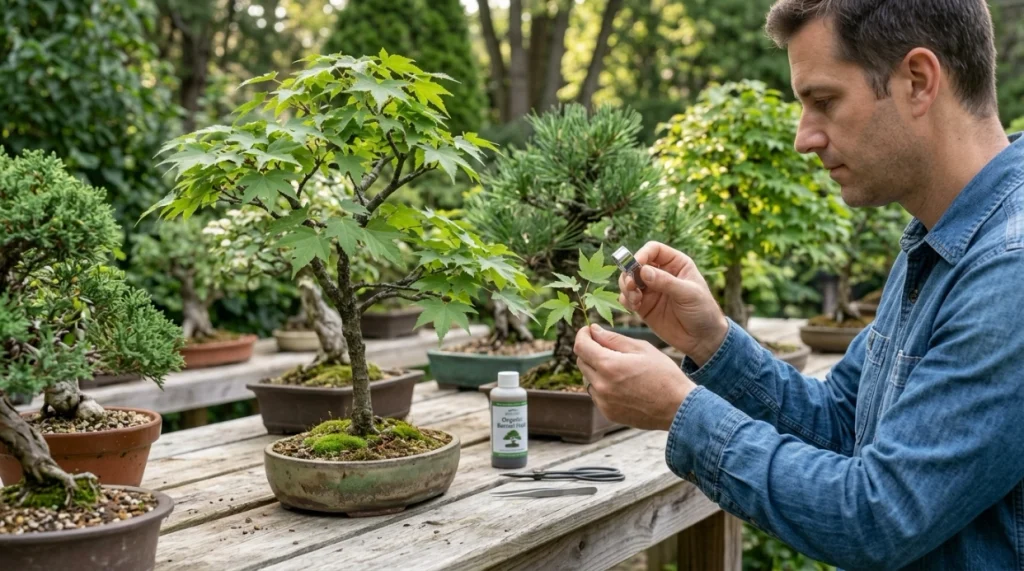
Prevention focuses on keeping the foliage vigorous without creating a humid, crowded canopy. This matters most on trees with a history of repeated seasonal infections.
- Space bonsai properly: Leave enough room for air to move between canopies.
- Thin overcrowded growth: Use normal seasonal pruning to improve light penetration.
- Provide suitable light: Avoid keeping sun-tolerant species in unnecessarily deep shade.
- Feed conservatively: Excess nitrogen can produce large amounts of susceptible new growth.
- Clean growing areas: Remove diseased leaves and old plant debris regularly.
- Inspect weekly: Watch tender shoots closely during favorable weather.
- Know your species: Trees with repeated mildew problems may need preventive management before their usual outbreak season.
Winter or dormant-season thinning can improve future airflow on suitable deciduous species. Avoid aggressive pruning during an active infection simply to open the canopy.
The most successful strategy is usually consistent care rather than repeated spraying. A healthy bonsai with appropriate light, spacing, watering, nutrition, and airflow is easier to manage when disease pressure rises.
Frequently Asked Questions
Can powdery mildew kill a bonsai tree?
Powdery mildew is rarely fatal by itself on established woody plants. Heavy or repeated infections can still reduce photosynthesis, distort new growth, weaken foliage, and contribute to premature leaf loss, so a small or already stressed bonsai deserves attention.
Does powdery mildew start in bonsai soil or roots?
Powdery mildew is primarily a disease of foliage, buds, and young shoots rather than a root disease. Depending on the mildew species, the fungus may survive between seasons in infected buds or specialized structures on plant material.
Should I remove every infected leaf?
No. Remove heavily infected foliage only when the bonsai can tolerate that loss. Stripping most leaves from a weak tree can reduce photosynthesis and create additional stress, so balance disease removal against the tree’s overall vigor.
Can I use neem oil on powdery mildew?
Some neem-oil products are labeled for powdery mildew and can help with mild to moderate infections. Check the specific label for your plant type, avoid treating heat- or drought-stressed trees, and never assume all bonsai species tolerate oil equally well.
Can I use sulfur on a bonsai tree?
Sulfur can prevent powdery mildew on some plants, but certain species and cultivars are sensitive to it. Never use sulfur close to an oil treatment, and avoid applications during high temperatures unless the product label specifically permits them.
Will powdery mildew disappear in winter?
Visible mildew may disappear when deciduous foliage drops, but the disease can return the following growing season. Some powdery mildew fungi survive in dormant buds or resistant fungal structures, so sanitation and early monitoring remain useful.
How do I know the treatment is working?
Watch the newest leaves and shoots. Old infected areas may remain discolored or damaged, but successful management should reduce fresh powdery patches and allow new growth to emerge normally.
What Is the Best Approach to Powdery Mildew on Bonsai?
Identify the problem before reaching for a fungicide. White residue, insects, and environmental injury can imitate powdery mildew, so inspect multiple leaves and consider the whole tree.
Once mildew is confirmed, improve airflow, clean up infected debris, protect healthy foliage, and use a labeled treatment only when necessary. Early, conservative action usually gives a bonsai the best chance to keep producing clean, healthy growth.
