Is My Azalea Bonsai Dying? Signs and How to Save It

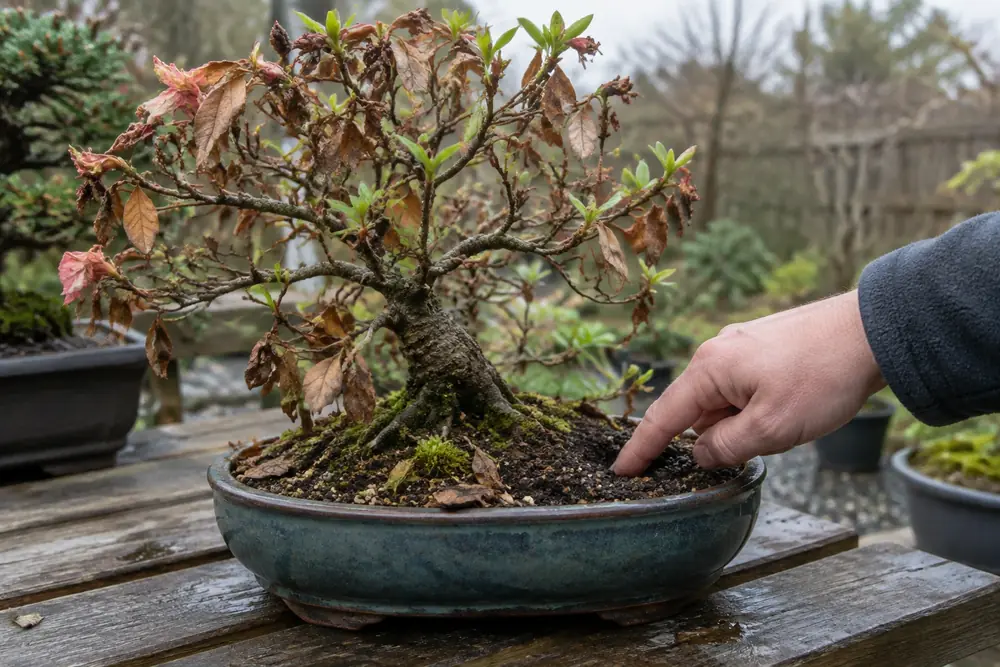
An azalea bonsai dying usually shows it in the leaves first: shoots go limp, leaves turn brown and crispy or yellow, and whole branches can go bare within a week or two. It is scary to watch, but it does not always mean the tree is lost. Azaleas recover surprisingly well once the cause is fixed, as long as some of the wood and roots are still alive.
In this guide
In most cases the problem starts in the root zone. Azaleas have very fine, shallow roots that die quickly if the soil dries out, stays soggy, or turns alkaline. This guide helps you check whether your tree is still alive, find the most likely cause, and follow a step-by-step plan to save it.
Is my azalea bonsai dying or just stressed?
Before you do anything drastic, check what is still alive.
- Scratch test: gently scratch a small spot of bark on a branch with your fingernail. Green and moist underneath means that part is alive. Brown and dry means it is dead. Test several branches and the trunk.
- Bend test: live twigs bend; dead twigs snap with a dry crack.
- Root check: slide the tree out of the pot. Healthy azalea roots are fine, light brown and firm. Dead roots are dark, mushy or dry and brittle, and slip their outer skin when pulled.
If most branches are green under the bark and you can find some firm roots, your tree has a good chance. A few dropped leaves in autumn or after flowering can also be normal, see our guide to why bonsai lose leaves suddenly.
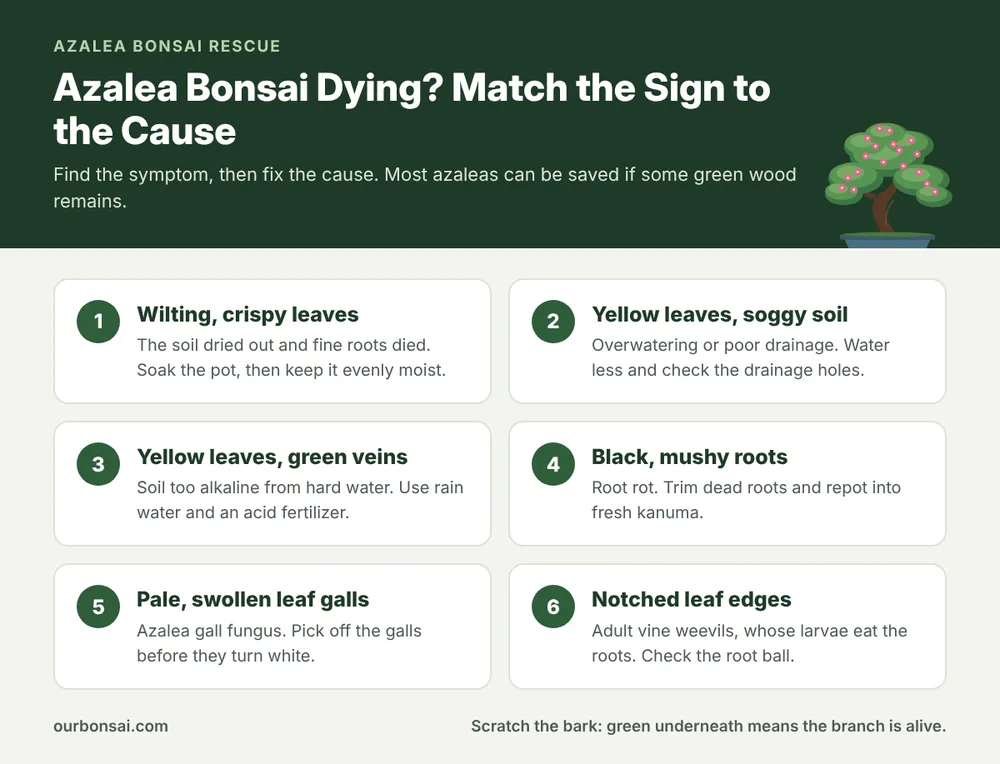
7 common causes of an azalea bonsai dying
1. The soil dried out
This is the number one cause. A single hot afternoon with dry soil can kill the fine root tips, and you see the result a few days later as wilting and crispy brown leaves. Azaleas in small bonsai pots need checking every day in spring and summer.
2. Overwatering and root rot
The opposite problem is just as common. Soil that stays wet for days pushes out the air, the roots suffocate, and fungi attack them. Leaves turn yellow and drop, and the soil may smell sour. Our guide to root rot in bonsai shows how to spot it and treat it.
3. Alkaline soil or hard water
Azaleas are acid-loving plants. In normal potting soil or with hard tap water, the pH rises and the roots can no longer take up iron. The classic sign is yellow leaves with green veins (chlorosis). The RHS rhododendron growing guide recommends acidic soil and rain water for the same reason. Kanuma soil keeps the pH low; compare options in our list of the best soil for azalea bonsai.
4. Kept indoors too long
Satsuki azaleas are outdoor shrubs. Indoors they get too little light and too much dry, warm air, and they slowly drop leaves and decline over a few months. A short indoor stay during flowering is fine; living indoors all year is not. See our Satsuki azalea indoor care tips if you have to keep it inside for a while.
5. Frost or winter damage
Roots in a small pot freeze far more easily than roots in the ground. An azalea left fully exposed in a hard frost can look fine until spring, when it fails to leaf out. Protect the pot below freezing and keep it out of drying winter wind.
6. Pests
- Vine weevil: adults cut notches in leaf edges at night; the white larvae eat the roots in the pot, and a tree can collapse suddenly. The RHS page on vine weevil explains the life cycle.
- Azalea lace bug and spider mites: leaves look speckled, pale or bronzed from above, with dark spots or fine webbing underneath. See our guide to spider mites on bonsai trees.
7. Fungal diseases
Azalea leaf gall turns new leaves thick, pale and swollen, later covered in white powder. It is ugly but rarely fatal; pick the galls off before they turn white. Petal blight makes flowers collapse into brown mush and only affects blooms. Root rot, as above, is the serious one.
How to save a dying azalea bonsai: step by step
- Move it to the right spot. Bright shade outdoors, sheltered from hot sun and wind, while it recovers. If it is winter, an unheated, frost-free place.
- Check the roots. Slide it out of the pot and look. If the root ball is bone dry, soak the whole pot in water for 10 to 15 minutes, then drain.
- Treat rot if you find it. Cut away black, mushy roots with clean scissors and repot into fresh kanuma. Do not fertilize until new growth appears.
- Fix the water. Use rain water or filtered water and water when the top of the soil starts to dry, not on a schedule. Never let it go bone dry again.
- Cut back dead wood. Remove branches that failed the scratch test, cutting back to green wood. Leave anything you are unsure of until spring.
- Treat pests. Rinse leaves, use a suitable insecticidal soap for mites or lace bugs, and check the root ball for vine weevil larvae.
- Be patient. Azaleas can push new buds from bare wood. Give the tree four to eight weeks of steady care before you decide it is gone.
What not to do
- Do not fertilize a sick tree heavily. Damaged roots cannot use it and salts can burn them further. Wait for new shoots, then feed lightly with an acid fertilizer, see our azalea fertilizer picks.
- Do not keep watering a tree that already sits in wet soil.
- Do not do a full repot and a hard prune at the same time on a weak tree unless rot forces you to.
- Do not move it from shade to full sun in one go.
FAQ: azalea bonsai dying
Can a dying azalea bonsai come back?
Yes, often. If the scratch test shows green wood and some roots are firm, fix the cause and give it a few weeks. Azaleas bud back well from old wood.
Why are the leaves on my azalea bonsai turning brown?
Most often because the soil dried out and fine roots died. Other causes are frost, too much fertilizer, or root rot. Check the soil and the roots first.
Why is my indoor azalea bonsai dying?
Satsuki azaleas are outdoor trees. Indoors they lack light and humidity and cannot rest in winter. Move it outside to a sheltered spot and adjust watering.
How do I know if my azalea bonsai is dead?
If every branch is brown and dry under the bark and the roots are all mushy or brittle, it is dead. If any green remains, keep caring for it.
Final thoughts
An azalea bonsai dying is almost always a root problem: too dry, too wet, or soil that is not acidic enough, sometimes helped along by pests or frost. Check what is alive, fix the cause, and give the tree time. For more on the warning signs that apply to every species, see our guide to why bonsai branches die and our bonsai pests and diseases guide.