Bonsai Wilting After Repotting: Causes and How to Fix It

This post contains affiliate links. As an Amazon Associate, OurBonsai earns from qualifying purchases at no extra cost to you. Read our disclosure.
In this guide
- Why is my bonsai wilting after repotting?
- Is some wilting normal after repotting?
- How to fix bonsai wilting after repotting
- What if the bonsai is still wilting after two weeks?
- How to prevent wilting next time you repot
- Does the type of tree make a difference?
- FAQ: bonsai wilting after repotting
- Final thoughts
Seeing your bonsai wilting after repotting is scary, especially when the tree looked perfectly healthy the day before. The good news is that some drooping in the first days is normal. Repotting removes or damages part of the root system, and for a while the tree simply cannot pull up as much water as its leaves are losing. With the right aftercare, most trees bounce back within a few weeks.
This guide explains why repotted bonsai wilt, how to tell normal transplant shock from a real problem, and exactly what to do to help your tree recover.
Why is my bonsai wilting after repotting?
Leaves wilt when they lose water faster than the roots can supply it. During repotting you comb out old soil, trim long roots and often remove a good share of the fine feeder roots. Those tiny root tips do most of the water uptake. Until new ones grow, the tree is running on a smaller “pump”.
The most common causes are:
- Root loss. Cutting back more than about a third of the roots on a weak tree, or any root pruning at the wrong time of year.
- Wrong season. Repotting a deciduous tree after the leaves have fully opened, or a tropical tree in cold weather, slows root recovery.
- Too much sun or wind. A freshly repotted tree placed back in full afternoon sun loses water fast.
- Air pockets in the soil. If soil was not worked in around the roots, some roots sit in empty space and dry out.
- Overwatering. Cut roots sitting in soggy soil can start to rot, which also causes wilting. Our guide to bonsai root rot shows the warning signs.
- Dry root ball before repotting. A tree that was already thirsty when you started has no reserve.
Is some wilting normal after repotting?
Yes. Mild drooping of soft new shoots for a few days is very common, especially on broadleaf trees such as ficus, elm and maple. Botanists call this transplant shock, and it happens to garden plants and trees of all sizes.
| Sign | Probably normal | Needs attention |
|---|---|---|
| Soft shoot tips droop | First 3 to 7 days | Still drooping after 2 weeks |
| Leaves look dull | Leaves stay green | Leaves turn yellow, brown or crispy |
| Leaf drop | A few older leaves | Most leaves drop at once |
| Soil | Drains and dries in a day or two | Stays wet and smells sour |
| Branches | Flexible and green under the bark | Brittle, brown under the bark |
If a quick scratch test on a twig shows green tissue under the bark, the tree is alive and has a good chance of recovery.
How to fix bonsai wilting after repotting
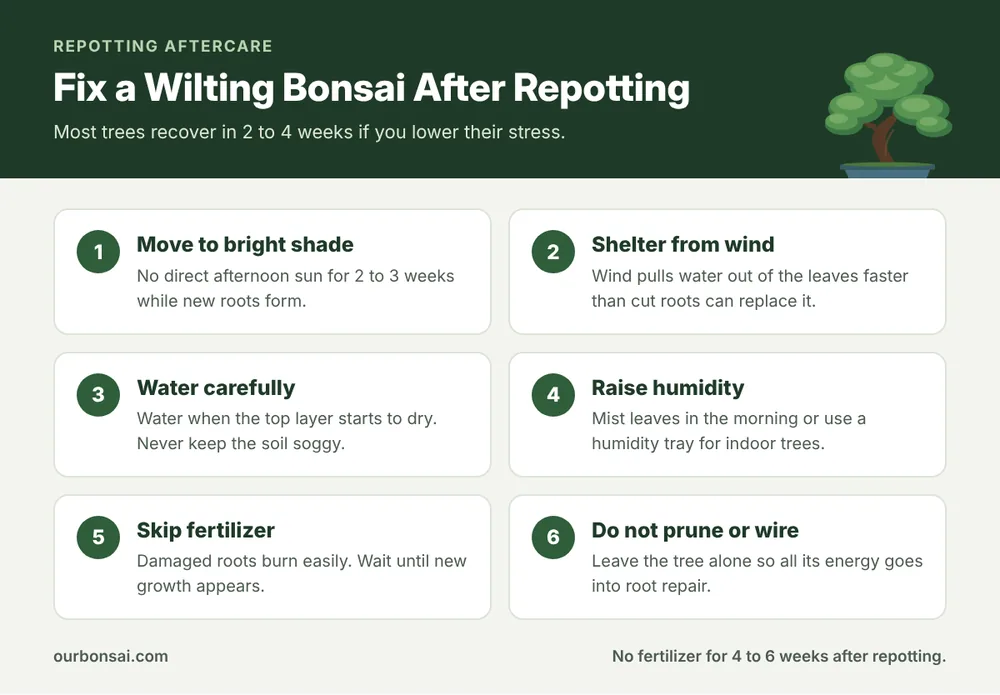
Step 1: Move the tree to bright shade
Take the tree out of direct afternoon sun for two to three weeks. Morning sun is fine for most outdoor trees. Indoors, keep it near a bright window but not in a hot, sunny spot. Our guide on how much light a bonsai tree needs explains how to tell bright shade from full sun.
Step 2: Protect it from wind
Wind is one of the biggest causes of water loss through the leaves. A sheltered corner of a balcony or patio, or a spot behind a fence, makes a real difference in the first weeks.
Step 3: Water correctly, not more
The urge is to water a wilting tree again and again. Do not. Water thoroughly when the top half centimetre of soil starts to look dry, then let excess drain away. A free-draining soil mix helps here; see our guide to the best bonsai soil if you are unsure what you used. A simple soil moisture meter can take the guesswork out of it.
Step 4: Raise the humidity
Misting the leaves in the morning or placing an indoor tree on a humidity tray reduces water loss from the foliage while the roots catch up. Misting does not replace watering; it just buys time.
Step 5: Hold the fertilizer
Fresh root cuts are easily burned by fertilizer salts. Wait four to six weeks, or until you see new healthy growth, before feeding again. Then start at half strength.
Step 6: Leave it alone
No pruning, wiring or moving the tree around. Every extra stress slows recovery. If the tree is badly wilted, you can remove a few of the largest leaves to reduce water loss, but do not strip it bare.
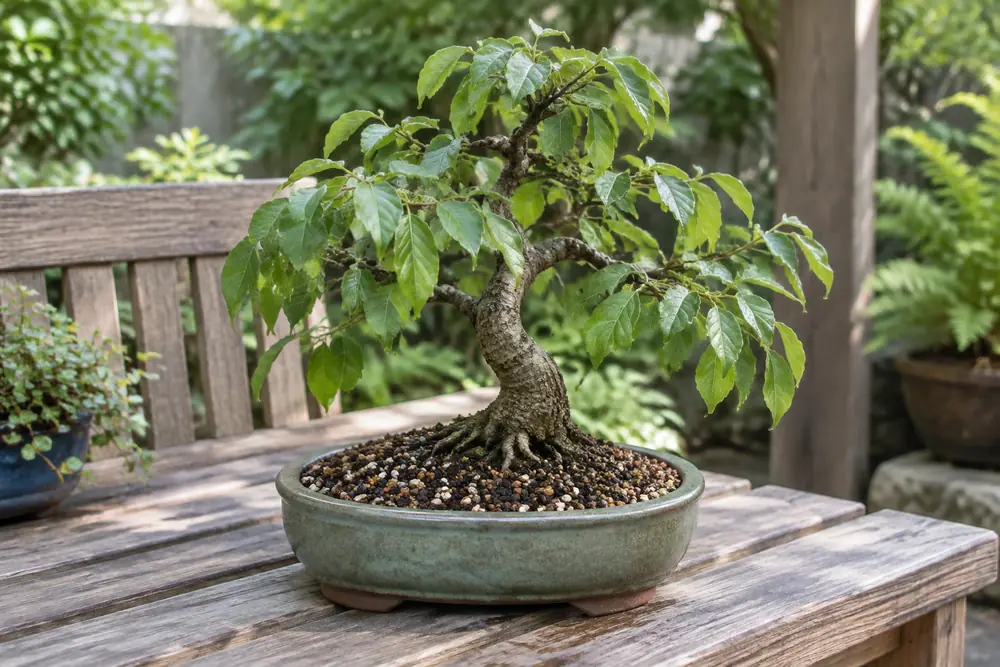
What if the bonsai is still wilting after two weeks?
Check these points one by one:
- Is the soil soggy? Tip the pot slightly to drain it, and water less often. Make sure the drainage holes are not blocked.
- Is the tree loose in the pot? A tree that rocks in the wind keeps tearing new root tips. Tie it in firmly with bonsai wire through the drainage holes.
- Is it too dark or too cold? Tropical trees need warmth (above about 15°C / 60°F) to grow new roots.
- Are there pests? Stressed trees attract aphids and spider mites. Look under the leaves.
If branches are dying back from the tips, read why bonsai branches die for the next steps.
How to prevent wilting next time you repot
- Repot at the right time. For most deciduous and coniferous trees that is late winter to early spring, just as buds swell. For tropical trees it is late spring or early summer when they are growing strongly. Our guide on the best time to repot tropical bonsai covers indoor trees.
- Water the day before. A well hydrated tree handles root work much better.
- Do not remove too much. On a healthy tree, removing up to about a third of the root mass is usually safe. Weak trees need lighter work.
- Work soil in well. Use a chopstick to settle soil between the roots so there are no air pockets.
- Use good tools. Sharp root scissors and a root hook make clean cuts. See our list of bonsai repotting tools, or browse bonsai root rakes on Amazon.
Does the type of tree make a difference?
Yes. Different trees react to root work in different ways, and knowing what to expect stops you from panicking too early.
- Ficus and other tropical trees wilt quickly but also recover quickly when kept warm. A heat mat under the pot can help in a cool room.
- Maples and other deciduous trees repotted at bud break rarely wilt badly. If they were repotted late, after the leaves opened, expect some leaf scorch.
- Junipers and pines rarely wilt visibly. Instead, stress shows weeks later as yellowing or browning foliage, so keep caring for them carefully even if they look fine.
- Azaleas have very fine roots that dry out fast. Never let their soil go dry after repotting.
FAQ: bonsai wilting after repotting
How long does transplant shock last in bonsai?
Usually one to four weeks. Fast-growing tropical trees often recover in about ten days, while slow conifers can take a month or more to push new growth.
Should I water a wilting bonsai every day?
Only if the soil is drying out every day. Check first. Watering soil that is still wet is the fastest way to turn transplant shock into root rot.
Will the leaves that wilted recover?
Leaves that are only drooping usually perk up. Leaves that have turned crispy or yellow will drop, and the tree will replace them once the roots grow back.
Can I use rooting hormone or vitamin B1 after repotting?
Some growers use root stimulants, but they are not essential. Good placement, careful watering and patience matter far more.
Final thoughts
A bonsai wilting after repotting is usually reacting to lost roots, not dying. Give it bright shade, shelter from wind, careful watering and a break from fertilizer and pruning. In most cases you will see fresh buds within a few weeks, and the tree will grow back stronger in its new soil. For more on day-to-day care, see our complete bonsai care guide.