Is My Serissa Bonsai Dying? Signs, Causes and How to Save It

This post contains affiliate links. As an Amazon Associate, OurBonsai earns from qualifying purchases at no extra cost to you. Read our disclosure.
In this guide
- Is my serissa bonsai dying or just stressed?
- Why is my serissa bonsai dying? The common causes
- How to save a dying serissa bonsai
- Yellow leaves on a serissa: dying or normal?
- How to keep a serissa healthy long term
- A two-week recovery routine for a struggling serissa
- FAQ: serissa bonsai dying
- Final thoughts
If your serissa bonsai dying is the first thing you searched after seeing a pile of yellow leaves on the table, you are not alone. Serissa (Serissa japonica), also called snow rose or tree of a thousand stars, is one of the most popular indoor bonsai, and also one of the most dramatic. It drops leaves when it is moved, when it is too wet, too dry, too cold or too dark. The good news is that a serissa that drops leaves is usually stressed, not dead.
This guide shows you how to tell the difference, what causes a serissa to decline, and a simple plan to save it.
Is my serissa bonsai dying or just stressed?
Serissa reacts quickly to change. Leaf drop alone does not mean the tree is dying. Look at the whole picture:
| Sign | Stressed (recoverable) | Serious (act now) |
|---|---|---|
| Leaves | Yellowing and dropping | All leaves gone, none returning after weeks |
| Twigs | Bend and feel flexible | Snap easily, dry and brittle |
| Bark scratch | Green underneath | Brown or gray underneath |
| Roots | White or light tan, firm | Black, mushy, smell sour |
| Soil | Dries within a few days | Stays wet for a week or more |
Start with a scratch test: use a fingernail to gently scrape a small spot on a twig. Green tissue means that part is alive. Test several branches and the trunk, moving from the tips toward the base.
Why is my serissa bonsai dying? The common causes
1. Overwatering and root rot
This is the number one killer. Serissa likes moist soil but hates soggy roots. In dense soil or a pot without good drainage, roots suffocate and rot. Signs include yellow leaves, black roots and a sour smell. Our guide to bonsai root rot explains how to check and treat it.
2. Moving the tree
Serissa dislikes change. A new spot, a trip home from the store or turning the pot can all trigger leaf drop. Pick a good spot and leave it there.
3. Underwatering
Small pots dry out fast, especially near a heater. If the root ball dries completely, fine roots die and the tree drops leaves within days.
4. Low light
Indoors, serissa needs a very bright spot near a window. In dim rooms it thins out, weakens and drops leaves. See our guide on how much light a bonsai tree needs.
5. Cold drafts or sudden temperature changes
Serissa is subtropical. It prefers about 15 to 24°C (60 to 75°F) and does not like cold windows, open doors or blasts of hot air from vents.
6. Pests
Aphids, scale and spider mites weaken stressed trees. Check under the leaves and along the stems. Our guide to bonsai pests and diseases helps you identify them.
How to save a dying serissa bonsai
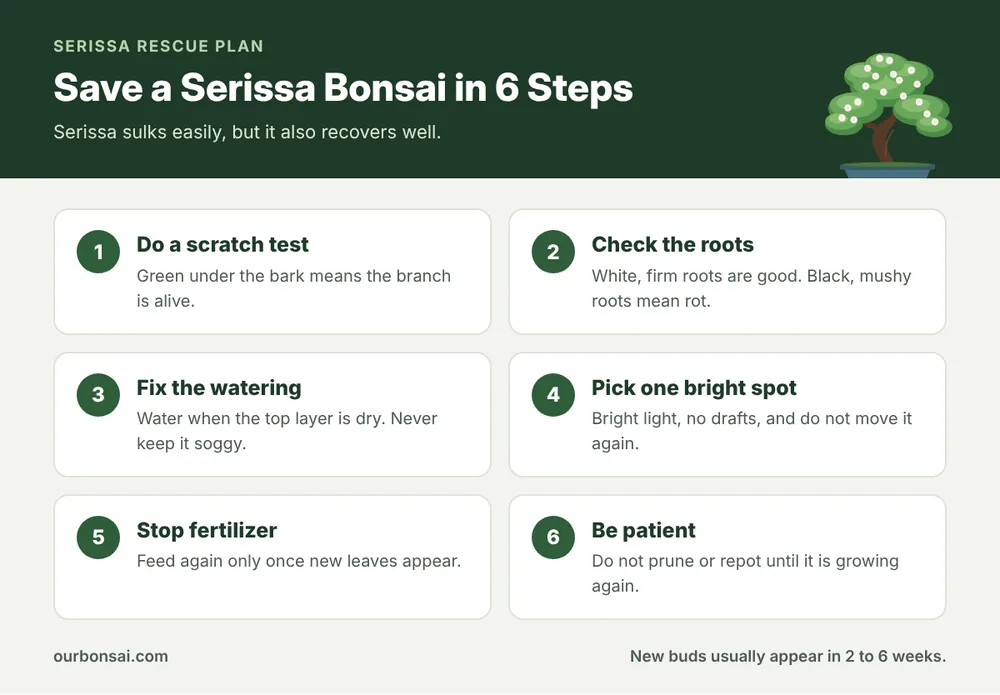
Step 1: Find out what is alive
Do the scratch test on several branches. Cut back only twigs that are clearly dead (brown, dry and brittle). Leave anything that is still green.
Step 2: Check the roots
Gently slide the tree out of its pot. Healthy roots are white to light tan and firm. If you see black, mushy roots, trim them away with clean scissors and repot into fresh, free-draining bonsai soil. If the roots look fine, put the tree straight back.
Step 3: Correct the watering
Water thoroughly when the top half centimetre of soil feels dry, then let it drain completely. Never leave the pot standing in water. A soil moisture meter helps if you are unsure.
Step 4: Give it one bright, stable spot
A south- or east-facing window is ideal, away from heaters and cold glass at night. In dark homes, a small bonsai grow light makes a big difference. Once it is in place, do not move it.
Step 5: Raise humidity
Indoor air is often dry. A humidity tray under the pot helps the tree hold on to its remaining leaves.
Step 6: Stop fertilizer and wait
A stressed tree cannot use extra nutrients, and salts can burn damaged roots. Wait until you see new leaves before feeding again at half strength.
Yellow leaves on a serissa: dying or normal?
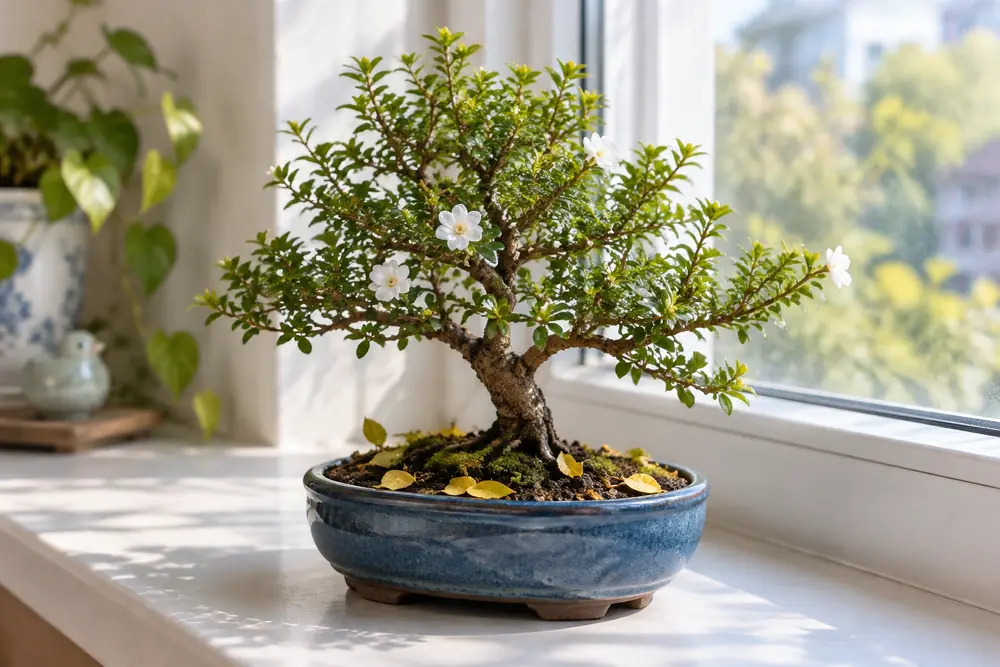
Some yellowing is normal. Serissa regularly sheds older inner leaves, especially in autumn and after flowering. If only a few leaves yellow while new green shoots appear at the tips, the tree is healthy. If yellowing spreads quickly and no new growth appears, use the checklist above. We cover yellow leaves in more detail in our post on serissa bonsai yellow leaves.
How to keep a serissa healthy long term
- Soil: A free-draining bonsai mix with some organic matter holds moisture without becoming soggy. See our guide to the best bonsai soil.
- Water: Steady moisture, never bone dry, never waterlogged.
- Light: As much as you can give it indoors. In summer, a sheltered outdoor spot with morning sun suits it well.
- Feeding: Every two weeks in spring and summer with a balanced fertilizer, monthly in winter if it is growing under lights.
- Pruning: Trim new shoots back to one or two leaves after flowering. Serissa roots smell unpleasant when cut; that is normal.
If you need supplies, a simple bonsai humidity tray and a good soil mix are the two most useful buys for a serissa. The species page on Serissa japonica has more background on its natural habitat.
A two-week recovery routine for a struggling serissa
Once you have checked the roots and found a good spot, the hardest part is doing less. A simple routine keeps you on track:
- Every morning: Look at the soil surface and lift the pot. A light pot means it needs water soon; a heavy pot means wait.
- Every two to three days: Water when the top layer is dry, slowly and thoroughly, until water runs from the drainage holes.
- Once a week: Check under the leaves for pests and look for small green buds along the stems.
- Never: Move the tree, prune it, repot it again or feed it during these first weeks.
Most serissas show tiny new buds within two to four weeks. When they appear, the roots are working again. Let the shoots grow to four or five leaves before you trim anything, and only then begin feeding with a weak balanced fertilizer.
It also helps to compare your tree with its natural needs. Serissa comes from humid, warm parts of Southeast Asia, where it grows as a small shrub in bright, filtered light. The closer you can bring your home conditions to that, the less often it will sulk. A bright window, a humidity tray and steady temperatures cover most of what it wants.
FAQ: serissa bonsai dying
Can a serissa with no leaves recover?
Yes, if the branches and roots are alive. Keep it in bright light with careful watering, and new buds often appear within a few weeks.
Why does my serissa drop leaves after I bring it home?
It is reacting to the move, new light and new humidity. Find a bright spot, keep the watering steady and give it two to four weeks to settle.
How often should I water a serissa bonsai?
There is no fixed schedule. Indoors, it is often every two to four days. Check the soil each day and water when the top layer is dry.
Should I repot a dying serissa?
Only if the roots are rotting or the soil stays soggy. Otherwise, repotting adds stress. Wait until it is growing strongly again, ideally in spring.
Final thoughts
A serissa bonsai dying is usually a serissa sulking. Check the roots, fix the watering, give it one bright, stable spot and resist the urge to move or fuss over it. Most trees push new buds within a few weeks and, once settled, reward you with clouds of tiny white flowers. For more indoor care basics, read our guide on how to take care of a bonsai tree indoors.