Is My Ficus Bonsai Dying? Signs and How to Save It

This post contains affiliate links. As an Amazon Associate, OurBonsai earns from qualifying purchases at no extra cost to you. Read our disclosure.
In this guide
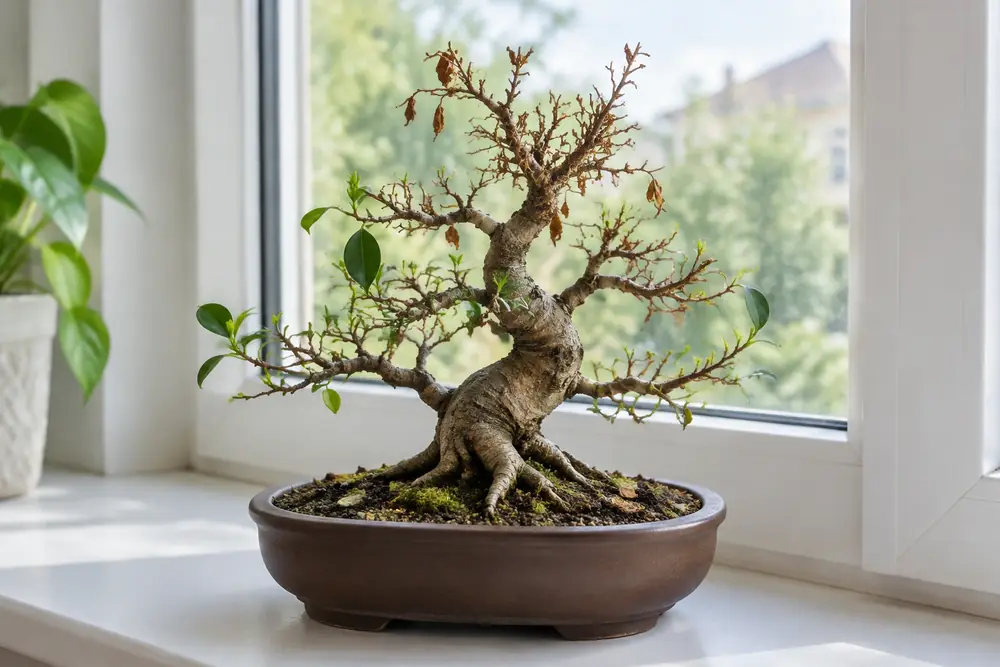
A ficus bonsai dying rarely happens overnight. Usually the tree drops leaves, then some twigs dry out, and new growth stops. The good news is that ficus are some of the toughest bonsai there are. They store energy in their trunk and roots and can push new buds from bare wood, so a tree that looks finished often comes back once the cause is fixed. The first job is to find out how much of the tree is still alive, and the second is to work out why it declined.
This guide covers the warning signs, how to check what is alive, the most common causes of decline in Ficus retusa, microcarpa and benjamina, and a step-by-step rescue plan.
Warning signs your ficus bonsai is in trouble
- Heavy, ongoing leaf drop for weeks, with no new buds.
- Twigs that are dry, brittle and snap instead of bending.
- Wrinkled or shrunken bark on the trunk or branches.
- Soft, dark patches at the base of the trunk.
- Soil that smells sour or stays wet for days.
- Sticky leaves, white cotton, or brown bumps on stems, which point to pests.
- No new growth at all in spring or summer when it should be growing.
One sign alone, such as some leaf drop after a move, is common and often harmless. Several signs together mean the tree needs help now.
How to check if a ficus bonsai is still alive
Scratch test
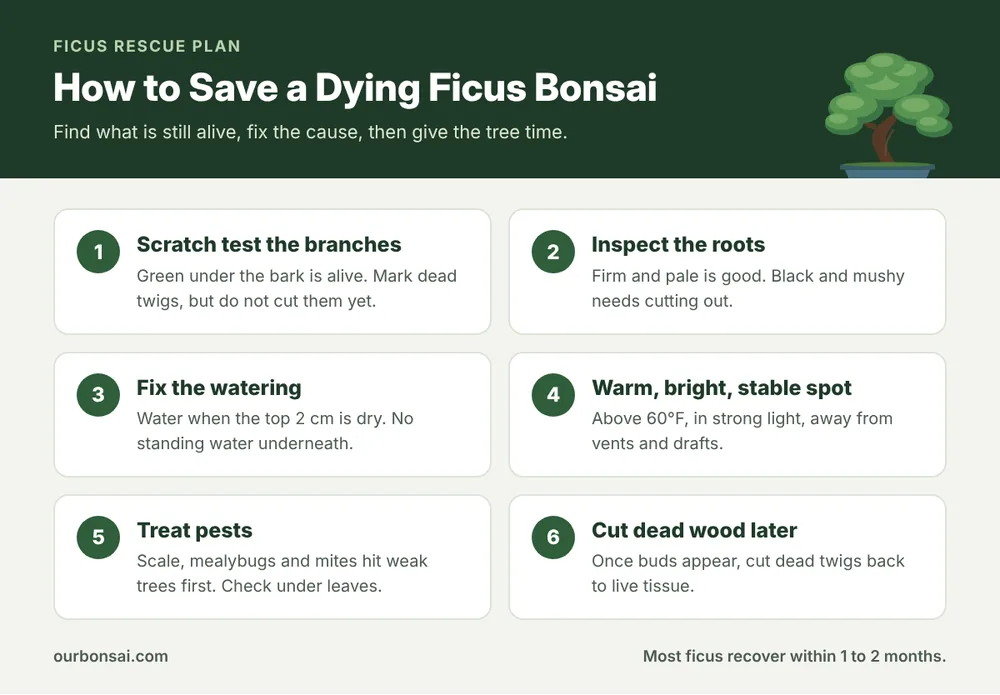
Scratch a tiny patch of bark with your fingernail, starting near a branch tip. Green or creamy tissue underneath is alive. Brown and dry tissue is dead. Work back toward the trunk until you find green. Mark the boundary in your mind, but do not cut dead twigs yet; wait until the tree shows you where it will bud.
Bend test
Living twigs bend; dead ones snap with a dry crack.
Root check
Slide the tree out of its pot. Healthy ficus roots are firm and white to light brown. Rotting roots are black or dark brown, mushy, and the outer skin slides off. A tree with some healthy roots left can recover. A tree with no live roots at all usually cannot.
Common causes of a ficus bonsai dying
| Cause | Typical signs | Fix |
|---|---|---|
| Overwatering, root rot | Yellow, soft leaves, sour soil, dark trunk base | Cut rot, repot in gritty soil, water less |
| Underwatering | Crispy leaves, wrinkled bark, dry soil | Soak the pot, then water regularly |
| Low light | Slow decline, long pale shoots, inner leaf drop | Brightest window or grow light |
| Cold and drafts | Sudden drop of green leaves | Keep above 60°F, away from doors and AC |
| Pests | Sticky leaves, cotton, webbing, bumps | Remove by hand, spray insecticidal soap |
| Sunburn after moving outdoors | Bleached, brown patches on top leaves | Shade, then introduce sun gradually |
| Pot-bound roots | Dries out in hours, water runs straight off | Repot and root prune in early summer |
Root rot is the big one
Most ficus that die indoors die from wet roots. Dense potting soil plus a saucer of water plus low light is a recipe for rot. Our guide to root rot in bonsai shows how to cut away the damage, and good potting soil for bonsai explains what to repot into.
Ficus benjamina is extra sensitive
Weeping fig (Ficus benjamina) is famous for dropping its leaves at the smallest change of light or temperature. A benjamina that has dropped most of its leaves after a move is usually stressed, not dead. Keep it in one bright spot and wait.
Pests on weak trees
Scale, mealybugs and spider mites settle on stressed ficus. Our guide to ficus bonsai pests and diseases covers identification and treatment. A neem oil spray or insecticidal soap, applied weekly, clears most infestations.
How to save a dying ficus bonsai
1. Stabilize the roots
If the roots are rotting, cut away all soft, dark roots with clean scissors and repot into a fast-draining mix of akadama, pumice and lava. Use a pot that is not much bigger than the remaining roots. If the roots are fine, leave them alone; repotting a healthy root ball adds stress.
2. Get the watering right
Water thoroughly when the top 2 cm of soil feels dry, and never sooner. With fewer leaves the tree uses less water, so check before every watering.
3. Give warmth and strong light
Put the tree in the brightest, warmest spot you have, ideally 65 to 80°F (18 to 27°C). If natural light is weak, add a grow light for 12 hours a day; our guide to the best bonsai tree light lamps compares a few.
4. Raise humidity
A humidity tray or a room humidifier helps a weak tree, especially in heated rooms in winter.
5. Wait before feeding and pruning
Do not fertilize until new leaves have formed and hardened. Do not prune live branches. Once buds appear, cut dead twigs back to just above live tissue.
How long does a ficus take to recover?
In warm, bright conditions, new buds usually appear within three to six weeks. In winter or low light it can take two months or more. Full recovery, with a dense canopy again, usually takes a full growing season. The Wikipedia article on Ficus microcarpa notes how vigorous this species is in the wild, which is why patience nearly always pays off.
How to stop it happening again
Most ficus that decline do so because of a few habits that are easy to change:
- Water by checking, not by the calendar. Push a finger into the soil every day or two and water only when the top feels dry.
- Use free-draining soil and a pot with real drainage holes. Repot out of dense nursery soil at the next early summer.
- Give it the most light you can. A ficus that grows strongly resists pests and recovers from mistakes. In winter, a grow light makes a huge difference.
- Keep conditions stable. One spot, steady warmth, no cold glass or vents.
- Feed in the growing season. Every two weeks from spring to early autumn with a balanced fertilizer.
- Look closely every week. Check under leaves and along stems when you water, so pests are caught early.
- Summer outdoors, if you can. A few months in bright shade outside builds a far stronger tree, as long as it comes back in before nights get cold.
FAQ: ficus bonsai dying
Can a ficus bonsai with no leaves come back?
Yes. If the trunk and some branches are green under the bark and the roots are healthy, a leafless ficus usually re-buds in warm, bright conditions.
Why is my ficus bonsai dying from the top?
Top dieback often comes from root loss, because the roots cannot supply the far ends of the tree. It also happens after sunburn, or when the top dried out completely.
Should I fertilize a dying ficus?
No. Fertilizer can burn damaged roots. Wait until new leaves appear, then feed lightly.
Is it too late to save my ficus?
If the trunk is brown and dry under the bark all the way down and the roots are mushy, it is too late. If you find any green tissue and some firm roots, keep going.
Final thoughts
A ficus bonsai dying is usually reacting to wet roots, low light, cold or pests. Check what is alive, fix the cause, give the tree warmth and light, and wait. Ficus are tough, and most come back stronger. Once it is growing again, our golden gate ficus bonsai care guide will help keep it healthy.