Algae Bonsai Problems: Is Green Algae Harmful and How to Remove It

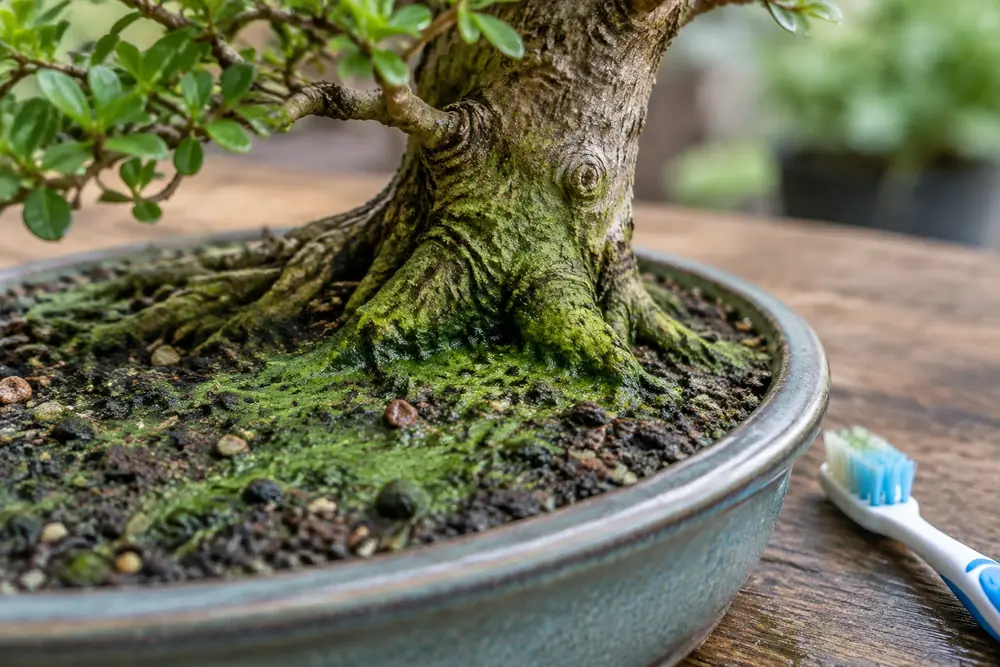
Seeing a green film on your bonsai’s soil, pot or trunk is common, and in most cases it is algae bonsai growers deal with all the time. Algae thrives where things stay wet, shady and still. A little on the soil surface is harmless. A thick, slimy layer is a sign that the soil is staying too wet, and on the trunk it can hide bark texture and trap moisture against it. The fix is mostly about watering and airflow: let the soil dry a little more between waterings, give the tree more light and air, scrape off the worst of it, and brush the bark gently with a soft toothbrush.
In this guide
- What algae on bonsai looks like
- Is algae harmful to bonsai?
- Why algae grows on bonsai
- How to remove algae from the soil
- How to remove algae from the trunk and branches
- How to clean algae off bonsai pots
- How to prevent algae coming back
- Algae on indoor vs outdoor bonsai
- Common mistakes
- FAQ: algae bonsai
- Final thoughts
This guide explains what algae is, when it matters, and how to clean it off and keep it away.
What algae on bonsai looks like
Algae are simple, plant-like organisms that photosynthesize but have no roots, stems or leaves. On bonsai you will usually see one of these:
- A slimy green film on the soil surface, often in the shadiest part of the pot.
- A green powdery coating on the trunk and branches, most often on the shady side.
- Green stains on the outside of unglazed pots and on bonsai benches.
It is easy to confuse algae with other green growth:
| Growth | What it looks like | Is it a problem? |
|---|---|---|
| Algae | Flat, slimy or powdery green film, no visible structure | Harmless in small amounts, sign of excess moisture |
| Moss | Soft, raised cushions with tiny leaves | Usually welcome, as long as it is not too thick |
| Lichen | Gray-green, crusty or leafy patches on bark | Harmless, often seen on older trees |
| Liverwort | Flat green lobes like tiny leaves on the soil | Competes with roots, best removed |
Is algae harmful to bonsai?
A thin layer is not harmful on its own. Algae does not feed on the tree, and it does not attack roots or bark. The problems come from what algae causes and what it says about the conditions.
- It signals soggy soil. Thick algae means the surface stays wet for long periods. The roots below may be suffering too.
- It can seal the soil surface. A dense algae crust slows water from soaking in and reduces air reaching the roots. Water may run off the top instead.
- It holds moisture against the bark. On some species, constant moisture at the trunk base can encourage rot.
- It hides the bark. On trees grown for their bark, like pines, junipers and elms, a green coating spoils the look.
If you also see yellowing leaves or a sour smell from the soil, read our guide to root rot in bonsai. Our bonsai pests and diseases guide covers other problems that often come with damp conditions.
Why algae grows on bonsai
- Constant moisture. Watering too often, or soil that stays wet for days.
- Fine or broken-down soil. Old akadama turns to mud over time and holds more water at the surface.
- Low light. Shady benches and indoor windows that get little direct sun.
- Still, humid air. No breeze to dry the surface after watering.
- Fertilizer on the surface. Nutrients in liquid feed help algae grow on the soil.
- Humidity domes and greenhouses. Great for cuttings, great for algae too.
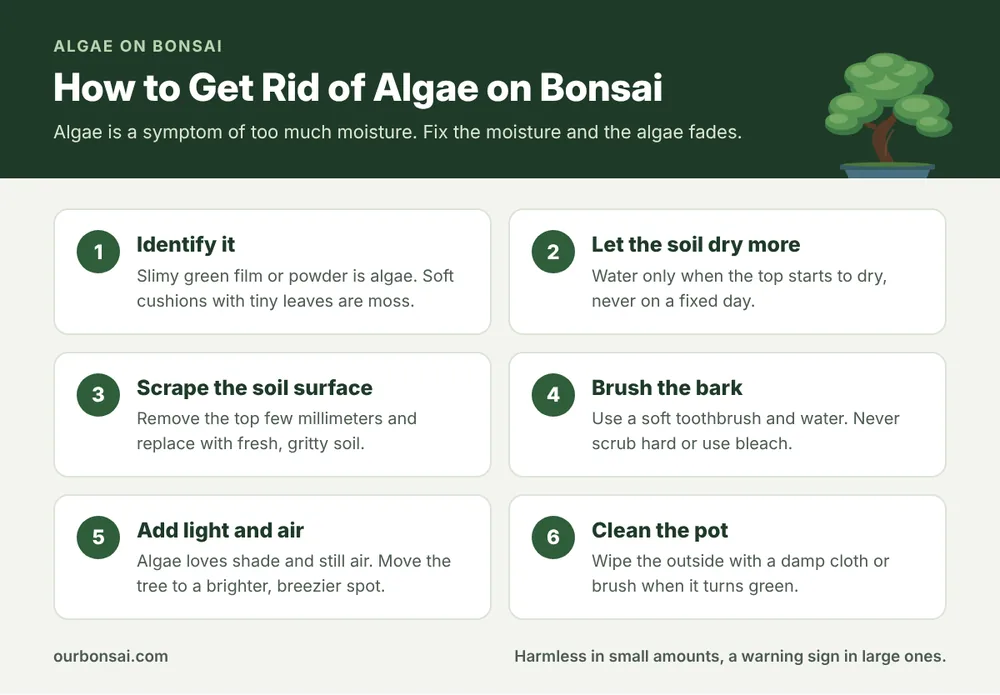
How to remove algae from the soil
- Let the surface dry a little. It is easier to remove dry algae.
- Scrape off the top layer. Use a small spoon or chopstick to remove the top few millimeters of soil where the algae grows.
- Top up with fresh soil. Add a thin layer of clean, sieved bonsai soil.
- Adjust watering. Water only when the top starts to dry. Check before every watering.
- Repot if the soil is old. If the whole mix has broken down and stays wet, plan a repot in spring with fresh, gritty soil. Our bonsai soil mix ratio guide helps.
How to remove algae from the trunk and branches
- Dampen the bark with a little water.
- Brush gently with a soft toothbrush, working with the grain of the bark.
- Rinse with clean water.
- For stubborn patches, use a toothbrush dipped in plain water mixed with a little mild soap, then rinse well.
Never use bleach, wire brushes or strong household cleaners on bark. They damage the living layer underneath. On deciduous trees with smooth bark, such as maples, be especially gentle. Do this in the growing season, not when the tree is frozen.
How to clean algae off bonsai pots
Algae on the outside of a pot does not hurt the tree, but it looks untidy. Wipe glazed pots with a damp cloth. For unglazed pots, use a soft brush and water. Some growers like a bit of patina on old unglazed pots, so do not scrub too hard if you want an aged look. When repotting, scrub empty pots with hot water and a brush before reuse.
How to prevent algae coming back
- Water by need. Check the soil and water only when it starts to dry. Our guide on watering bonsai in summer shows how to judge it.
- Use gritty soil. Inorganic mixes dry at the surface quickly. See bonsai soil vs regular soil.
- Give more light. Outdoors, a bench with some direct sun. Indoors, a brighter window or indoor grow lights for bonsai.
- Improve airflow. Space trees apart. Indoors, a small fan on low helps.
- Feed the roots, not the surface. Pour liquid fertilizer evenly, or use solid fertilizer cakes.
- Repot on time. Broken-down soil is a magnet for algae.
Algae on indoor vs outdoor bonsai
Indoors, algae usually appears on the soil surface of trees kept in low light, watered on a fixed schedule or standing on a wet humidity tray where the pot touches the water. Raise the pot above the water line on pebbles, water less often and move the tree closer to the window.
Outdoors, algae shows up mostly in long wet spells, on north-facing benches and on the shady side of trunks. It often fades by itself once the weather turns sunnier and drier. Turning trees a quarter turn every week or two helps all sides of the trunk get some light.
Common mistakes
- Scrubbing bark hard. You can strip off living tissue.
- Using bleach or harsh chemicals. They harm the tree and roots.
- Treating the algae and not the cause. It will return if the soil stays wet.
- Removing all moss along with the algae. Moss is usually fine and helps protect the surface.
FAQ: algae bonsai
Is green algae bad for my bonsai?
A thin layer is harmless. A thick layer means the soil stays too wet, which can harm the roots. Treat the cause by adjusting watering, light and airflow.
How do I get algae off my bonsai trunk?
Brush it gently with a soft toothbrush and plain water. Avoid harsh chemicals and hard brushes.
Why does my indoor bonsai have algae on the soil?
Indoor trees get less light and airflow, and the soil dries slowly. Water less often, give more light and scrape off the top layer.
Is algae the same as moss?
No. Moss forms soft, raised cushions with tiny leaves and is usually welcome. Algae is a flat green film or powder.
Final thoughts
Algae bonsai owners notice is usually a harmless green film that points to one thing: too much moisture for too long. Scrape the soil, brush the bark gently and wipe the pot. Then fix the real cause by watering only when the soil needs it, using gritty soil and giving the tree more light and air. The green will fade, and your tree’s roots will be healthier for it. For more on caring for the whole tree, see our main bonsai care guide.