Bonsai Branches Black? Causes and What to Do

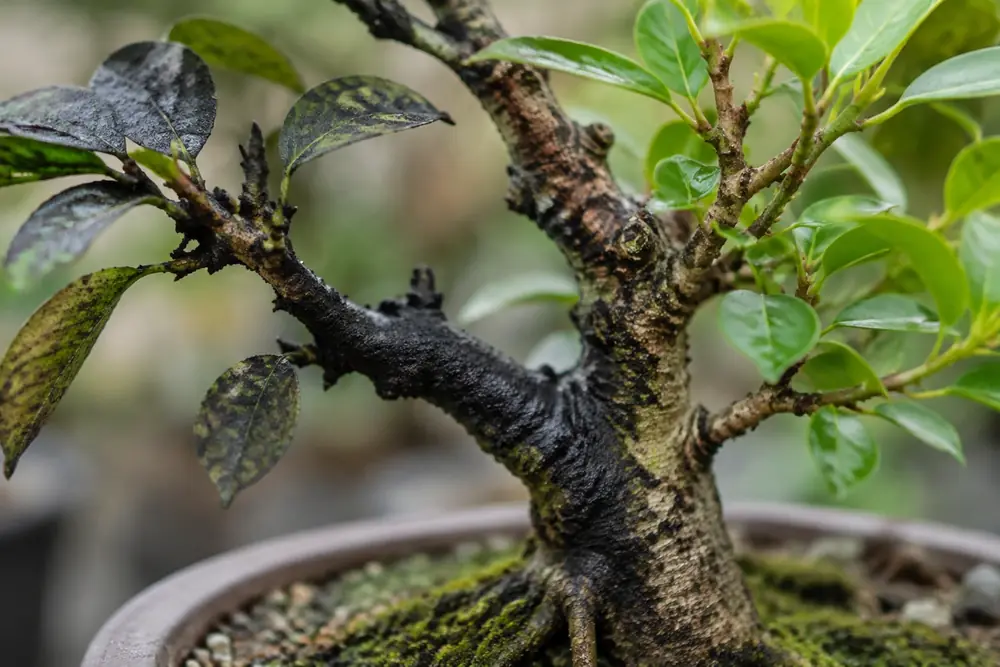
If you have noticed your bonsai branches black in places, the first job is to work out whether the black is on the bark or in it. A sooty black coating that wipes off is usually sooty mold, a harmless-looking fungus growing on sticky honeydew left by pests. Black that is part of the branch itself, with brown or black tissue under the bark, points to dieback from frost, a fungal canker, bacterial infection or root rot. The fix depends entirely on which one you have, so start with two quick tests: the wipe test and the scratch test.
In this guide
This guide explains each cause, how to identify it and what to do.
First: is it normal bark color?
Some trees have naturally dark bark. Black pine, some ficus varieties, ebony and dark-barked junipers can look nearly black, especially when wet. If the branch is firm, the leaves are healthy and the color is even across the tree, it is probably just the bark. Compare with photos of the species or with older branches on the same tree.
Two quick tests
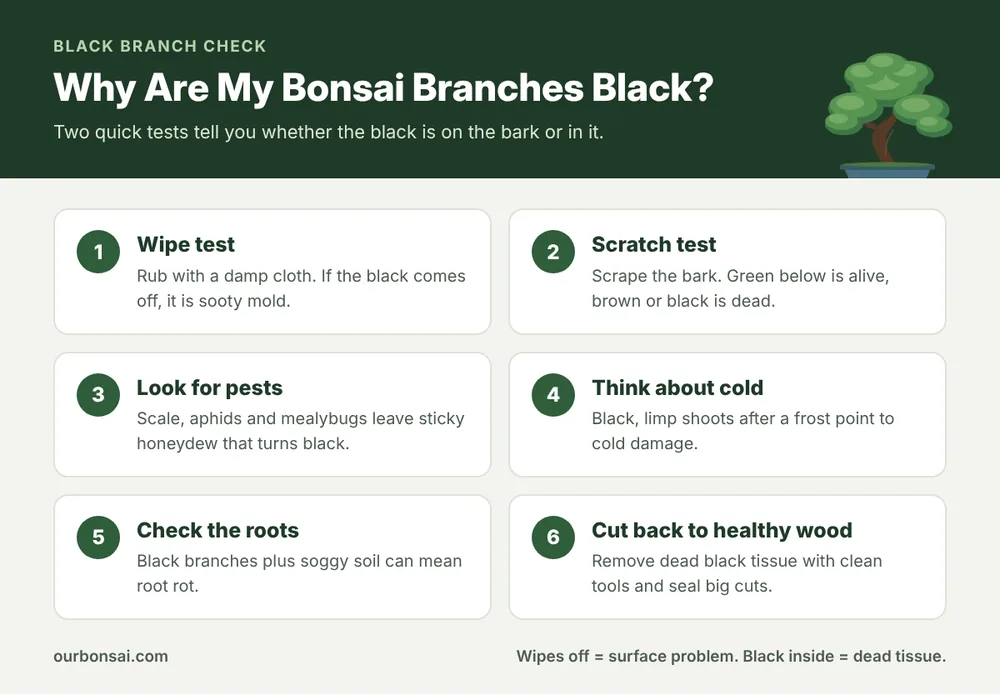
- Wipe test. Rub the black area with a damp cloth or cotton bud. If it comes off and leaves normal bark underneath, it is a surface coating, most likely sooty mold.
- Scratch test. Gently scrape a small patch of bark with a fingernail. Green and moist underneath means the branch is alive. Brown, black or dry tissue means it is dead or dying.
Causes of black bonsai branches
| Cause | What you see | Serious? |
|---|---|---|
| Sooty mold | Black, powdery coating that wipes off, sticky leaves | Mild, but pests need treating |
| Frost damage | Shoots turn black and limp after a freeze | Moderate |
| Fungal dieback or canker | Black, sunken patches, dead tips spreading back | Serious |
| Bacterial infection | Black, wet-looking shoots, sometimes ooze | Serious |
| Root rot | Branches blacken and die from the bottom up, soil wet | Serious |
| Sunscald or physical injury | Dark, dry dead patch on one side | Moderate |
1. Sooty mold
Sooty mold is a group of fungi that grow on honeydew, the sticky sugar left by sap-sucking insects. It does not infect the tree, but a thick layer blocks light from leaves and looks ugly. The real problem is the insects. Look for scale, aphids, mealybugs or whiteflies on the undersides of leaves and along stems. Our guides on scale on bonsai trees and aphids on bonsai trees cover treatment. If your leaves feel sticky too, see why bonsai leaves are sticky.
2. Frost damage
Tender new shoots on deciduous trees and the branches of tropical bonsai turn black and soft after a frost. Often only the tips die. Wait until new growth shows what is still alive, then cut back.
3. Fungal dieback and cankers
Fungi can enter through pruning wounds, wire damage or frost cracks and kill the living tissue under the bark. You see black or dark brown sunken areas, often with dead twigs beyond them. The dead zone can slowly spread. Our guide on why bonsai branches die covers dieback in more detail.
4. Bacterial infections
Some bacteria cause shoots to turn black and look burned or wet, sometimes with oozing. These spread in warm, wet weather and through contaminated tools. See our guide to bacterial diseases in bonsai trees.
5. Root rot
When roots rot, branches lose their water supply and die back, often starting low or on one side. Bark may darken and leaves blacken. Check the roots: dark, mushy, smelly roots confirm it. Our guide on root rot in bonsai explains how to treat it.
How to treat black bonsai branches
If it is sooty mold
- Treat the pests first, or the mold will return.
- Wash the branches and leaves with lukewarm water and a drop of mild soap, using a soft brush or cloth.
- Rinse well with clean water.
- Check again every week for new pests.
If the branch is dead or dying
- Find where the living tissue starts with the scratch test.
- Cut the branch back to a few millimeters into healthy, green wood with clean, sharp tools.
- Disinfect tools with rubbing alcohol between cuts so you do not spread infection.
- Seal larger cuts with cut paste. See our guide to the best bonsai cut paste alternative.
- Dispose of infected material. Do not compost it.
- Improve airflow and light around the tree, and avoid wetting the foliage in the evening.
If root rot is involved
Trim rotten roots, repot into fresh, gritty soil and water carefully until the tree recovers.
Black branches on popular bonsai species
- Ficus. Black, soft tips usually mean cold damage or a draft. A black coating on stems and leaves is almost always sooty mold from scale insects.
- Jade. Black spots on stems with soft tissue point to rot from overwatering or cold. Firm black marks can be old scars or sunburn.
- Japanese maple. New shoots that turn black in spring often mean a late frost. Black streaks in the wood when you cut a dead branch can point to a wilt disease, which should be cut out well below the damage.
- Juniper and pine. Black coating on needles and twigs is usually sooty mold from aphids or scale. Shoots that die back and turn dark can mean a twig blight.
- Fruiting trees (crab apple, quince, cotoneaster). Black, shriveled shoots that look scorched can be fire blight, a bacterial disease. Cut well below the damage and disinfect tools every cut.
How to prevent black branches
- Inspect for pests every couple of weeks, especially under leaves.
- Keep tools clean and disinfect them between trees.
- Seal large pruning cuts and avoid pruning in wet, cold weather.
- Water by need and use gritty soil so roots never sit wet.
- Protect from frost in winter and bring tropical trees indoors before nights get cold.
- Give good airflow. Space trees apart and thin dense foliage.
For a full overview of common problems, see our guide to bonsai pests and diseases.
Common mistakes
- Scrubbing off sooty mold but ignoring the insects. It will be back in weeks.
- Leaving dead branches on the tree. Dead wood can harbor fungi that spread.
- Cutting with dirty tools. You may spread infection to healthy branches.
- Assuming dark bark is disease. Check the species first.
FAQ: bonsai branches black
Is black on my bonsai branches mold?
If it wipes off with a damp cloth, it is most likely sooty mold growing on honeydew from pests. If the tissue itself is black, the branch is damaged or dead.
Can a black bonsai branch recover?
Not the black, dead part. But if the tissue below it is alive, cutting back to healthy wood lets new shoots grow.
What causes bonsai branches to turn black in winter?
Usually frost damage on tender shoots or tropical trees left out in the cold.
Is sooty mold harmful to bonsai?
It does not infect the tree, but it blocks light from the leaves and signals a pest problem that does cause harm.
Final thoughts
When you find your bonsai branches black, use the wipe test and the scratch test to separate surface sooty mold from dead or infected wood. Treat pests to stop sooty mold, cut back dead tissue to healthy wood with clean tools, and fix underlying problems like wet roots or frost exposure. Most trees recover well once the cause is removed. For general care, see our main bonsai care guide.