How Often to Water Bougainvillea Bonsai (Indoor & Outdoor)

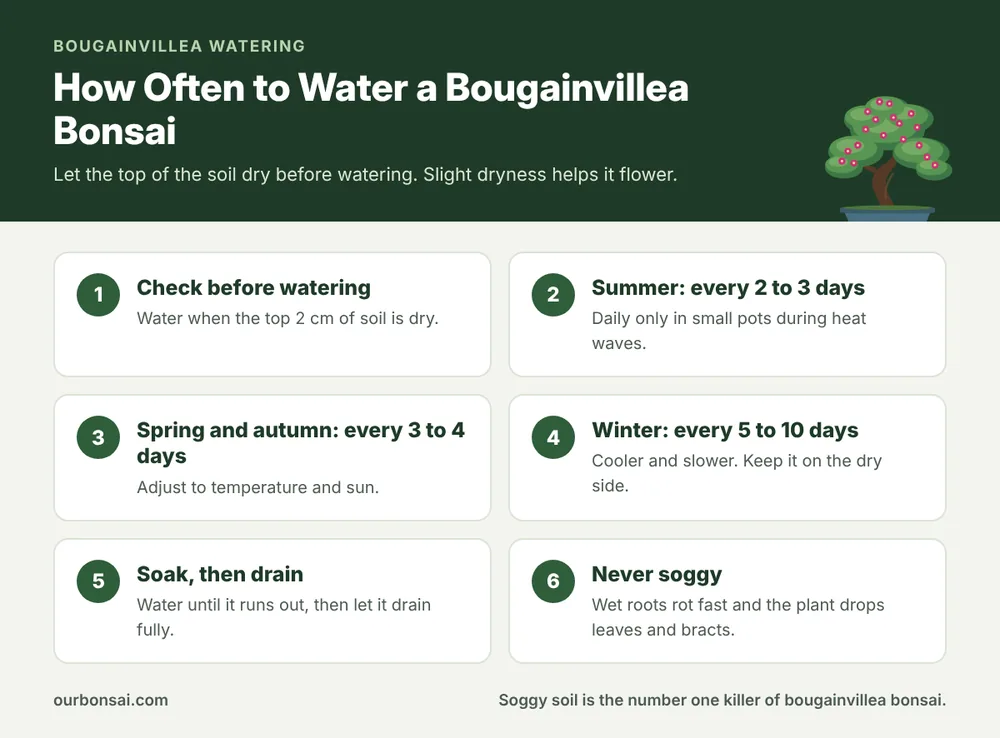
If you are wondering how often to water bougainvillea bonsai, the answer is different from most bonsai: water thoroughly, then let the top couple of centimeters of soil dry out before watering again. In a warm, sunny summer that usually means every two to three days, sometimes daily for a small pot in a heat wave. In winter, when growth slows, it may be every five to ten days. Bougainvillea is naturally drought tolerant and actually flowers better when it is kept slightly on the dry side. Constantly wet soil is the main way bougainvillea bonsai are killed.
In this guide
- Why bougainvillea needs a different watering approach
- How often to water bougainvillea bonsai by season
- How to tell when your bougainvillea bonsai needs water
- How to water a bougainvillea bonsai
- The right soil makes watering easier
- Watering indoors vs outdoors
- Signs of overwatering and underwatering
- Watering after repotting or pruning
- Using watering to encourage flowers
- Common watering mistakes
- FAQ: how often to water bougainvillea bonsai
- Final thoughts
Bougainvillea is a tropical, woody vine from South America, famous for its bright papery bracts in magenta, purple, orange, red and white. As a bonsai, it develops a thick, gnarled trunk and flowers repeatedly in warm, bright conditions. This guide explains how to water it through the year, how watering affects flowering, and the signs of over and underwatering.
Why bougainvillea needs a different watering approach
Most bonsai like soil that stays evenly moist. Bougainvillea comes from regions with distinct dry seasons and has adapted to them. Its roots dislike sitting in wet soil and rot quickly in cool, soggy conditions. The Clemson University bougainvillea fact sheet notes that overwatering is one of the most common reasons garden bougainvillea fails to thrive or flower.
There is also a flowering benefit. When bougainvillea gets slightly dry between waterings, it shifts its energy from leafy growth to flowering. Growers in warm climates use this on purpose: water well, let the soil dry, then water again.
That said, bonsai pots are small. Letting the soil dry out completely for days will still damage the roots. The goal is “dry on top, slightly moist below”, not bone dry.
How often to water bougainvillea bonsai by season
| Season | How often (warm climate or bright indoor spot) | Notes |
|---|---|---|
| Spring | Every 3 to 4 days | Growth starts, increase water gradually |
| Summer | Every 2 to 3 days | Daily only for small pots in heat waves |
| Autumn | Every 3 to 5 days | Slow down as days shorten |
| Winter | Every 5 to 10 days | Cool and slow growth, keep on the dry side |
Always check before watering. A tree in a large pot in partial shade dries much more slowly than a small tree in full sun on a hot patio.
How to tell when your bougainvillea bonsai needs water
- Finger test: push a finger about 2 cm into the soil. If it is dry to that depth, water. If it is still damp, wait.
- Chopstick test: leave a wooden chopstick in the soil for ten minutes. If it comes out dry, water. If it is dark and damp, wait.
- Pot weight: lift the pot right after watering and again when dry. With practice, you can tell by weight alone.
- Leaves: slightly soft, drooping leaves in the afternoon mean the tree is thirsty. Water right away.
A simple soil moisture meter is helpful while you learn your tree’s rhythm.
How to water a bougainvillea bonsai
- Water the whole soil surface slowly with a watering can with a fine rose, such as a Japanese watering can for bonsai.
- Keep going until water runs freely from the drainage holes.
- Let the pot drain completely. Never leave it in a saucer of water.
- Water in the morning, so the soil can dry a little during the day.
- Aim at the soil, not the flowers. The papery bracts bruise and drop if they stay wet.
The right soil makes watering easier
Bougainvillea needs a gritty, fast-draining soil so excess water drains away quickly. Dense, peaty soil holds water for days and causes root rot. Our guide to the best soil for bougainvillea bonsai explains the ideal mix. If your tree came in heavy soil, repot it into a proper mix in late spring or early summer.
Watering indoors vs outdoors
Outdoors (warm months or warm climates)
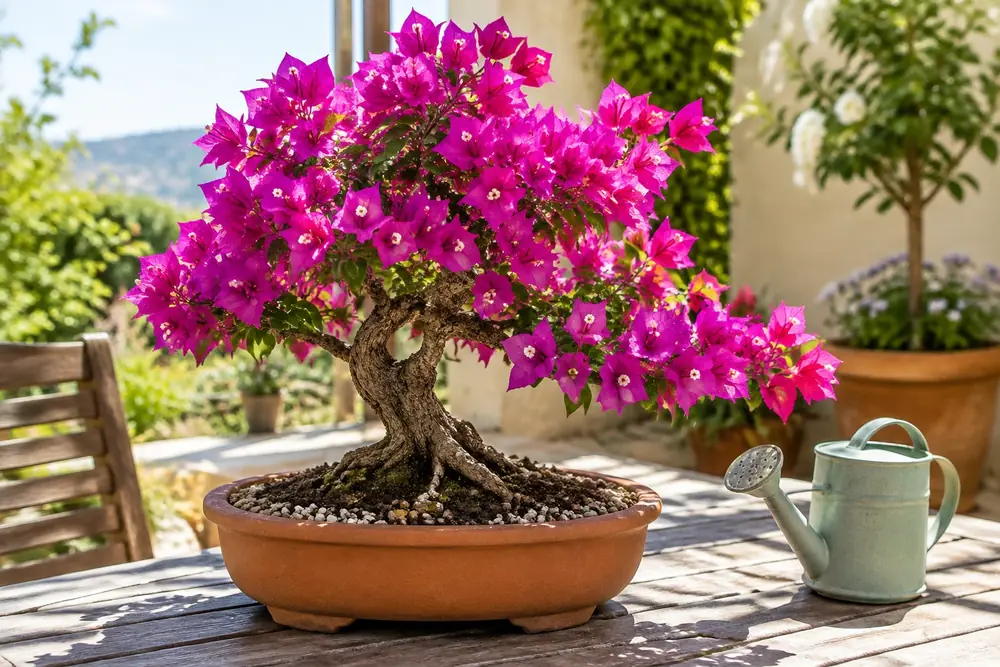
Bougainvillea thrives outdoors in full sun when temperatures stay above about 50 °F (10 °C). Outdoors, the soil dries faster, so check daily in summer. It is the best place to get strong growth and heavy flowering.
Indoors
Indoors, the soil dries more slowly. Place the tree in the sunniest window you have and water only when the top 2 cm is dry. Indoors in winter, it is very easy to overwater, so check carefully. Bougainvillea needs a lot of light to flower; without it, it grows leaves but few bracts. Our guide on how much light a bonsai tree needs explains why.
Signs of overwatering and underwatering
| Sign | Likely cause | What to do |
|---|---|---|
| Yellow leaves dropping, soil wet | Overwatering | Let soil dry more between waterings |
| Lots of leaves but no flowers | Too much water or too little sun | Water less often, more sun |
| Soft, black roots, sour smell | Root rot | Repot into gritty soil, trim dead roots |
| Wilting leaves, dry soil | Underwatering | Water thoroughly now, check more often |
| Bracts dropping quickly | Sudden drought or wet bracts | Even watering, water the soil only |
If roots are rotting, our guide to root rot in bonsai walks you through what to do.
Watering after repotting or pruning
Bougainvillea is sensitive to root disturbance. After repotting, which is best done in late spring or early summer when it is warm, the reduced root system uses less water. Water thoroughly once, then let the top of the soil dry a little more than usual before the next watering. Keep the tree out of harsh midday sun for a week or two. Do the same after heavy pruning: with fewer leaves, the tree uses less water, and overwatering at this point is a common cause of root rot. Increase watering again as new shoots and leaves appear. Many growers avoid repotting while the tree is in flower, because root disturbance often makes it drop its bracts.
Using watering to encourage flowers
Once your bougainvillea is healthy and growing well, you can use watering to push flowering:
- Give it full sun, at least six hours a day.
- Water thoroughly, then let the top 2 to 3 cm of soil dry before watering again.
- Use a fertilizer lower in nitrogen and higher in phosphorus and potassium during the flowering season.
- Avoid heavy pruning while it is blooming.
Do not push it so dry that leaves wilt for long periods. Mild dryness is enough.
Common watering mistakes
- Treating it like other bonsai. Bougainvillea wants to dry slightly, not stay moist.
- Watering on a schedule. Check first, every time.
- Leaving water in the saucer. Roots sit in water and rot.
- Overwatering in winter. Growth slows, so water use drops sharply.
- Wetting the flowers. Bracts spot and fall faster.
FAQ: how often to water bougainvillea bonsai
Should I water my bougainvillea bonsai every day?
Usually not. Only small pots in hot, sunny weather need daily water. Most of the time, every two to four days is enough.
Why is my bougainvillea bonsai not flowering?
Most often too much water, too much nitrogen or not enough sun. Let the soil dry slightly between waterings and give it full sun.
How do I water a bougainvillea bonsai in winter?
Sparingly. Keep it bright and above 50 °F (10 °C), and water only when the top few centimeters of soil are dry, often every week or so.
Can bougainvillea bonsai survive drought?
It tolerates short dry spells better than most bonsai, but a small pot that dries out completely for days will still damage the roots.
Final thoughts
So, how often to water bougainvillea bonsai? Less often than most bonsai. Water thoroughly, let the top of the soil dry, then water again, which usually means every two to three days in summer and every week or so in winter. Use gritty soil, never leave it standing in water and give it lots of sun. For styling ideas once your tree is thriving, see our guide to bougainvillea bonsai styles.