Cherry Blossom Bonsai Yellow Leaves: Causes and Fixes

This post contains affiliate links. As an Amazon Associate, OurBonsai earns from qualifying purchases at no extra cost to you. Read our disclosure.
In this guide
- Normal autumn color vs a problem
- 6 causes of cherry blossom bonsai yellow leaves
- How to diagnose step by step
- Quick reference
- Yellow leaves after repotting or a move
- Watering and feeding through the year
- Preventing yellow leaves
- Can yellow cherry leaves turn green again?
- FAQ: cherry blossom bonsai yellow leaves
- Final thoughts
Cherry blossom bonsai yellow leaves are a sign that is easy to misread. In autumn, yellow to orange to red leaves are completely normal: flowering cherries are deciduous and color up before they drop their leaves. In spring and summer, though, yellow leaves point to a problem, most often wet roots, a fungal disease called cherry leaf spot, hunger or pests. The pattern of yellowing usually tells you which.
Cherry blossom bonsai are typically Japanese flowering cherry (Prunus serrulata) or related Prunus species. This guide explains how to tell normal autumn color from trouble, the main causes of yellow leaves in the growing season and what to do about each.
Normal autumn color vs a problem
In autumn, as days shorten, cherry leaves turn yellow, orange and often bright red before falling. The Wikipedia article on Prunus serrulata notes its attractive autumn color in gardens. On a bonsai, this is a good sign: the tree is preparing for winter dormancy.
It is normal if:
- It happens from early to mid autumn
- Leaves color fairly evenly across the tree
- Buds along the branches stay plump and firm
It is a problem if:
- Leaves yellow in late spring or summer
- Yellowing comes with spots, holes or curling
- Soil is constantly wet or bone dry
- Branches die back along with the yellowing
6 causes of cherry blossom bonsai yellow leaves
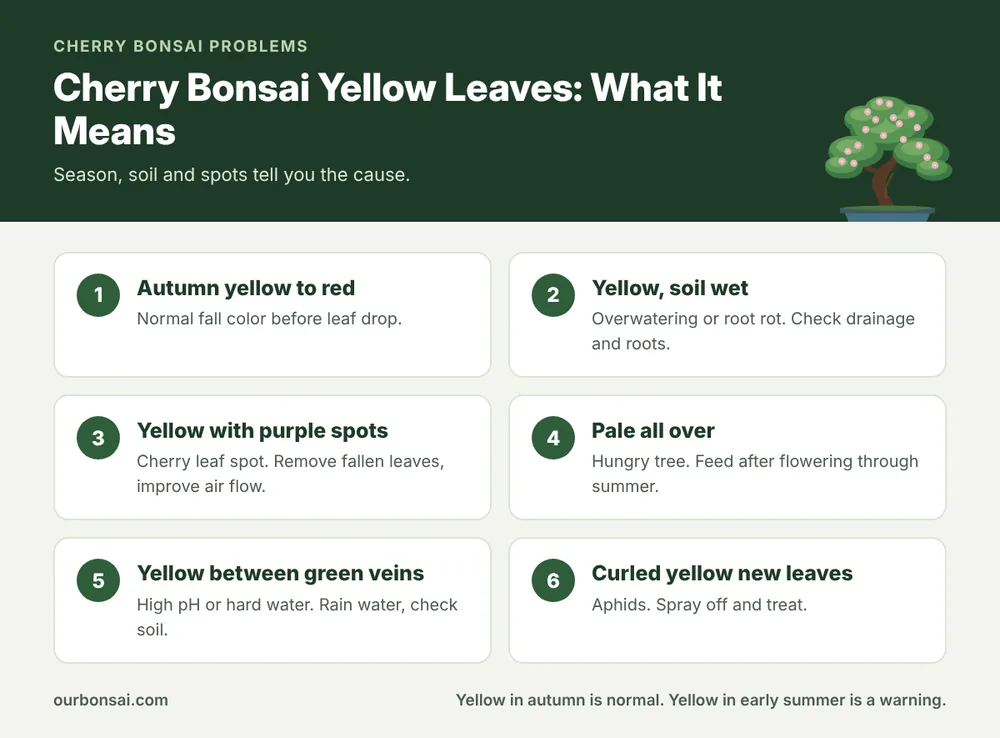
1. Overwatering and root rot
Cherries have fleshy roots that rot easily in wet, airless soil. Leaves turn a soft, even yellow and drop, often starting with older leaves, while the soil stays wet for days.
Fix: water only when the top of the soil is just dry. Make sure the drainage holes are open and the pot never sits in water. If the roots are dark and soft, follow our guide to root rot in bonsai and repot into a gritty mix like those in our bonsai soil mix ratio guide.
2. Cherry leaf spot
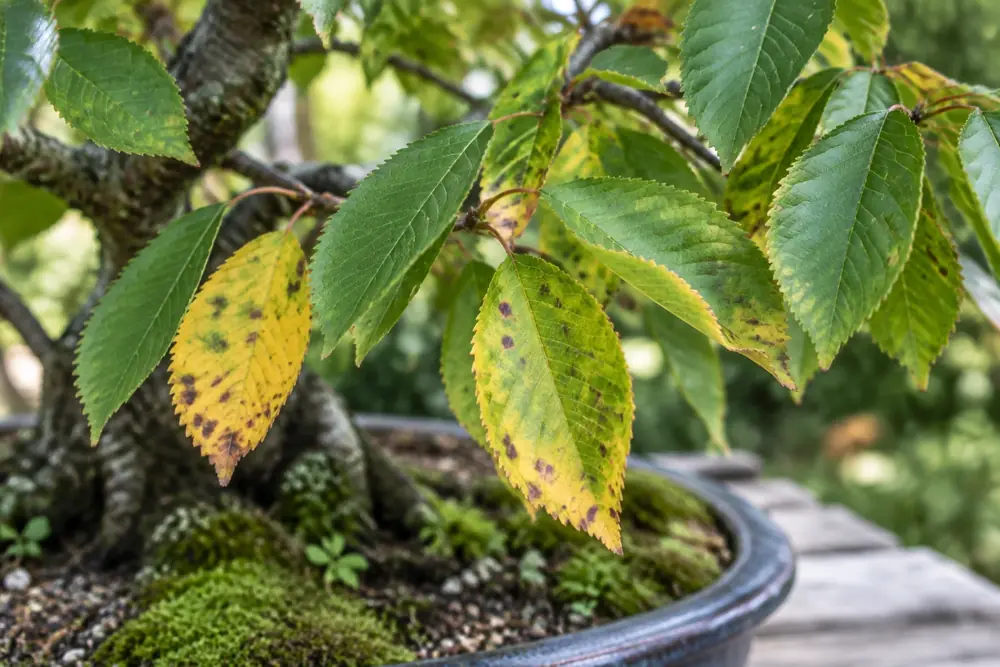
A common fungal disease of cherries. Small purple to reddish-brown spots appear on the leaves, the leaf around them turns yellow, and affected leaves drop early, sometimes leaving the tree half bare by midsummer. Spots may fall out, leaving tiny holes. It spreads in warm, wet weather.
Fix: remove and destroy affected leaves and all fallen leaves, because the fungus survives in them over winter. Water the soil, not the leaves, and thin the canopy for better air flow. Our guide to bonsai leaf spot disease explains treatment options, including fungicides for severe cases.
3. Nutrient shortage
Flowering takes a lot of energy, and bonsai soil holds few nutrients. A hungry cherry turns pale yellow-green all over, especially in summer.
Fix: feed after flowering every two to three weeks until late summer. A balanced feed, switching to a lower nitrogen formula in late summer, supports next year’s flower buds. Our guide to the best liquid fertilizer for bonsai trees has good choices.
4. High soil pH or hard water
Cherries prefer slightly acidic to neutral soil. In alkaline soil, often from very hard tap water over several years, they struggle to take up iron. New leaves turn yellow while the veins stay green.
Fix: use rain water where possible and repot into an akadama-based mix at the next repotting time. A chelated iron supplement can help green up leaves in the meantime.
5. Drought stress
A small pot can dry out in an afternoon. Leaves yellow, then brown and crisp, often at the edges first.
Fix: check the soil daily in summer and water thoroughly when the top is just dry. Our guide to watering bonsai in summer has tips for hot spells.
6. Aphids
Aphids love the tender new shoots of cherries. They suck sap, causing new leaves to curl, distort and turn yellow. You may also see sticky honeydew and ants.
Fix: spray them off with water and treat with insecticidal soap if needed. Our guide to aphids on bonsai trees covers a full plan.
How to diagnose step by step
- Check the date. Autumn color is normal.
- Feel the soil. Wet and sour points to overwatering. Bone dry points to drought.
- Look for spots. Purple-brown spots with yellow surrounds mean leaf spot.
- Look at the veins. Yellow leaf with green veins on new growth means iron uptake problems.
- Check new shoots. Curled leaves with tiny insects mean aphids.
- Think about feeding. No fertilizer since spring? The tree is likely hungry.
Quick reference
| What you see | Most likely cause | First step |
|---|---|---|
| Yellow, orange, red in autumn | Normal color | Nothing to fix |
| Soft yellow leaves, wet soil | Overwatering | Water less, check roots |
| Purple spots, yellowing, early drop | Cherry leaf spot | Remove infected leaves |
| Pale yellow-green all over | Hunger | Feed regularly |
| Yellow with green veins | High pH | Rain water, akadama |
| Curled yellow new leaves | Aphids | Spray off, treat |
Yellow leaves after repotting or a move
Cherries also turn some leaves yellow after a change in conditions. A tree repotted late, after the leaves had already opened, has fewer roots to support its foliage and may yellow and drop some leaves for a few weeks. The same happens when a cherry is moved from a shaded nursery into full sun, or brought indoors for too long while in flower.
In these cases, the fix is simply stability. Keep the tree outdoors in morning sun with light afternoon shade, water evenly and do not fertilize until new leaves appear. Most trees settle within three to four weeks. Next time, repot in early spring as the buds swell, before the leaves open, and limit indoor visits during flowering to a few days in a cool, bright spot.
Watering and feeding through the year
| Season | Watering | Feeding |
|---|---|---|
| Spring | Check daily, increase as leaves open | Start after flowering |
| Summer | Daily, sometimes twice | Every 2 to 3 weeks, lower nitrogen late |
| Autumn | Less often as leaves color | Stop |
| Winter | Only when soil starts to dry | None |
Preventing yellow leaves
- Use gritty, fast-draining soil
- Water when the topsoil is just dry, never on a schedule
- Feed after flowering through summer
- Clear fallen leaves, especially in autumn
- Water the soil, not the foliage
- Thin the canopy for good air flow
- Check new shoots for aphids each spring
Can yellow cherry leaves turn green again?
Leaves that are only slightly pale from hunger or iron shortage may regain some color once you fix the cause. Leaves that are fully yellow, spotted or curled usually stay that way and drop. Do not worry about them. What matters is that the next leaves come in healthy and dark green.
FAQ: cherry blossom bonsai yellow leaves
Why are my cherry bonsai leaves turning yellow in summer?
Most often overwatering, cherry leaf spot or hunger. Check the soil, look for spots and think about when you last fed the tree.
What are the purple spots on my cherry bonsai leaves?
Usually cherry leaf spot, a fungal disease. Remove infected and fallen leaves and keep the foliage dry.
Is yellowing in autumn a problem?
No. Flowering cherries are deciduous and color up before dropping their leaves.
Should I remove yellow leaves from my cherry bonsai?
Remove spotted leaves to slow disease. Plain yellow leaves can fall on their own.
Final thoughts
Cherry blossom bonsai yellow leaves in autumn are part of the tree’s natural cycle. In the growing season, they point to wet roots, leaf spot, hunger, soil pH or aphids. Read the pattern, fix the main cause, and keep the tree outdoors in sun with airy soil and steady feeding. For a broader look at leaf color problems, see our guide to bonsai leaves turning yellow or brown.