Moss on Bonsai Soil: Good or Bad? When to Keep It and When to Remove It

This post contains affiliate links. As an Amazon Associate, OurBonsai earns from qualifying purchases at no extra cost to you. Read our disclosure.
In this guide
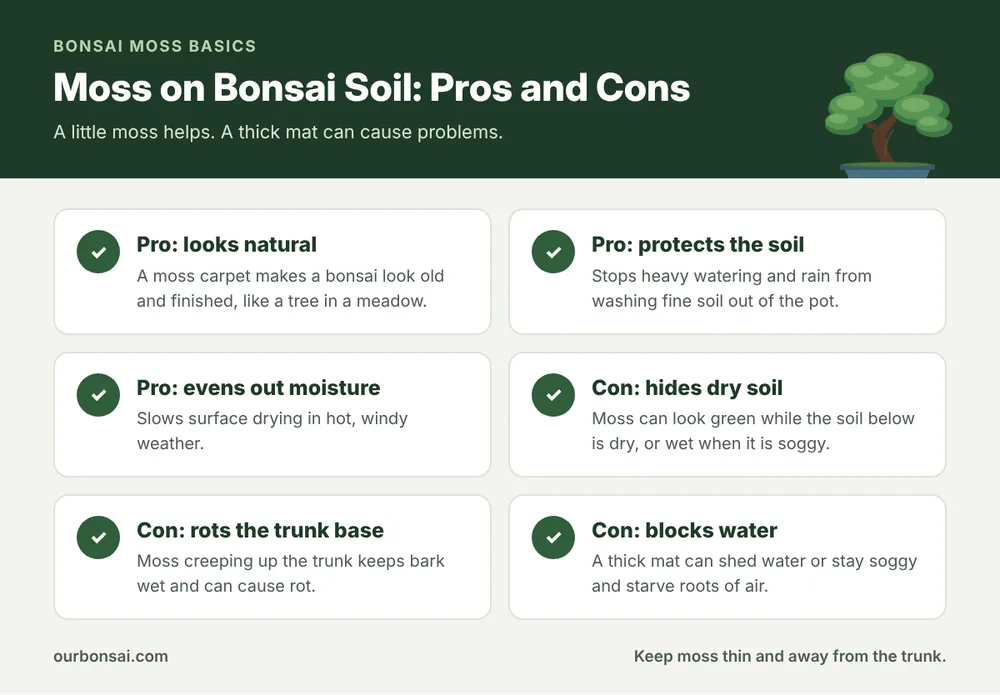
Moss on bonsai soil can be either a good thing or a warning sign, depending on how much there is and where it grows. A thin, even layer of moss gives a bonsai an aged, natural look, protects the soil surface from washing away, and slows down drying in hot weather. That is why many growers put it there on purpose. But a thick mat of moss can hide watering problems, keep the trunk base permanently wet, and stop water from soaking in evenly. The trick is to keep moss thin, short and away from the trunk.
This guide explains the benefits and drawbacks, what moss tells you about your watering, how to grow moss on purpose and how to remove it when it gets out of hand.
Why moss grows on bonsai soil
Moss spreads by tiny spores that are everywhere outdoors. It grows wherever the surface stays moist, shaded and undisturbed for a while, which describes the top of many bonsai pots. Outdoor trees that are watered every day often develop a green layer within a season. Indoors, moss is less common because the air is drier.
Mosses are simple plants called bryophytes. They have no real roots, only tiny threads that anchor them to the surface. They take water and nutrients mostly through their leaves. That means moss does not compete much with your tree’s roots for water deep in the pot. The problems come from what moss does to the surface, not underground.
The benefits of moss on bonsai soil
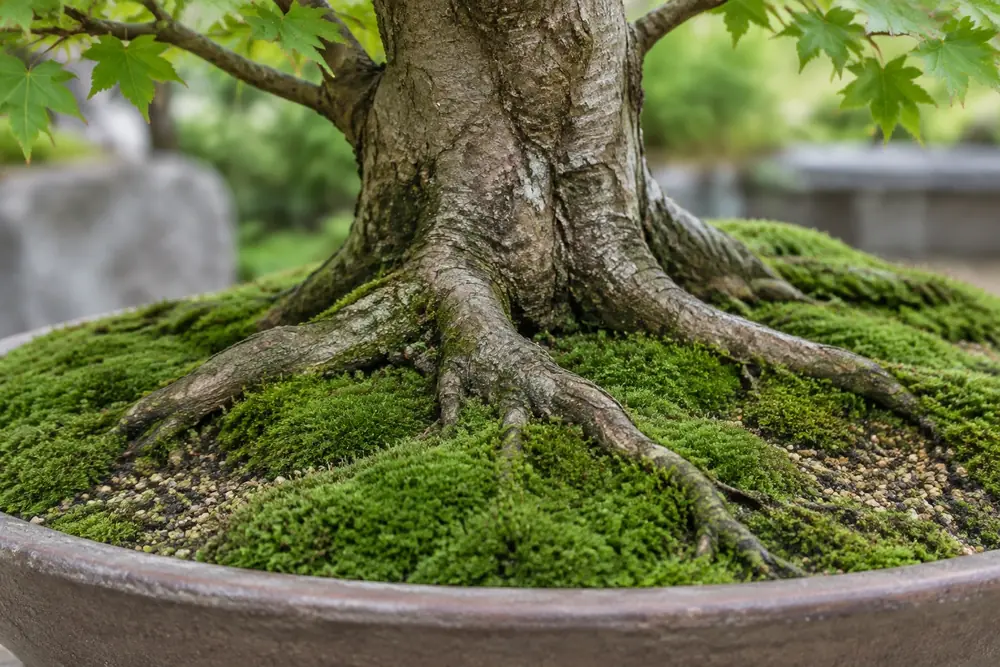
- It looks natural. A mossy surface makes a bonsai look like an old tree growing in a meadow or forest. Traditional Japanese display almost always uses moss, especially for exhibitions.
- It protects the soil. Moss holds the top layer of soil in place when you water, so fine particles do not wash out of the drainage holes.
- It slows evaporation. In hot, windy weather, moss keeps the surface from baking, which protects fine surface roots.
- It shows good conditions. Healthy moss means the soil surface is staying reasonably moist, a sign that watering is regular.
The drawbacks of moss
- It hides the soil. You cannot see or feel the soil under a thick mat, so it is harder to tell when the tree needs water. Moss can stay green while the soil below is dry.
- It can shed water. A dry, dense mat can repel water at first, so water runs off the sides instead of soaking in.
- It can keep things too wet. In shade or with heavy watering, a thick mat can keep the soil surface soggy, which reduces air reaching the roots. Our guide to root rot in bonsai explains why air in the soil matters.
- It can damage the trunk. Moss that creeps up the trunk and over the surface roots keeps the bark wet all the time. Over months this can soften the bark, invite rot and slow the development of the nebari (surface roots).
- It can harbor pests. Thick moss provides cover for slugs, ants and fungus gnats. See our guide to fungus gnats on bonsai trees.
What moss tells you about your watering
| What you see | What it usually means |
|---|---|
| Thin, healthy moss in patches | Normal, regular watering outdoors |
| Thick, spongy moss everywhere | Soil surface staying wet; may be overwatering or too much shade |
| Green algae slime instead of moss | Soil very wet, poor drainage, or dense soil |
| Moss turning brown and crispy | Surface drying out a lot; check deeper soil |
| No moss at all on an outdoor tree | Fine, or the surface dries fast in full sun |
Green slime (algae) on the soil is different from moss and is a clearer sign of too much water or poorly draining soil, as is fuzzy white mold on bonsai soil. If you see either, check your soil mix; our bonsai soil mix ratio guide shows how to make a mix that drains well.
How to keep moss under control
- Keep it away from the trunk. Clear a small ring around the base of the trunk and off the top of the surface roots.
- Keep it thin. Scrape off thick, spongy patches with tweezers or a small spatula.
- Check the soil, not the moss. Push a finger or chopstick through the moss into the soil before watering.
- Remove it before repotting. Peel it off in sheets and keep the healthy pieces to put back afterwards.
- Let some soil show. Leaving a few bare areas helps you judge moisture and lets air in.
How to grow moss on bonsai soil on purpose
Many growers add moss for display. Here is the simple method:
- Collect moss from a shaded spot, such as a paving crack, an old wall or a log. Choose short, fine cushion moss, which looks best in scale. Avoid tall or stringy mosses. Only collect where you have permission.
- Dry and crumble it (optional). Dried moss can be rubbed through a sieve and sprinkled over the soil. It regrows within a few weeks in moist conditions.
- Or press live pieces onto the soil. Lay small pieces on damp soil, press them down firmly and mist.
- Keep it moist and shaded for the first few weeks while it establishes.
- Keep it thin and away from the trunk once it grows.
You can also buy live bonsai moss or dried moss spores if you cannot collect any. Japanese moss gardens, described in the Wikipedia article on moss gardens, use the same short cushion mosses that look best on bonsai.
How to remove moss from bonsai soil
If moss has taken over, it is easy to remove:
- Peel it off with tweezers or your fingers. It usually lifts away in sheets.
- Scrape the surface gently with a small spatula or the flat end of chopsticks to remove small patches.
- Clean the trunk base with a soft toothbrush and water to remove moss from the bark.
- Top up the soil if you removed some with the moss.
- Improve conditions to slow regrowth: more light, better drainage and slightly less frequent watering.
Avoid chemical moss killers. They can harm the tree and its roots, and are not needed in a small pot.
Moss on indoor bonsai
Moss on indoor bonsai is less common and harder to keep alive, because indoor air is dry. If you see it, that usually means the soil surface is staying wet a long time, so check that you are not overwatering. A light dusting of moss on an indoor tree is fine, but do not try to keep a thick carpet indoors.
FAQ: moss on bonsai soil
Is moss on bonsai soil bad?
Not in small amounts. A thin layer is helpful and attractive. A thick mat, or moss growing up the trunk, should be thinned.
Does moss steal water from my bonsai?
Not significantly. Moss has no real roots and takes water mostly from the surface. The bigger risk is that it hides how wet or dry the soil is.
Should I remove moss before repotting?
Yes. Lift it off in sheets, set it aside in a shaded spot, and press it back onto the new soil afterwards.
Can moss grow on bonsai soil indoors?
It can, but it usually struggles in dry indoor air. If it thrives indoors, the soil may be staying too wet.
Final thoughts
Moss on bonsai soil is a friend in moderation: it protects the soil, looks beautiful and signals regular watering. Keep it thin, keep it away from the trunk and roots, and always check the soil under it before you water. Do that, and you get all of the beauty with none of the problems. For more everyday care tips, see our bonsai care guide.