Is My Japanese Maple Bonsai Dying? Signs and How to Save It

This post contains affiliate links. As an Amazon Associate, OurBonsai earns from qualifying purchases at no extra cost to you. Read our disclosure.
In this guide
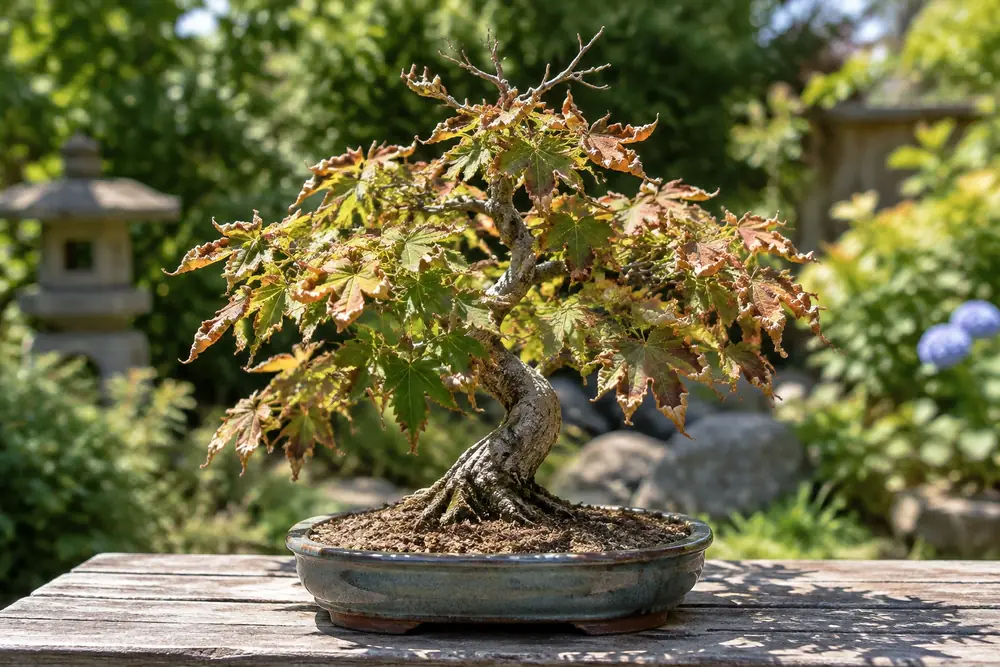
A Japanese maple bonsai dying can look alarming in many ways: leaves scorched brown at the edges, whole branches wilting, twig tips dying back, or buds that never open in spring. But Japanese maples (Acer palmatum) are also deciduous, so a bare tree in winter is perfectly normal. The first step is to work out whether you are looking at dormancy, stress or real decline. Most problems trace back to the roots: drying out, overheating, rotting or freezing. Caught early, many maples recover fully.
This guide covers how to tell dormancy from decline, check what is alive, recognize the common causes and save a struggling tree.
Dormant, stressed or dying?
| What you see | Usually means |
|---|---|
| Bare tree in winter, plump buds | Normal dormancy |
| Brown, crispy leaf edges in summer | Stress: dry or hot roots, sun scorch |
| Whole tree wilting in summer heat | Roots dried out, or root loss |
| Branches dying back from the tips | Root damage or cold damage |
| One branch suddenly wilting and dying | Possible verticillium wilt |
| Buds fail to open in spring | Roots damaged over winter, or tree dead |
| Soft, dark roots, sour soil | Root rot |
How to check if a Japanese maple is alive
- Buds. Healthy maple buds are plump, firm and often reddish. Gently squeeze one; if it is dry or crumbles, it is dead.
- Scratch test. Scrape a tiny area of bark on a thin branch. Bright green, moist tissue underneath means alive. Brown and dry means dead. Work toward the trunk to find where living tissue starts.
- Bend test. Live twigs bend; dead ones snap.
- Roots. Ease the tree out of the pot. Healthy maple roots are fine, fibrous and light colored. Rotten roots are dark, soft and smell bad.
Common causes of a Japanese maple bonsai dying
Drought and hot roots
The most common summer problem. Japanese maples have thin leaves and fine roots that suffer quickly if the soil dries out or the pot heats up in full sun. Leaves scorch at the edges, then whole branches can wilt and die back. The Wikipedia page on Acer palmatum notes its natural preference for partial shade and moist soil.
Root rot
Dense soil, a pot that does not drain, or constant overwatering suffocates fine roots. Leaves yellow and drop, growth is weak and the tree declines over a season. Our guide to root rot in bonsai explains the signs and treatment.
Frost damage to roots
Japanese maples are hardy, but roots in a small pot can freeze much harder than roots in the ground. A long, hard freeze can kill the roots; the tree then fails to leaf out, or leafs out and collapses in spring.
Kept indoors too long
Japanese maples need a cold winter dormancy outdoors. Kept indoors through winter, they do not rest properly and decline. Our guide to Japanese maple bonsai indoors explains how long they can safely be inside.
Verticillium wilt
A soil-borne fungal disease that blocks the water-carrying tissue. A single branch, or one side of the tree, suddenly wilts and dies in summer, often with dark streaks in the wood when cut. The Wikipedia article on verticillium wilt describes how it spreads. There is no cure; cut out affected branches well into healthy wood and disinfect tools.
Pests
Aphids cluster on soft new spring shoots and can curl and distort the leaves, while scale insects settle on bark. On their own they rarely kill a maple, but on a tree already stressed by drought or root problems they speed up the decline. Check the undersides of new leaves in spring; our guide to aphids on bonsai trees covers simple treatments.
Too much work at once
Heavy pruning, full defoliation and repotting in the same season can exhaust a maple. Space out major work.
How to save a dying Japanese maple bonsai
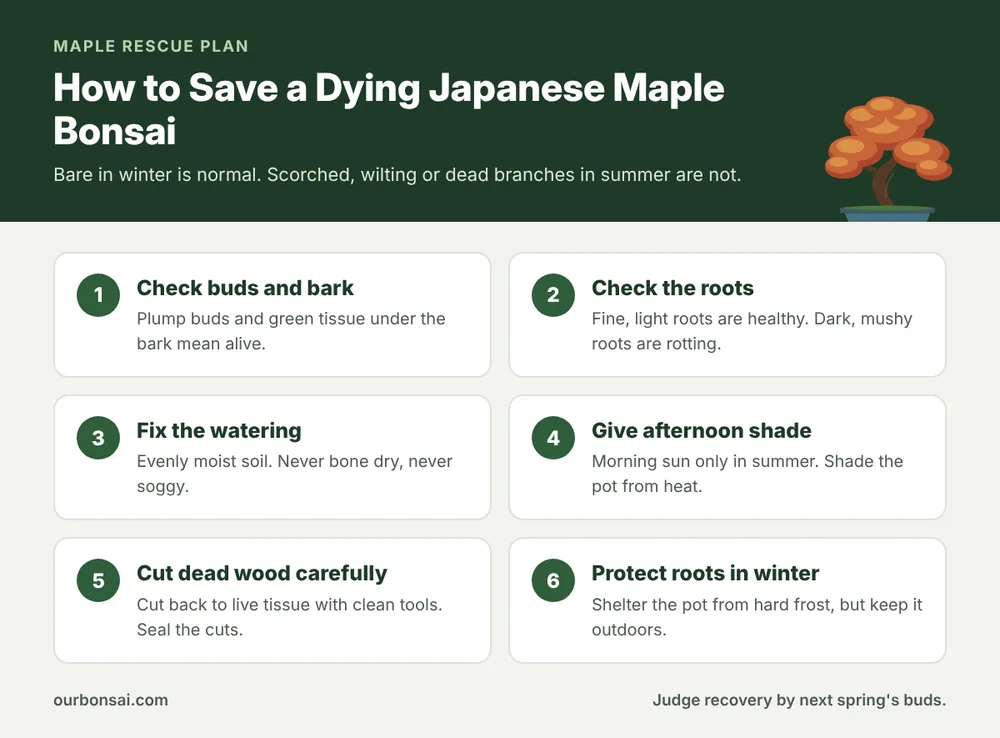
Step 1: Map what is alive
Use the bud, scratch and bend tests. Mark dead branches, but do not cut anything until you know the extent of the damage.
Step 2: Check and treat the roots
If roots are rotting, cut away all soft, dark roots with clean scissors. In early spring, repot into a fresh, free-draining mix with plenty of akadama. At other times of year, improve drainage without disturbing the roots: remove any saucer and keep the tree out of long rainy spells. Our bonsai soil mix ratio guide explains a good mix.
Step 3: Get watering consistent
Water when the top centimeter of soil starts to dry, then soak the pot. In summer, check morning and late afternoon. Our article on watering bonsai in summer has practical tips.
Step 4: Shade and shelter
In summer, give morning sun and afternoon shade, and shield the pot from direct sun. A 30 percent shade cloth works well over a bench. Keep the tree out of hot, drying wind.
Step 5: Remove dead wood
Once you are sure which branches are dead, cut them back to living tissue just above a live bud, using clean, sharp tools. Seal larger cuts with cut paste.
Step 6: Feed only when it grows
Wait for healthy new leaves before feeding, then use a gentle organic fertilizer.
How long does recovery take?
Maples damaged in summer often look poor until autumn and then leaf out reasonably well the next spring if the roots survived. Judge the real result by next spring’s buds. Give the tree a full growing season with no heavy work, and it can rebuild its canopy.
During that recovery season, let shoots grow longer than you normally would before trimming them. Every leaf is feeding the roots, and a maple that is pinched and trimmed hard while weak recovers much more slowly. Skip leaf pruning entirely that year and leave repotting until the following spring unless the roots are rotting.
How to keep a Japanese maple healthy
- Grow it outdoors all year, with afternoon shade in summer.
- Use an akadama-rich, free-draining soil.
- Water by checking the soil daily during the growing season.
- Protect the pot from hard freezes in winter.
- Feed in spring and summer.
- Space out major work: one big job per year.
FAQ: japanese maple bonsai dying
Why are my Japanese maple bonsai leaves turning brown and crispy?
Usually the soil dried out or the roots overheated, or the tree is getting too much afternoon sun. Water consistently and add afternoon shade.
Is my Japanese maple dead or dormant?
In winter, check the buds and do a scratch test. Plump buds and green tissue mean dormant, not dead.
Can a Japanese maple bonsai recover from scorched leaves?
Yes. Scorched leaves will not recover, but a healthy tree grows new leaves next spring.
What does it mean if one branch suddenly dies?
It can be root loss on that side, physical damage, or verticillium wilt. Check the wood for dark streaks.
Final thoughts
A Japanese maple bonsai dying is usually reacting to dry, hot, waterlogged or frozen roots, and sometimes to disease. Map what is alive, fix the roots and watering, give afternoon shade and be patient until spring. For a tougher maple to grow alongside it, see our Brussels trident maple bonsai review.