Best Soil for Sago Palm Bonsai: Mix and Repotting Tips

The best soil for sago palm bonsai is a gritty, fast-draining mix close to what you would use for a succulent: about 40 percent pumice, 30 percent lava rock and 30 percent akadama or fine pine bark, in coarse grains of 3 to 8 mm, with a slightly acidic pH of around 5.5 to 6.5. A sago palm (Cycas revoluta) stores water in its thick trunk and resents wet roots, so the pot should be dry at a depth of 2 to 3 cm within roughly 3 to 7 days indoors. Regular potting soil, especially peat-heavy mixes, is the most common reason sagos rot from the base up.
In this guide
It is not a palm, and that matters for the soil
Despite the name, the sago palm is a cycad, a very old plant group that predates flowering plants. It comes from southern Japan, including the Ryukyu Islands and Kyushu, where it grows on well-drained, often rocky or sandy slopes near the coast. It is hardy outdoors to roughly USDA zone 8 or 9.
What that means for a bonsai grower:
- The trunk is a water tank. Like a caudex plant, it can go without water for a while. It cannot survive sitting in wet soil.
- Growth is slow. Most sagos push one flush of fronds a year. Roots grow slowly too, so repotting is rare.
- Roots have helpers. Sago palms grow special knobbly, coral-shaped roots near the surface that host nitrogen-fixing cyanobacteria. They look odd but are healthy.
Our full sago palm bonsai care instructions cover light and watering in more depth.
Mixing the best soil for sago palm bonsai
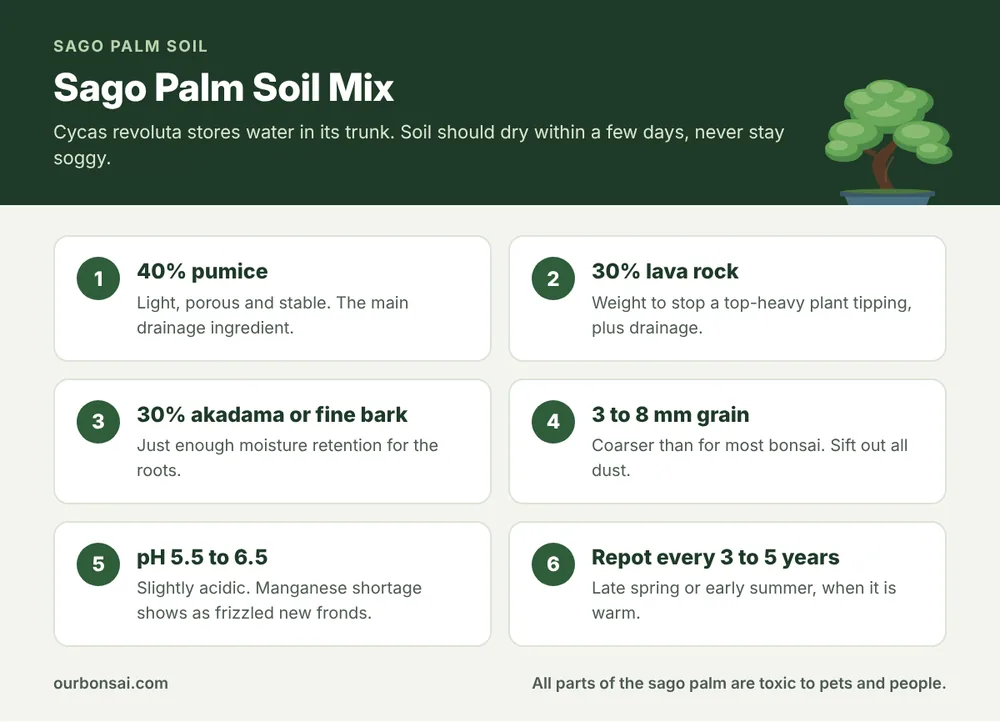
- Sift pumice, lava and akadama (or bark) through a 3 mm screen and discard the dust.
- Measure by volume: 4 parts pumice, 3 parts lava, 3 parts akadama or bark.
- Mix dry, then dampen slightly before potting.
You can also start from a good gritty succulent mix. Bagged mixes that are mostly pumice, calcined clay and a little bark, like the one in our Bonsai Jack succulent soil review, work well. Avoid anything that feels spongy or dusty in the bag.
A simple test tells you if the mix is right. Water the pot until it drains, then push a wooden chopstick 3 cm into the soil and leave it there. In a warm, bright room the chopstick should come out dry or nearly dry within 3 to 5 days. If it is still dark and damp after a week, the mix holds too much water for your conditions and the share of pumice should go up. If it is bone dry the next day in mild weather, add a little more akadama or bark. Small adjustments of 10 percent are enough; the sago palm is not delicate about exact ratios, only about wet feet.
| Ingredient | Use for sago palm? | Reason |
|---|---|---|
| Pumice | Yes, main part | Drainage, stable structure |
| Lava rock | Yes | Weight for a top-heavy plant, drainage |
| Akadama | Yes, a third or less | Some water retention |
| Fine pine bark | Yes, instead of akadama | Water retention, slightly acidic |
| Coarse sand | A little | Adds weight but fills gaps if fine |
| Peat or compost | No | Stays wet and invites trunk rot |
| Garden soil | No | Compacts in a pot |
The pot matters as much as the mix
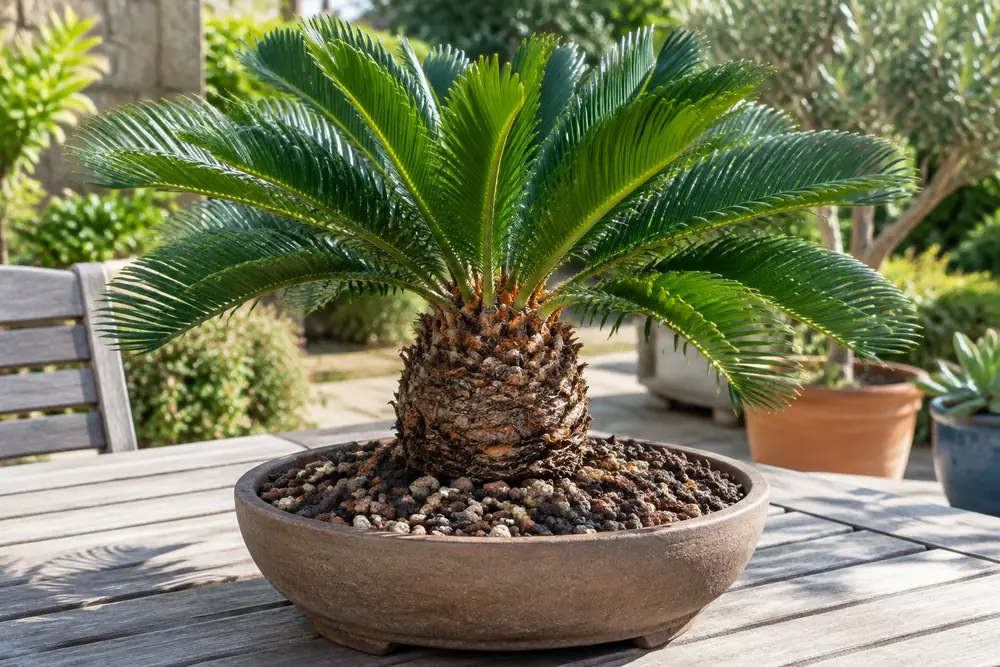
Sagos are top-heavy, with a stout trunk and a crown of stiff fronds. A wide, fairly deep pot with large drainage holes works best. Very shallow bonsai pots tip over and dry unevenly. Unglazed pots let the soil breathe a little more, which helps in humid climates.
Set the trunk so the swollen base sits at or slightly above the soil line. Burying the base keeps it wet and is a common route to rot.
When and how to repot a sago palm
Repot only every 3 to 5 years, or when roots clearly fill the pot. Late spring to early summer is ideal, once nights stay above about 15 C (59 F) and before the new flush of fronds unfolds. Repotting during a flush can deform the new leaves.
- Water a day or two before.
- Ease the plant out. Sago roots are thick and fleshy; avoid tearing them.
- Remove old, compacted soil from around the roots with your fingers or a chopstick.
- Cut only roots that are dead, black or mushy. Leave the coralloid roots alone.
- Repot at the same level, trunk base above the soil.
- Wait about a week before watering if you cut any roots, so the wounds can dry and callus. In very hot weather, water lightly after 3 to 4 days.
Feed lightly after a month with a palm or cycad fertilizer that contains manganese. A shortage of manganese is a known cause of “frizzle top”, where new fronds come out yellow and stunted.
Mistakes that kill sago palms
- Watering on a weekly schedule all year. In winter indoors, a sago may need water only every 2 to 3 weeks.
- Peat-based soil. Holds water around the trunk base. See why in our comparison of bonsai soil and regular soil.
- Cutting off yellowing lower fronds too early. The plant draws nutrients back from old fronds. Remove them once fully brown.
- Ignoring rot. A soft, squishy trunk base means rot inside. Our root rot in bonsai guide shows how to check.
Frequently asked questions
Is a sago palm safe to keep around pets?
No. Every part, especially the seeds, contains toxins that can cause liver failure in dogs and cats. Keep it out of reach. Our article on whether bonsai trees are poisonous to cats and dogs lists other risky species.
Can I use cactus soil for a sago palm bonsai?
A gritty cactus mix is a reasonable starting point. Many store-bought ones are too fine, so blend them 50/50 with pumice.
How often should I water a sago palm in this soil?
When the top 2 to 3 cm are dry. That might be every 3 to 5 days in summer outdoors and every 2 to 3 weeks indoors in winter.
Does it need a pot with very large drainage holes?
Bigger holes help, especially in a deep pot. Cover them with mesh to keep soil in.
Final word
Treat a sago palm’s root zone like a succulent’s: coarse, mineral, quick to dry, with the trunk base kept clear of the soil. Repot rarely and gently, and the plant will reward you with a new crown of fronds each year. For the botany and natural range, see the Wikipedia article on Cycas revoluta.