How to Repot Serissa Bonsai Without Leaf Drop

The answer to how to repot serissa bonsai comes down to doing as little as possible at once. Repot in spring, when new shoots are appearing and room temperatures stay above about 18 C (65 F), every 2 years for most trees. Trim no more than about a quarter of the roots, use an airy mix that still holds moisture (equal parts akadama, pumice and fine bark works well), and put the tree straight back in the exact spot it came from. Then change nothing else for 4 weeks: no pruning, no moving, no fertilizer. Serissa is famous for dropping leaves when stressed, and stacking several stresses together is what causes the worst losses.
In this guide
Why serissa is so touchy
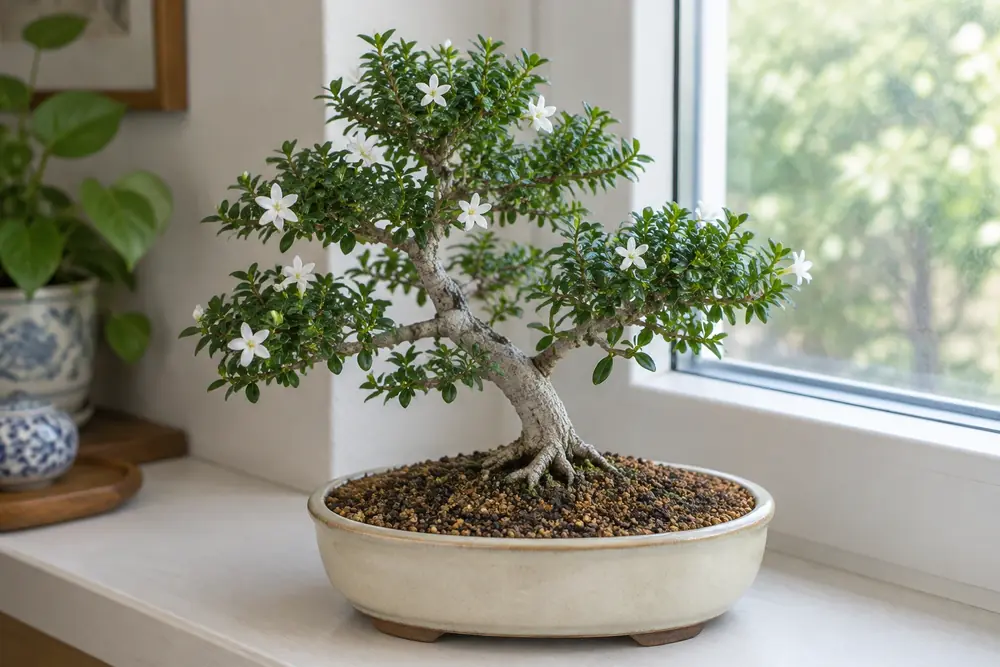
Serissa japonica, also called snow rose or tree of a thousand stars, is a small evergreen shrub from Southeast Asia, including southern China and Indochina. It is grown for its tiny leaves, pale bark and small white flowers that can appear on and off for much of the year.
It is also known for one habit: it sheds leaves in response to almost any change. A move to a new windowsill, a cold draft, a dry spell, a big prune or a repot can each send a shower of yellow leaves onto the table. The tree usually survives, but repeated stress weakens it. When you repot, you are causing the biggest change of all, so everything else should stay steady.
Another quirk: cut or bruised serissa roots give off an unpleasant smell, a bit like manure. That is normal and is where the old name Serissa foetida comes from. It is not a sign of rot by itself.
Signs it needs repotting
- Water runs off the surface or takes a long time to soak in.
- Roots circle the inside of the pot or poke through the drainage holes.
- The tree needs water noticeably more often than a year ago because the pot is full of roots.
- Growth has slowed through spring and summer despite good light and feeding.
If none of these apply, wait another year. Serissa does not benefit from being repotted on a fixed schedule.
Timing the repot
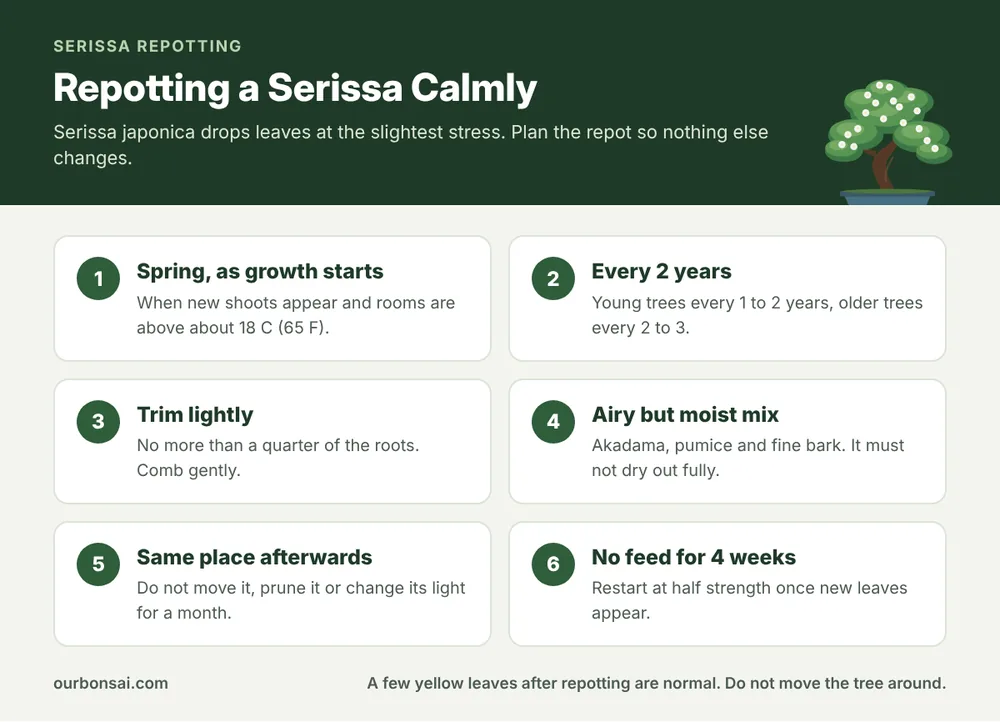
The right moment is spring, when you see the first fresh shoots and the days are lengthening. Indoors, that is usually March to May. Avoid:
- Winter. Low light and cool rooms slow root growth.
- Peak flowering. The tree may drop all its buds.
- Right after buying it. Give a new serissa at least 4 to 6 weeks to adjust to your home first. It will likely drop leaves from the move alone.
Our article on the best time to repot tropical bonsai explains why the warm season matters for subtropical trees in general.
Soil for a serissa bonsai
Serissa wants a mix that never fully dries out but never stays soggy either. Its roots are fine and fibrous and suffer quickly in both extremes.
- 1 part akadama
- 1 part pumice
- 1 part fine pine bark (or sifted coco coir chips)
Sift to 2 to 4 mm for most serissa, which tend to be small trees in small pots. Slightly acidic to neutral pH suits it. If your room is very dry, raise the akadama or bark slightly. Avoid plain potting soil; in a shallow pot it stays wet and the roots rot.
How to repot serissa bonsai, step by step
- Water the day before so the root ball is evenly moist.
- Work somewhere out of drafts and do the job in one sitting. Long exposure dries the fine roots.
- Lift the tree out and gently loosen the outer layer of soil with a chopstick. Avoid ripping out large chunks.
- Trim lightly. Cut circling roots and anything black or mushy. Remove no more than about a quarter of the root mass.
- Prepare the pot with mesh and tie-down wires.
- Set the tree, tie it in and work fresh mix around the roots with a chopstick, so no air pockets remain.
- Water slowly until water runs clear from the drainage holes.
- Return it to its old spot immediately, same window, same orientation if you can.
The first month after repotting
| Week | What to do | What to expect |
|---|---|---|
| 1 | Keep in its usual bright spot. Water when the top centimeter is just dry. | A few yellow leaves |
| 2 | Same. Mist lightly if the air is dry, or use a humidity tray. | Some leaf drop may continue |
| 3 | Same. No pruning yet. | New buds begin to show |
| 4 | Start feeding at half strength if new leaves are growing. | Fresh growth |
The main thing is consistency. Do not “rescue” a serissa that drops leaves in week one by moving it to a sunnier window or watering it more. That adds a second stress and usually makes things worse. If yellowing continues past three weeks, look at our guide to serissa bonsai yellow leaves for a fuller diagnosis.
Mistakes to avoid
- Repotting and pruning in the same session. Spread them at least 4 weeks apart.
- Bare-rooting. Serissa roots are fine and dry out within minutes. Keep a core of old soil.
- Letting the new mix dry out completely. This species does not tolerate a dry root ball after root pruning.
- Cold drafts. A window that is cold at night or an air conditioner nearby can trigger heavy leaf drop. Read more on sudden leaf loss in bonsai.
- Overwatering out of worry. Soggy soil plus cut roots is the classic route to root rot. Our root rot in bonsai page explains the warning signs.
Frequently asked questions
My serissa dropped half its leaves after repotting. Will it recover?
Usually, yes, if the stems stay flexible and green under the bark. Keep conditions steady and watch for new buds over 3 to 4 weeks. If twigs turn brittle and brown inside, those parts have died.
Can I repot serissa in summer?
Early summer is fine indoors if the tree is growing strongly. Avoid heat waves and keep it out of hot afternoon sun.
Should serissa go into a bigger pot?
If the trunk is still developing, a slightly larger pot helps. For a finished tree, trim roots and return it to the same pot.
Does serissa need special soil because it flowers?
No. Flowering depends more on light, steady moisture and feeding than on the soil recipe. The mix above suits flowering well.
Final thoughts
Serissa repays a careful, quiet repot: spring timing, light root work, a mix that stays slightly moist, and a month without any other changes. Expect some leaf drop and do not react to it. For more on growing it as an indoor flowering tree, see our guide to flowering indoor bonsai tree care, and for botanical background, the Wikipedia page on Serissa.