Soft Bonsai Trunk: What It Means and How to Fix It

A soft bonsai trunk is one of the more worrying things you can find on your tree. Healthy wood is firm, even on young trees and succulents like jade. When the trunk gives under your thumb, feels spongy or looks wrinkled, something is wrong inside. The most common causes are rot spreading up from waterlogged roots, severe dehydration in succulent species, and frost damage. The good news is that if you catch it early and part of the trunk is still firm, many trees can be saved.
In this guide
This guide explains how to work out what is causing the softness, how to check how far it has gone, and what to do next.
What a healthy bonsai trunk should feel like
Wood is made of hard, dead xylem cells on the inside and a thin living layer just under the bark called the cambium. The vascular cambium is what grows the trunk thicker each year and carries the tree’s life. On most species, pressing the trunk should feel like pressing a pencil: no give at all.
There are two exceptions to know about:
- Succulent bonsai such as jade (Crassula ovata), portulacaria and baobab store water in their trunks. They feel a little fleshy, but they should still be firm and smooth, not squishy or wrinkled.
- Very young cuttings and green shoots are flexible before they turn woody. That is normal.
The main causes of a soft bonsai trunk
| Cause | Typical clues | Common in |
|---|---|---|
| Root rot spreading up | Soil stays wet, sour smell, leaves yellow and drop, softness starts at the base | Any species, especially indoors |
| Trunk rot or canker | Dark, sunken patch on one side, may ooze | Older trees, wounds that never closed |
| Dehydration (succulents) | Trunk wrinkled and soft but dry, leaves shrivel | Jade, portulacaria, baobab |
| Frost damage | Soft, dark bark after a freeze and thaw | Tropicals left outdoors, small pots in winter |
| Boring insects | Small holes, sawdust-like frass, soft patch around it | Outdoor deciduous trees |
Root rot moving into the trunk
This is the cause in most cases. When soil stays wet for weeks, roots suffocate and rot, and the fungi and bacteria involved move up into the base of the trunk. You will usually see yellowing and leaf drop first. Our guide to root rot in bonsai covers the full picture.
Dehydration in succulent species
A jade bonsai that has been kept too dry, especially in a hot room, will use the water stored in its trunk. The trunk goes soft and wrinkled, but it is dry, not wet. This is the one kind of soft trunk that usually reverses fully with proper watering.
Frost damage
Water inside plant cells expands when it freezes and bursts the cells. After thawing, damaged bark turns dark and soft. Tropical bonsai like ficus, schefflera and jade are especially at risk if left out on a cold night.
How to diagnose a soft trunk step by step
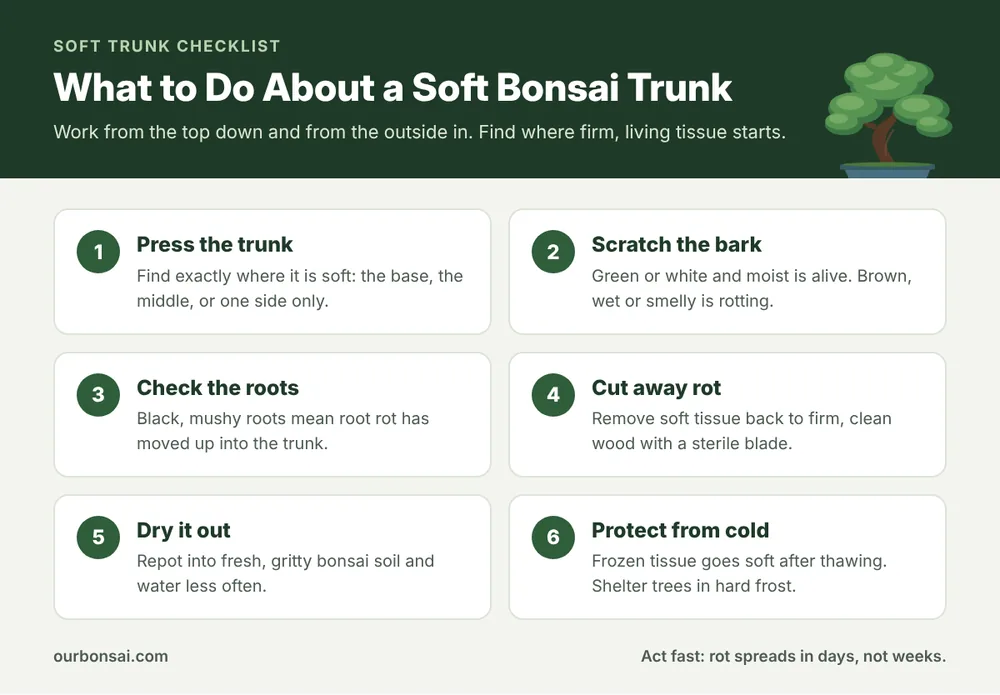
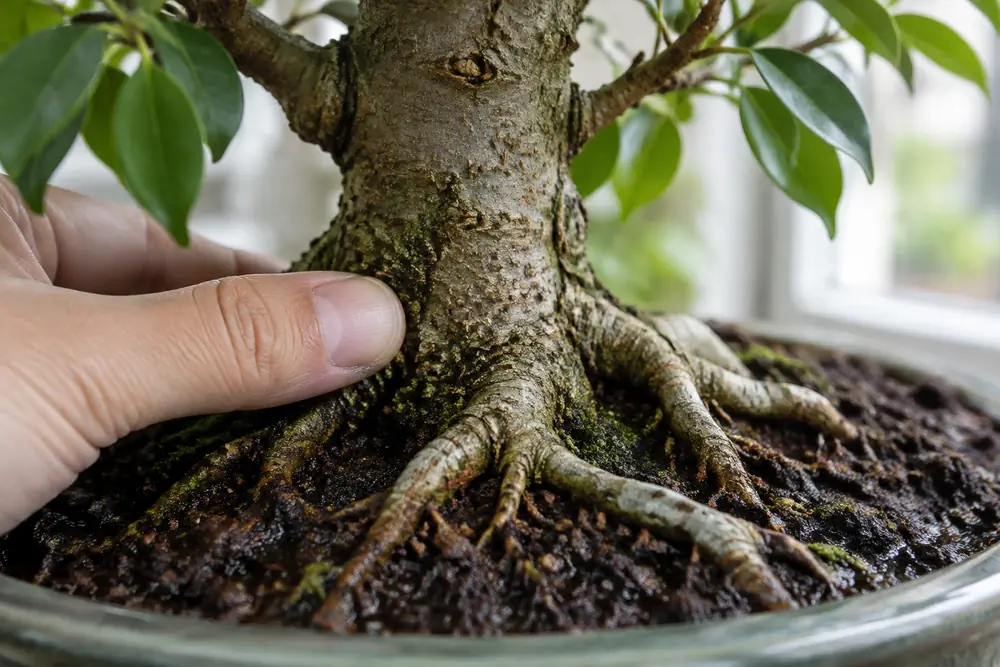
- Map the soft area. Press gently along the trunk from the soil line upward. Note whether it is soft all around, just at the base, or only on one side.
- Smell the soil. A sour, rotten smell points to root rot.
- Do a scratch test. Use a fingernail or a small knife to scrape a tiny patch of bark above the soft area. Moist green or white tissue is alive. Brown and wet is dead and rotting.
- Look at the roots. Slide the tree out of its pot. Healthy roots are firm and light colored. Rotten roots are dark, slimy and fall apart when you pull them.
- Check the history. Was the tree outside during a freeze? Has the soil been wet for weeks? Has a succulent gone a month without water? The answer is often obvious once you ask.
How to fix a soft bonsai trunk
If it is a dehydrated succulent
Water thoroughly until water runs out of the drainage holes, then let the soil dry before the next watering. The trunk should firm up and smooth out within one to three weeks. Move it out of direct heat from radiators.
If rot is the cause
- Remove the tree from its pot and wash away the old soil.
- Cut off all dark, mushy roots with clean, sterilized scissors.
- With a sharp, clean knife, carve away soft trunk tissue until you reach firm, healthy wood. Disinfect the blade between cuts.
- Let the cut surfaces dry for a few hours. On large wounds, a cut paste or sealant helps keep out more infection.
- Repot into fresh, fast-draining bonsai soil in a clean pot. Our bonsai soil vs regular soil guide explains why dense potting mix is a common trigger.
- Water lightly and only when the top of the soil dries. Keep the tree in bright, indirect light without fertilizer until it recovers.
If frost is the cause
Wait until spring before cutting. Frost damage is often less extensive than it looks at first. Once new buds open, you can see which parts are alive and remove the dead sections.
Can a tree with a soft trunk be saved?
It depends on how far the damage reaches. If the softness is only on one side and the rest of the trunk is firm, the tree can often survive and the dead area can even become an interesting deadwood feature later. If the trunk is soft all the way around at the base, water and nutrients can no longer move up, and the tree above that point will die.
In that case, take cuttings from any healthy branches. Jade, ficus, schefflera and many other indoor species root easily, so you can start again from the same plant.
How to prevent a soft trunk
- Use gritty bonsai soil. Fast drainage is the best protection against rot. See our bonsai soil mix ratio guide.
- Water by need, not by calendar. Check the soil first, every time.
- Never let pots sit in water. Empty saucers after watering.
- Bring tropicals in before frost. Most should come inside when nights drop below about 10 °C (50 °F).
- Treat wounds. Large pruning cuts are an entry point for rot. Clean cuts and sealant help.
- Check for pests. Our bonsai pests and diseases guide shows what to look for.
FAQ: soft bonsai trunk
Why is my jade bonsai trunk soft?
Either it is dehydrated or it is rotting. If the trunk is soft and wrinkled while the soil is dry, water it. If it is soft and the soil is wet or smells bad, check the roots for rot.
Can a soft trunk become hard again?
A dehydrated succulent trunk firms up again once it is watered. Rotten or frozen tissue does not recover. It has to be cut out so healthy wood can wall it off.
Is a soft spot on one side of the trunk serious?
It needs attention. Clean it out to firm wood and keep it dry. A tree can survive with one dead side, but the rot must not spread around the trunk.
Should I fertilize a bonsai with a soft trunk?
No. Fertilizer stresses damaged roots. Wait until the tree is growing healthy new leaves again.
Final thoughts
A soft bonsai trunk is always a sign to act, not to wait. Find out whether you are dealing with rot, dehydration or frost, check the roots, and cut away anything that is mushy and brown. Then fix the cause, usually soggy soil, so it cannot happen again. Caught early, many trees recover. For broader care habits, our main bonsai care guide is a good next read.