Best Wire Cutter for Bonsai: 7 Cutters Compared


As an Amazon Associate we earn from qualifying purchases. See our affiliate disclosure.
In this guide
- Our Top Picks at a Glance
- Why Not Just Use Ordinary Wire Cutters?
- 1. Wazakura Bonsai Wire Cutter 7.7 in (Best Overall)
- 2. TianBonsai Professional Wire Cutter 205 mm (Best for Thick Copper Wire)
- 3. TianBonsai Professional Wire Cutter 180 mm (Best All-Round Size)
- 4. TianBonsai Wire Scissors 160 mm (Best Small Cutter)
- 5. TianBonsai Standard Wire Cutter 180 mm (Best Budget Cutter)
- 6. VOUIU 8 in Wire Cutter (Best for Aluminium Wire on a Budget)
- 7. Wazakura Wire Cutter and Jin Pliers Set (Best Wiring Set)
- Also Worth a Look
- How to Choose a Bonsai Wire Cutter
- Frequently Asked Questions
- Final Verdict
Quick answer: the best bonsai wire cutter for most people is the Wazakura 7.7-inch hand-forged wire cutter, made in Sanjo, Japan, with short rounded jaws that snip wire flush to the branch without marking the bark. If you wire a lot of trees and want a lower price, the TianBonsai professional 205 mm cutter in 4Cr13MoV alloy steel handles thick copper, and the 180 mm version is the better all-round size. On a tight budget the TianBonsai standard 180 mm cutter does the same job with a plainer steel, and if you only ever use aluminium wire the VOUIU 8-inch cutter is enough.
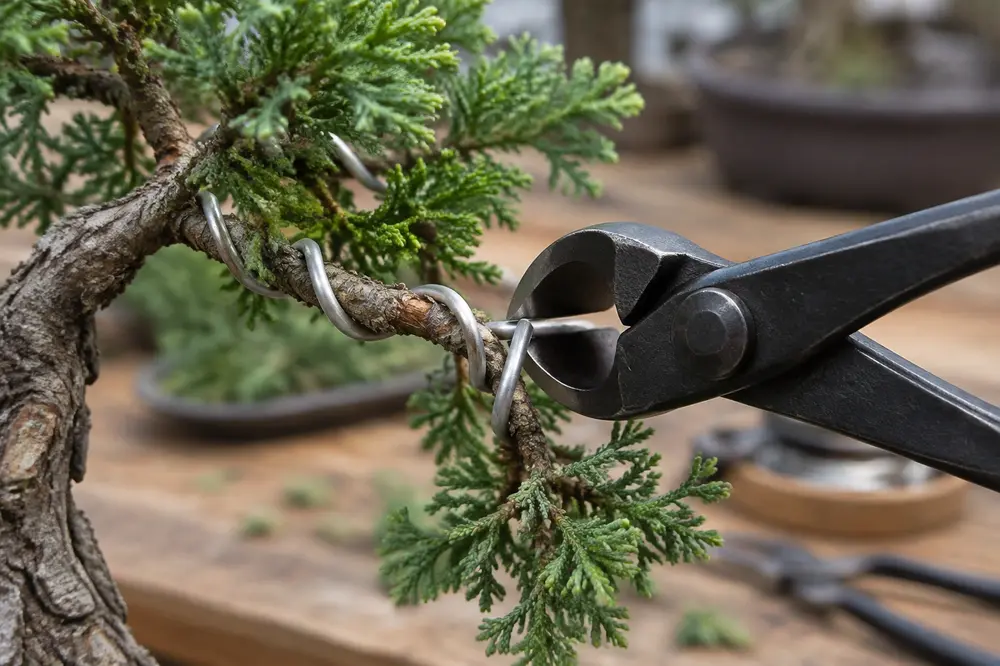
A wire cutter is the second bonsai tool most people buy, after a pair of shears, and it is the one most often skipped in favour of something from the garage. That works until the day a pointed electrician's cutter slips off a 2 mm wire and bites a branch you spent two years growing. Bonsai wire cutters are built differently: a blunt rounded nose that can press right up against bark, two symmetrical blades that shear the wire cleanly, and long handles for leverage so you can cut 4 or 5 mm copper one-handed. We compared the seven cutters below using the Amazon listings on November 1, 2026 and the makers' published specifications. We have not tested these particular units by hand; where we describe cutting performance we are drawing on the steel, geometry and the makers' own claims.
Our Top Picks at a Glance
| Cutter | Steel and size | Best for |
|---|---|---|
| Wazakura Bonsai Wire Cutter 7.7 in | Hand-forged S55C carbon steel, 195 mm | Best overall |
| TianBonsai Professional Wire Cutter 205 mm | 4Cr13MoV alloy steel, 205 mm | Best for thick copper wire |
| TianBonsai Professional Wire Cutter 180 mm | 4Cr13MoV alloy steel, 180 mm | Best all-round size |
| TianBonsai Wire Scissors 160 mm | 5Cr15MoV stainless, HRC55, 160 mm | Best small cutter |
| TianBonsai Standard Wire Cutter 180 mm | 3Cr13 alloy steel, 180 mm | Best budget cutter |
| VOUIU 8 in Wire Cutter | Stainless steel, 210 mm | Best for aluminium wire on a budget |
| Wazakura Wire Cutter and Jin Pliers Set | Hand-forged carbon steel, made in Japan | Best wiring set |
Why Not Just Use Ordinary Wire Cutters?
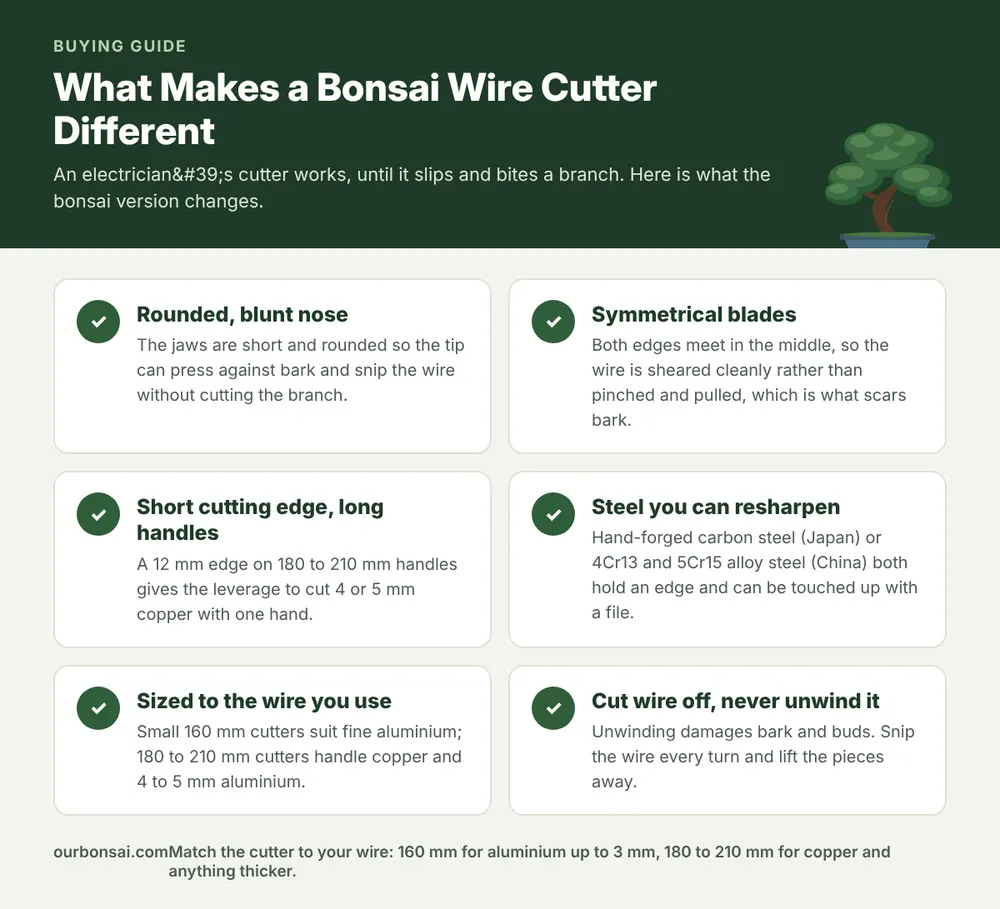
Three reasons. First, the nose: a hardware-store diagonal cutter has a pointed tip that must be angled away from the branch, so you end up cutting wire a few millimetres clear of the bark and then teasing the stub out. A bonsai cutter has a rounded nose and a flush cutting edge, so you place it against the branch and snip. Second, the blades: bonsai cutters are ground so both edges meet symmetrically, which shears the wire rather than pinching it; a pinched cut drags the wire against the bark. Third, leverage: a 12 mm cutting edge on a 180 to 210 mm handle multiplies your grip enough to cut 5 mm copper, which an 6-inch electrician's cutter will not do. If you are new to wiring, our guide on how to wire a bonsai tree covers the technique, and removing bonsai wire explains why you snip it off in pieces rather than unwinding it.
1. Wazakura Bonsai Wire Cutter 7.7 in (Best Overall)
| Steel | S55C hand-forged carbon steel |
|---|---|
| Length | 195 mm (7.7 in), 12 mm blades |
| Weight | 220 g (7.8 oz) |
| Made in | Sanjo, Niigata, Japan |
Wazakura's wire cutter is hand forged in Sanjo, the Niigata town whose blacksmiths have made edged tools since the 17th century, and it shows in the details: the jaws are short, rounded and precisely aligned so you can cut wire close to the branch and lift it away in pieces. At 195 mm it is a true one-handed tool for 1 to 4 mm aluminium and most copper.
S55C is a plain high-carbon steel. It takes a very keen edge and resharpens easily with a fine file, but it will rust if you put it away wet, so wipe it and oil it like any good carbon steel tool. The listing showed limited stock when we checked. For the rest of the brand's range see our Wazakura bonsai tools review.
Pros
- Hand forged in Sanjo, Japan
- Rounded jaws cut flush without marking bark
- Resharpenable carbon steel
- Comfortable handles for repeated cuts
Cons
- Carbon steel needs oiling
- Costs more than Chinese alloy-steel cutters
- Stock runs low
Best for: anyone who wires trees regularly and wants a cutter that lasts decades.
2. TianBonsai Professional Wire Cutter 205 mm (Best for Thick Copper Wire)
| Steel | 4Cr13MoV alloy steel |
|---|---|
| Length | 205 mm |
| Model | MTS-10 |
| Warranty | 2-year repair guarantee from the maker |
TianBonsai's professional-grade line is the best-value serious bonsai steel we know of, and the MTS-10 is its biggest wire cutter. At 205 mm you get noticeably more leverage than a 180 mm cutter, which matters when you move from aluminium to annealed copper, or wire a trunk with 5 mm wire. 4Cr13MoV is a hardenable stainless alloy: it resists rust better than Japanese carbon steel and still holds a good edge.
The maker offers a two-year repair guarantee, which is unusual at this price. The tool is heavier than the Wazakura and the finish is more utilitarian. We cover the brand in depth in our TianBonsai tools review.
Pros
- Long handles give real leverage for copper
- Rust-resistant alloy steel
- Two-year repair guarantee
- Good price for professional grade
Cons
- Heavier than a 180 mm cutter
- Plainer finish than the Japanese tools
Best for: collectors who wire conifers with copper or work on larger trees.
3. TianBonsai Professional Wire Cutter 180 mm (Best All-Round Size)
| Steel | 4Cr13MoV alloy steel |
|---|---|
| Length | 180 mm (about 7 in) |
| Model | MTS-11 |
| Warranty | 2-year repair guarantee |
Same steel and same professional grade as the 205 mm cutter, in a more compact 180 mm body. The maker describes the two blades as precisely aligned so they close symmetrically and leave clean cuts when you dismantle wire from a branch, which is exactly the point of a bonsai cutter. For most hobbyists working with 1 to 4 mm aluminium and occasional copper, 180 mm is the size to buy: it fits a tool roll, it is light enough for an hour of unwiring, and it still has the leverage for anything short of heavy trunk wire.
Stock was limited when we checked, so if it is unavailable the 205 mm model is the same tool with longer handles.
Pros
- Ideal size for most wiring work
- Symmetrical blades for clean flush cuts
- Rust-resistant alloy
- Two-year repair guarantee
Cons
- Limited stock at the time of writing
- Less leverage than the 205 mm
Best for: the typical hobbyist with a shelf of small and medium trees.
4. TianBonsai Wire Scissors 160 mm (Best Small Cutter)
| Steel | 5Cr15MoV stainless, HRC55 |
|---|---|
| Length | 160 mm |
| Cuts | Copper wire up to 5 mm, per the maker |
| Model | MT-WC-160 |
A small, stainless wire cutter for fine work: detail wiring on shohin trees, snipping 1 and 1.5 mm aluminium from twigs, and cutting guy wires. 5Cr15MoV with a quoted hardness of HRC55 is a step up from the 4Cr13 used on the professional cutters, and the stainless finish means it shrugs off damp. The maker claims it cuts copper up to 5 mm, though at 160 mm you will not have the leverage to do that comfortably; treat it as a 3 mm cutter.
Pair it with one of the bigger cutters rather than relying on it alone.
Pros
- Compact and light for detail work
- Higher-hardness stainless steel
- Good price
Cons
- Limited leverage for thick wire
- Too small as an only cutter
Best for: shohin and mame growers, and anyone who does a lot of fine aluminium work.
5. TianBonsai Standard Wire Cutter 180 mm (Best Budget Cutter)
| Steel | 3Cr13 alloy steel |
|---|---|
| Length | 180 mm |
| Cuts | Copper wire under 5 mm, per the maker |
| Model | SN-WC-180 |
TianBonsai's standard grade is the same shape as the professional MTS-11 in a cheaper 3Cr13 steel. 3Cr13 is softer and will need touching up sooner, but the geometry is right: rounded jaws, symmetrical edges, 180 mm handles. For a beginner who wires a few trees a year, that is all that matters, and it costs a fraction of the Japanese tool.
If this is your first wiring purchase, buy it alongside a knob cutter or concave cutter and a roll of 2 mm aluminium, and you have everything you need to start styling.
Pros
- Best value for a proper bonsai cutter
- Correct jaw geometry
- 180 mm handles
Cons
- Softer steel dulls faster
- No frills
Best for: beginners and anyone who wants a spare cutter for the garden.
6. VOUIU 8 in Wire Cutter (Best for Aluminium Wire on a Budget)
| Steel | Stainless steel |
|---|---|
| Length | 210 mm (8.3 in) |
| Intended for | Aluminium wire, per the maker |
VOUIU sells an enormous range of inexpensive bonsai tools, and its 210 mm wire cutter is one of the longest on this list, which gives good leverage for the price. The listing is honest about its purpose: it is made for aluminium wire. Stainless steel at this price is not hardened like the TianBonsai alloys, so we would keep it away from copper and anything over 4 mm.
If you use anodised aluminium exclusively, as most indoor and deciduous growers do, it will serve. See our VOUIU bonsai tools review for how the brand compares.
Pros
- Long handles for the price
- Stainless, low maintenance
- Cheap enough to keep in every tool roll
Cons
- Not meant for copper
- Softer steel
- Stock was limited
Best for: aluminium-wire users who want a long cutter without spending much.
7. Wazakura Wire Cutter and Jin Pliers Set (Best Wiring Set)
| Contents | Wire cutter 195 mm, 220 g; jin pliers 210 mm, 230 g |
|---|---|
| Steel | Hand-forged high-carbon steel |
| Made in | Sanjo, Japan |
The same Wazakura wire cutter bundled with the other tool wiring really needs: jin pliers. The pliers twist and tighten wire, pull it off in sections and strip bark for jin and shari, and their grooved jaws hold round wire far better than ordinary pliers do. Both tools are hand forged in Sanjo and the carbon-steel blades can be resharpened for years.
The set is the best gift on this page and the right purchase if you are about to start wiring branches seriously. Buy a separate pair of bonsai tweezers for fine work.
Pros
- Two Japanese tools for less than buying separately
- Jin pliers make wiring and unwiring far easier
- Gift-ready
Cons
- Carbon steel needs care
- Higher outlay
Best for: anyone building a proper Japanese wiring kit.
Also Worth a Look
- TianBonsai 160 mm Wire Scissors: a plainer sibling of our small pick, in stock and cheaper, for fine aluminium work.
- Any of the brand tool sets in our Japanese bonsai tool kit guide already includes a wire cutter; check before you buy one twice.
How to Choose a Bonsai Wire Cutter
Match the length to your wire
Length is leverage. A 160 mm cutter is comfortable for 1 to 3 mm aluminium and small trees. A 180 mm cutter is the all-rounder for most hobbyists. Go to 205 or 210 mm if you wire with copper, work on trunks with 5 mm wire, or have large hands. Many serious growers end up with a large and a small cutter.
Carbon steel or alloy steel
Japanese tools from Sanjo are usually hand-forged high-carbon steel such as S55C. It takes the keenest edge and resharpens beautifully, but it rusts if neglected. Chinese makers such as TianBonsai use hardened alloy steels (3Cr13, 4Cr13MoV, 5Cr15MoV) that resist rust and hold an edge well; the higher the number, the harder the steel. Either is fine. The difference you will feel is in the fit of the blades and the smoothness of the pivot, which is where the Japanese tools earn their price.
Check the jaw shape
The nose should be rounded and the cutting edge should reach the very tip, so you can lay the cutter flat against a branch. If a listing photo shows pointed, angled jaws, it is a pruning tool or an electrician's cutter wearing a bonsai label.
Buy a wire cutter before you need it
The moment to own one is when wire starts to bite into bark. Our article on bonsai wire bite explains how to spot it and why you must cut the wire off rather than unwind it. A cheap cutter today beats a scarred trunk next spring.
Look after it
Wipe sap off after use, dry it, and oil carbon steel. Never cut anything other than bonsai wire with it; steel wire, fencing wire and plant ties will chip the edge. Sharpen with a fine diamond file along the existing bevel, a few strokes at a time.
Wire cutters are only one part of a styling kit. For the tools that cut wood rather than wire, see our concave cutter review and our overview of what tools a bonsai grower needs. The town that produces the Wazakura tools, Sanjo in Niigata prefecture, has been a centre of Japanese metalwork since the Edo period.
Frequently Asked Questions
What is a bonsai wire cutter?
A cutter with short, rounded, symmetrical jaws designed to snip training wire flush against a branch without marking the bark. The long handles give enough leverage to cut thick copper one-handed.
Can I use regular wire cutters for bonsai?
You can for thin aluminium, but the pointed tip of an ordinary cutter cannot sit flat against the bark, so you leave stubs or risk nicking the branch. A bonsai cutter is safer and faster.
What size bonsai wire cutter should I buy?
180 mm suits most hobbyists. Choose 160 mm for fine work on small trees and 205 to 210 mm if you use copper or 5 mm aluminium.
Should I unwind bonsai wire or cut it off?
Cut it off, every turn, with a wire cutter. Unwinding drags the wire across bark and snaps buds and twigs.
Is Japanese carbon steel better than Chinese alloy steel?
Hand-forged carbon steel takes a finer edge and resharpens easily but rusts if left wet. Hardened alloy steels like 4Cr13MoV resist rust and hold an edge well. The Japanese tools usually have a smoother action and better blade alignment.
What is the best bonsai wire cutter?
The Wazakura 7.7-inch hand-forged cutter is our overall pick. The TianBonsai professional 180 mm and 205 mm cutters are the best value for serious use.
Can a wire cutter cut copper bonsai wire?
Yes, if it is long enough. A 180 mm or larger cutter in hardened steel handles annealed copper up to about 4 or 5 mm. Small 160 mm cutters should be kept for aluminium.
Final Verdict
Buy the Wazakura hand-forged wire cutter if you want a tool for life, or the Wazakura cutter and jin pliers set if you are building a wiring kit from scratch. For the best value, the TianBonsai professional 180 mm is the size most people need and the 205 mm is the one for copper. On a budget, the TianBonsai standard 180 mm has the right geometry at the best value. Whatever you choose, use it to cut wire off, never to unwind it.