How to Treat a Bonsai After a Spider Mite Infestation
Quick Answer
After a spider mite infestation, keep your bonsai isolated, remove remaining mites with water or a labeled treatment, and restore normal watering without keeping the soil constantly wet. Delay heavy pruning, repotting, and aggressive fertilizing until the tree is actively recovering, and continue checking the foliage because surviving eggs or hidden mites can restart the infestation. The UC IPM spider mite guide provides useful identification and management guidance.
Post-Infestation Recovery Steps
- Keep it isolated: Do not immediately return the bonsai to a crowded bench or houseplant collection.
- Check for survivors: Inspect leaf undersides with a 10× hand lens and use a white-paper tap test.
- Water normally: Prevent drought stress without keeping the bonsai substrate permanently saturated.
- Pause major work: Postpone repotting, wiring, defoliation, and heavy pruning while vigor is reduced.
- Watch new growth: Fresh, normally colored leaves or needles are more useful than damaged old foliage for judging recovery.
The Most Important Check
- Do not declare the infestation finished just because the visible webbing disappears. Continue checking for live mites and fresh stippling.
Spider mites can leave a bonsai looking worse even after you have controlled the active infestation. Damaged leaves may remain bronzed, dry, or speckled because destroyed plant cells do not turn green again.
Recovery therefore depends on what you do next. I prefer to treat the weeks after an infestation as a stabilization period rather than rushing the tree back into normal styling work.
In This Guide
What Should You Do Immediately After a Spider Mite Infestation?
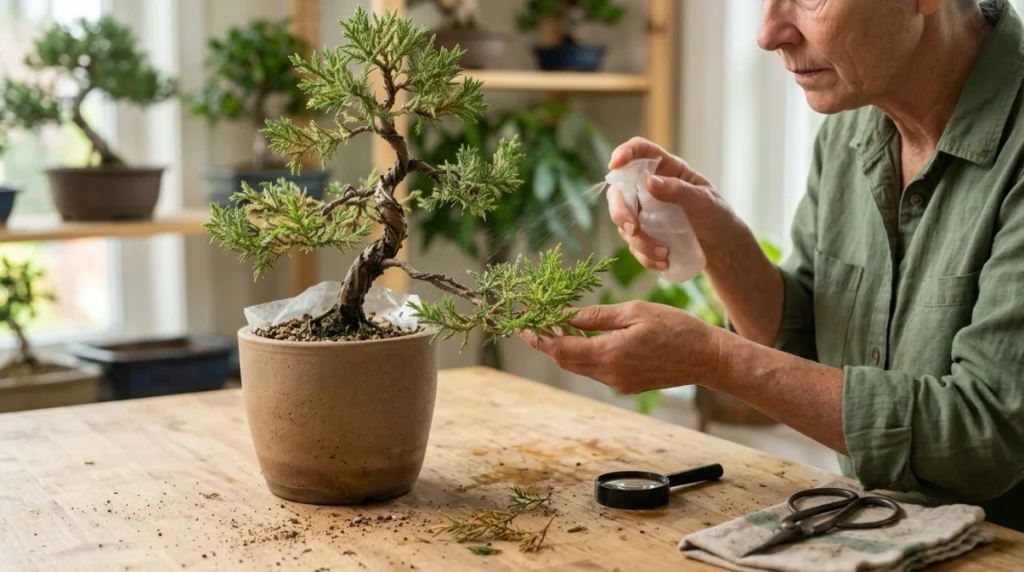
Keep the bonsai isolated and concentrate on reducing stress. You want to protect healthy foliage while confirming that the mite population is no longer active.
Post-infestation bonsai care is the recovery period after active pest control, when you monitor for surviving mites while helping the tree rebuild healthy foliage and vigor.
Keep the bonsai in quarantine
Do not move the tree straight back beside healthy bonsai. Spider mites are tiny enough that a few survivors can be easy to overlook.
- Separate foliage: Prevent branches from touching neighboring plants.
- Inspect nearby trees: Check plants that previously shared the same bench, shelf, or windowsill.
- Clean the area: Remove fallen leaves and plant debris around the affected bonsai.
- Clean tools: Wash tools and your hands after handling an infested tree.
The University of Minnesota Extension guidance for indoor plant pests also recommends washing hands and tools after working with infested plants.
Remove remaining mites without stressing the tree
A controlled stream of water can dislodge spider mites from many bonsai species. Pay particular attention to leaf undersides and protected branch junctions.
Protect loose bonsai substrate while rinsing. A shallow pot can lose soil quickly under excessive water pressure.
- Support tender shoots with one hand while rinsing.
- Spray from several angles rather than only from above.
- Allow the foliage to drain afterward.
- Return the tree to suitable airflow and light.
If live mites remain, use only a pesticide, horticultural oil, or insecticidal soap labeled for the pest and plant. Follow the product label for dilution, intervals, temperature limits, and repeat applications.
Section Takeaway: The first goal after spider mites is stability, not rapid growth. Keep the tree isolated, remove surviving pests, and avoid piling extra stress onto damaged foliage.
How Do You Know the Spider Mites Are Really Gone?
Do not judge success by webbing alone. Confirm recovery by looking for live mites, new feeding damage, and the condition of emerging foliage.
Spider mites are arachnids rather than true insects. Many common species are around 1/50 inch long, so magnification makes monitoring much easier.
Use the white-paper test
Hold clean white paper beneath suspicious foliage. Tap the branch several times and watch the paper for tiny moving specks.
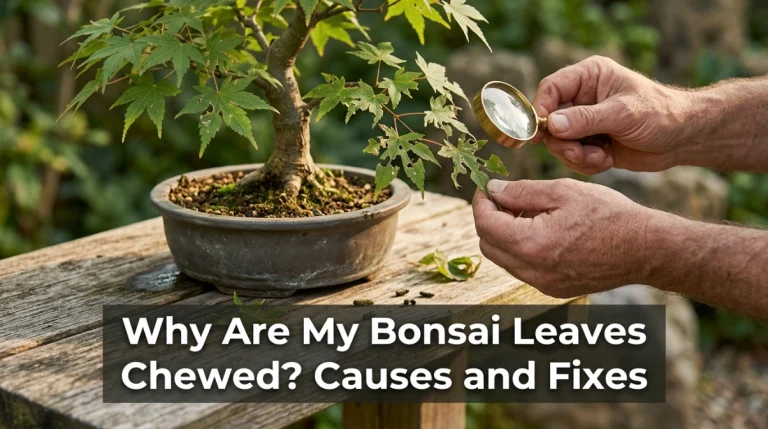
A 10× hand lens can then help you inspect leaf undersides. Look for mites, eggs, shed skins, and fine silk.
- Good sign: No moving mites appear during repeated inspections.
- Good sign: New foliage develops without fresh stippling.
- Warning sign: New pale dots continue appearing.
- Warning sign: Fine silk returns around leaves or fine twigs.
- Warning sign: Live mites remain on leaf undersides.
Old damage will not disappear
Existing pale or bronze stippling usually remains visible. Those leaf cells have already been injured.
This is one reason growers sometimes overtreat a bonsai that is already improving. The damaged foliage looks unchanged, so they assume the pesticide failed.
| What You See | Likely Meaning | Best Response |
|---|---|---|
| Old stippling but no live mites | Previous feeding damage | Monitor rather than automatically spraying again |
| Fresh pale dots on new leaves | Possible continued feeding | Inspect undersides immediately |
| Moving dots on white paper | Active mites may remain | Continue labeled treatment and monitoring |
| Clean, normally colored new growth | Recovery is progressing | Maintain normal species-appropriate care |
I like to inspect a recently affected tree every two or three days at first. Once repeated checks stay clean, I move back toward a normal weekly pest inspection routine.
Section Takeaway: Judge recovery by live mite activity and fresh growth, not by whether old damaged leaves become green again.
How Should You Water and Position a Recovering Bonsai?
Give the bonsai its normal species-appropriate conditions while avoiding drought stress. Do not compensate for spider mites by keeping the root zone permanently wet.
Spider mite damage tends to be worse on water-stressed plants. However, excessive watering can create a completely different root problem.
Water the soil, not the calendar
Check the bonsai substrate before watering. Water thoroughly when the tree needs it, then allow normal drainage through the pot.
- Do not intentionally dry it out: Drought stress can slow recovery.
- Do not leave it waterlogged: Bonsai roots still require oxygen.
- Check more often: Small pots can change moisture levels quickly.
- Keep drainage open: Make sure drain holes have not become blocked.
Should you increase humidity?
Some spider mites thrive under warm, dry conditions, but humidity is not a substitute for pest control. Raising humidity also does not mean saturating the bonsai soil.
For indoor tropical bonsai, moderate room humidity may reduce environmental stress. Outdoor species should still receive the conditions appropriate for their species and season.
Give the tree appropriate light
Do not place a recovering bonsai in deep shade unless its species requires it. Leaves need adequate light to support photosynthesis and new growth.
At the same time, avoid sudden exposure to intense sun if the foliage was previously indoors or shaded. Acclimate the tree when a major light change is necessary.
The general Bonsai Empire pest and disease guidance also emphasizes correct placement, watering, soil, and overall care when reducing pest problems.
Section Takeaway: Recovery care should be balanced. Prevent drought stress, preserve drainage, and give the species the light and environment it normally needs.
When Can You Fertilize, Prune, or Repot Again?
Wait until the bonsai shows stable recovery before performing demanding work. A weak tree gains little from being fertilized heavily, defoliated, repotted, and wired at the same time.
Fertilizer after spider mites
Do not use a strong fertilizer dose as emergency medicine. Fertilizer does not repair mite-damaged leaf cells or kill remaining mites.
When active growth resumes, return gradually to the normal fertilizer program for that species and season. Follow the fertilizer label rather than increasing concentration to force faster recovery.
Pruning and defoliation
A few badly damaged leaves can sometimes be removed from a vigorous broadleaf bonsai. Avoid stripping a weakened tree simply because its old foliage looks unattractive.
Leaves that remain functional still help produce energy. Cosmetic damage alone is not always a reason to remove them.
Pro tip: Delay heavy pruning, complete defoliation, or other irreversible work until the tree has clearly regained vigor. Ask an experienced grower or local bonsai club for help if the tree is weak or valuable.
Should you repot after spider mites?
Spider mites generally feed on foliage, so a mite infestation by itself is not a reason to bare-root or repot a bonsai. Unnecessary root work can add significant stress.
Repot only when there is a separate horticultural reason. Examples include a badly broken-down substrate, serious root problems, or the tree reaching its appropriate seasonal repotting window.
- Active mites: Continue pest management first.
- Weak growth: Postpone optional styling work.
- Healthy new growth: Resume routine care gradually.
- Urgent root problem: Assess it separately from the mite infestation.
Pro tip: Root pruning cannot be undone. If a recently infested bonsai is weak, get experienced advice before combining pest recovery with major root work.
Section Takeaway: Do not try to “make up” for spider mite damage with fertilizer or drastic bonsai work. Stable new growth is the signal to start returning to normal maintenance.
How Do You Keep Spider Mites From Coming Back?
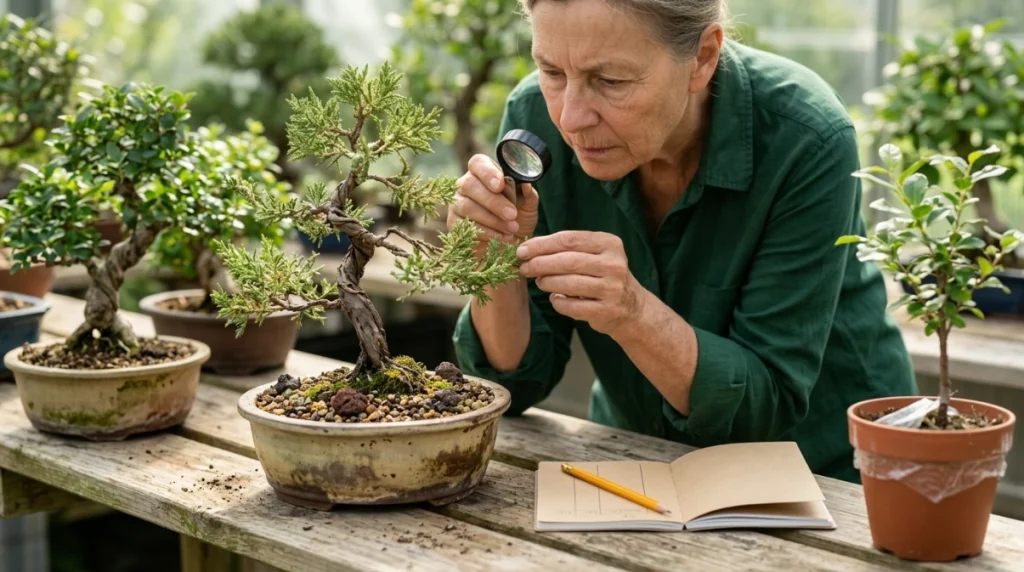
Prevention depends on early detection, appropriate watering, clean growing conditions, and avoiding unnecessary pesticide use. No single humidity trick or spray guarantees that mites will never return.
Inspect before damage becomes obvious
Spider mites often stay on leaf undersides before growers notice serious discoloration. Make pest inspection part of normal watering and bench maintenance.
- Check leaf undersides with a hand lens.
- Watch for pale stippling on new foliage.
- Inspect branch forks and dense interior growth.
- Quarantine newly acquired plants before mixing collections.
- Check neighboring plants when one tree develops mites.
Protect beneficial predators
Broad-spectrum insecticides can sometimes worsen spider mite problems by killing natural enemies. Use targeted controls only when you have confirmed the pest.
Predatory mites are commercially used against spider mites in suitable growing systems. The University of Maryland Extension overview of predatory mites explains how these beneficial arachnids feed on plant-damaging mites.
Keep a simple recovery log
A written record makes recurring infestations easier to recognize. Record treatment dates, inspection results, weather or indoor conditions, and when healthy new growth appears.
As of 2026, I still prefer this simple integrated approach over spraying on a fixed calendar. Confirm the pest, reduce stress, choose the least disruptive effective treatment, and keep watching the tree.
Section Takeaway: The best defense against another severe infestation is regular inspection. Catching a few mites is much easier than treating a web-covered bonsai.
Frequently Asked Questions
Can a bonsai fully recover from spider mites?
Yes, many bonsai recover when the infestation is controlled before severe decline occurs. Damaged leaves may remain stippled or bronze, so focus on whether the tree produces healthy new foliage and maintains normal vigor.
How long should I isolate a bonsai after spider mites?
Keep it isolated until repeated inspections show no active mites or fresh feeding damage. Rather than relying on one fixed number of days, continue monitoring through the treatment interval specified on your product and beyond the final application.
Should I remove every damaged leaf?
No. Cosmetic damage does not mean a leaf is useless, and stripping foliage from an already stressed bonsai can slow recovery. Remove leaves only when there is a clear horticultural reason and the tree can tolerate the loss.
Can spider mites live in bonsai soil?
The common plant-feeding spider mites responsible for leaf stippling primarily inhabit foliage and feed on plant cells. Finding tiny organisms in the soil does not automatically mean they are spider mites, so identify them before treating the root zone.
Should I spray neem oil after the mites appear to be gone?
Do not keep spraying automatically without evidence of active pests. Any pesticide or horticultural oil can stress sensitive foliage when misused, so follow its label and continue inspecting before deciding whether another application is justified.
Does misting prevent spider mites?
Misting alone is not reliable spider mite control. Maintaining appropriate moisture and reducing excessively dry conditions may help the plant tolerate stress, but an active infestation still requires monitoring and appropriate physical, biological, or labeled chemical control.
When can I return the bonsai to my collection?
Return it when repeated checks show no live mites, fresh webbing, or new stippling. Inspect neighboring trees at the same time so an unnoticed population does not immediately reinfest the recovered bonsai.
What Is the Most Important Part of Spider Mite Recovery?
The most important step is continuing to observe the bonsai after the obvious infestation disappears. Spider mite recovery is a process, not a single spray followed by normal styling.
Keep the tree stable, give it species-appropriate water and light, and judge progress from healthy new growth. Once vigor returns and inspections remain clean, you can gradually resume normal fertilizing, pruning, wiring, and other bonsai work.
For the next few weeks, make inspection part of every watering session. A minute spent checking leaf undersides can stop a small surviving population from becoming another serious infestation.